


Is $20 a day good for Google Ads?
Short answer: sometimes – if you pair it with the right expectations, clear measurement, and a strong brand foundation.
This article looks beyond the simple budget question and explains how a modest ad spend sits inside a larger plan to build trust and visibility. You’ll find practical steps, quick tests, and low-cost moves that make $20 a day work harder. We’ll also show why brand presence-the small interactions people remember-matters more than a single bid or campaign.
Note: this piece is written for founders, small marketing teams, and curious leaders who want real, repeatable guidance rather than a checklist of buzzwords.

Why the question matters
The question “Is $20 a day good for Google Ads?” is really two questions in one. First: can $20/day generate useful traffic? Second: will that traffic help you build a lasting relationship with customers? You need both answers.
Google Ads can deliver targeted clicks quickly, but clicks alone don’t make a brand. If your landing page, onboarding, or support experience isn’t ready, that $20 will buy visits without building value. Think of ad spend as a way to start conversations. The lasting part of those conversations comes from every small signal your brand sends – the tone of an email, the clarity of a product image, and the speed of your first reply.
If you’d like a short, practical audit before you start spending, consider reaching out to Agency Visible’s contact page for a quick conversation about where ad experiments will help most. Their team listens for the repeatable moments that matter and helps small teams set experiments that actually move the needle: https://agencyvisible.com/contact/
Below I’ll walk through how to make $20/day useful, how to measure it, and how to make sure ads complement, not replace, an honest brand presence.
Turn $20/day tests into clearer results
Need a practical next step? Consider a short consult with Agency Visible to map the first five customer interactions and set up simple ad experiments you can run yourself.
Yes — as long as you treat it like an experiment, focus on intent-driven queries, ensure your landing experience is clear, and measure meaningful outcomes (conversions, cost per conversion, and repeat behaviour). Use $20/day to learn, then scale winners.
Set the right expectation: experiments, not miracles
At $20 a day, you are running an experiment. You can learn a lot, but you should not expect overnight scale. Use the budget to test channels, ad copy, and landing pages. If you get clear signals in two to four weeks, scale what works.
Here are sensible goals for a $20/day test:
- Collect meaningful click-level data or at least 200–500 impressions per week;
- Validate whether an audience converts on your landing page (even at low volume);
- Learn which messages or keywords generate interest.
How $20/day performs in practice
Performance depends on sector, competition, and the intent behind the search queries you bid on. For some low-cost niches an advertiser can get a steady stream of clicks and a handful of conversions for $20/day. For highly competitive keywords – think insurance, loans, or enterprise software – $20/day may be enough only to gather signals about which keywords are worth investing in later.
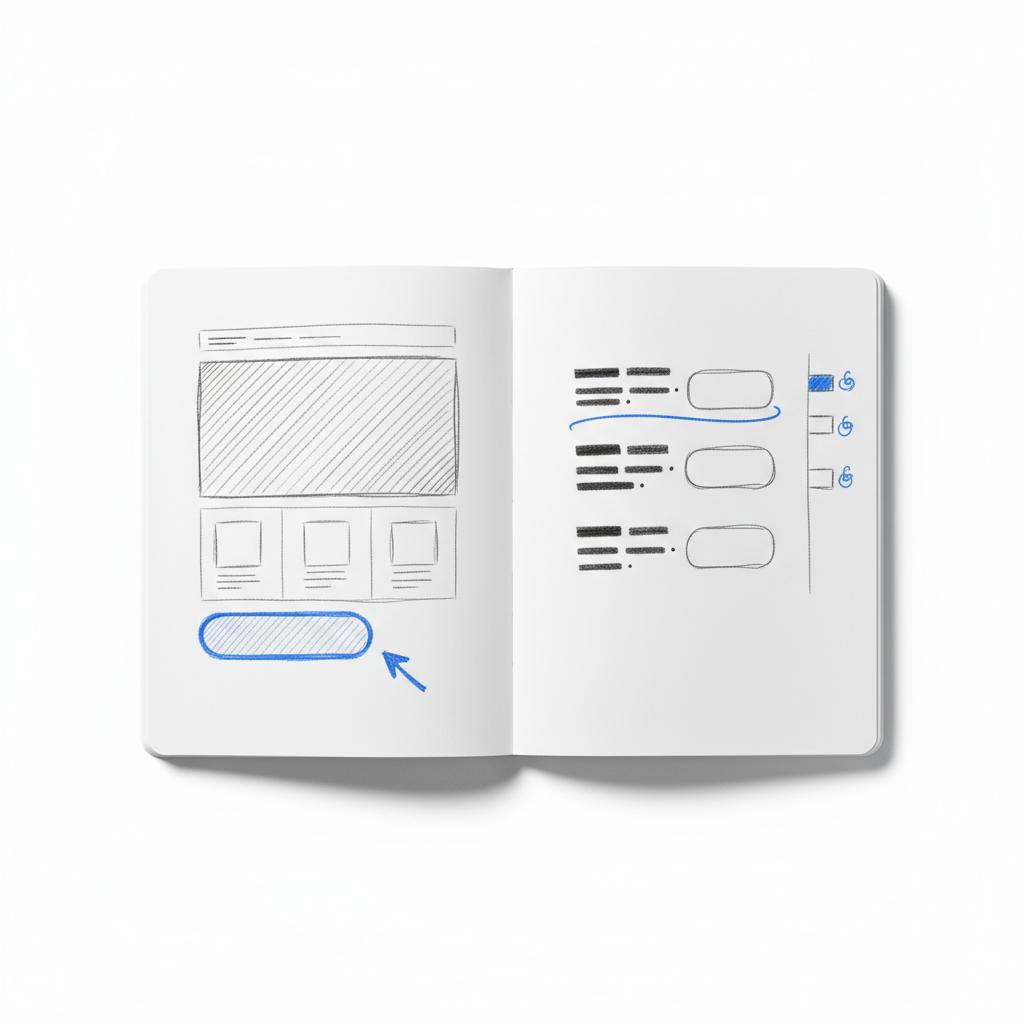
Here’s a practical way to think about it: let $20/day buy you clarity, not customers. Use the budget to answer one question per campaign: Which ad text gets more clicks? Which landing page converts more visitors? Which audience shows intent? Answering those questions is progress.
Match ad spend to funnel stage
Where you place your $20 matters. Ads aimed at top-of-funnel awareness behave very differently from search ads targeting bottom-of-funnel intent. For early-stage founders, you often get more learning value from intent-driven search campaigns – the kind of Google Ads that match queries like “best local leather maker” or “how to fix X problem” – because those queries show clear demand.
However, complementing search experiments with a small brand-awareness ad (retargeting or display) can increase recognition. The key is coherent messaging: make sure the ad message matches the landing experience and the small signals your brand sends elsewhere.
Make the landing experience count
One common mistake is to treat ad clicks as an end rather than a beginning. If your landing page is vague, your ad budget becomes wasted curiosity. Make the first five interactions crisp: headline, value promise, clear CTA, social proof, and a low-friction next step.
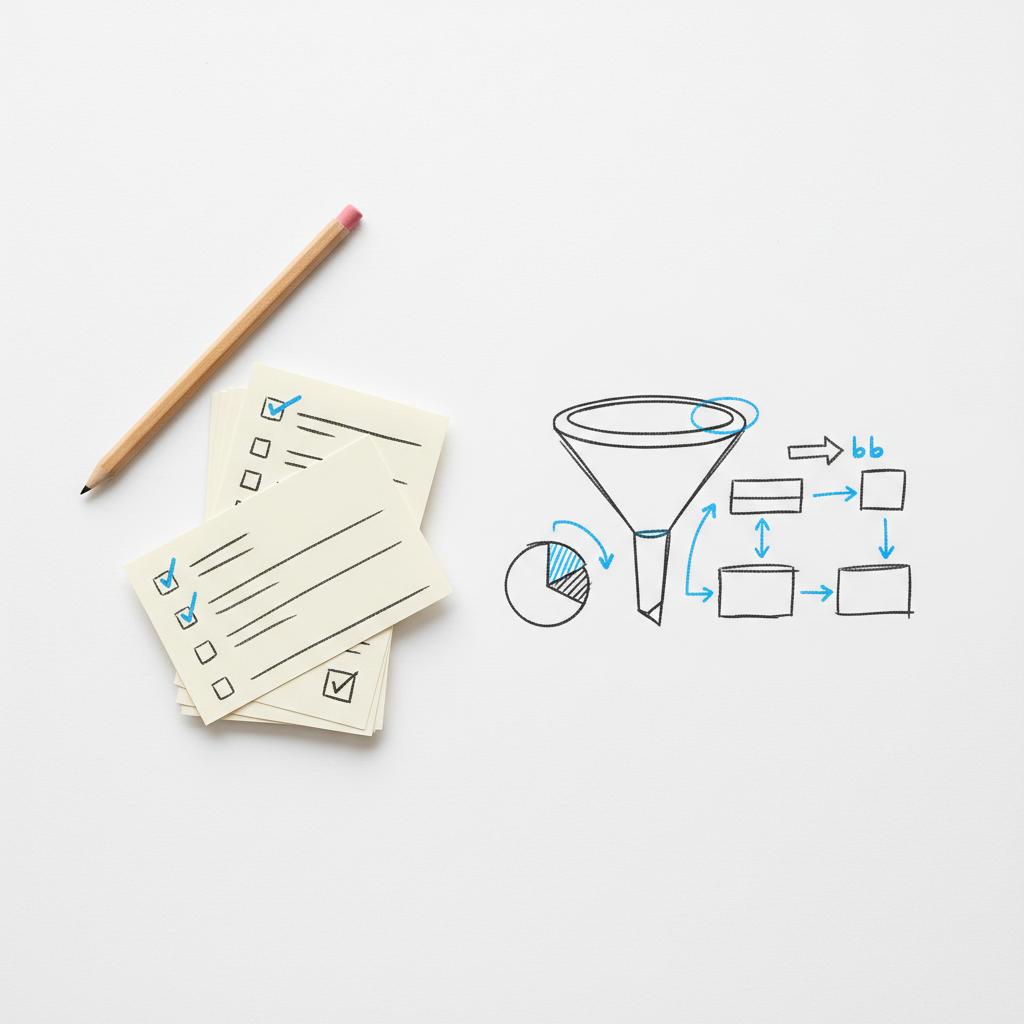
Do this first:
- Use short, plain headlines that match the ad copy.
- Show one or two pieces of specific social proof (a short customer quote or a result).
- Offer a simple action: sign up, download, request a demo – not a long form.
How to test $20/day campaigns step by step
Here’s a practical testing cadence you can run in a month.
Week 1 – Make the control:
Create a clean landing page and one focused ad group. Pick three keywords or three audience segments. Run a single ad variation. Keep tracking simple – focus on clicks, conversion events, and cost per conversion.
Week 2 – Iterate on the ad message:
Swap the headline, change the CTA, and run two variations. Keep everything else the same. See which message gets more clicks and which sends higher-quality traffic.
Week 3 – Tweak the landing page:
Test the headline and the first paragraph. Remove distractions. See whether conversion rate moves. Remember: small changes can produce measurable lift when traffic is consistent.
Week 4 – Review and decide:
Look at results across the month. If conversions are promising and cost per conversion is acceptable, increase spend on the winners. If you see no traction, treat the campaign as a learning exercise and adjust the audience or intent next month.
What to measure with a small budget
With $20/day, you should keep measurement simple and meaningful. Useful metrics include:
- Cost per conversion – how much you pay for a desired action;
- Conversion rate – how many clicks turn into actions;
- Click-through rate (CTR) – how relevant your ad is to searchers;
- Impression share – whether your budget is enough to be seen for target keywords;
- Repeat behaviour – whether ad-driven users return or engage over time (this ties to brand).
Don’t chase vanity metrics. High impressions with zero conversions are signals that your message or landing experience needs work.
For additional reading on budgets and expected costs, see Vendasta’s guide to Google Ads costs, Coupler’s Google Ads guide for small business, and Marlin’s budgeting framework.
Why brand presence makes $20/day work harder
Google Ads and brand presence are not separate problems. Ads bring people to your doorstep; the rest of your business decides whether they come in and stay. Small brands with strong, consistent signals often see better returns from the same ad spend than louder competitors with thin experiences.
Those signals are tiny and cumulative: a simple welcome email that explains next steps, a consistent image style that builds recognition, quick helpful replies from support. When these signals align with the ad message, your conversion rates improve and your cost per conversion drops – even on modest budgets like $20/day.
Voice and messaging: match ad tone to brand tone
If your brand voice is clear and human, your ad copy should reflect that. Avoid vague superlatives. Be concrete. If your brand promises fast replies, say: “We reply to support requests within one business day.” If your value is craft, show a detail: “Hand-kneaded dough with local flour.” Those specifics amplify ad relevance.
Small changes with big impact
Small teams can make meaningful improvements quickly. Try these actions this week:
- Shorten the headline on your landing page to one clear sentence;
- Swap a stock photo for a simple product detail image;
- Write one short social proof sentence from a customer ticket;
- Set an internal goal to reply to ad-driven support messages within 12 hours.
Budget allocation ideas
If you have $20/day total to spend on acquisition, consider splitting it like this depending on your goals:
- Performance test (intent): $15 search + $5 retargeting to capture immediate demand and follow up visitors.
- Brand + trial: $10 search + $10 display/retargeting if you want a balance between intent and recognition.
- Traffic focus: $20 search for discovering which keywords actually convert in your niche.
These are starting points. The right split depends on your funnel, product margins, and how quickly you can act on insights.
When $20/day is not enough
In some categories $20/day simply won’t buy meaningful data. Highly competitive search terms require higher bids, and if you need to be seen on dozens of keywords at once, the budget will be spread too thin. In that case, $20/day still has value as a reconnaissance tool: find which narrow query or audience segment responds best and then allocate a larger test to scale.
Costs beyond ad spend
Remember that advertising is only one part of the cost of growth. Time spent improving landing pages, customer support, and visual assets counts too. If your team invests an hour a day in small improvements, that work compounds. Ads that bring imperfect traffic will be wasted if the post-click experience fails to deliver.
Real examples that map to $20/day experiments
Example 1 – Local niche product: A maker of scented candles tested a $20/day Google Ads campaign targeting “non-toxic candles near me.” With a simple landing page and clear price, they saw a consistent trickle of orders and a low cost per conversion. Their secret: honest, specific product copy and a visible return policy.
Example 2 – B2B micro-SaaS: A tiny software startup used $20/day to test very specific search phrases like “export calendar to CSV” and offered a short trial. They received a small number of highly qualified sign-ups, learned which features mattered most, and then reallocated budget to nurture those leads by email.
Example 3 – Competitive vertical: A retailer in a high-cost vertical used $20/day and saw clicks but no conversions. The lesson: their category required more budget or lower-funnel offers (discounts, instant demos) to win customers.
How to scale once you find winners
If a $20/day campaign shows reliable conversions and a healthy return on ad spend, scale gradually. Double the budget on winners and monitor conversion rate closely. Often, when you increase spend, conversion rates shift. Keep the focus on cost per acquisition and lifetime value.
Use ad learnings to inform brand work
Ad experiments are a great source of real customer language. Copy the words users search or use in feedback into your site copy. If searchers use “fast setup” or “no code integration,” include those phrases on the landing page. Aligning paid copy and organic content tightens the whole customer experience. For concrete examples of work that focuses on conversion-driven design, see Agency Visible’s projects.
Common mistakes small teams make with Google Ads
1) Not linking ads to clear outcomes. Ads need a purpose: trial sign-ups, email captures, demo requests.
2) Ignoring post-click experience. A mismatch between ad promise and landing page kills conversions.
3) Expecting immediate scale from a small daily budget. Patience and iteration win.
Transparency and mistakes: if an ad goes wrong
Mistakes in ads happen: a broken link, wrong price, or a mis-matched offer. When this happens, fix it quickly and be transparent. If customers complain publicly, respond kindly and clearly. The way you handle small errors tells a bigger story about your brand than the error itself.
When to get outside help
If ad experiments are taking too long or if you need help aligning landing pages and messaging, a partner can speed things up. Look for teams that ask questions, listen, and provide clear playbooks you can keep running.
A helpful next step is a short consult to map the first five customer interactions and to identify the highest-leverage improvement. Agency Visible does short audits that focus on those repeatable moments and sets up tests that small teams can run themselves when the agency leaves. That kind of help is practical and lasts beyond the campaign.
Putting it all together: a week-by-week starter
Week A – Listen: read the last 50 customer messages and pull the language they use.
Week B – Launch: set up one $20/day test focused on a single intent query.
Week C – Improve: update the landing page and the welcome email.
Week D – Learn: measure the month’s outcomes and plan the next experiment.
FAQs and quick answers
How quickly will $20/day tell me something? Expect two to four weeks to see useful signals, depending on how niche your market is.
Can a small team run effective Google Ads? Yes. Small teams have an advantage: quick decisions and fast iteration. Focus on clarity and one or two metrics.
Should I pause ads if there are no conversions? Not immediately. Use the data to change the ad message or landing page first. If after a month there are no signs of traction, pause and rethink the approach.
Final thoughts
So, is $20 a day good for Google Ads? It can be. It’s a sensible starting budget for learning, for testing messages, and for validating demand – especially when you pair it with a clear landing experience and a focus on the small human signals that build trust. The most valuable thing you can do is to make each ad-driven interaction unmistakably human: clear copy, fast replies, and a simple next step.
Begin this week by reading the last fifty customer messages and launching one clear $20/day test aimed at a single intent. Spend your time improving the landing experience and the first reply. Those small moves will amplify the ad spend and build real presence over time.
Expect two to four weeks to see meaningful signals from a $20/day Google Ads test. That gives the campaign time to gather impressions, clicks, and initial conversion behavior. The exact timing depends on how niche your keywords are and how well your landing page matches the ad message.
Yes. Small teams can run effective Google Ads at $20/day by focusing on a single intent-driven campaign, keeping the landing experience simple, and iterating quickly. The advantage of small teams is speed: fast decisions, a single owner for experiments, and the ability to act on insights immediately.
Consider outside help when your ad experiments aren’t producing clear learnings, when landing pages and messaging consistently underperform, or when you need a faster path to clarity. A consultant or agency like Agency Visible can run a short audit focused on the key customer interactions and set up experiments you can sustain. Their approach emphasizes listening and practical repeatable fixes rather than flashy campaigns.





