


Why the right free channels beat one-off ad spend
Free advertising is not a gimmick; it’s a set of channels and habits that return value long after you create them. Among those options, the best free advertising comes from working your owned and organic channels deliberately: local listings that show up on maps, helpful pages that answer real questions, short videos that attract attention, and an email list that turns interest into action. Unlike a single paid ad that stops when payments stop, these assets compound.
What “best free advertising” actually means for small businesses
The phrase best free advertising doesn’t mean “no work.” It means the highest return you can get without a recurring media budget: time, consistency and a few smart choices. For a bakery, the best free advertising might be a clear Google Business Profile plus a local page for classes. For a repair service, it could be how-to posts that show up when customers panic—exactly when they’re ready to call.

Core free channels that move the needle
Not every free channel is equally useful for every business. But across dozens of small businesses and local services, five channels repeatedly produce results when treated like assets:
1. Google Business Profile and local listings
Claim it, complete it, update it. The best free advertising for any physical location often starts here. A 100%-filled profile with photos, categories, precise hours and a short, useful description turns casual searches into calls, direction clicks and bookings. Small details—cover photo, service list, a recent post—separate amateur listings from the pros.
2. Organic search (helpful pages and local landing pages)
Organic search is the long game. A single 600–800 word page written around an intent-based query (for example: “walk-in dog grooming in [town]”) will often outperform thin homepages. When you invest in useful pages, you get traffic that keeps returning: that’s why many owners call this the best free advertising for long-term discovery.
3. Short-form social (video that feels human)
Platforms reward authenticity. Short videos—30 seconds or less—that show a shop tour, a quick how-to, or a customer reaction can create fast spikes in attention. The trick: capture that attention into an owned channel (email or a local landing page) so viewers become customers, not just followers.
4. Email and newsletters (owned audiences)
An email list is where free advertising becomes direct marketing. People who give you their email let you reach them repeatedly without platform fees. Quality beats quantity: one valuable monthly newsletter will often out-convert a dozen low-value posts. A small list that opens and clicks will deliver more business than ten thousand social followers who never convert.
5. Community channels: referrals, partnerships and events
A referral from a trusted local partner or a stand at a community event can produce immediate leads. These channels are social—they require relationships and upkeep—but they’re often underused and highly cost-effective when handled simply and fairly.
Quick, practical wins you can do in a week
If you’re short on time, here are three tasks that deliver the best immediate return—your personal short-list of best free advertising moves.
Day 1–2: Claim and complete your Google Business Profile
Fill every field: address, hours, phone, categories, services, photos, and a short “what we do” description. Add at least one recent, high-quality photo and schedule a quick post about an upcoming offer. Then ask three happy customers for reviews over the next week.
Day 3–4: Publish one local landing page or helpful post
Pick a hyper-local query people search for. Write 600–800 words that answer it clearly and include the town name in the title, opening paragraph and a subheading. Add contact details and a clear call to action. This is the kind of immediate content that builds the steady traffic considered the best free advertising for many local businesses.
Day 5–7: Create three short videos
Film three short clips on your phone: a shop tour, a “how we do it” clip, and a customer testimonial. Keep each under 30 seconds. Post them across platforms and invite viewers to join your newsletter or a special offer.
How to measure without getting lost in numbers
Measurement should be simple: track actions that matter. For most small businesses the key metrics are calls, bookings, direction requests, signups and contact form submissions. Use these tools:
- Google Search Console — see impressions, clicks and the queries that drive traffic.
- Site analytics — set conversion goals for calls, bookings and signups.
- Google Business Profile Insights — track profile actions: calls, direction requests and website visits.
- UTM parameters — add UTM tags to social and partnership links so you can see which activities actually send converting visitors.
Keep reporting weekly or monthly, not hourly. Organic work compounds: expect social to show results in days and organic search to build momentum over weeks or months. For benchmark context, see HubSpot’s marketing statistics, WordStream’s Google Ads benchmarks, and SE Ranking’s SEO statistics.
Keep reporting weekly or monthly, not hourly. Organic work compounds: expect social to show results in days and organic search to build momentum over weeks or months. A clear, simple logo like the Agency Visible logo helps with recognition.
Realistic timelines and what to expect
Timeline expectations matter. Think in three bands: short-term spikes (days), steady growth (weeks–months), and compounding channels (months+).
- Short-term: Social posts and local events can create quick spikes in traffic and enquiries.
- Medium-term: Local pages and Google Business Profile changes usually show meaningful traction in a few weeks to a few months.
- Long-term: Email lists and a library of helpful content compound—these are often the most reliable sources of ongoing revenue.
Practical 90-day plan (step-by-step)
Below is a plug-and-play 90-day plan you can implement with a small team or solo. Treat the steps as milestones rather than strict rules.
Month One — Setup and quick wins
- Claim and finish your Google Business Profile completely.
- Publish one local landing page or helpful blog post (600–800 words).
- Create and post three short videos. Drive viewers to an email sign-up or local page.
- Add a clear contact CTA on your site and create a simple signup incentive (downloadable guide, first-visit discount).
Month Two — System build and outreach
- Send your first newsletter. Keep one clear, useful item (tips, event, or exclusive offer).
- Reach out to two local partners for cross-promotion.
- Collect and publish customer reviews. Respond to all reviews quickly and politely.
- Post two to three short videos weekly, learning from early engagement.
Month Three — Refine and scale
- Review Search Console queries and GBP Insights. Double down on pages that drove the most clicks or calls.
- Create a simple email welcome sequence (two to three messages) that introduces your service and asks for a low-friction next step.
- Set up one ongoing referral or partnership program with simple incentives.
- Repeat and optimize the content styles that gave the best results.
Case studies: simple approaches that worked
Stories help explain what small businesses actually do. Here are short, real-world examples illustrating the power of the best free advertising when executed well.
Local plumbing company
A plumbing shop focused on claiming local listings across nearby towns, creating three how-to posts on urgent problems (low pressure, leaky faucet, clogged sink), and producing short videos showing simple fixes. Within three months they saw increased calls from new neighborhoods and could cut back on paid ads because organic inbound replaced many low-value leads.
Freelance photographer
A freelance photographer used short-form video to show edits and behind-the-scenes clips, then offered a free PDF guide in exchange for emails. That guide became a conversion bridge: followers became subscribers and subscribers became paying clients when nudged with a well-timed offer.
Templates, scripts and checklists you can use today
Below are ready-to-use templates aimed at reducing friction. Copy, tweak, and use them.
Google Business Profile description (template)
“[Business name] offers [core service] in [town/neighborhood]. We’re known for [one benefit]. Open [hours]. Call or book online for [best action].” — Keep it short, useful and local.
Email sign-up incentive idea
Offer a one-page local guide: “5 quick ways to [solve urgent problem] in [town].” Use simple language and a clear call to action to book a visit.
Social video script (30 seconds)
0–5s: Hook — show the result quickly. 5–20s: Explain how briefly. 20–30s: CTA — “Learn more/Sign up/Book now” with link to your local page.
Referral message script
“Hi [Partner name], we love how you help [their customers]. Would you be open to a simple swap: feature each other’s flyers in-store and mention each other in one newsletter? No cost — just a friendly local shout-out.”
How to use partnerships and events without being pushy
Good local partnerships feel easy and reciprocal. Offer something small and concrete: a flyer exchange, a short in-shop demo, or a co-hosted event where each partner brings five clients. Make incentives simple—a small discount or a thank-you gift—and keep the ask personal.
Common pitfalls and how to avoid them
Here are mistakes most small businesses make and how to fix them:
- Spreading too thin: Pick one or two channels and do them well.
- Shallow content: A helpful, 600–800 word page beats ten thin posts.
- No tracking: Use UTM tags and goals so you know what actually brings converting traffic.
- Neglecting reviews: Ask for reviews and respond to them—both praise and criticism.
How to write helpful content that ranks
Write like you’re answering one real person’s question. Include the town name if local search matters. Use clear headings, short paragraphs and a step-by-step approach. Add structured data if you can (localBusiness, events), and encourage reviews on your Google Business Profile to build trust.
How to set UTM links that actually tell a story
UTM links let you trace which posts, partnerships or videos created real actions. Use a simple, consistent pattern:
- utm_source=platform (e.g., instagram)
- utm_medium=social
- utm_campaign=week1_video
Record the links in a shared sheet and check your analytics weekly to see which campaigns convert to calls or signups.
What to measure and why it matters
Focus on actions that show intent: calls, bookings, direction clicks and signups. For search, use Search Console queries to refine new pages. For local, GBP Insights shows direct user intent—how many asked for directions, how many called. Those are the numbers that align with business outcomes.
Benchmarks and conversion ideas
Benchmarks vary by industry and region. A practical approach is to set small, achievable goals: 10 new email signups in month one, 20% more GBP actions in month two, a 10% increase in calls by month three. These are modest but measurable targets that show progress without over-promising.
Advanced moves when you’re ready
Once the basics work, consider:
- Creating a content calendar of helpful topics timed to seasonal demand.
- Building a short welcome email sequence to nurture new subscribers.
- Using simple schema markup and local business data to help search engines understand your location and services.
When you’re ready to scale faster, a strategic partner can help refine content, measure impact, and maintain momentum. For a friendly, practical help with small-business visibility, consider reaching out to Agency VISIBLE for an initial, no-fuss review.
Reach Agency VISIBLE if you’d like a short, no-jargon consult about making your owned channels work harder—whether that’s a 90-day plan, content priorities, or local listing cleanup.
Short FAQ and troubleshooting
Below are quick fixes for typical problems:
- My GBP isn’t getting views: Add more photos, ask for reviews, and post an update weekly.
- My page is getting views but no calls: Make the call to action clearer, add a visible phone number and a short booking form.
- Social gets likes but no signups: Use a simple lead magnet (one-page guide) and a clear link to capture emails.
Tracking the results: a simple dashboard idea
Create a one-page dashboard with these weekly numbers: GBP actions, page visits to your local page, newsletter signups, and calls/bookings. Review trends week-to-week and double down on what moves the needle.

Final checklist: the best free advertising steps
Print this checklist and follow it weekly:
- Complete Google Business Profile and add one photo.
- Publish one local page (600–800 words) with clear CTA.
- Create three short videos and post across platforms.
- Start a simple email sign-up and deliver a one-page lead magnet.
- Ask three customers for reviews and respond to them.
- Reach out to one local partner for a cross-promotion.
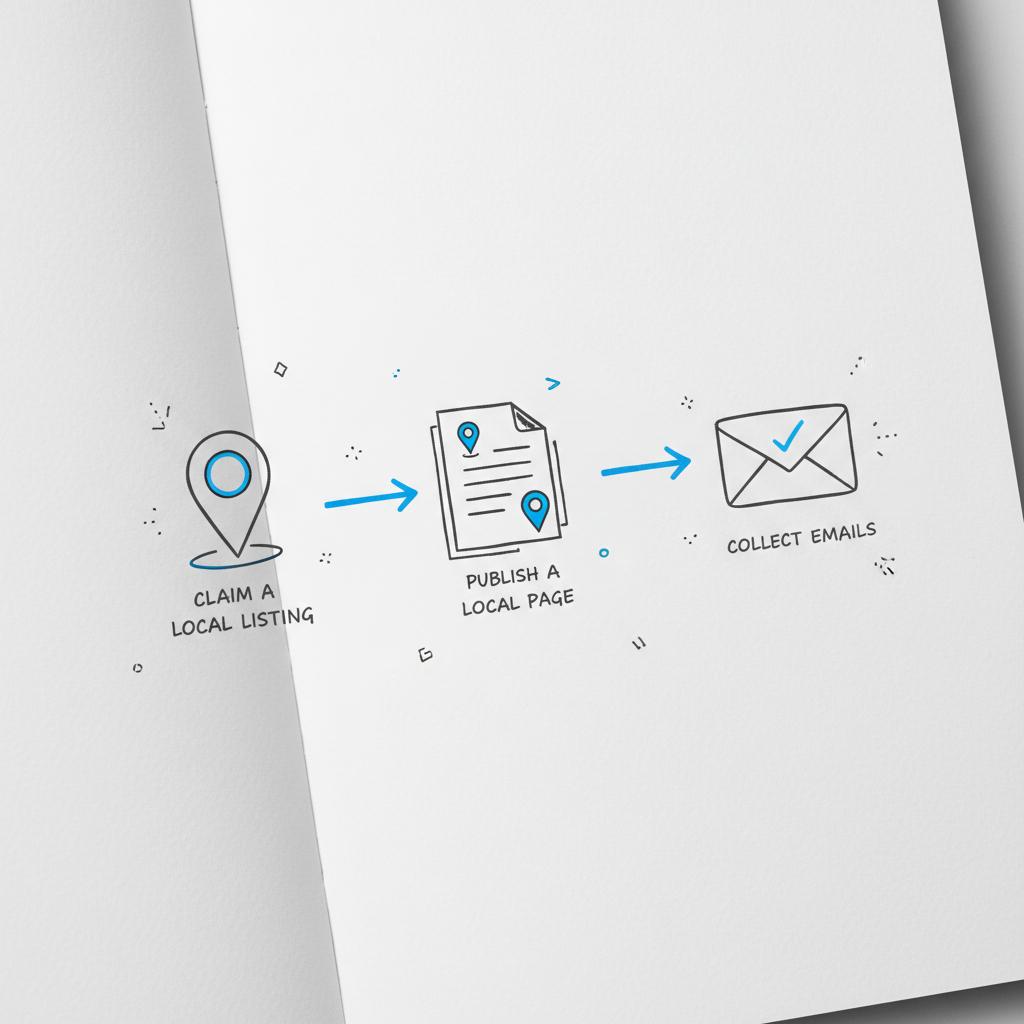
No — waiting for word of mouth is passive. The best free advertising is active and intentional: claim your local listings, publish helpful local pages, create short human videos, and capture emails so you can follow up. That small, steady work turns occasional referrals into predictable leads.
No. Relying on word of mouth without actively managing your presence is a passive strategy. The best free advertising is intentional: you claim local listings, craft a helpful page, capture interested visitors into an email list, and follow up. Doing a little work consistently is what turns occasional referrals into steady, predictable leads.
Wrapping up: why consistency is the truest free advantage
The most reliable free advertising isn’t a secret channel; it’s a consistent set of choices: keep your local listing up-to-date, publish helpful pages, add short videos, and nurture the people who give you their email. Over time those small, steady actions produce real customers and reduce dependence on paid ads.
Next step you can take right now
Get three quick visibility wins this week
Plan a quick visible checklist call with Agency VISIBLE — one friendly conversation that can point out three easy wins you can do this week. Small moves often out-perform big plans when they’re done well.
Expect different timelines for different channels. Social posts can create noticeable spikes in days. Local pages and Google Business Profile updates usually begin to show traction in a few weeks and can build steady traffic over months. Email and newsletters convert best once you’ve built trust—allow a few weeks for signups and a few months for compounding returns. Track calls, bookings and signups as the primary indicators so you focus on business outcomes rather than vanity metrics.
Relying solely on social media is risky. Platforms change algorithms and reach can drop suddenly. Social is great for fast attention, but the best free advertising mixes social with owned channels—like email and local pages—so you can capture attention and convert it into reliable leads.
Not at first. Small businesses can achieve meaningful wins with focused, consistent work using the templates and steps in this guide. If you want to scale faster and keep momentum predictable, a strategic partner can help. For a short, practical consultation on what to prioritise, you can <a href="https://agencyvisible.com/contact/">reach Agency VISIBLE</a> for friendly guidance.





