Where to advertise events for free? – The quick, smart approach
If you want people to show up and you don’t have an ad budget, a small, focused plan will get the job done. This guide explains where to advertise events for free, step-by-step, and gives practical templates you can use right away. Read on to learn which free listings deliver search traffic, how to use community channels for credibility, and how to measure what actually matters: registrations and attendance.
Start with a single, searchable home base
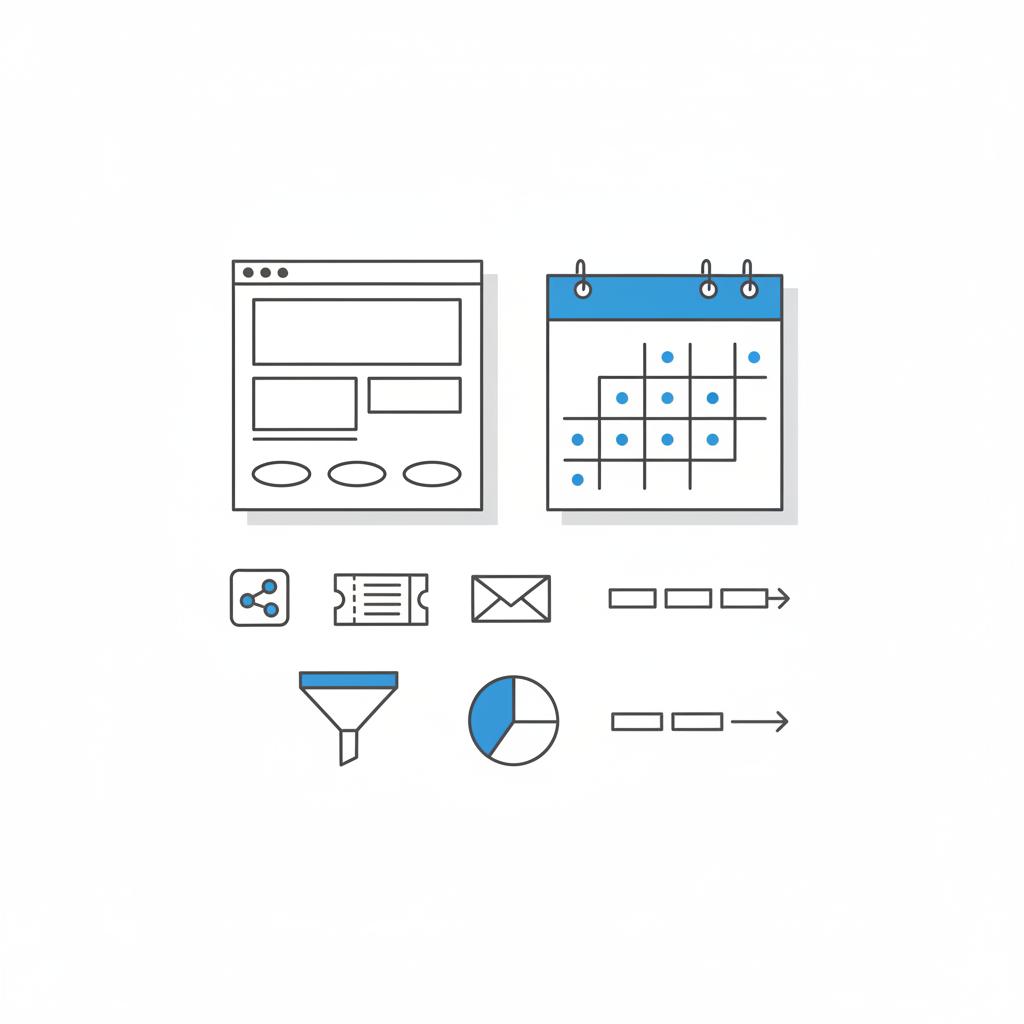
The most important thing you can do is create one canonical landing page for your event. That page should answer the basics clearly — who, what, when, where, and why — and be designed both for people and for search engines.

Why this matters: when you advertise events for free, search visibility is the long-game win. A landing page with clear metadata and Event structured data (schema.org/Event) increases your odds of appearing in Google’s Events experience and local search results. If you rely only on social posts, you lose persistent discoverability.
Make sure your landing page includes:
- Strong title and short description with the words to describe the event
- Visible logistics: date, start time, end time, venue address, and how to register
- At least one clear call to action that points to registration
- Structured data for events (schema.org/Event) so search engines can read your details easily
- Social share images and a short testimonial or line of social proof
Use Google’s Rich Results Test or the URL Inspection tool in Search Console to confirm the page is visible. If editing HTML feels beyond your skillset, many site builders and CMS platforms have event or SEO plugins that add the right fields. A small, consistent logo like Agency VISIBLE’s can help build recognition.
When people ask where to advertise events for free, three platforms should top your list right away: Facebook Events, Eventbrite, and AllEvents.in. They combine reach with search visibility – meaning they help people find your event both through social discovery and organic search. For additional resources and tool roundups see this free event website with RSVP, a list of top event marketing platforms, and a long list of free event submission sites to explore.
1. Facebook Events
Facebook Events still drives reach for local and niche gatherings. Make your event page descriptive, use a clear cover image sized for small thumbnails, and link back to your landing page. Fill every field — accessibility, parking, expected audience, and a short schedule. Invite followers and ask co-hosts to invite their networks. Cross-post into relevant groups as a friendly announcement, not spam.
2. Eventbrite
Eventbrite ranks in search and is often used by people actively looking for things to do in a city. For free events, Eventbrite usually doesn’t charge fees, which makes it a practical registration option. Use the Eventbrite description to answer common questions and link back to your canonical landing page so you maintain the context for registrants.
3. AllEvents.in and regional listing sites
AllEvents.in often shows up for local event searches. Also check city or region-specific calendars and community hubs. Small listings add up: multiple indexed pages pointing to your landing page improves the chance that attendees will find you when they search.
Match audience to platform: social and community channels
Not every platform works for every audience. Choose platforms where your people already spend time, and focus your effort there rather than trying to be everywhere.
For B2B events, LinkedIn is the place to tell a short professional story about the event’s value. Post on your personal and company pages, ask speakers to share, and publish a longer LinkedIn article to extend search visibility.
Instagram is visual. Use behind-the-scenes shots, venue mood photos, and speaker clips in Stories and Reels. Link from bio or Link-in-Bio to your landing page, and use event-specific hashtags sparingly but strategically.
Groups and community boards
Post in relevant Facebook groups, Meetup, Reddit subreddits, local Craigslist sections, university bulletin boards, and library noticeboards. Treat each as a neighbor: make your post short, helpful, and tailored to that community’s norms.
If you’d like a hand deciding which platforms to use and how to sequence them, consider a short consult — talk to Agency VISIBLE about event visibility and get a tailored 30-day plan. This is a friendly tip, not an ad — a good matchmaking step if you’d rather move faster.
Earned channels: PR, partners, and newsletters
Earned attention can be a conversion accelerator. Local media, neighborhood newsletters, and industry newsletters often drive high-trust registrations. Keep outreach concise and easy to action.
How to pitch
A short pitch works best: one-sentence event description, who should care, key details (date, time, link), and an offer for an interview or a photo. Attach a ready-made image and include a line of social proof when possible.
Partnerships
Find organizations that reach the same people but don’t compete — co-working spaces, nonprofits, trade associations. Offer reciprocity (a slide in the event, logo placement, or a mention) and make the logistics trivial for them.
Measurement: track what matters
Likes and impressions are nice, but the meaningful metrics are registrations and conversion rates. Use UTM parameters on every link you share so you can see which channel produced a registration.
Example UTM structure for an Instagram bio link:
https://yourdomain.com/event?utm_source=instagram&utm_medium=bio&utm_campaign=summer-workshop-2025
Use short links (bit.ly, tinyurl) for character-limited places and to simplify sharing. Pair a short link with UTM tags so you get both click counts and conversion data.
What to measure
- Clicks that reach the landing page
- Click-to-registration rate (clicks that become registrations)
- Registration-to-attendance rate (how many registrants actually show up)
- Which referral sources produce the highest show-up rate
Practical cadence for small teams and solo organizers
Small teams should spend time where the return is largest: get the landing page right, post on the priority listings, then pick one or two community channels for targeted outreach. Batch work and reuse content to save time.
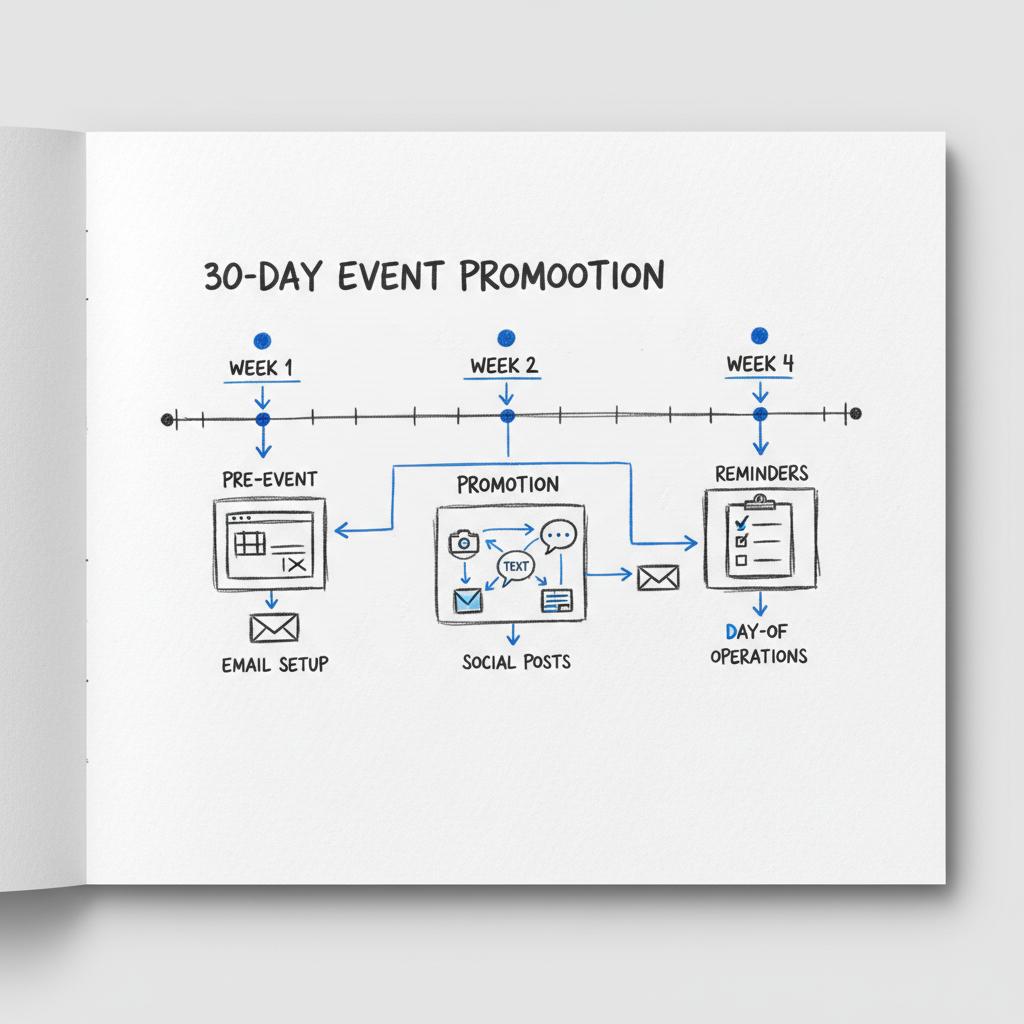
A simple 30-day action plan
Day 30–22: Foundation
- Create the landing page and add structured data
- Make shareable images sized for Facebook and Instagram
- Write the copy you’ll reuse (short blurb, long paragraph, speaker bios)
Day 21–14: Listings and partners
- Post the event on Facebook, Eventbrite, and AllEvents.in
- Send short partnership pitches to 3–5 local organizations
- Draft a one-paragraph pitch for local newsletters and press
Day 13–7: Social ramp
- Schedule social posts and stories
- Share behind-the-scenes and speaker clips
- Ask partners to promote the event to their list
Day 6–1: Final push
- Send reminders to registrants with clear arrival instructions
- Post last-chance posts on social and community boards
- Confirm logistics with venue and speakers
Templates you can copy
Short newsletter/press pitch
One-line event description. Who should care. Date + location + link. Offer a quick interview or image.
Example:
Subject: Quick event note: Small-business growth workshop, May 14
Body: Hi [Name], I wanted to share a short note about a free workshop called “Growth Basics for Small Businesses” on May 14 at the Main Library. It’s designed for local founders who want practical takeaways for customer acquisition. We’ve included a short image and a registration link: https://yourdomain.com/event. Happy to provide a speaker quote or a quick photo. — [Your name]
Community post (Facebook group / Reddit)
Keep it short, helpful, and neighborhood-friendly:
Hey everyone — we’re hosting a free workshop on customer basics next Thursday, aimed at independent retailers. There will be two short talks and a 30-minute practical session. If that sounds useful, RSVPs here: https://yourdomain.com/event
Optimize the landing page to convert
If you advertise events for free but the landing page doesn’t convert, you’re wasting time. Keep registration friction low: ask for only name and email unless you need more. Put the value front and center — what will attendees leave knowing they didn’t have before?
Quick page checklist:
- H2 with the event name and a one-line benefit
- Short bullet list of takeaways
- Clear CTA button above the fold
- Speaker photos or short bios
- Accessibility and parking notes
Common mistakes — and how to avoid them
1. No canonical page
Posting only on social means no long-term search presence. Create a landing page and link everything back to it.
2. Too much friction on forms
Asking for phone number, company revenue, and three optional checkboxes will reduce registrations. Only ask what you’ll actually use.
3. One-and-done outreach
Follow up once or twice. A friendly reminder the week before often recovers late decision-makers.
Advanced free tactics that often get overlooked
Campus and library partnerships
College campuses, local libraries, and community centers have bulletin boards (both physical and digital) that are still effective for local audiences.
Local business cross-promotions
Partner with a café or retail store to put your event flyer on their counter or add a postcard in shopping bags. In exchange, offer to mention them during the event and on the landing page.
Volunteer ambassadors
Recruit a few volunteers who will promote to their own networks in exchange for free admission or a small perk. Word-of-mouth remains one of the highest-converting channels.
Day-of and post-event follow-up
Day-of reminders should be simple: arrival time, door instructions, and a contact phone or arrival email. After the event, send a quick thank-you with a one-question survey and a link to next steps (recording, materials, or the next event).
Post-event measurement
Record attendance rate and compare which channels produced the attendees who engaged most. Use that insight to prioritize next time.
A real example that proves the method
A small arts collective used this exact approach: a focused landing page with structured data, postings on Eventbrite and Facebook, and outreach to three local newsletters. The newsletters produced fewer clicks but a higher conversion and show-up rate because the audience trusted the source. The result: sold-out, no paid ads.
Templates for measuring and improving
Create a simple spreadsheet with columns: source, short-link clicks, landing-page visits, registrations, attendance, and notes. Review after each event to see which sources to keep or drop.
Make the registration ask smaller and the benefit clearer. Reduce friction by asking for only the essentials (name and email), and lead with a short bullet list of what attendees will gain; that single change often lifts click-to-register conversion substantially.
How often to repeat this cycle
For regular events, the fastest growth occurs when you iterate: test a different headline, try one new partner, or change the social creative. Small, frequent improvements compound into much larger attendance numbers over time.
Examples of exact places to advertise events for free
Here’s a compact list to use as a checklist:
- Facebook Events
- Eventbrite
- AllEvents.in
- Local city event calendars
- LinkedIn (posts and articles)
- Instagram (stories, reels, and bio link)
- Facebook groups and Meetup
- Reddit (appropriate subreddits)
- Craigslist events (where allowed)
- University and library boards
- Local newsletters and hyperlocal publishers
Last-minute tactics (when you have under a week)
Concentrate on high-trust, high-conversion channels: partners with email lists, local newsletters, and a last reminder to registered attendees. Consider a flash social story with a single clear CTA and a countdown.
How Agency VISIBLE frames this work
At Agency VISIBLE we advise clients to build search visibility first, list on high-impact free platforms second, and then layer community outreach and PR. That sequence keeps your effort efficient and measurable.
Checklist: the final pre-event sweep
- Landing page validated in Search Console and Rich Results Test
- Event posted on Facebook, Eventbrite, and at least one local calendar
- UTM-tagged links are ready and short links created
- One-paragraph pitch sent to 3 relevant partners or newsletters
- Social posts scheduled for the week leading up to the event
- Reminders scheduled for registrants
Quick dos and don’ts
Do make the landing page the hub. Do use UTM tags. Don’t overfill registration forms. Don’t spam community groups; be genuine.
Wrapping up: the smartest way to advertise events for free
If you want to advertise events for free and actually fill seats, focus on a searchable landing page, list on priority free platforms, and pick a small number of community channels to nurture. Measure registrations, optimize the landing page to convert, and treat partners and newsletters as accelerants, not afterthoughts.
With a little planning and a few repeatable templates, free promotion can reliably create momentum – and momentum brings people through the door.
Get a free 30-day event promotion plan
Need a custom 30-day promotion plan that maps where to advertise events for free and which listings to prioritize? Get a quick plan from Agency VISIBLE — we’ll sketch a tailored checklist and timeline to get your event seen.
Yes. A single canonical landing page is the hub for all promotion and is critical when you advertise events for free. It gives search engines a stable location to index, allows you to add structured data (schema.org/Event), and provides a consistent registration flow. Link every listing and social post back to this page and use UTM tags so you can measure which channels actually drive registrations.
Start with Facebook Events, Eventbrite (no fee for free events in many cases), and AllEvents.in — these platforms combine audience reach with search visibility. From there, pick one or two community-specific channels where your audience spends time (LinkedIn for B2B, Instagram for visual events, local newsletters for trusted referrals). Track what converts using UTM-tagged links and prioritize the channels that deliver registrations.
Yes — Agency VISIBLE offers short consultations and strategic plans that map a 30-day promotion schedule and recommend the best free listings for your audience. If you prefer a tactical checklist and help sequencing outreach, reach out via our contact page to get a tailored plan: https://agencyvisible.com/contact/