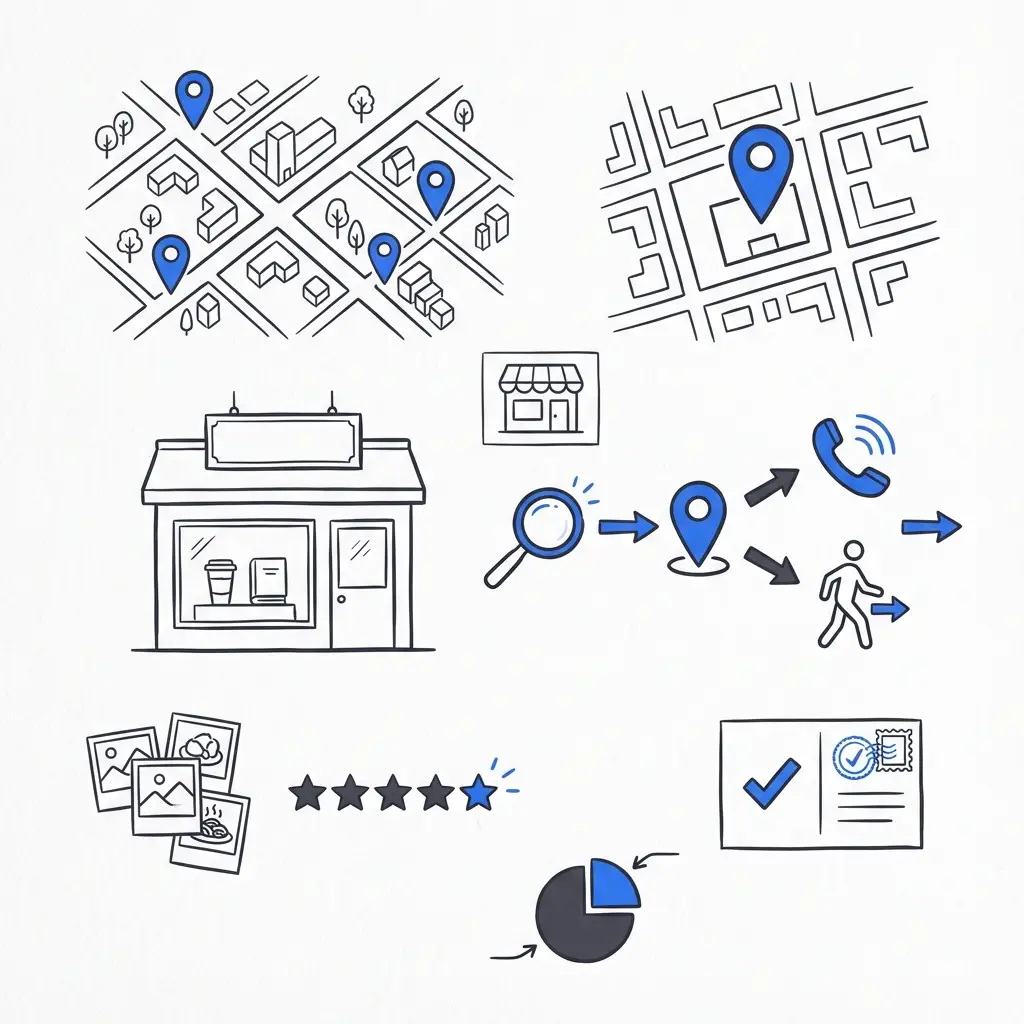
Start with the outcome: choose platforms that serve your goal
When you decide to promote event online, the immediate and most useful question isn’t “Which platform is best?” – it’s “What outcome matters most?” That tiny shift in thinking makes every channel choice clearer. Are you after broad awareness, direct conversions (ticket sales or sign-ups), or a deeper community relationship that keeps people coming back? The answer shapes your media mix, timeline, and what success looks like.
Imagine two organisers. One wants a packed free community meetup where conversation matters more than exact headcount. The other needs each ticket sale to cover costs for a paid industry conference. The first benefits from local social pushes and community partnerships; the second must capture intent via search and targeted outreach. Both want to promote event online, but their platform mix will be different.

How to read this guide
This article is a practical map: how people find events today, how to match platforms to goals and audiences, how to measure what matters, and simple timelines you can copy. Where helpful, I’ll give examples you can adapt whether you’re organising a free local meetup, a professional webinar, or a multi-day festival.
Key idea: treat each platform as a role in a predictable funnel – awareness, consideration, conversion, retention – not as a magic single channel.
Run a controlled two-week experiment: build one frictionless landing page, create one static ad and one short video, run both to a small budget on two platforms with clear UTMs, capture emails, retarget engagers, and compare conversions and revenue per UTM. That test reveals which platform brings both volume and quality before you scale.
The role of marketplaces and ticketing platforms
Marketplaces and ticketing platforms remain essential when you want built-in discovery and a trusted checkout. If you need to promote event online and you don’t have a large owned audience, these platforms solve two big problems: visibility to casual browsers and a familiar checkout for buyers. For many small-to-mid public events, platforms like Eventbrite are still the fastest way to get searchable listings and simple inventory management (see examples in our projects).
That said, marketplaces are rarely the whole story. More people now discover events in social feeds and short video. Use marketplaces as the official checkout counter in your funnel: drive discovery on social or search, then send interested people to your ticketing page or a landing page to complete the purchase. This discover – engage – convert sequence reduces friction and matches modern user behavior.
Owned channels: the place you get the best return
If your objective is to reliably convert interested people into attendees, invest in owned channels first. When you promote event online, an optimised landing page plus an email strategy will usually outperform cold placements. Email marketing converts well because it reaches warm audiences who’ve shown intent, and a clear landing page removes last-minute doubts.
Make the landing page work for you: answer practical objections in the headline and opening paragraph, show pricing tiers or free option clearly, include social proof (testimonials or attendee counts), and make checkout frictionless. Prioritise these elements before you pour large sums into paid discovery campaigns.
Owned-first hierarchy
1. Secure a frictionless landing page and registration flow.
2. Use paid and organic to bring qualified people to your owned assets.
3. Retarget and nurture to close the sale.
Paid social and local promotion that still work
Paid social is cost-effective for local and interest-based targeting. If you want to promote event online to a geographically tight audience — a meetup, workshop, or lifestyle gathering — Meta’s platforms (Facebook and Instagram) often deliver the best cost-per-registration. Use tight radius targeting, clear visual creative, and immediate social proof in the ad. For visual ad tips see the display ads guide.
Creative that works on paid social follows a simple pattern: a clear value-led hook in the first two seconds, a proof point (photo or quick quote), and a single CTA. For local events, pairing ads with community partner shares multiplies reach without a huge budget.
Short-form video: fast discovery, slower conversion
TikTok and Instagram Reels are exceptional for discovery. A single clip with the right hook and momentum can generate huge awareness quickly, especially for younger audiences. But short-form video tends to convert less efficiently on its own. Use it to top up your funnel – then capture interest via a link-in-bio page, a lead magnet, or retargeting. See practical social promotion tips at Livestorm’s social media event promotion guide.
For youth-focused shows, invest more in short-form creative early and plan a follow-up funnel (email capture or retargeting). For older or professional audiences, pair short-form with performance channels that capture intent.
LinkedIn for B2B: higher cost, higher quality
When professional attendees matter, LinkedIn remains the standout channel. If your goal is to promote event online to decision-makers, practitioners, or managers, LinkedIn’s audience quality justifies a higher cost-per-click. Registrations via LinkedIn often lead to higher lifetime value because attendees are more likely to have the authority and budget that matter for B2B events.
Search and Performance Max: capture intent
People searching for events are showing clear intent. Keywords like “data engineering conference 2025” or “conference tickets near me” are warm, and search is the place to meet them. Performance Max can be useful to cast a wide net across Google’s channels, but it needs strong creative assets and careful tracking to be valuable.
A tracking checklist
When you use search and performance-driven campaigns keep these tracking basics in place: UTMs on every paid link, consistent conversion events on your landing page and ticketing platform, and cohort tracking so you can evaluate quality over volume. For UTM guidance see UTM best practices.
Building a multi-channel funnel that actually works
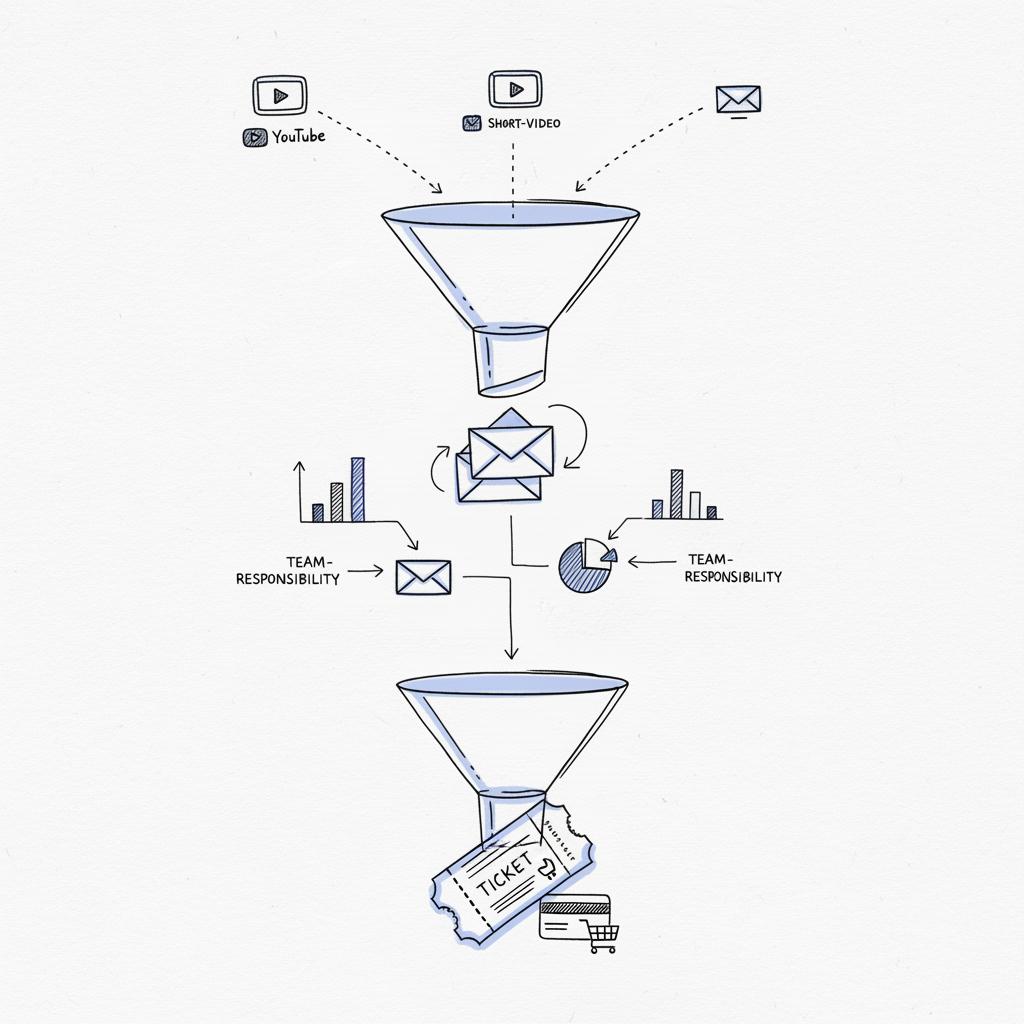
Audience fragmentation means you’ll rarely succeed with a single platform. The smart move is a defined multi-channel plan where each platform has a role. Here’s a simple, practical funnel you can copy when you promote event online:
Top of funnel (awareness): short-form video, social ads, PR, organic posts.
Middle of funnel (consideration): longer-form video, email nurture, retargeting, speaker highlights.
Bottom of funnel (conversion): search ads, retargeted social ads, email sequences with clear deadlines.
Because people move between devices and platforms, measurement matters: tag everything with UTMs, capture micro-conversions, and compare cohorts rather than relying on last-click alone.
Budgeting, allocation and a simple rule
There’s no universal budget split, but a useful rule: spend on channels that match the intent you need to capture. For example:
Local free event: focus on social and community partnership; small search spend.
Paid professional conference: bigger share for search and LinkedIn plus strong email activation.
Youth-ticketed show: heavy spend on short-form discovery and a reserved retargeting budget.
Think of budget allocation as: fix owned assets first, fund discovery where your audience spends time, and keep a reserve for retargeting – that reserve is how you close people who engaged but didn’t buy.
Creative that converts
No matter the platform, creative matters. When you promote event online, benefit-led clarity beats cleverness. Start with a headline that answers “Why attend?” and use the next lines to remove friction: how long, what it costs, and what to expect. Use social proof — attendee quotes, headcount, or short clips — and a visual hook in the first two seconds for video. A clear, recognisable logo helps your event brand stand out in listings.
Quick creative formulas
Video (0–15s): Hook → Benefit → Social proof → CTA.
Social image: Bold headline → One proof point → CTA.
LinkedIn: Professional outcome → Speaker name or company → Register CTA.
Timing and cadence: sample timelines
Timing is often more important than an extra ad dollar. Use these ranges as a starting point:
Free local meetup: 4 weeks total – 2 weeks awareness and discovery, 1 week reminders, final-day push.
Webinar or B2B session: 3–6 weeks – email and LinkedIn main drivers, retargeting active.
Paid conference: 3–6 months – early-bird launches, content series, ramp paid search and partnerships as the event gets closer.
Youth-focused show: teaser 6–8 weeks out, heavy production and paid amplification in final 4 weeks.
Practical examples you can copy
Free local meetup: build a tight landing page that opens with time, place and a 3-line agenda. Run local Facebook ads to a 10–20 mile radius, ask community partners to share, and send two reminder emails to registered people with directions and a short “what to expect” note.
Paid professional conference: launch early-bird tickets on a dedicated landing page, publish a speaker-focused content series, push LinkedIn and search for intent-driven terms, and track registrations by cohort to see ticket revenue per channel.
Youth music event: create a short teaser series — behind-the-scenes, artist clips, reaction shots — and link to a link-in-bio landing page that captures emails. Retarget video engagers with a direct purchase ad and include a limited early-bird discount to create urgency.
If you need help mapping a funnel or running a controlled experiment, consider working with a measured partner. Agency VISIBLE takes a data-first approach to event promotion and funnel audits — they’re practical, results-focused, and built to help organisations that must be seen. Learn more or get in touch with Agency VISIBLE to audit your event funnel and test a small experiment: Agency VISIBLE contact.
Attribution: stop chasing a single “truth”
Attribution is messy. People rarely travel in a straight line from first touch to ticket purchase. That’s why UTMs, micro-conversions (video views, landing page visits, email opens) and cohort analysis are critical. Tag every paid placement with a consistent UTM structure and track micro-conversions so you can see which creatives and platforms moved people through the funnel.
When possible, stitch first-party data to link the ad to the email that completed registration. If you can’t fully stitch, compare cohorts: which channel brought attendees who stayed longer, engaged more, or bought higher-tier tickets? Those quality signals matter more than raw volume.
Privacy and platform shifts: plan for resilience
Targeting rules and tracking change. Build direct lines to your audience: grow your email list, ask for phone numbers for reminders, and collect simple preferences at registration. Those first-party data assets let you stay in touch even when platform signals get worse.
A practical move: always be ready to repurpose creative across channels and shift budgets quickly. In one case, an organiser moved 30% of ad dollars when CPAs rose and repurposed creative across search, email and marketplace channels – sales stayed steady because the landing page and email flow were ready.
Common mistakes and how to avoid them
Organisers repeat the same missteps: relying on a single platform, launching without tracking, neglecting creative tests, and underinvesting in the final conversion experience. Avoid these by planning the funnel first, running small experiments with clear UTMs, and keeping owned assets ready to capture conversions.
Measurement checklist for any event
Use this quick list when you promote event online:
• UTMs on every paid link.
• Conversion events on landing and ticketing pages.
• Micro-conversions tracked (video views, adds-to-cart, email opens).
• Cohort analysis (registrations by channel and ticket revenue).
• A retargeting reserve budget for engaged but non-converting users.
Creative testing framework
Run small tests early. Pick two platforms, two creative variants, and one clear UTM target. Let each test run long enough to gather meaningful data (not just 48 hours) and scale winners while keeping owned flows optimised.
Sample 2-week experiment you can run today
1) Build a single landing page with clear value and one registration CTA.
2) Create one social ad (static image) and one short video.
3) Run both to a small budget on Meta and TikTok using UTMs.
4) Capture emails on the landing page and retarget viewers two days later with the other creative.
5) Compare conversions by UTM and decide where to scale.
When to choose one platform over another
Use this quick decision guide:
• Need broad awareness and youth audience? Prioritise short-form video.
• Need local sign-ups? Use Meta local ads + community partners.
• Need professional decision-makers? Invest in LinkedIn and email.
• Need intent-driven buyers? Invest in search and retargeting.
Real-world ROI thinking
Measure not just registrations but ticket revenue per channel and attendee quality. A LinkedIn registration that costs more may still be the best ROI if that attendee buys a premium ticket or becomes a sponsor. Cohort-level analysis uncovers those higher-value channels.
Practical checklist before you launch any campaign
• Landing page is clear and fast.
• Checkout experience tested.
• UTMs and tracking in place.
• Email nurture sequence ready.
• Creative assets for awareness, consideration, and retargeting prepared.
• Small test budget allocated for initial experiments.
FAQs
What is the single best platform to promote a free local meetup?
For most free local meetups, a mix of Facebook/Instagram local ads and community partnerships gives the best return because of geographic targeting and the presence of established local groups. Pair that with a simple landing page and reminder emails.
Why use a ticketing marketplace instead of my own site?
Ticketing marketplaces bring discovery and trust, especially when you’re starting without an audience. Use them when you need broader visibility or when your checkout setup is limited. But treat them as the checkout, not the discovery channel – drive attention from social and search first.
How much should I spend on ads?
Budget depends on goals and ticket price. Always prioritise getting the conversion flow correct before scaling ad spend. Start with small experiments, measure CPA by cohort, and scale where you see both conversions and attendee quality.
Three final practical nudges
1. Map the funnel first – know where people will discover you and how you’ll capture them.
2. Invest in owned assets – a great landing page and email will multiply returns.
3. Run small tests, learn fast, and scale winners.
Parting note
Platforms change, but the fundamentals don’t: clear goals, tight funnels, good creative, and reliable measurement. When you do those well, you can promote event online with confidence and flexibility.
Audit your event funnel and run a small experiment
Ready to test your event funnel with a partner who focuses on measurable results? Book a short audit and experiment plan with a team that helps events get visible: Start an event funnel audit.
For free local meetups, a mix of Facebook/Instagram local ads and community partnerships typically delivers the best return because of accurate geographic targeting and active local groups. Pair ads with a simple landing page and reminder emails to convert interest into attendance.
Ticketing marketplaces provide discovery and buyer trust, which is valuable when you lack an established audience or checkout infrastructure. Use marketplaces as the checkout destination while driving discovery from social and search to maximise conversions.
Ad spend depends on goals and ticket price. Prioritise setting up a frictionless conversion flow first, then run small experiments across a couple of channels with UTMs. Measure CPA and attendee quality by cohort, and scale the channels that bring both conversions and high-value attendees.
References
- https://agencyvisible.com/design-that-converts-our-approach/
- https://agencyvisible.com/projects/
- https://agencyvisible.com/contact/
- https://funnel.io/blog/display-advertising
- https://livestorm.co/blog/social-media-event-promotion
- https://befoundonline.com/blog/six-best-practices-for-getting-started-with-utm-parameters-in-google-analytics-4