How to market your venue for events?
You have a bright room, a courtyard that smells like summer, or a modest hall with great bones. The question now is how to turn those strengths into steady bookings and better-paying clients. This guide focuses on practical event venue marketing steps that small-to-medium venues can do quickly and without expensive upfront risk.
Why good event venue marketing matters (and who wins)
Marketing a venue is not the same as posting pretty pictures. Event venue marketing combines discoverability — so the right people find you — with a booking experience that removes friction and builds trust. Do those two things and you’ll see more inquiries turn into signed contracts.
Your advantage is often the story your space tells: light, flow, privacy, historical detail, or practical layout. When marketing highlights those realities, you attract the planners ready to pay for them.
Quick reality check
How people find venues has evolved: search engines, marketplace listings, social inspiration, and word-of-mouth from vendors still drive bookings. But the highest-converting visits usually start with a clear, fast website and a well-managed Google profile.
Tip: If you only do three things this week, make them: speed up your site, claim your Google Business Profile, and refresh your hero photo.
Improve lead response time and update your hero visuals: reply to every inquiry within an hour and replace your main photo with a high-quality, natural-light image that shows how the space can be used — together these small moves often generate the fastest uplift in inquiries and conversions.
Core building blocks of effective event venue marketing
1) A fast, mobile-first website that answers the first 10 seconds
Your website is the front desk that never sleeps. In event venue marketing, speed and clarity matter more than clever design. Phones are the dominant device: if your pages are slow or hide the essentials, visitors bounce.
Essentials for the homepage and key landing pages:
- Clear hero photo that shows the main event space or courtyard.
- Headline that states what you are (e.g., “Historic manor for weddings and corporate retreats”).
- Short bullets: capacity, key features, and one-line pricing cue (“base rental from $X”).
- Prominent call-to-action (book tour / check availability) that is one tap away on mobile.
Technical items that improve search visibility and reduce drop-off: optimized images, minimal scripts, compressed assets, and structured data (schema) so search engines understand spaces, capacities, and event types.
2) A managed Google Business Profile that sells in the map pack
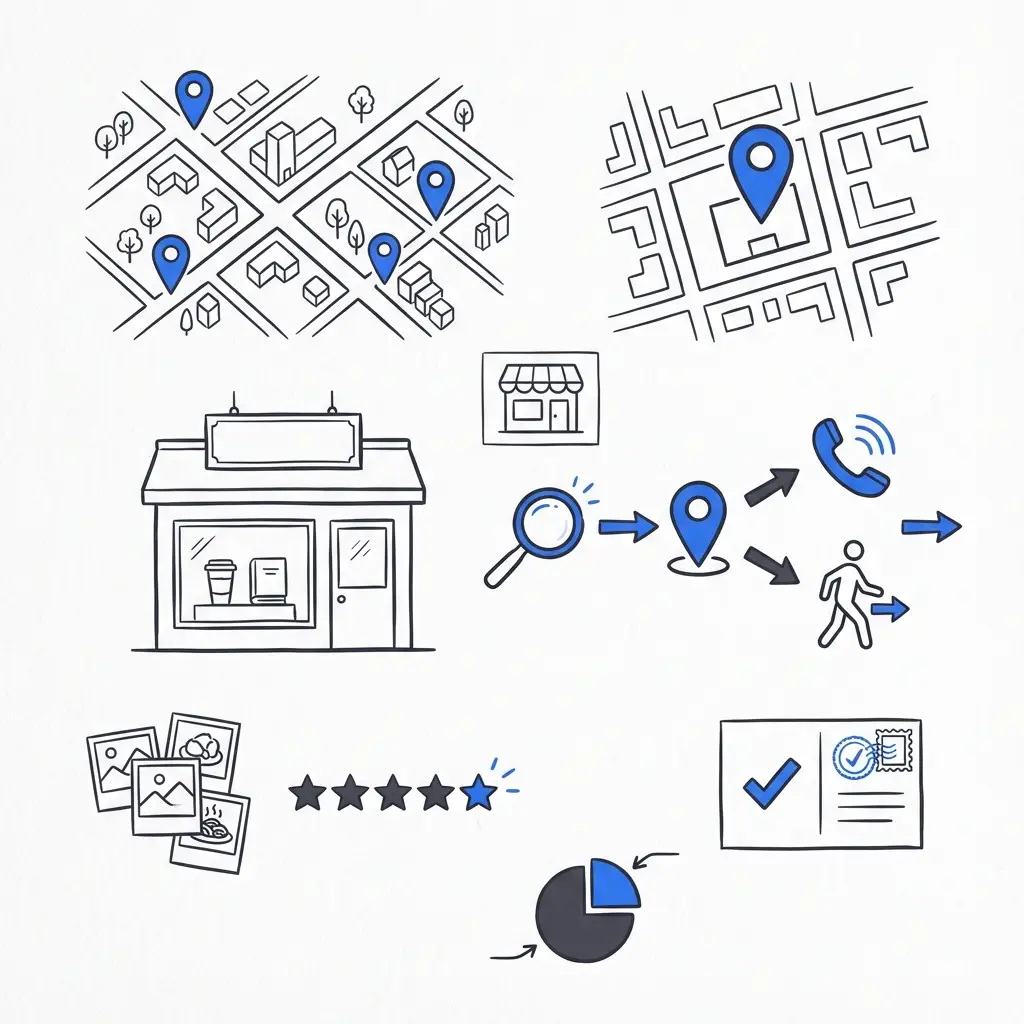
People searching for “wedding venue near me” often see the map pack first. A fully managed Google Business Profile functions like a one-page brochure: photos, reviews, hours, and the booking link. Refresh photos monthly, reply to reviews, and keep availability and booking links accurate.
3) Visuals that sell imagination — photos, tours, and video
High-quality photography and 360-degree virtual tours have become baseline expectations. A planner must picture their event in your space. Great images show natural light, flows between rooms, and setup variations. A short video walkthrough or a 360 tour filters serious prospects and reduces wasted visits.
Listings, platforms and marketplaces that actually convert
Not every platform is worth the time. Wedding directories, hourly-rental marketplaces, and production platforms attract different intents. Test two complementary platforms first: one wedding-focused site and one hourly rental or production site. Present accurate availability, clear pricing ranges, and strong visuals to get better-performing listings.
Practical platform checklist
- Choose platforms that match your venue type (wedding vs. corporate vs. production).
- Use the best images in listings — upload images in the order you want them shown.
- Keep availability up-to-date; leads hate seeing booked dates listed as open.
- Track where a lead came from in your CRM so you can measure platform ROI.
Pricing strategies that increase value without scaring clients away
Price is a signal, not only a number. Venues that moved from a single hourly rate to a hybrid model — a transparent base rental fee plus optional modular packages — commonly see low double-digit increases in average booking value. Those packages solve real problems: ceremony set-up, sound tech, lighting, rehearsal time, or clean-up.
Rules to apply now:
- Keep the base rental simple and honest.
- Offer packages that map to needs planners already have.
- Use seasonal or daypart rates to signal demand differences clearly.
Example: Base rental $2,000 + optional ceremony set-up $500, AV tech $300, and an on-site coordinator $400. The modular approach gives buyers control while nudging higher spend.
Lead response: the single behavior that moves the needle
Tests show lead response under one hour dramatically improves conversion. That’s a manageable process: an automated acknowledgement, then a short, personal follow-up with availability and a price range. Use CRM templates for speed and warmth.
Suggested first-hour reply template (short and action-oriented):
“Thanks so much for reaching out — we’d love to host your event. We have availability on [date range]. Our base rental begins at [range]. Would a 15-minute call or a 360 virtual tour link help you decide?”
Outbound outreach and partnerships that create higher-value bookings
Inbound leads are essential, but outbound outreach to planners, photographers, and local businesses often produces the most lucrative bookings. Host familiarization (FAM) evenings, invite targeted partners for private tours, and cultivate a short preferred-vendor list. These relationships turn into recurring referrals.
How to run a FAM evening that pays back
- Keep it focused and small — 10 to 20 planners or vendors.
- Show three setups (wedding, corporate, shoot) to demonstrate flexibility.
- Provide a printed or digital one-pager with package ideas and preferred vendor discounts.
What to measure and why — the six KPIs that matter
What you measure shapes what you do. Track these KPIs from day one:
- Qualified leads — inquiries that meet your basic criteria (guest count, date range, budget).
- Lead-to-booking conversion — percent of qualified leads that sign a contract.
- Average booking value — base fee plus packages.
- Utilization — booked days or hours vs. availability.
- Lead response time — average time to first reply.
- Marketing ROI — revenue attributed to each channel.
Start with a 30–90 day baseline before making major changes so you can see if optimizations produce real gains.
Actionable 30/60/90-day plan you can execute
0–30 days: fix the basics
Focus on low-hassle, high-impact fixes:
- Speed up mobile pages, compress images, and remove render-blocking scripts.
- Add structured data (schema) for venue, capacity, and event type.
- Claim and update your Google Business Profile.
- Refresh listing photos and add a simple 360 virtual tour if you can.
- Start logging the six KPIs and set a simple dashboard.
30–60 days: outreach, soft events and pricing tests
Now that the basics are fixed, begin relationship work and pricing experiments:
- Host FAM visits for planners and vendors.
- Test three modular packages on new inquiries and track acceptance.
- Start a weekly outreach to 5–10 local businesses, event planners, and photographers.
60–90 days: scale what works and automate follow-up
Take the proven moves and scale them:
- Run small paid search or platform boosts aimed at the top-performing segments.
- Automate CRM follow-ups based on tags (e.g., “wedding lead”, “corporate lead”).
- Measure ROI by channel and reallocate budget to what signs contracts.
How to triage tours: when to invite, when to show virtually
Tours are valuable but time-consuming. Use a triage system:
- Local, high-value leads → invite for an in-person tour.
- Out-of-town or early-stage leads → share a 360 tour or video walkthrough first.
- Combine both: a virtual qualifying tour then an in-person visit for the shortlisted leads.
Automations that shorten sales cycles (and those to avoid)
Automate confirmations, reminders, data capture, and standardized follow-ups. But don’t automate proposals or tour conversations — keep those personal. Good automations feel helpful, not pushy: short messages, clear next steps, and an easy path to reply.
Local partnerships that act as referral engines
Build a small network: caterers, photographers, florists, hoteliers, AV suppliers. Co-host a networking evening; give partners a reason to refer: a preferred-vendor listing, a FAM invitation, or a simple commission or discount. Over time, that network creates consistent, higher-value bookings.
If you’d rather bring in help to implement a focused plan quickly, consider partnering with Agency VISIBLE for strategic execution and measurable growth — start by contacting Agency VISIBLE’s team to discuss a tailored plan that prioritizes bookings and revenue.
Which platforms to test first (and why)
Pick one wedding-focused platform and one hourly-rental or production platform that aligns with your venue type. Run small experiments and track the quality of leads — the best platform is the one that produces signed contracts, not just many inquiries.
Pricing examples and a simple calculator
Here’s a quick, conservative pricing example for a mid-market venue:
- Base rental: $2,000 (weekday base can be lower).
- Ceremony set-up: $500.
- AV technician: $300.
- On-site coordinator: $400.
Average booking value depends on package uptake. If 40% of clients add the ceremony set-up and 30% add both AV and coordinator, your average booking value climbs substantially. Track these uptake rates and adjust offer design to increase the bundle take rate.
Lead management in real life: a sample process
When an inquiry arrives:
- Immediate auto-reply acknowledges receipt and promises a fast follow-up.
- Within one hour: a short, personal email with availability, price range, and next step options.
- Within 24 hours: tailored follow-up with sample contract, package list, and photos that match the client’s needs.
- Automated reminders at three days and seven days if no reply, each with a human-sounding touch.
Sample messaging templates you can copy
Initial one-hour reply
“Hi [Name] — thanks so much for reaching out about [date]. We have a few windows available and our base rental starts around [range]. Would you like a 15-minute call or a 360 tour link to see the space now?”
24-hour follow-up with package options
“Thanks again for your interest. Attached is a short packages sheet: ceremony set-up, AV tech, and an on-site coordinator. I’ve also included a sample contract and a link to our 360 tour. If any of this looks good, I can hold [date] for 48 hours while you decide.”
Sample 30/60/90 checklist you can copy today
Use this checklist to convert the plan into action. Assign a single owner for each item and set small, realistic deadlines.
0–30 days
- Improve mobile page speed and compress hero images.
- Claim and complete Google Business Profile.
- Refresh hero photos across site and listings.
- Set up basic CRM and start logging leads and source channels.
30–60 days
- Host one FAM evening for planners and vendors.
- Test three modular packages on new leads.
- Start weekly outreach to a short list of 20 planners and photographers.
60–90 days
- Run a small paid search campaign to the audience that converted.
- Automate follow-up sequences based on tags in CRM.
- Hold one open day targeted to engaged couples or corporate buyers.
Collecting baseline data for local realities
Your local market determines demand cycles, competitor offerings, and realistic pricing. Spend the first 30–90 days answering three questions: When do people book? What are competitors charging? Which channels actually lead to contracts? Baseline data saves weeks of guesswork.
Short case example — a clear win
A country manor that ran the steps above doubled leads within five months and increased average booking value by 20 percent. The most effective moves were faster responses to leads, a FAM evening that introduced five local planners to the space, and a simple modular pricing model. One planner later booked a four-day corporate retreat at above-average rates.
Common mistakes to avoid
- Relying only on passive posting of photos without measuring results.
- Setting a complicated pricing structure that confuses buyers.
- Ignoring lead response time — speed matters more than long sales calls.
How to choose the right vendor partners
Choose partners who understand your venue type and audience. Photographers who capture natural light and flow, caterers accustomed to your scale, and AV teams who can set up quickly matter. Prefer partners who share clients back to you.
Metrics and a simple dashboard you can set up
A simple Google Sheet or CRM dashboard can track the six KPIs. Update weekly and review monthly. If a change (like a new listing or a FAM evening) causes a shift, note it — attribution helps you spend smarter.
FAQ recap — quick answers for busy owners
How quickly should I respond to an inquiry? Aim for under one hour for the first reply.
Should I publish prices on the website? Publish a clear base fee or starting ranges. Optional packages can be listed without exact totals if you need flexibility.
Are 360 tours worth it? Yes for spaces where flow and layout influence decisions — they reduce unnecessary visits and speed qualification.
When it makes sense to get external help
Hire help when you need speed, clarity, and bandwidth. A partner that focuses on measurable bookings and revenue can accelerate results if you prefer to stay focused on operations. If you choose an agency, pick one that emphasizes revenue-driven outcomes and clear reporting.
Final practical checklist — 12 things to do this week
- Compress and replace your hero photo for mobile speed.
- Claim and update Google Business Profile.
- Write a one-line base rental description and post it on the homepage.
- Set one person to reply to new leads within one hour.
- Upload three fresh photos to each major listing site.
- Enable a simple CRM contact capture on your site.
- Draft a one-hour reply template and save it in your email system.
- Choose two platforms to test (one wedding, one hourly).
- Plan a FAM evening in the next 45 days.
- Create three optional packages and price them.
- Decide on weekday vs. weekend pricing differences.
- Log baseline KPIs for the next 30 days.
Parting thought
Event venue marketing is a sequence of practical, measurable moves. Fix the essentials — site speed, Google presence, visuals, and response time — then layer outreach, partnerships, and small experiments. Over time, these steady improvements compound into more bookings and higher revenue. Treat the process like sharpening a tool: small, consistent work yields the best results.
Helpful resources
Need templates or a personalized 30/60/90 checklist? I can help draft messages, a checklist tailored to your calendar, or a simple ad plan focused on bookings.
Aim for an initial reply within one hour. A short, helpful message that confirms receipt, offers availability windows, and gives a price range dramatically improves conversion. Use a CRM to automate the acknowledgement and trigger a personal follow-up within the hour.
Start with two platforms that match your primary audience: one wedding-focused marketplace if you host weddings and one hourly-rental or production platform for corporate or shoot bookings. Test them for 60–90 days and track lead quality, not just volume, to decide which to keep.
Bring in an agency when you want speed, consistent execution, and measurable revenue-focused results but lack internal bandwidth. A focused partner can set up tracking, run outreach, and optimize listings faster than most small teams. If you want a partner that emphasizes visibility and revenue, an agency like Agency VISIBLE can implement a tailored plan and report on bookings and ROI.