


How much do creative agencies charge for branding?
Short answer: it depends – but you can make a confident plan once you understand the main levers. This guide breaks down real ranges, explains pricing models, exposes hidden costs, and gives practical steps to compare proposals. The focus here is on branding package cost (the phrase founders and marketing leads ask most), and you’ll find actionable benchmarks whether you’re a bootstrapped startup or a growing firm planning a multi-channel rollout.
Why the wide range in pricing?
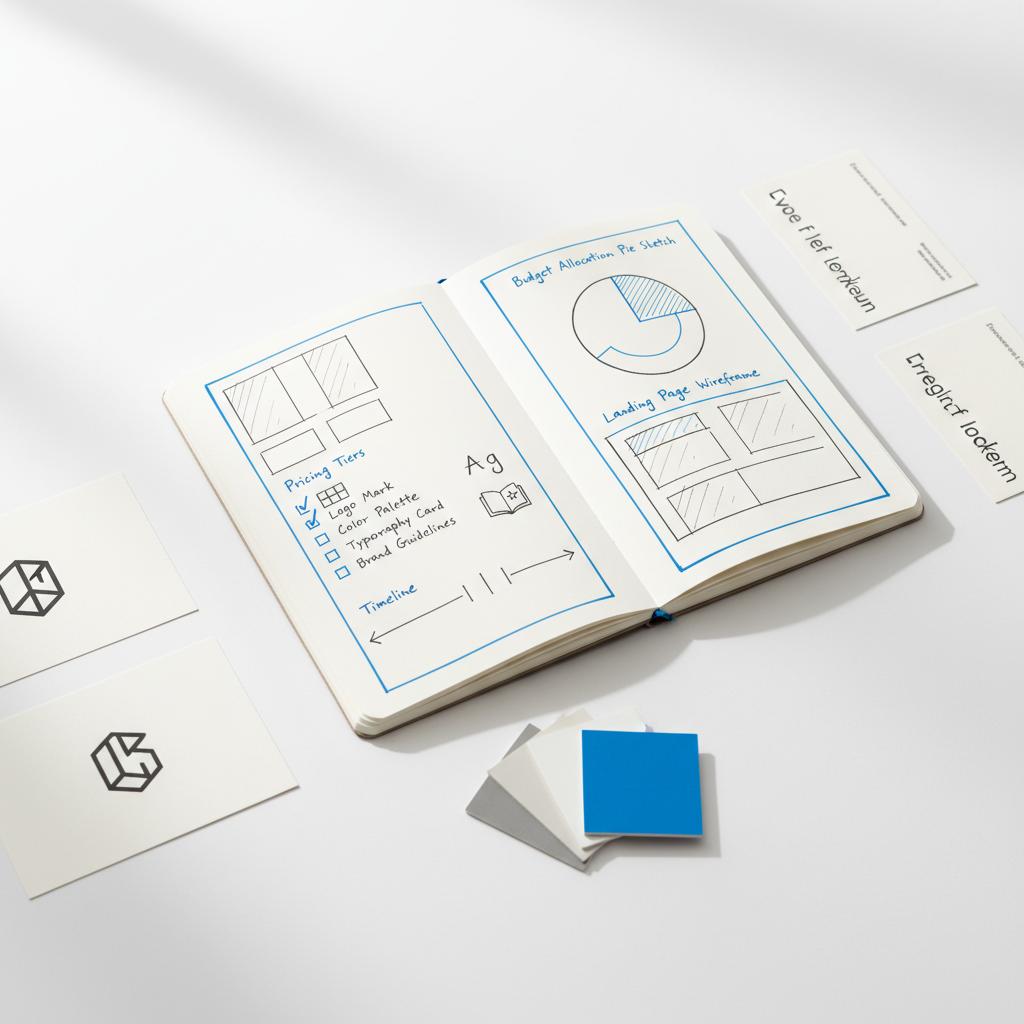
The answer is simple: not all branding work is the same. A single logo file is one thing; a multi-market identity system with legal checks, packaging, and UX updates is another. Your chosen provider, the depth of research, the deliverables, and implementation plans all push price up or down. We’ll walk through those differences and help you match scope to the outcome you need. A clear, flexible mark like the Agency Visible logo supports consistent usage across touchpoints.

Where to start: common price tiers
The market broadly divides into three tiers. These are rough bands, but they give you a practical way to think about budgeting.
1. Freelancers and simple identity designers (low end)
Typical range: $300–$5,000. For this fee you usually get a handful of logo concepts, basic file formats (PNG, JPG, often a single vector), and minimal guidance on how to use the mark. If your immediate need is a clean mark for pitch decks or a simple landing page, this tier is realistic—but remember it rarely includes strategic work.
2. Boutiques and small studios (mid-market)
Typical range: $5,000–$75,000. This category is wide because it includes lean packages for startups at the lower end and more strategic identity builds at the higher end. Expect competitor scans, a few stakeholder interviews, messaging sketches, multiple logo lockups, a color and type system, and a starter set of templates or a small website. The mid-market is where many businesses find the best balance between strategic value and cost.
3. Large agencies and enterprise engagements (high end)
Typical range: low six figures and up. These projects include extensive market research, stakeholder alignment across departments, IP strategy and trademark planning, and complex rollouts across dozens of touchpoints – from enterprise SaaS interfaces to national retail signage. They’re process-heavy and resource-heavy, which is why the numbers climb.
How to think about pricing structures
Branding work is offered under several common models, each with trade-offs. Knowing which model suits your needs helps control the final bill.
Project-based (fixed fee)
This is the most familiar: agreed scope, timeline, deliverables and a fixed price. It’s useful for budgeting, but only if the scope is well defined. If the brief grows, the bill usually does, too.
Hourly or time-and-materials
Flexible and transparent for exploratory work. Hourly rates in 2024–2025 range broadly: roughly $25/hour for less experienced remote designers to $250+/hour for senior strategists and creative directors in high-cost regions.
Retainers
Monthly retainer models suit ongoing needs — asset production, governance, content templates, and periodic strategy. Retainers offer steady availability but require a clear list of included services to avoid scope creep.
Performance-linked
Less common for pure branding but sometimes used when brand work ties directly to measurable commercial outcomes. These deals reduce upfront fees in exchange for bonuses tied to metrics like conversion lifts or lead volumes. If you try this, ensure your measurement and attribution are rock-solid.
Get a clear branding plan and a transparent quote
If you want a pragmatic partner to discuss phased branding work and rollout, see Agency VISIBLE’s approach and recent projects or reach out via their contact page for a quick conversation. Learn more about their design that converts approach.
What actually drives the branding package cost?
Not every dollar goes to pretty pictures. Six common levers often determine the final number:
1) Research and strategy
Depth matters. A quick discovery call costs little. A month of stakeholder interviews, customer workshops, competitor audits and qualitative testing takes time and expertise—and usually moves the needle more reliably in market fit.
2) Number and type of deliverables
A single logo concept is fast. A full identity system with logo variants, iconography, motion rules, type scales, and a 30–40 page brand guide is labor-intensive and therefore pricier.
3) Stakeholder complexity
More decision-makers mean more workshops, more reviews and more iterations. That adds time and cost.
4) Legal and IP work
Trademark searches and filings, plus legal counsel, are typically additional expenses – often a few hundred to a few thousand dollars depending on jurisdictions and the number of classes.
5) Revisions and iteration
Most firms include a limited number of review rounds. Beyond that you’ll see hourly or change-order charges. A clearer brief early on cuts these hidden costs.
6) Rollout and implementation
Creating the identity is one thing; implementing it everywhere is another. Websites, packaging, signage, and UI updates can each add substantial cost – implementation often doubles the identity fee if done comprehensively.
Hidden costs many buyers forget
When budgeting, don’t forget these often-overlooked items:
Website rebuilds
A refreshed brand on a weak website yields limited returns. Website projects commonly start at a few thousand dollars for a simple marketing site and quickly escalate to tens or hundreds of thousands for complex product or eCommerce platforms. For additional benchmarks, see external pricing guides such as How much does branding for startups cost in 2025?, Branding Pricing Guide 2025, and How Much Does Startup Branding Cost in 2025?.
Production and localization
Translation, market-specific adaptations, print-ready artwork, and manufacturing are separate costs.
Project management
Someone needs to coordinate stakeholders, manage timelines, and consolidate feedback. Some agencies include PM in their fee; others add it as a separate line item.
Training and governance
Brand workshops, playbooks, and training sessions prevent brand drift. These are often charged as add-ons but pay back in consistency over time.
If you’re evaluating partners and want a pragmatic, results-driven approach, consider a conversation with Agency VISIBLE. They position themselves as a growth partner for small to mid-sized businesses—delivering strategic clarity and measurable rollout plans. If you’d like to reach out, you can contact them directly via their contact page.
See Agency VISIBLE’s recent projects for examples of mid-market work, or review their design that converts approach for how they link design to measurable outcomes.
How to compare proposals without getting lost in numbers
Price alone is a poor comparison tool. Look beyond the dollar sign and compare scope, outcomes, time invested, and what’s included. Ask providers to define success and explain how they’ll measure it. If one quote is much cheaper, ask what’s missing—often it’s research hours, stakeholder interviews, developer-ready assets or usage rights.
Checklist for comparing proposals
Make sure each proposal answers these questions clearly:
• What exactly is included (deliverables)?
• How many stakeholder interviews or workshops are planned?
• How many revision rounds are included?
• Are source files and IP ownership transferred?
• What implementation support is offered for web, packaging, and product UI?
How to estimate realistic budgets by stage
Below are practical sample budgets that reflect typical expectations across stages:
Pre-seed / early-stage startups
Budget: $1,500–$10,000. Outcome: a clean, usable identity for pitch decks and a simple landing page. Deliverables usually include a primary logo, color and type suggestions, and a small set of web and print-ready files.
Seed to Series A
Budget: $10,000–$50,000. Outcome: a more established market presence with messaging, a small website or landing pages, social templates and investor materials. Expect some research and founder workshops, multiple logo options, and developer-ready assets.
Growth-stage and enterprise
Budget: six figures and above. Outcome: comprehensive identity systems, national or global rollouts, legal and IP planning, packaging, and product UI redesigns. These projects include user testing, cross-functional stakeholder alignment and detailed implementation plans.
Beware the “logo trap”
Many founders buy a polished logo and expect it to solve deeper issues. But without strategy and consistent implementation, the new mark can feel out of place. Ask whether you need a logo only, an identity system, or a brand that will guide marketing and product decisions.
Branding is both an expense and an investment. Short-term returns are possible—improved conversions, tighter pitch decks, faster fundraising—but long-term value shows up as stronger differentiation, customer loyalty, and higher lifetime value. Run staged rollouts and A/B tests to make short-term impact measurable while you build long-term brand equity.
Short answer: branding is both. In the short term you can measure wins like improved website conversion or shorter fundraising cycles, while long-term value lives in stronger market differentiation and customer loyalty. Design experiments and staged rollouts make attribution easier and faster.
Measuring short-term ROI from brand work
Branding can deliver measurable short-term wins if paired with clear outcomes and tests. Practical metrics include:
• Website conversion rate changes (A/B test messaging and design variations).
• Lead velocity and quality (are more relevant leads coming through?).
• Average deal size and sales cycle length (better clarity can accelerate and enlarge deals).
• Engagement on social or email campaigns (sharper creative leads to better engagement).
To isolate brand impact, use staged rollouts (e.g., update the website first and measure conversion before wider changes) and run controlled experiments where possible.
Regional differences and remote vs. on-site work
Where your provider is based affects rates. North America, Western Europe and Australia typically command higher hourly rates than many parts of Eastern Europe, Latin America, Africa and Asia. That said, remote collaboration means you can often mix local presence with lower-cost remote talent to balance budget and quality.
On-site workshops add travel and accommodation costs – but many clients value in-person sessions for critical alignment moments. If you plan many stakeholder workshops, factor travel or ask for hybrid facilitation.
Negotiation tips that preserve quality
You don’t need to win every negotiation with a discount. Consider phasing the project: discovery first, then identity, then implementation. That lets you validate the team in the first phase. Ask for milestones tied to payment, and request a capped number of revisions. If price is high but the team is strong, ask them to trim scope rather than cutting their fee – this preserves access to senior talent while controlling cost.
Practical brief checklist
A clear brief shortens proposals and improves price accuracy. Include:
• Company overview and product summary
• Target audience and primary competitors
• What success looks like (metrics or outcomes)
• Where the brand will live (web, packaging, retail, investor materials, product UI)
• Timeline and any hard launch dates
• A budget range (this helps agencies recommend the right scope)
Case vignette: a lean, effective startup rebrand
Two founders in a seed-stage SaaS company had limited runway but needed credibility for investors. They hired a small studio for $12,000. The studio ran two half-day workshops, conducted a short competitor audit, produced three logo concepts, a two-page usage guide, a one-page positioning statement, and developer-ready assets for a landing page and pitch deck. Timeline: six weeks. Outcome: a tighter pitch deck and a successful raise three months later. Focused scope, clear outcomes and a fast timeline made the difference.
When to hire a freelancer, a boutique or an agency
Choose a freelancer when speed and cost matter and the scope is limited. Choose a boutique when you need strategic thinking and practical rollout without enterprise-level overhead. Choose a larger agency when you need legal support, cross-functional stakeholder management, or global rollout capabilities.
Common questions buyers forget to ask
Buyers often emphasize aesthetics and deadlines but forget practicalities. Confirm who will own source files, whether fonts are licensed for your use, how assets are handed to developers, who will train your team, and what ongoing asset costs look like six months after launch.
Transparency and expectations
Pricing transparency is improving but still limited. A good provider explains assumptions, time estimates behind deliverables, and where costs could shift. If a provider can’t explain its hours and assumptions, that’s a red flag.
Final practical steps
If you’re starting the branding process, take three pragmatic actions:
1. Define the problem you want the brand to solve. Is it better conversion, category differentiation, fundraising credibility, or product clarity?
2. Set a realistic budget range and be honest about what you can invest now vs. later.
3. Prepare a brief identifying stakeholders, channels and success signals. A clear brief saves negotiation time and brings better proposals.
Quick recap of realistic ranges
• Freelancers: $300–$5,000
• Boutiques/small agencies: $5,000–$75,000
• Large agencies/enterprise: low six figures and up
How to avoid the most common mistakes
• Don’t treat a logo as the entire solution. Ask for an identity system if you need consistency across channels.
• Don’t sign a vague scope. Get deliverables and ownership spelled out.
• Don’t skip trademark checks if you plan to scale.
• Don’t under-invest in implementation – rollout is where brands become real.
What to expect during the first 90 days of a mid-market rebrand
Weeks 1–2: alignment and discovery (founder workshops and stakeholder interviews). Weeks 3–6: concepting, iterations and initial visual system. Weeks 7–10: detailed guidelines, templates and developer-ready assets. Weeks 11–12+: rollout planning, QA and launch coordination. Timelines vary but this gives a realistic pace for mid-market projects.
How much will you actually need to budget?
Match ambition to budget. If you want investor-ready materials and a small website, plan for $10k–$50k. If you want a multi-market rollout with product UI changes and packaging, anticipate six figures. Always leave a contingency for implementation surprises – about 10–20% of the identity fee is pragmatic.
Measuring success after launch
Track both short-term and long-term metrics. Short-term: website conversion, lead quality, social engagement. Long-term: brand awareness surveys, NPS, customer retention and lifetime value. Combine quantitative metrics with qualitative feedback from sales and support teams.
Closing thought
Branding combines creative judgment with disciplined project work. When you understand what drives the branding package cost – research depth, deliverable scope, legal needs, and implementation – you can budget confidently, choose the right partner, and avoid common traps. Match scope to the business problem and the timeline and you’ll get much more value for every dollar spent.
FAQs
Q: How much does a brand identity package cost for a startup?
A: Expect anywhere from $1,500 to $50,000, with the most common seed-stage range around $5,000–$25,000 when messaging, a landing page and templates are included.
Q: Can I get a decent identity for $500?
A: You can get a usable logo, but at that price expect minimal strategy, limited deliverables and potential licensing or file limitations. A modestly larger investment usually pays off.
Q: How long does a typical branding project take?
A: Small identity projects: a few weeks. Mid-sized projects: 8–12 weeks. Enterprise rebrands with rollouts: several months.
Expect anywhere from $1,500 to $50,000. The most common seed-stage range sits around $5,000–$25,000 when you include messaging, a landing page and basic templates. The lower end will cover a clean logo and basic files; the higher end brings research, workshops and developer-ready assets.
You can get a usable logo at $500, but expect limited strategic work, fewer deliverables, and possible licensing or file limitations. For long-term value and fewer surprises, a slightly larger investment is recommended.
If you plan to scale or operate in multiple markets, budget for trademark searches and at least initial filings. Trademark costs vary by country and filing class, and legal counsel may add fees. Treat IP work as a separate line item in your budget to avoid surprises.
References
- https://www.bolderagency.com/journal/how-much-does-branding-for-startups-cost-in-2025-full-pricing-guide
- https://knapsackcreative.com/blog-industry/branding-pricing-guide
- https://www.metabrand.digital/learn/how-much-does-startup-branding-cost-in-2025
- https://agencyvisible.com/projects/
- https://agencyvisible.com/design-that-converts-our-approach/
- https://agencyvisible.com/contact/





