Why four words change the way you plan events
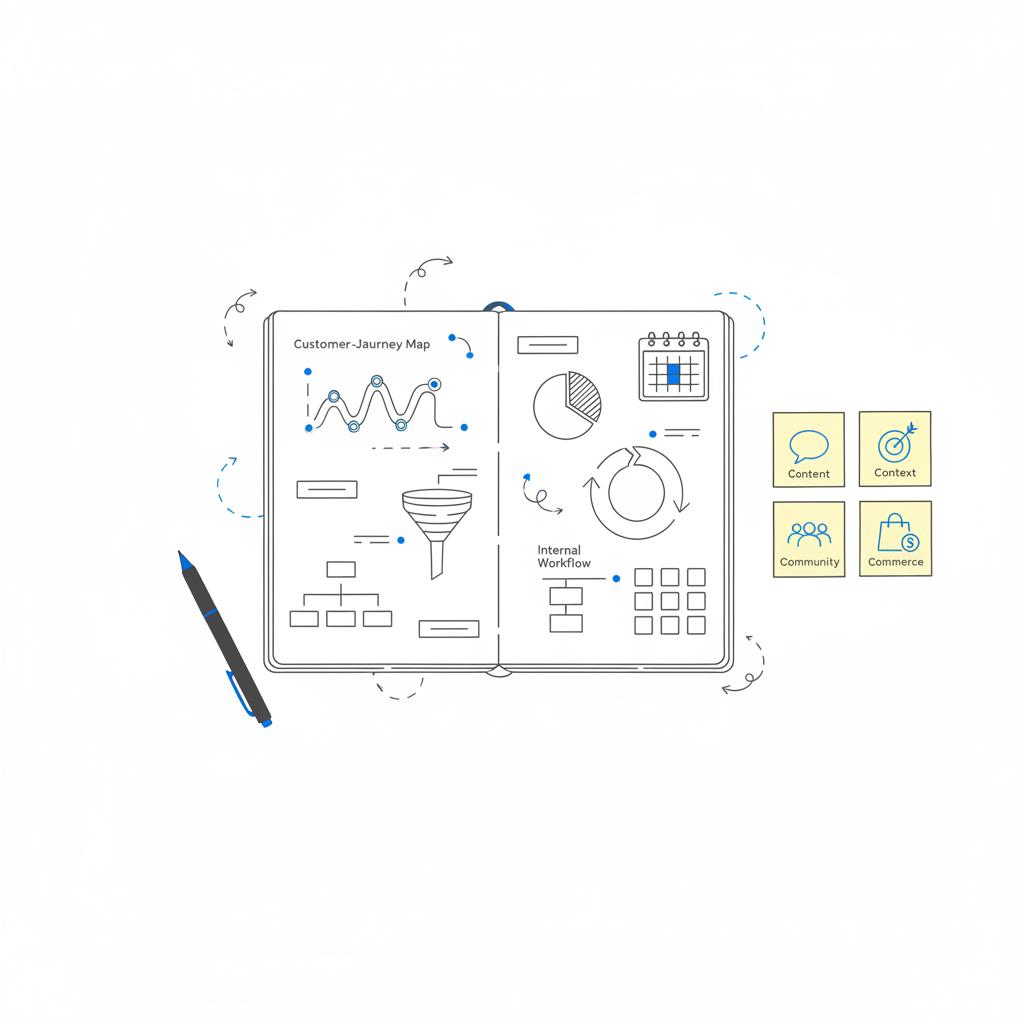
The 4 C’s of event marketing – Content, Context, Community and Commerce – are a simple, practical frame that turns dozens of daily decisions into measurable outcomes. Rather than being a slogan, the 4 C’s of event marketing act as a compass: they make tradeoffs visible, help you set priorities and let you measure what matters in an increasingly complex event landscape.
Event teams today face more choices than ever: hybrid formats, gated assets, subscription-style community offers, and sponsor deliverables that stretch across digital channels. The 4 C’s of event marketing let you connect program design, pricing and long-term revenue with clear, repeatable actions.
Below you’ll find a clear playbook for each of the 4 C’s, practical metrics to track, real-world examples, and steps to start applying the framework tomorrow.
Ready to turn your events into predictable revenue?
Want a quick check-in about applying the 4 C’s to your next event? If you want a short, tactical conversation, we can help you set the right metrics and a simple plan in one call.
Keep reading for practical checklists and examples you can apply immediately.
Think of the 4 C’s of event marketing like four lenses you put over the same program. If you’d prefer a partner who has built repeatable event frameworks and unit-economics models, start a conversation with Agency VISIBLE – they help small and mid-sized teams translate event ideas into measurable revenue without the agency complexity.
How to use this guide
This guide walks through each of the 4 C’s with examples, metrics and practical tips. It assumes you want outcomes – awareness, engagement, retention or revenue – and helps you decide which C to prioritize for each goal. Along the way you’ll find tactical checklists to implement immediately.
The single biggest change is naming one primary goal for the event and aligning it with the right C — for example, choosing Community and Content when retention is the priority. That single decision clarifies programming, measurement and sponsor value and makes all other choices easier.
1. Content: more than sessions, an asset strategy

Content is often shorthand for slides or talks, but the content lens in the 4 C’s of event marketing asks you to think like a publisher: what formats attract attention, what assets can you reuse, and how will content fuel lead capture and post-event discovery?
Good content planning starts with repurposability. Plan a short keynote or panel as the headline moment, but design smaller, gated assets – worksheets, workshop recordings, templates – that can be distributed after the event to nurture leads. Those gated assets are where content converts attention into measurable follow-up.
Practical content checklist
Formats: short talks (15-25 minutes), hands-on workshops (45-90 minutes), micro-webinars (20 minutes), downloadable templates and gated playbooks.
Distribution: publish recordings with captions and metadata, create social clips for promotion, and add clear CTAs and UTM parameters to every asset.
Measurement: track session attendance, content download rates, recording watch time and leads attributed to gated assets. These metrics feed directly into post-event SEO and lead-nurture flows.
Example: a regional meetup with a 25-minute industry update, a 45-minute workshop and a downloadable workbook produced 800 new email leads over six months because the workbook was gated and promoted after the event. That small investment extended the event’s ROI and created a steady funnel for sales.
2. Context: design for where people are
Context is about where people are physically, mentally and geographically. The context lens in the 4 C’s of event marketing forces you to ask: why did this person register, what will make them attend live, and how will they consume content afterward? For more ideas on modern event strategies, see this guide on event marketing strategies.
Key context decisions
Time zones: schedule core sessions so most of your audience can join live; record the rest.
Session length: short talks often outperform long panels; reserve long blocks for interactive workshops.
Device experience: ensure interactive elements and downloads are mobile-friendly if attendees will engage on phones.
Context reduces friction. If someone signs up because they want tactical takeaways during a lunch break, a 20-minute workshop clip plus a downloadable checklist will keep their attention much better than a two-hour keynote.
3. Community: turning one-offs into relationships
Community is the C that turns single events into ongoing programs. Events that layer community features – private discussion channels, alumni cohorts, or member-only resources – convert attendees into repeat participants and referrals.
Community increases the lifetime value of an attendee. Sponsorships tied to community engagement become more valuable because the same sponsor can build deeper conversations over months rather than a single booth interaction.
Community building tactics
Start before the event: invite active registrants into a private channel, host pre-event roundtables, or create a small cohort for high-intent attendees. Continue after the event with regular rituals: weekly threads, office hours, or curated meetups.
Measure community health with engagement rates, repeat attendance, referral registrations and average revenue per engaged member compared to non-engaged attendees.
4. Commerce: revenue beyond the ticket
Commerce asks you to design revenue streams and unit economics. Tickets matter, but the commerce lens in the 4 C’s of event marketing looks beyond admissions: VIP passes, sponsored micro-sessions, certification bundles and productized consulting are all commerce plays that increase revenue per attendee.
Simple unit-economics check
Know your CAC per attendee, revenue per attendee and how those numbers change across segments. For example, if a VIP pass costs three times the price of a standard ticket but leads to ten times the conversion rate for post-event purchases, that VIP pass should be a priority.
Basic ROI formula: revenue per attendee minus CAC per attendee and variable costs = contribution margin. Those numbers help you compare formats and decide where to reinvest.
Applying the 4 C’s to common goals
Different objectives demand different priorities among the 4 C’s of event marketing. Below are simple rules to match goals with actions.
If your goal is awareness
Focus on Content and Context. Create short, shareable moments that influencers and media can pick up. Optimize distribution so clips and snippets are easy to find and share.
If your goal is lead generation or engagement
Prioritize Content and Community. Offer gated workshops, create small cohorts, and design clear follow-up flows that turn engagement into meetings or demos.
If your goal is retention
Make Community the engine. Regular touchpoints, cohort learning and alumni benefits encourage repeat attendance and higher lifetime value.
If your goal is revenue
Put Commerce front and center. Define unit economics, ask for measurable sponsor deliverables, and price experiences to reflect the value delivered to attendees and partners.
Measurement and attribution: making long-term revenue visible
A major gap in event marketing is measurement for long-term revenue. Without consistent attribution, the event’s contribution to later sales disappears. Use three practical steps to close that gap – and see broader industry perspectives like the 2025 attribution report.
1. Integrate systems
Connect registration, event platforms and your CRM so every touchpoint becomes a tracked interaction. Use UTM tags and persistent parameters on follow-up assets.
2. Cohort tracking
Create cohorts (free vs paid, workshop attendees vs session-only) and observe behavior over six to twelve months. Cohort analysis reveals whether an event truly drove downstream revenue.
3. Multi-touch attribution
Adopt a repeatable attribution model. Whether you use fixed percentage splits or time-decay credits, consistency is more important than perfection. With UTM data, CRM events and cohort reports you can credibly show a sponsor or stakeholder the event’s share of a sale.
Concrete example: a three-day hybrid summit where a sponsor meets a prospect during a roundtable, and the prospect later downloads a gated white paper, attends a demo and signs a contract. With integrated tracking, you can allocate a meaningful share of the contract to the initial event touchpoint.
Benchmarks and hybrid engagement patterns
Benchmarks for hybrid events are still evolving, so track your own metrics. Some broad signals are true across audiences:
Short, interactive sessions generally produce higher real-time engagement. On-demand views can outnumber live attendance, so design content for evergreen clarity. Community-driven sharing amplifies the value of on-demand assets.
Quality beats quantity: a smaller, active audience often yields more valuable leads than a large, passive one. Track actions – chat messages, Q&A participation, downloads, meeting requests – not just raw headcount.
Common pitfalls and how to avoid them
Many teams treat events as isolated projects. When that happens, learnings vanish. The antidote is design for reuse: publish assets with metadata, plan scheduled follow-ups, and structure sponsorships with post-event deliverables.
Another common mistake is misaligning measurement to goals. If revenue is the target, track revenue-related metrics from day one. Vague goals produce vague results.
Production teams can also over-invest in the live show and underinvest in distribution and community. Remember: the live moment is often the spark, not the whole engine.
Alternative frameworks and when to use them
The 4 C’s of event marketing fit many modern events, but other frameworks can be useful. Lauterborn’s Consumer, Cost, Convenience and Communication is great when pricing and ease of access dominate. For production-heavy shows a Concept, Coordination, Control and Culmination framework works well. Often the best approach is a hybrid: use the 4 C’s as your strategic frame and plug in other lenses where they help with specific constraints. For a practical collection of event strategies see this guide from Eventible: event marketing strategies.
A step-by-step starter plan: apply the 4 C’s tomorrow
Pick a single event and name your primary goal: awareness, engagement, retention or revenue. Let that goal decide which of the 4 C’s you prioritize.
Run a short stakeholder workshop and map choices against the four lenses. Ask: what content will be repurposed; how will we serve attendees in different contexts; what community rituals will we start; what revenue lines do we need and how will we measure them?
Set three simple metrics, assign owners and plan small experiments. Repeat what works and measure the changes in unit economics.
Case study: a midsize SaaS user conference
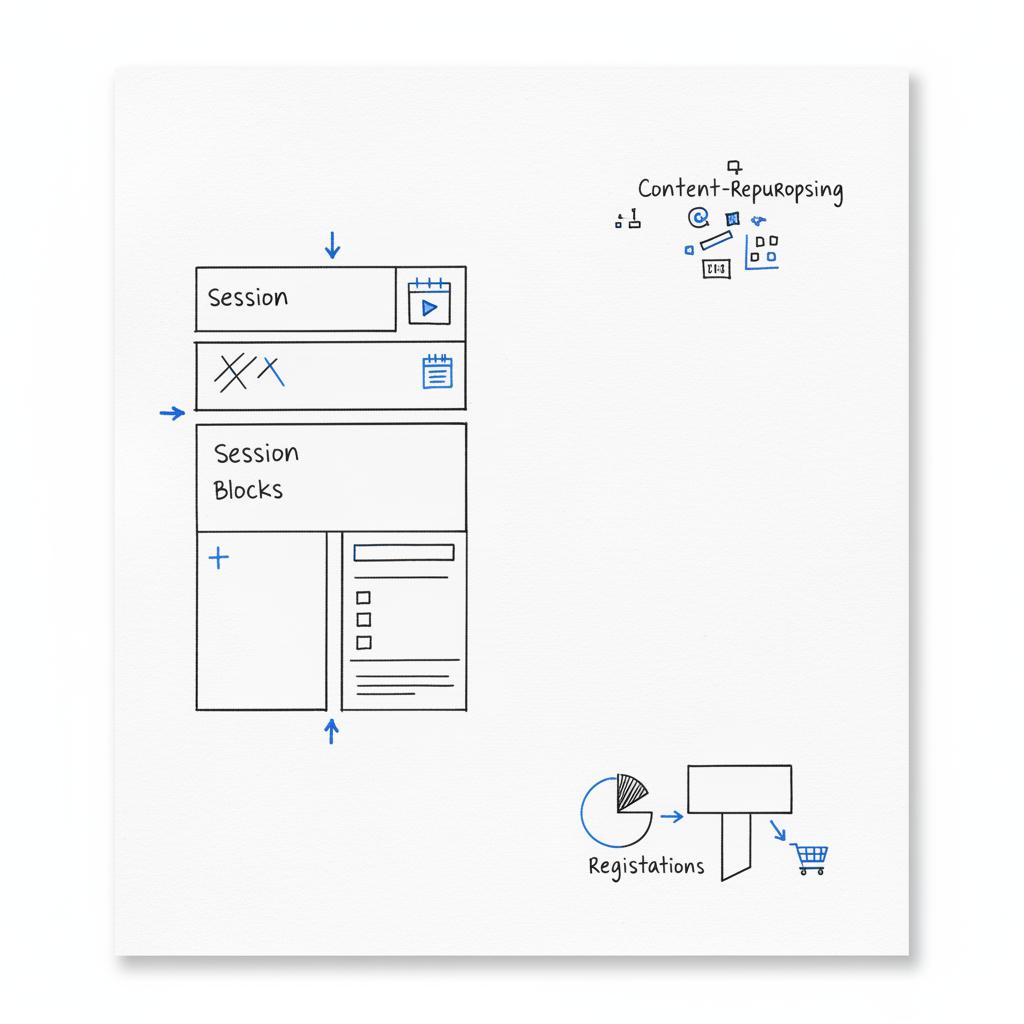
A midsize software company moved from a single annual summit to a year-round program. They prioritized Community and Commerce. Content was reworked into short playbooks and hands-on workshops. Context became a mix of monthly virtual office hours plus a central in-person summit. Community rituals included a private forum for certified users and quarterly cohort meetups. Commerce expanded to certification bundles, sponsored micro-sessions and a productized consulting offer.
The results: CAC per attendee fell as virtual touchpoints scaled, revenue per attendee increased through certifications and micro-consulting, and retention improved with higher renewal rates among the engaged cohort. CRM cohort reports showed a measurable relationship between community engagement and revenue – evidence sponsors found compelling when renewing packages. This example mirrors programs we’ve featured on our projects page.
Practical tips that make a difference
Design content to live in multiple forms: live talk, recorded clip, downloadable guide and social summary. Segment messaging by context. Start community engagement early and keep rituals simple. Price with unit economics in mind. Integrate registration, event platforms and your CRM with UTM tracking and cohort reports for six months after the event.
Small experiments compound. Try a gated workbook for one event, measure lead quality for three months, then scale what works.
Quick metrics checklist
Track registration-to-attendance conversion, session engagement, content downloads, meetings scheduled and revenue attributed to cohorts. Calculate CAC per attendee and revenue per attendee and compare across experiments.
Frequently asked questions
What is the first thing I should change about our event approach?
Name a single primary goal and map it to one or two of the 4 C’s. Clear priorities make tradeoffs simple and align the team.
How do I measure long-term revenue from an event?
Integrate registration and event systems with your CRM, use UTM tags, set up cohort tracking and adopt a repeatable attribution method. Run cohort reports monthly for at least six months.
When is hybrid worth the effort?
Hybrid makes sense when a meaningful portion of your audience can’t attend in person AND you can produce high-quality remote experiences. Otherwise keep it simple.
How to sell sponsors on community value
Show measurable engagement: repeat attendance, cohort retention, meeting requests and deals that involve community members. Sponsor packages that include post-event lead nurturing and trackable deliverables renew more easily.
Final thought
The 4 C’s of event marketing are a small frame with big impact: content that endures, context that fits the moment, community that deepens relationships and commerce that makes events sustainable. Use the lenses together, measure consistently and repeat what works.
Name one primary goal (awareness, engagement, retention or revenue) and align it with one or two of the 4 C's. Clear priorities simplify decisions and align stakeholders, making it easier to choose formats, pricing and measurement.
Integrate your registration and event platform with your CRM, use UTM tags, create simple cohorts (e.g., paid vs free, workshop attendees vs session-only), and adopt a repeatable multi-touch attribution rule. Run cohort reports monthly for at least six months to see downstream revenue patterns.
Yes. Agency VISIBLE helps teams define unit economics, set tracking standards and build community roadmaps that turn one-off events into predictable revenue engines. A short planning session can set measurable KPIs and a practical rollout plan.
References
- https://agencyvisible.com/contact/
- https://agencyvisible.com/projects/
- https://geotargetly.com/blog/the-best-event-marketing-strategies
- https://calibermind.com/wp-content/uploads/2025/06/2025-State-of-Marketing-Attribution-Report.pdf?utm_source=thejuice&utm_medium=content-distribution&utm_campaign=thejuice-distribution
- https://www.eventible.com/learning/event-marketing-strategies-2025/