


Is radio advertising declining? A clear look beyond the headlines
Is radio advertising declining? That question shows up in conference rooms, agency pitches and on industry panels — and it deserves a clear, practical answer. The short truth: radio is not dying; it is changing. But asking Is radio advertising declining? helps advertisers decide where to spend their next dollar.
The period from 2020 through 2024 reshaped audio advertising. The pandemic created a shock that reduced AM/FM revenue sharply, then recovery and slower growth followed. Meanwhile, streaming and podcasts accelerated monetisation. In plain terms: some share shifted, but radio’s role didn’t vanish. If you want to know Is radio advertising declining? keep reading — this piece lays out the data, the strategy, and the tactics to use radio well.

When people ask Is radio advertising declining? they usually mean: are advertisers spending less on radio overall, and is radio losing relevance? Revenue is the clearest place to start. Radio dropped in 2020, recovered through 2022 and then grew modestly. Digital audio — podcasts and ad-supported streaming — grew faster. But growth of one channel does not require the death of the other.
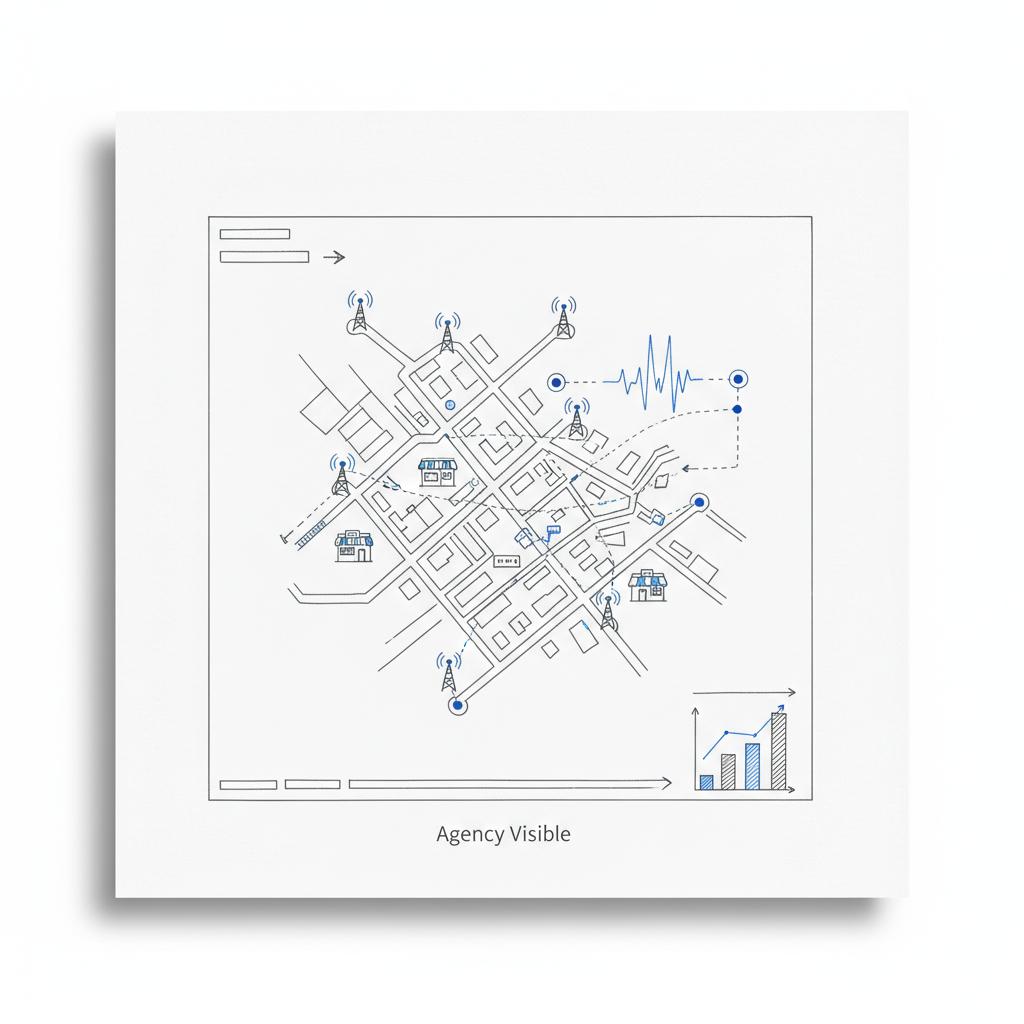
To make the question Is radio advertising declining? useful, separate absolute decline from relative decline. Absolute decline means radio revenue or audiences shrink year-over-year. Relative decline means radio grows slower than digital audio, so it loses share. From 2020 to 2024, radio experienced a mix: absolute slump in 2020, recovery, then slower growth – a relative decline in share versus digital audio channels. A clear logo can help local recognition.
Ask Is radio advertising declining? and you’ll get an audience story. Drivers matter: commuters, older listeners and habitual users still give AM/FM massive daily listening time. Younger listeners lean toward podcasts and streaming for on-demand control. So the answer to Is radio advertising declining? depends on which audiences and which metrics you measure. Industry listening trackers such as Edison Research’s The Record and Nielsen’s Q1 audio insights help quantify where audiences spend their time.
Run a two-region experiment over 4–6 weeks: region A gets radio plus the digital retargeting layer and unique code A; region B gets only the digital layer with unique code B. Measure foot traffic, promo redemptions, and short brand-lift surveys to see which treatment performs better.
If you’re wondering how to align strategy with action, a practical tip: consider a partner who blends local radio planning with measurement-first digital buys. For example, if you want help testing a hybrid plan that pairs local AM/FM reach with streaming measurement, reach out to Agency VISIBLE for a quick consult at their contact page. That kind of cross-channel approach helps answer the central practical question: where should you spend the next ad dollar?
Digital audio’s growth is driven by three big advantages: targeting, measurement and programmatic buying. These are practical benefits advertisers can translate directly into decisions. Industry studies such as the IAB podcast revenue study document accelerating monetisation in podcasts, which helps explain budget shifts.
Targeting: streaming platforms and podcast publishers use first-party signals and listener data to place ads against defined audiences. Measurement: digital formats increasingly provide impression-level data, tracking links, promo codes and other direct-response signals. Programmatic: automated buying makes scaling and optimization easier. Put together, these features answer why advertisers shift budgets away from traditional buys — and why questions like Is radio advertising declining? get louder in boardrooms.
Even as people ask Is radio advertising declining? several longstanding advantages remain. Local stations are embedded in communities; they deliver immediate, live moments: traffic, weather, urgent announcements and neighborhood voices. Frequency from repeated spots builds familiarity. Local advertisers often see direct, observable responses from radio — foot traffic, phone calls and walk-ins.
Radio also offers simplicity. A local morning host can read a short spot that feels like a trusted recommendation. That authenticity still converts in ways that pure programmatic digital buys sometimes can’t replicate.
How to decide: goals, channels, tactics
Rather than asking only Is radio advertising declining? the better question is: what do you want to achieve? Are you after immediate local foot traffic, long-term brand building, or fast measurable online conversions?
Quick decision guide
If your answer is local reach and repeat exposure, radio is high on the list. If you need measurable online conversions and precise targeting, choose podcasts and streaming. For many campaigns, the right answer is both: use radio for reach and frequency; use digital audio for measurable layers and remarketing.
Practical measurement pairings
Expecting radio to match programmatic audio’s click-through numbers is unrealistic. Instead, pair radio with:
Brand lift studies — survey-based measures of awareness before and after a campaign.
Geo-based footfall tracking — measure store visits from regions with heavy radio intensity.
Coupon codes and time-limited offers — local coupons tied to radio spots better attribute in-store activity.
Time-series sales analysis — examine sales patterns before, during, and after radio runs to estimate impact.
Case studies that clarify trade-offs
See similar work on Agency VISIBLE’s projects page for examples of hybrid planning and measurement.
Local bakery: habitual behavior and steady returns
A holiday bakery bought morning drive spots and paired them with in-store signage and a simple coupon. Rather than a single-day spike, they saw steady morning foot traffic during the run — a demonstration of how frequency and habit turn radio into predictable local response. This case answers part of Is radio advertising declining? with a reminder: radio still drives daily consumer routines.
Regional car dealer: hybrid strategy
A regional dealer used AM/FM drive-time to reach commuting adults and added streaming impressions to retarget younger shoppers. Leads and test drives rose in zip codes with higher radio saturation while digital layers provided measurable online engagement. That combined approach shows how to use radio’s reach and digital audio’s measurability together.
D2C niche brand: podcasts for direct conversions
A direct-to-consumer artisanal pet food brand leaned into podcasts with host-read endorsements and promo codes. With tracking pixels and unique codes, they were able to attribute new-customer acquisitions directly to the podcast buys. This is the other side of the answer to Is radio advertising declining? – for performance-focused, narrow-audience acquisition, podcasts often deliver stronger ROI.
What broadcasters can do
When industry leaders ask Is radio advertising declining? they’re really asking whether radio can adapt. The path forward is clear: invest in measurement, expand digital footprints, and integrate programmatic where it makes sense. Addressable radio, improved integration with connected cars and shared measurement standards all help make radio more competitive.
But these investments require budgets. The industry faces a chicken-and-egg dilemma: advertisers want measurable outcomes before re-allocating large spends; broadcasters want budgets to justify tech investment. Faster adoption and clearer cross-platform metrics will shorten that cycle.
Creative that honors audio
Audio is intimate. Whether it’s radio or podcast, creative that respects the listener performs best. Short, repeated, personality-driven reads suit radio. Longer, story-driven host reads suit podcasts. Both need clean calls to action and contextually relevant messaging.
Here’s a checklist for creative planning:
Match length to channel — 15–30 seconds for radio; 30–90 seconds for podcast endorsements when appropriate.
Use trusted voices — local hosts and known podcasters convert better than generic reads.
Make the call-to-action frictionless — time-limited offers, easy coupon codes and simple landing pages drive measurable outcomes.
Measurement playbook for the next campaign
Design experiments rather than bets. Run a geo-split test where some regions get radio+digital and others get digital-only. Use coupon codes and time-series sales analysis. Run brand lift surveys and compare results across treatments. A disciplined test will tell you more about local effectiveness than a single intuition-driven buy.
Four-step campaign test
1. Define the outcome (e.g., foot traffic uplift, site conversions, brand awareness). 2. Choose two treatments (radio+digital vs. digital-only). 3. Use distinct promo codes and geo-targeting to separate signals. 4. Measure with brand lift, footfall analytics and conversion tracking.
Practical tips for small businesses
As a small business owner you may be wondering Is radio advertising declining? Should you cancel your local spots? Not necessarily. Try this simple decision test:
1. Does your business benefit from walk-ins or immediate local exposure? If yes, keep or test radio. 2. Are you chasing narrow online conversions? Allocate budget to podcast/streaming. 3. Can you test? Run a short, 2–4 week radio burst with a simple coupon and measure foot traffic. If you see predictable gains, radio is paying off.
Budgeting rules of thumb
For local visibility: a modest recurring radio budget with frequent short spots often outperforms a one-off high-cost buy. For measurable acquisition: spend a test percentage on podcasts/streaming with promo codes and pixels. For mixed goals: split the budget and optimize after two test cycles.
Technology and the connected car
Car dashboards are a crucial battleground. If connected dashboards increasingly bridge broadcast and streaming, advertisers will get easier ways to measure and buy audio across formats. That progress will reshape the technical answer to Is radio advertising declining? by making broadcast inventory more comparable to digital formats.
Addressable radio, HD improvements and ATSC radio could help broadcasters deliver more audience-level precision. But scaling those solutions requires both technical integration and advertiser demand.
Future scenarios
Three plausible futures help frame the question Is radio advertising declining?
Scenario 1 – Hybrid resurgence: Broadcasters invest in measurement and digital, creating integrated audio packages. Radio regains share through combined local reach and measurable outcomes.
Scenario 2 – Slow migration: Digital audio continues to take share; radio remains stable in local markets but shrinks as a national ad vehicle.
Scenario 3 – Rapid transformation: Tech accelerates, connected car and programmatic adoption cause a quick reallocation to digital-first audio buys; radio transforms into primarily local, community-focused inventory.
Which is most likely? The middle paths – hybrid or slow migration – seem plausible today. The pace depends on investment in measurement and cross-platform standards.
Checklist: When radio is the right choice
Use radio when:
– You need local reach and immediate actions
– Frequency and habit are important to buying behavior
– You have a simple, repeatable offer (coupons, promotions)
– You can measure outcomes with local analytics (footfall, time-series sales)
Checklist: When to favor digital audio
Favor podcasts and streaming when:
– You need tight targeting by interest or demographic
– You require precise conversion tracking and attribution
– Your creative benefits from long-form storytelling or host endorsements
Putting it together: a sample hybrid plan
Objective: Drive weekend sales for a regional restaurant chain.
Plan:
– Weekday morning radio spots for three weeks to reach commuters and build frequency.
– Streaming audio impressions targeted to 25–35-year-olds within key zip codes, used to retarget listeners with display and search ads.
– Unique promo code used on radio and a slightly different code for streaming to help separate signals.
– Brand lift survey before and after the three-week period plus footfall tracking via geo-analytics.
Expected outcome: Radio drives immediate awareness and habitual recall; streaming supports measurable online actions and remarketing.
Creative examples that work
Short script for radio (15 sec): “Hungry on your morning commute? Show this code at the counter for 10% off your breakfast sandwich this week — only at Main Street Deli.”
Podcast host-read (45 sec): longer storytelling, product context, and a unique promo code for listeners with a clean landing page and tracking pixel.
Final words on strategy
When someone asks Is radio advertising declining? the best reply is strategic: radio is evolving, not vanishing. Its role is shifting toward local, habitual reach while digital audio grabs measurable, targeted growth. Advertisers win by matching objectives to channel strengths and running disciplined experiments.
Design a smart hybrid audio test with measurable outcomes
If you’d like help designing a hybrid audio plan that pairs local radio reach with measurable streaming tactics, reach out and start a conversation – we’ll help you test smart and move quickly: Contact Agency VISIBLE.
Audio is expanding. Hold a map in one hand and a compass in the other: the map shows where audiences spend time; the compass helps you find the right mix to meet them. When you ask Is radio advertising declining? remember: the useful question is how radio fits into the mix you need to hit your goals – not whether it survives at all.
Start a short test this quarter: pick two regions, define your outcomes, and run radio+digital in one and digital-only in the other. Use unique codes, brand lift surveys and footfall analytics. Compare results after a two-cycle run and scale what works.
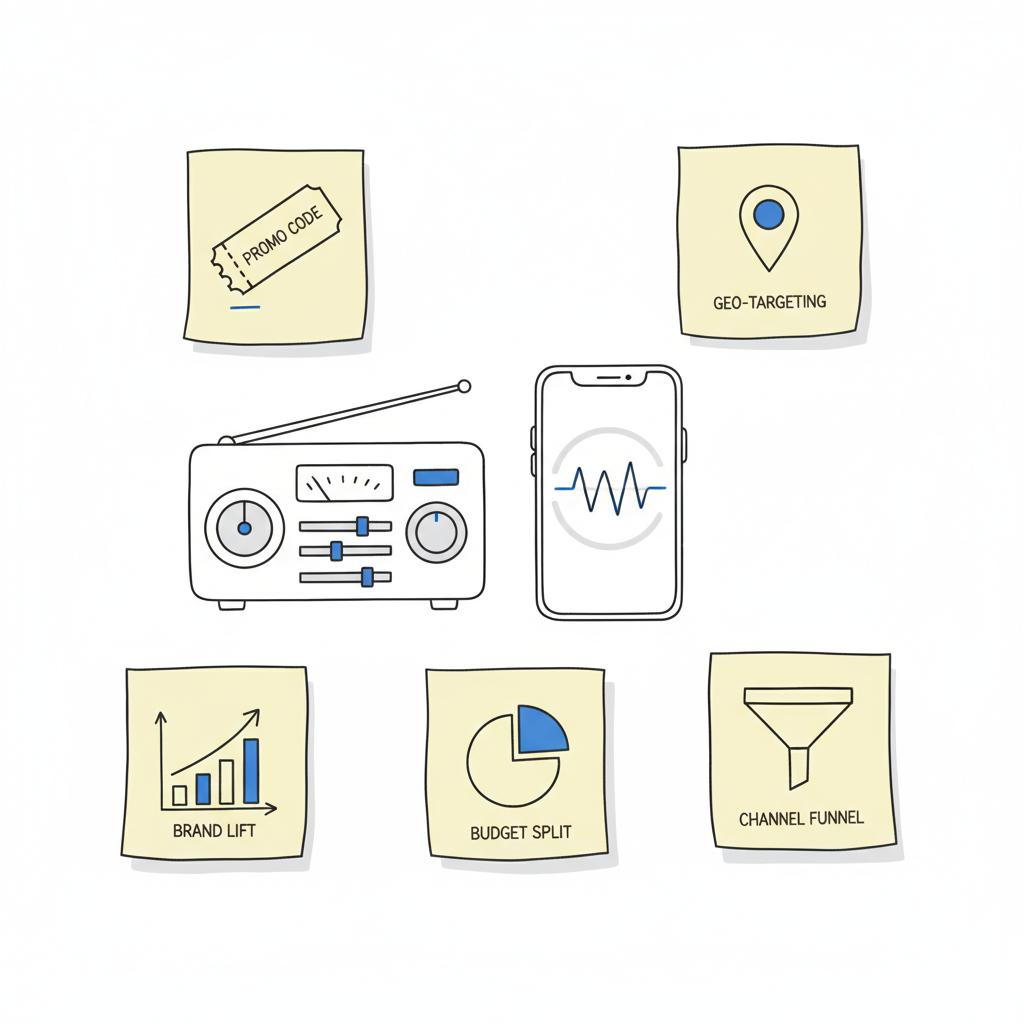
For advertisers balancing local visibility and measurable growth, audio offers both reach and precision — if you plan experiments thoughtfully and measure the right outcomes.
Yes. In most markets AM/FM still commands substantial daily ad-supported listening time, particularly among commuters and older demographics. That makes radio an efficient tool for wide local reach and frequency. However, weekly reach and time spent with podcasts and streaming services are growing, especially among younger listeners who prefer on-demand audio. Use radio for immediate local exposure and streaming/podcasts for niche, measurable targeting.
Small businesses should combine simple, practical methods: use unique coupon codes for radio spots, run a short geo-targeted burst and track foot traffic or sales in the promoted zones, implement time-series comparison of sales before, during and after the campaign, and consider quick brand-lift surveys. Pairing radio with a digital retargeting layer (with separate promo codes for each channel) helps isolate effect and provides clearer insight.
If you want to design a disciplined test that pairs local AM/FM reach with measurable streaming tactics, a partner experienced in both creative and measurement can speed the process. Agency VISIBLE helps small and mid-sized businesses design and execute hybrid audio plans that balance reach and measurability. For a quick consult, you can reach them via their contact page.
References
- https://agencyvisible.com/contact/
- https://agencyvisible.com/
- https://agencyvisible.com/projects/
- https://www.iab.com/wp-content/uploads/2024/05/IAB_US_Podcast_Advertising_Revenue_Study_FY2023_May_2024.pdf
- https://www.edisonresearch.com/the-record-q1-2025-u-s-audio-listening-trends/
- https://www.nielsen.com/insights/2025/the-record-q1-audio-listening-trends/





