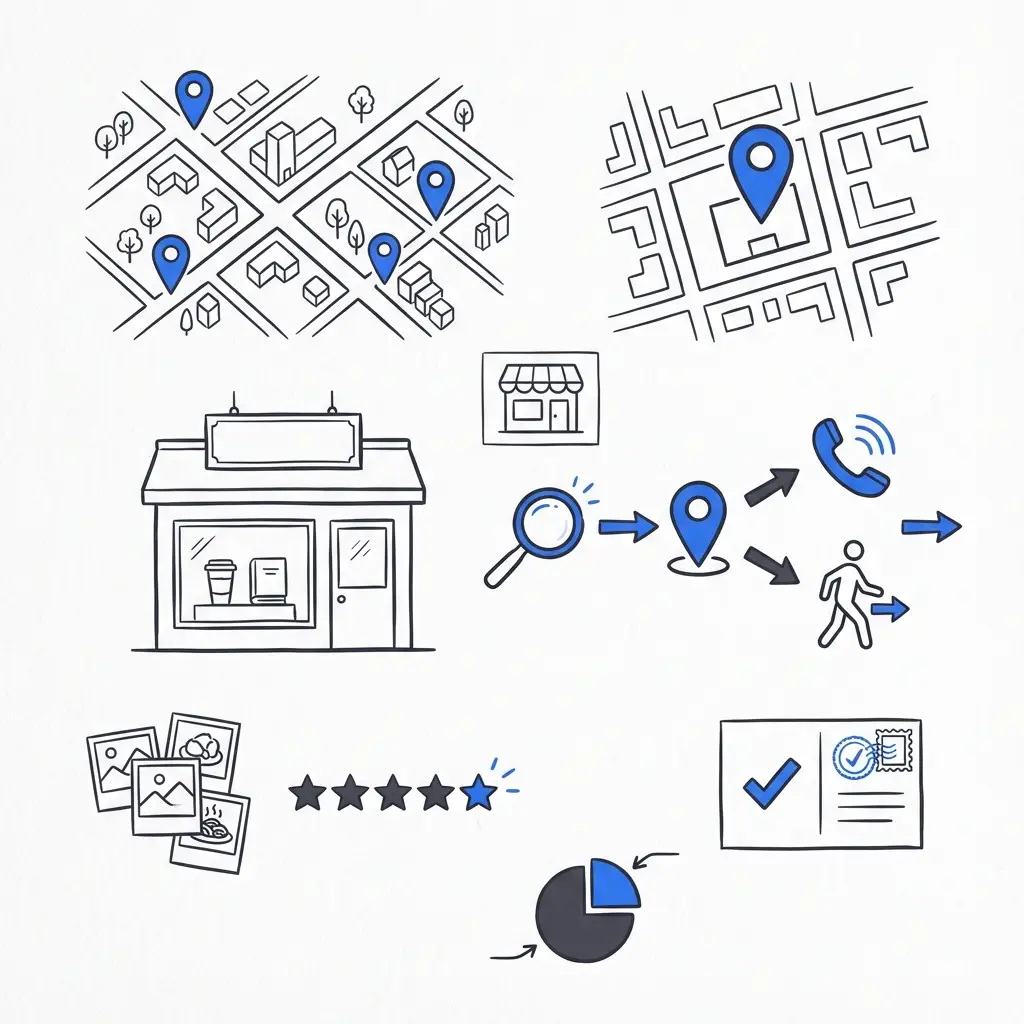
Are Google Ads good for real estate agents?
google ads for realtors can be one of the most direct ways to reach people who are actively looking to buy or sell a home. In the right market, with clean tracking and focused campaigns, Google Search turns intent into conversations – and conversations into appointments. But the results depend on three big things: local competition, how you measure outcomes, and whether you treat ads as a short experiment or a sustained channel.
Why search traffic matters
Think of search as a busy street where someone is already asking for help. When a person types “homes for sale 3 bed near me” or “how much is my house worth,” they’re not just glancing – they’re asking. That intent makes search clicks especially valuable for real estate. For many agents, the cost to reach that intent is worth paying because the leads are further down the funnel than cold social traffic.

Still, high intent doesn’t automatically equal low cost. In many competitive ZIP codes, seller and valuation queries draw big bids from multiple agents, which pushes cost-per-click and cost-per-lead up.
What the numbers usually look like
At a national level, click costs for real estate keywords typically range from about $1.50 to more than $10 per click (see WordStream’s Google Ads benchmarks). Many local markets fall in the $2–$5 range, but high-demand seller queries can climb into double digits. In practice, buyer-intent search campaigns commonly return leads for around $50–$150 per lead, while seller-intent or valuation leads often cost $100–$400+ because they’re rarer and attract stronger competition. Recent reports also highlight shifts in seller lead costs across markets, which can change budget planning (see this report), and industry ROAS benchmarks can help set realistic expectations (ROAS benchmarks).
Remember: cost-per-lead alone doesn’t tell the story. What matters is cost per meaningful outcome — booked appointment, listed property, or closed sale.
Campaign types that play well together
A single search campaign can deliver buyers. The highest-performing setups usually combine several elements: targeted search campaigns for high-intent queries, remarketing for return visitors, and dynamic property-feed campaigns that show actual listings. A property feed — where your active listings are fed into ad units — makes ads feel more relevant and increases click-to-conversion potential.
Another option is Google’s unified campaigns that mix inventory across networks and use property feeds for broader reach. They can drive volume, but they sometimes reduce transparency about which creative or placement led to a conversion. That trade-off matters if you value clear learning about what works in your market.
If you prefer a tactical partner to help set up tracking, property feeds, or a test campaign, Agency VISIBLE can help with practical, measurable setups that connect clicks to real-world outcomes.
Bidding: when to trust machine learning
Automated bidding can be powerful, but it needs data. If your account gets a steady stream of conversions, machine bidding often improves efficiency and saves management time. If you don’t yet have conversion volume, handing control to automated strategies too early can amplify mistakes and spend on low-value clicks.
Before testing automated bids, make sure conversions are defined correctly. Are you optimizing for form fills, phone calls, booked tours, or closed listings? Each choice changes what the bidding algorithm optimizes for – and therefore the type of traffic it will bring.
Tracking: the step that determines success
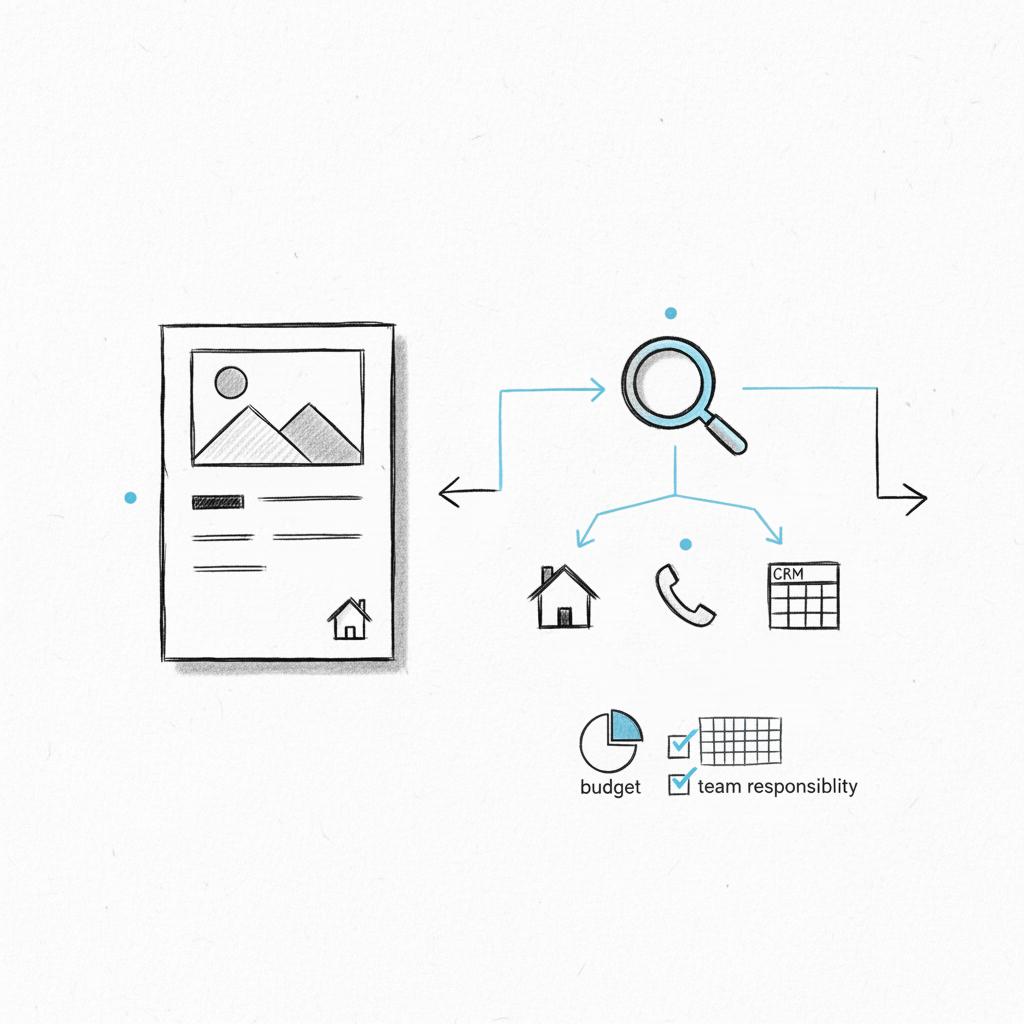
Many campaigns look successful in the ad dashboard but fail to show real business value because follow-up and offline conversions are not tied back to Ads. That’s why tracking phone calls, CRM entries, and offline conversions is essential.
Use call-tracking numbers that forward to your business line, and import offline conversions (appointments, listings, closed sales) back into Google Ads. Link your analytics and keep UTM tagging tidy so you can follow a lead from click to contract. Without proper attribution, you’ll misjudge what’s working and might shut off campaigns that actually produce real revenue.
How search compares with social and portals
Search captures active intent — that’s its core strength. Social channels are generally better for awareness and top-of-funnel work, and listing portals bring exposure that can supplement search campaigns. When you compare channels, keep in mind you’re often comparing different funnel stages: search = high intent, social = awareness and data for remarketing, portals = listing visibility.
Real-life example that clarifies the math
An agent in a mid-sized coastal market bought clicks for “home valuation” and “sell my house fast.” Initially, the cost seemed high. But when she tracked appointments and sales back to the original ads, she found valuation leads converted to listing appointments at about an 8% appointment rate, and several of those listings closed within a year. The true cost per closed listing — when offline value was included — looked reasonable. Without the offline tracking, she might have cut the campaigns prematurely.
Google Ads deliver both, but seller leads generally cost more and require targeted keywords (like “home valuation” and “sell my house fast”), higher bids, and accurate offline tracking to judge their value. Buyer traffic often converts faster, while seller intent needs more budget and patience — yet, when tracked properly, seller-focused campaigns can produce high-value listings.
How to plan a testing period that actually teaches you something
Start small and focused. Run a three-month test that targets a short list of high-intent keywords and matching landing pages. Keep experiments simple: change one thing at a time (copy, landing page, or bidding), and measure results. If you have call volume, ensure calls are tracked as conversions; if you rely on forms, capture clear UTM data so you can trace leads in your CRM.
What to track first
Begin with measurable events: clicks, call-tracking sessions, form fills, and booked appointments. Then bring in offline outcomes: appointments that become listings and listings that become closed sales. When you import those outcomes to Ads, you can optimize bids for what truly moves revenue.
Budgeting guidance
There’s no universal number, but a modest three-month test for a local agent usually lives in the low four-figure monthly range. That buys a sufficient number of clicks to learn about keywords and conversion rates in many markets. If your market has higher CPCs or you’re chasing scarce seller leads, plan for a larger budget and tighter targeting.
Common mistakes to avoid
Some errors show up repeatedly in underperforming accounts:
- Counting every lead the same way — a form fill is not always equal to a ready seller.
- Missing call tracking and offline conversion imports — these make real ROI invisible.
- Turning on automated bidding before you have consistent conversion volume.
- Running one big undifferentiated campaign instead of segmented campaigns for buyer vs. seller intent and geography.
- Sending clicks to slow or generic landing pages that don’t match ad messaging.
Landing pages that actually convert
A relevant ad must land on a relevant page. Fast page speed, a clear proposition, and a single simple action (call, book, request valuation) improve conversion rates dramatically. Small improvements — matching headline to search query, showing local proof, and using a direct call-to-action — can double conversions over a short period.
Measurement framework that scales
Measure the funnel in stages: clicks → tracked calls/forms → booked appointments → listings → closed sales. Assign approximate lifetime value to a closed listing so you can compare cost per lead to projected revenue. If a typical listing produces repeat business and referrals, include that in your lifetime value calculation — it often makes higher initial acquisition costs reasonable.
Testing frameworks: what to try first
Try these in sequence: (1) a tight search campaign on high-intent buyer keywords, (2) a search campaign focused on valuation and seller intent, (3) remarketing to visitors who viewed listings, and (4) a dynamic property-feed campaign. Run A/B tests on ad copy and landing pages and keep a manual bidding control group when you test automated bidding.
Practical tips for healthier campaigns
Keep UTM tagging consistent, set distinct conversion events for calls and forms, and import offline conversions. Use geographic bid adjustments to focus spend where you have better brand recognition or market share. If you outsource campaign management, choose a partner who understands how to connect the digital click to the real-world appointment.
How to handle high CPC markets
When CPCs climb, narrow your keyword lists to high-conversion phrases, tighten geographical targeting, and improve landing pages to lift conversion rates. A higher CPC can be fine if your conversion rate is higher — the math works in your favor when you extract more appointments from the same clicks.
Examples with basic math
Suburban market example: CPC ≈ $3. If you spend $3,000 in a month and get 1,000 clicks at a 2% lead conversion rate, that’s 20 leads at $150 per lead. If four leads close as buyers within a year, the campaign can pay for itself depending on commissions.
Dense market example: CPC ≈ $8. The same $3,000 buys fewer clicks, so focus on the best keywords, stricter geotargeting, and better follow-up to lift conversion rates and defend ROI.
Advanced: property feeds, Performance Max, and transparency trade-offs
Feeds that show real properties make ads more clickable and relevant. Performance Max and similar unified campaigns can give great distribution and use your feed to show listings across channels automatically. The downside: sometimes the reporting is less granular. If you prioritize learning which exact search terms or creatives drive closed deals, keep at least some tests in classic search campaigns with clear reporting.
When to use Performance Max vs. traditional search
Use Performance Max to drive volume and broaden reach, but keep a portion of budget in traditional search to preserve testability and control. That way you benefit from automation while still learning which keywords and messages produce the highest-value leads.
How to evaluate performance honestly
Look beyond clicks and cost-per-click. Count booked appointments, follow the leads in your CRM, and import closed outcomes into Ads. Build a simple rule: if a lead reliably progresses to a listing or sale at a known rate, multiply back the offline value to judge whether the ad spend is making sense.
Realistic timelines and expectations
Search can deliver buyer leads relatively quickly. Seller leads, valuations, and listings usually take more time and higher bids. Set a 3-month window for initial learning and a 6–12 month horizon to judge sustained ROI. Seasonality matters: spring and summer often bring higher volume in many markets.
How to integrate search with a full marketing mix
Search is strongest at the moment of intent. Use social and content marketing to build awareness and remarketing audiences so you can re-engage people who visited but didn’t convert. Use listing portals for broader exposure and keep messaging consistent across channels to build trust and recognition.
Common agent questions answered
Will Google Ads instantly bring me listings?
Not usually. Buyer leads can arrive faster, but seller leads and listings require targeted bids and clear tracking. Instant wins happen, but consistent success comes from testing, tracking, and follow-up.
Are social ads better for new agents?
Social is great for awareness and building an audience, but social leads often need more nurture. New agents seeking immediate appointments may find search ads more predictable for buyer intent. Blending both tends to deliver the best long-term pipeline.
When should I hand bidding over to automation?
When your account has a steady stream of clean conversions over several weeks. If you only have a handful of conversions a month, start with manual or conservative bidding until you build volume.
Checklist: a launch plan you can follow
1) Choose a short set of high-intent keywords. 2) Build landing pages that match each keyword group. 3) Implement call tracking and CRM capture. 4) Run a focused 3-month test with a controlled budget. 5) Import offline conversions and judge cost per meaningful outcome. 6) Scale what works and pause what doesn’t.
Quick wins that often help immediately
Improve page speed, match headlines to queries, use local proof, and make the next step obvious (call or book). Often these small changes lift conversion rates faster than adding budget.
How to choose an agency or partner
Look for a partner that prioritizes measurement and can connect digital clicks to offline outcomes. Avoid vendors who show vanity metrics but can’t import offline conversions or show how campaigns influence booked appointments and closed deals. For examples of work and approach, see our homepage and project case studies.
Ready to test Google Ads in your market? If you want a quiet partner to set up tracking or run an initial experiment, reach out and start with a simple, measurable plan. Contact Agency VISIBLE to schedule a practical test.
Start a practical Google Ads test with a partner who ties clicks to real results
Ready to test Google Ads in your market? If you want a quiet partner to set up tracking or run an initial experiment, reach out and start with a simple, measurable plan. Contact Agency VISIBLE to schedule a practical test.
Practical final thoughts
Google Search rewards speed and relevance. The faster you connect a motivated searcher to a helpful, local experience, the higher the chance of turning that click into an appointment. Test small, measure what matters, and be patient with learning. With the right setup, google ads for realtors can shift from a guessing game to a reliable channel for meaningful leads.
No shortcuts — just steady testing, clear measurement, and thoughtful follow-up.
Start with a focused keyword list and a single landing page per intent group. Track calls, import offline results, and evaluate after 90 days. If someone else is managing your campaigns, ask them to show the offline conversions and explain what they’re optimizing for.

Next steps if you want to try this
Cost varies widely by market and query. Typical U.S. CPCs for real-estate keywords range roughly from $1.50 to $10+, with many markets around $2–$5. Buyer-intent leads often cost about $50–$150 per lead; seller-intent or valuation leads commonly range from $100–$400+ because they’re rarer and more competitive. Your real cost depends on your conversion rates and whether you import offline outcomes like appointments and closed sales.
Not usually. Google Search can deliver buyer leads faster, but seller leads and valuations usually require higher bids and more time. Instant wins happen, but sustainable listings come from consistent testing, accurate tracking (including offline conversions), and strong follow-up. Treat search as one part of a broader mix — social and portals help build awareness and remarketing audiences that feed search campaigns.
<p>Yes — a skilled partner can set up call tracking, CRM integrations, property feeds, and offline conversion imports so you measure true ROI. For agents who want practical help, <a href="https://agencyvisible.com/contact/">Agency VISIBLE can assist</a> with test campaigns and measurable setups that connect clicks to appointments and closed deals.</p>
References
- https://www.wordstream.com/blog/2024-google-ads-benchmarks
- https://www.cincpro.com/blog/real-estate-lead-cost-report-for-sellers-on-google-q4-2024
- https://partnerwithez.com/blog/ppc-roas-average-real-estate/
- https://agencyvisible.com/contact/
- https://agencyvisible.com/projects/
- https://agencyvisible.com/