Understanding radio advertising cost: what to expect
Local radio remains alive in cars, shops and kitchens – and that steady attention has real business value. For many small owners the first question is simple: what is the radio advertising cost and is it worth the price? In the early paragraphs we’ll define typical price ranges, explain production expenses, and show practical ways to test and measure results without overspending. Recent outlooks discuss radio’s resilience and evolving reach, which is useful context when you plan a budget (what’s on the horizon for radio).
Before we dive deeper, a quick tip: if you want a partner who can help coordinate radio with digital tracking and production, consider reaching out to Agency VISIBLE — they help small businesses connect radio plans to measurable digital funnels in a busy, hands-off way.
Why radio advertising cost varies so much
The answer is simple: audience size, daypart, market size and station format. A 30-second ad on a tiny community station might run under $50–$100. In mid-sized cities the same 30-second spot commonly sits between $200 and $1,000. In major metros, drive-time inventory can escalate to $1,000–$5,000 or more per 30-second spot. Because of these ranges, the radio advertising cost for a campaign depends more on where and when you buy than on the fact that you bought radio at all. For an overview of typical radio ad rates and how they vary by ad length and market, see this rate guide (typical radio ad rates).
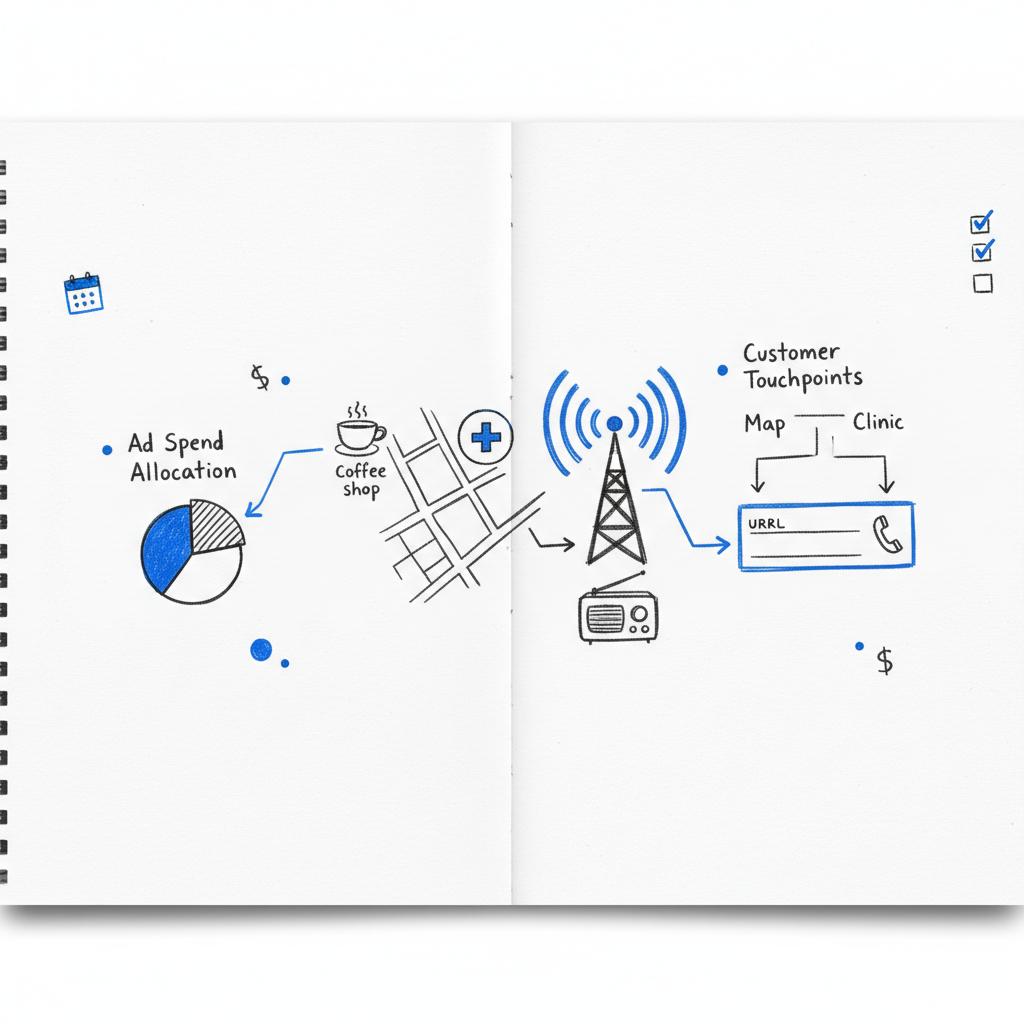
Production adds another variable. Professional voice talent, studio time and music licensing can push a 30-second spot into the $200–$2,000 range. But there are lower-cost options – local voice talent, shared studios, or good DIY recording – that keep total radio advertising cost manageable for smaller budgets.
How much should a small business budget?
Budgeting depends on your goals. If you want to test local awareness in a single small market, you can often run a meaningful test for $500–$2,000 per month using remnant or off-peak inventory. For sustained presence in a single city, small-to-medium local businesses often allocate $2,000–$10,000 per month. If your plan includes multiple stations, drive-time reach or multi-market buys, budgets commonly start at $10,000 per month and scale up from there. Forecasts for local radio ad spend can help set realistic expectations for market growth and digital radio mix (local radio ad spend forecast for 2025).
Those numbers aren’t rules – they’re realistic starting points that reflect how many local advertisers approach radio. If you keep track of your radio advertising cost against performance, the numbers become inputs for smarter negotiation rather than guesswork.

Example budget breakdowns
To make things concrete, here are realistic scenarios that show how radio advertising cost plays out in small businesses.
Micro test (neighborhood shop)
Budget: $500–$1,500/month. Purchase remnant mids and off-peak spots. Production: $150–$400 DIY or local studio. Metrics: promo code redemptions, foot traffic, call-tracking. This keeps radio advertising cost low while providing measurable readouts.
Consistent local presence (single market)
Budget: $2,000–$10,000/month. Purchase mixes of dayparts to get frequency. Production: $400–$1,200 for professional creative. Metrics: tracked landing page, call tracking, appointment bookings. The radio advertising cost here buys repeated exposure, which is where radio starts to build memory.
Regional/multi-market push
Budget: $10,000+/month. Priority: drive-time, multiple stations, polished production and agency coordination. Production: $1,000–$5,000. KPIs: web traffic lifts, tracked calls, promo code redemptions and store visits tied to ads. Higher radio advertising cost buys scale and the chance to influence a larger buying pool.
How to measure radio advertising cost vs return
Measurement is where many businesses win or lose. Radio’s advantage – wide reach – is also its attribution challenge. The practical answer is to design for tracking before you buy. Combine a short landing page URL, a unique promo code and a call-tracking number that you use only in the ad. Using multiple hooks lets you triangulate response and estimate the true radio advertising cost per lead or sale.
Run a short, tracked test: pick a tight geography, buy remnant or off-peak spots for 2–6 weeks, use a short landing page plus a promo code and a dedicated call-tracking number. Measure visits, code redemptions and tracked calls during the flight versus baseline. If you see a measurable lift, scale and negotiate better rates — if not, stop the buy and reallocate the radio advertising cost to higher-performing channels.
Why multiple tracking hooks? Because drivers rarely type long URLs, but they can remember a short promo code or call a phone number. If you use a tracked shortlink in the ad and a dedicated call number, you’ll get both web metrics and call records tied to the campaign – and that helps you divide your radio advertising cost by a real outcome: leads or conversions.
Best tracking tactics
1) Use a short, spoken landing page: citybakery.com/radio or yourbrand.com/deals. Keep it short, readable and mobile-friendly. 2) Add a short promo code: RADIO20 or LOCALFREE. 3) Use a call-tracking provider that records call source and length. Together these measures make the radio advertising cost traceable to specific results.
Estimating CPM and cost-per-lead
If you want a simple metric, compute CPM (cost per thousand listeners). Take your spot price and divide by the reported audience in thousands. For example, a 30-second drive-time spot that costs $2,000 and reports 200,000 listeners gives a CPM about $10. Keep in mind station audience reporting methods vary – always ask for the station’s own audience numbers and the time window they measure.
To estimate cost-per-lead, divide your total radio advertising cost for the campaign by the number of leads generated via your tracked sources. If you spent $3,000 on airtime and production and got 30 measurable leads, your effective cost-per-lead would be $100. That figure is what you should compare to the lifetime value of a customer to judge whether the radio advertising cost makes sense.
Negotiation tactics to lower your radio advertising cost
Station sales teams expect to negotiate. Here are practical moves:
- Ask for remnant or off-peak inventory for tests – it’s cheaper and often comes with flexible schedules.
- Request bonus value like extra spots, social shoutouts or streaming impressions bundled into a package.
- Propose sponsorships (weather, traffic, show segments) instead of pure spot buys – sponsorships can deliver more repeated context for similar cost.
- Explore barter if you can trade services or products for airtime in community markets.
Each of these moves reduces the effective radio advertising cost per impression and can increase your presence without increasing cash outlay.
When production matters – and when it doesn’t
Good creative is disproportionately important. Clear, vivid, short scripts that repeat your CTA are cheaper to produce and often more effective than overproduced spots that sound slick but forgettable. If your radio advertising cost budget is tight, prioritize a strong script and a pleasant, clear voice over expensive music beds. Conversely, if you plan a multi-market push, investing in polished production may increase recall and brand perception.
Creative tips to make your dollars work harder
Here are easy, repeatable creative rules that keep the radio advertising cost efficient while maintaining impact:
- Lead with the offer or brand name in the first 3–5 seconds.
- Use sensory details: “fresh-baked bread still warm” paints a picture on audio.
- Keep the CTA short and repeat it twice.
- Use real-sounding host reads or DJ endorsements for trust.
- Repurpose the same audio for station streaming and your social channels to lower overall radio advertising cost per channel.
Sample 30-second script (local bakery)
“Morning! It’s Fresh Loaves Bakery — drop by for a free pastry with any coffee this week. Say code RADIOFREE at checkout or visit freshloaves.com/radio. Open 7am–2pm. Fresh Loaves — smell the difference.”
Scripting like this keeps the CTA simple and memorable, and it keeps radio advertising cost focused on getting measurable responses.
Real-world examples that show how radio advertising cost turns into results
Example 1 — coffee shop (50,000 market): $1,000 monthly test. The owner buys remnant mid-morning spots, runs three 30-second spots per day for 30 days, uses a simple promo code and tracks foot traffic and code redemptions. Production: $250. Outcome: a measurable bump in visits and a clear cost-per-visit calculation that makes future negotiations easier.
Example 2 — regional home-improvement chain: $15,000–$30,000 monthly. This chain targets drive-time on multiple stations. Production is polished, landing pages are dedicated and call tracking is used. The result is wide reach, steady traffic to stores and a measurable relationship between ad runs and weekend sale conversions.
Example 3 — dental practice: $2,000–$6,000 monthly for steady local visibility in a mid-sized market. The creative emphasizes reassurance and easy booking, and the clinic uses call tracking and an appointment promo code to measure new-patient acquisition costs.
Cheap radio advertising options – when to use them
Not every small business needs drive-time. Consider these low-cost options:
- Remnant inventory: low price, unpredictable schedule – useful for tests.
- Off-peak dayparts: steady, cheaper impressions with repeat exposure.
- Sponsorships: weather or traffic sponsorships often bundle read time and social posts.
- Barter trades: useful in small towns where in-kind trades are culturally accepted.
These approaches lower the immediate radio advertising cost, but they may require more creative repetition or complementary digital follow-up to produce measurable ROI.
Radio advertising cost versus digital: a balanced view
Digital ads measure clicks and conversions quickly, often at lower CPMs when well-targeted. Radio provides broad awareness and repeated reach that supports brand recall in ways single-channel digital often cannot. The best small-business plans use radio to build recognition and digital to capture interest. That means radio advertising cost should be evaluated not against digital clicks alone but against the role radio plays in the customer journey.
How to blend channels
Run radio to build awareness and then retarget listeners with search and social. Use the radio promo code in social ads to boost recognition. Track conversions that occur during and after radio flights to see combined impact. When you include cross-channel tracking in your plan the radio advertising cost becomes a part of a multi-touch acquisition metric rather than a single-channel expense.
Negotiation checklist – what to ask from the station
Ask for:
- Rate card and the audience numbers that support those rates.
- Bonus spots or streaming impressions for testing advertisers.
- Trial schedule and an early-exit clause if the buy underperforms.
- Opportunities for live reads or sponsorships to lower the radio advertising cost per effective mention.
Bring your own data: share your expected target demo, ask how their audience overlaps, and request a small initial test. Stations appreciate advertisers who come prepared and those advertisers often secure better effective pricing.
Common mistakes to avoid
Buying a single week of expensive drive-time and expecting immediate sales; running ads without a clear CTA or tracking; assuming all stations reach the same audience; and skimping on creative quality. Radio needs repetition to work – if your budget can’t buy frequency, try sponsorships or off-peak buys until you can scale.
Creative production checklist
To control radio advertising cost while keeping quality high, follow this production checklist:
- Write a concise script with a single offer.
- Choose a voice that matches your brand – friendly, confident, local-sounding.
- Record in a quiet environment or a local studio for a clean track.
- Keep music beds simple and royalty-free when possible.
- Confirm deliverables (30s, 15s, versions, streaming-ready files) before paying.
Repurposing the same audio for streaming ads or social audio posts reduces the per-channel radio advertising cost dramatically.
How to run a low-risk radio test (step-by-step)
1) Define your goal: awareness, bookings or foot traffic. 2) Choose a limited geography and station format that matches your customers. 3) Build one strong 30-second script and a short landing page. 4) Purchase remnant or off-peak inventory for 2–6 weeks. 5) Use a dedicated call-tracking number and promo code. 6) Measure and compare leads during vs before/after the flight. 7) Negotiate with the station for ongoing value if results look promising.
This approach minimizes radio advertising cost risk while giving you a clear signal about channel fit.
How long should a test run?
Radio builds memory, so tests should be long enough to reach frequency: a few weeks is the minimum, and 4–8 weeks gives more reliable data that you can trust when evaluating radio advertising cost per outcome.
Industry-specific notes
Costs and responses vary by vertical. Service businesses that rely on calls (HVAC, plumbing, dental, legal) often get strong ROI from call-tracking and clear offers. Retail and hospitality can use promo codes and in-store redemption tracking. B2B local services may find sponsorships and long-form host reads more effective than short remnant spots. Factor the type of customer action when estimating your radio advertising cost targets.
Host reads vs produced spots
Short live reads by a trusted host often feel more authentic and can be less expensive than polished produced spots. If the station can bundle live mentions in a sponsorship, the effective radio advertising cost per authentic mention drops and trust rises.
Case study: realistic ROI math
Imagine a local dentist spends $3,500 for a month of mixed-daypart radio including production. They track calls and new patient bookings. During the radio flight they record 40 tracked leads and 8 new patients, each worth an average lifetime revenue of $1,200. The radio advertising cost per new patient is $437.50 ($3,500 / 8). With each new patient worth $1,200 in lifetime revenue, the return is clearly positive. The dentist can now confidently increase spend or optimize dayparts to lower the radio advertising cost per patient further.
If your radio advertising cost budget is small, favor clarity over cleverness. Use sensory language, repeat the CTA and make the code or shortlink impossible to mishear. Think like a driver: short, direct instructions and an easy action win.
Myths and truths
Myth: radio is only for older audiences. Truth: station formats matter, and many stations now combine broadcast with streaming and podcast extensions that reach younger listeners. Myth: radio can’t be tracked. Truth: with promo codes, call tracking and short landing pages it can be tracked effectively. Myth: cheap radio is always ineffective. Truth: cheap buys can work when the strategy is clear and the creative is focused.
Where to get help
If you prefer help coordinating buys, creative, and tracking, a small agency or consultant can save time and often reduce your overall radio advertising cost by negotiating volume, bundling digital retargeting and ensuring proper measurement. A partner like Agency VISIBLE can translate station offers into measurable campaigns and help tie radio to digital funnels for a balanced multi-channel approach.
Start a low-risk, measurable radio test with expert help
Want help testing radio without juggling vendors and spreadsheets? Reach out to Agency VISIBLE for a clear, measurable plan — contact Agency VISIBLE to start a low-risk radio test and get a custom budget plan that fits your business.
1) Define goals and acceptable radio advertising cost per lead. 2) Build tracking before the campaign starts. 3) Start small and ask for trials or bonus value. 4) Prioritize memorable, short creative. 5) Repurpose audio across streaming and social to lower effective cost. 6) Measure and renegotiate based on real results.
Final thoughts
Radio is not a magic shortcut – but when it’s planned with clear offers, proper tracking and creative that fits the medium, radio can be a reliable part of a small business marketing mix. Treat radio advertising cost as a variable that you can tune: test, measure, negotiate and scale the buys that prove out.
A 30-second radio ad can cost under $50–$100 on tiny community stations or remnant inventory, about $200–$1,000 in many mid-sized markets, and $1,000–$5,000+ in major metropolitan drive-time slots. Production is additional and commonly ranges from $200–$2,000 depending on voice talent and studio time.
Combine a short, spoken landing page URL, a unique promo code and a call-tracking number used only in the ad. Track visits, code redemptions and calls during the flight and compare them to baseline periods. Using multiple tracking hooks gives a clearer picture of radio advertising cost per lead or sale.
Yes — Agency VISIBLE provides strategy, production coordination and tracking support so small businesses can test radio with a measurable plan. They help map radio buys to digital funnels and track calls, landing-page visits and promo-code redemptions to show how radio advertising cost converts into real leads.