Can a real estate agent have a Google Business Profile? Yes – but it’s not automatic. In this guide you’ll learn the rules that matter, the small choices that make the biggest difference, and practical steps to maintain a compliant, lead-generating profile. If you’re wondering about eligibility, verification methods like video checks, or how to avoid suspension, this article walks you through each stage with real-world tips.
The question, can a real estate agent have a Google Business Profile, comes up a lot because GBP acts like a mini-local website on Google Search and Maps. A well-managed profile appears in local searches, shows up on maps, and gives prospects an easy way to call, book, or learn about you. For many agents, the GBP is the first handshake a neighbor has with their business – and first impressions matter.

Why a Google Business Profile matters for real estate agents
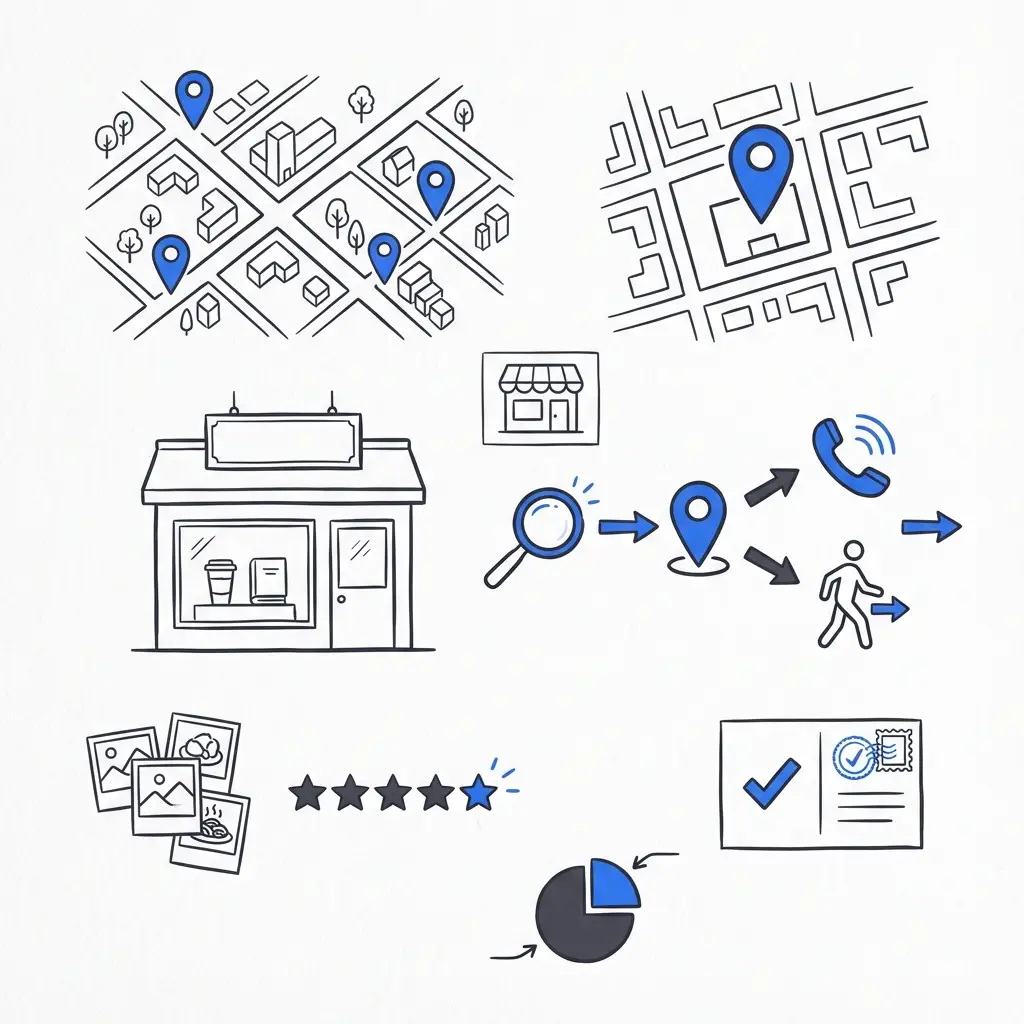
Think of your GBP as a compact storefront on the internet. It answers three core questions: who you are, where you operate, and how someone reaches you. When done right, it drives calls, website clicks, and appointment bookings. When done poorly, it can get suspended or confuse potential clients.
What GBP actually does for agents
Think of your GBP as a compact storefront on the internet. It answers three core questions: who you are, where you operate, and how someone reaches you. When done right, it drives calls, website clicks, and appointment bookings. When done poorly, it can get suspended or confuse potential clients.
Eligibility basics: what Google expects
Google insists that every profile reflects a real, verifiable presence. That principle translates into practical requirements for agents: a genuine person or business, verifiable contact details, and a truthful address and name. If you meet those conditions, you can list – but how you present yourself will affect visibility and compliance.
The three must-haves for agent listings
1) Real presence: Your profile must represent someone who actually provides real estate services in a real place.
2) Verifiable contact: Google needs a phone, email, or mailing address to verify you.
3) Honest naming and addressing: Use the legal or brokerage-registered name. No keyword stuffing or fake locations.
Storefront vs home office vs service-area business — which should you choose?
The choice between a storefront, a home-office, or declaring as a service-area business (SAB) is more than semantics. It changes how Google shows your profile and what customers expect when they find you on Maps.
Storefront listing
If you have a staffed office with signage and posted hours, use a storefront listing. It helps local “near me” searches and signals stability. Make sure the entrance is visible, calls are answered, and staff can receive visitors during the hours you list.
Home-office listing with hidden address
Many solo agents use their home as a workspace. Google allows hiding a residential address from public-facing listings, but you still must be able to verify you work from that location and that it isn’t merely a mailing address. Privacy and safety often make the hidden-address option attractive – just be ready to prove the location if asked.
Service-area business (SAB)
Declare SAB if you primarily meet clients in the field or at properties. SAB is helpful for mobile agents, but it’s closely checked – especially if you claim a broad service area without local proof. Overclaiming territories can lead to suspension.
Choosing the right GBP category
Categories tell Google what kinds of searches should display your profile. For realtors, common choices include “Real estate agent,” “Real estate broker,” or “Real estate agency.” Choose the best fit and use secondary services to explain specialties (e.g., “first-time buyers,” “luxury homes,” or “rentals”). Categories affect relevancy more than clever wording in your profile name.
Verification: postcards, phone, email – and video
Verification turns a claimed profile into a trusted one. The traditional methods are the postcard mailed with a code, phone verification, and email. Recently Google has increased video verification, which asks you to record short footage of ID, your workspace, and exterior signage. Video is harder to fake and can speed up trust checks when a postal verification looks uncertain. See Google’s video verification help page for the official requirements.
Preparing for video verification
Plan your short clip like a brief introduction: steady camera, good light, clear ID, your workspace or office exterior, and a quick explanation of services. Have a broker letter or license on hand if Google requests additional proof. Agents who anticipate video verification clear reviews faster. For a practical walkthrough, read this Complete Guide to Google Business Video Verification 2025.
What to put on your GBP – and what to avoid

Treat the profile like a tiny local webpage. Put the essentials up-front: accurate name, correct category, phone number, hours, and a link to a focused landing page. Use crisp photos – headshot, office exterior, and neighborhood scenes. Post regularly about local market updates, open houses, or short tips. Responses to reviews strengthen trust. A simple logo can help local recognition.
But don’t turn the profile into a commercial billboard. Avoid keyword stuffing in the business name or repeated promotional text. Use natural, helpful copy and let reviews demonstrate your results.
If you prefer a professional check, an Agency Visible profile audit can quickly flag naming, address, and verification risks and suggest simple fixes to prevent suspensions.
Common compliance pitfalls that trigger suspensions
GBP suspensions for agents usually happen for predictable reasons. Understanding these will help you avoid the most common mistakes.
1) Inflated or keyword-stuffed business names
Names like “Top Realtor in City” or long strings of services will get flagged. Use your legal or brokerage-registered name and keep descriptors to designated fields.
2) Virtual offices or mailbox addresses
Listing a virtual office as if it’s a staffed, client-facing location invites scrutiny. If the address is staffed and clients can safely meet there, keep documented evidence like a signed letter or lease.
3) Duplicate listings
Conflicts arise when both a brokerage and individual agents create similar profiles for the same physical office. Coordinate with your broker: match the displayed address and naming conventions, and avoid near-identical names that differ only by added keywords.
4) NAP inconsistencies
Different phone numbers or addresses across your website, GBP, and directories erode trust. Keep Name, Address, Phone consistent everywhere.
What to do if your GBP gets suspended
A suspension is stressful but fixable. Follow a calm, documented process: read the suspension reason, gather proof, correct any policy violations, and appeal with clear evidence.
Steps to recovery
1. Read the suspension notice carefully – Google often indicates the policy at issue.
2. Collect supporting documents: office exterior photos, a broker letter, business license, or utility bill showing the address.
3. Correct the profile details (name, address, phone) if they violate policy.
4. File an appeal with a concise, polite explanation and attach your proof.
5. Communicate with your brokerage or MLS if the suspension involves a team or listing conflict.
What NOT to do after a suspension
Don’t create duplicate accounts to skirt the suspension. Don’t switch to suspicious virtual addresses or aggressively rename profiles. These reactions increase the chance of a longer or permanent removal. Patience, documentation, and broker coordination usually lead to the best outcome.
Yes — hiding your home address is allowed for home-based agents, but you must still provide verifiable proof to Google if asked. Hiding addresses helps privacy but does not exempt the profile from verification or from being scrutinized for virtual-office claims.
Answer: Yes – hiding your address is allowed for home-based agents, but you must still provide verifiable proof to Google if asked. Hiding addresses helps privacy but does not exempt the profile from verification or from being scrutinized for virtual-office claims.
Optimization is steady work rather than a one-time trick. Here are repeatable steps that help real estate agents get more qualified leads from GBP.

1) Keep information consistent
Match the phone number, business name, and address across your website, brokerage pages, and local directories. Small inconsistencies can lower local rankings and confuse potential clients.
2) Use a focused landing page
Link your GBP to a neighborhood-specific landing page, not a generic homepage. A page focused on a neighborhood or service (e.g., “Downtown condos I sell”) converts visitors faster than a home page because it answers local questions directly.
3) Fresh photos and regular posts
Post new photos regularly – current listings, open houses, or community events. Use GBP posts to announce open houses, recent sales, market updates, or short neighborhood tips. Activity signals to Google that the profile is active and relevant.
4) Ask for reviews tactfully
Request reviews after a clear milestone such as closing. Make it easy – send the direct profile link and a short note about what to mention. Always respond promptly and gratefully to reviews, even the critical ones; thoughtful replies build trust.
5) Use services and attributes
Fill service lists and attributes honestly – e.g., “first-time homebuyers,” “luxury properties,” or “virtual tours available.” These fields help Google match your profile to specific search intent.
Coordination with brokerages and MLS
Local rules vary. Some brokerages control all public profiles; others allow agents to run their own listings. MLS policies might restrict usage of listing images outside the MLS. Before claiming or heavily optimizing a profile, have a quick conversation with your brokerage admin to align naming conventions, photo usage, and whether a broker letter is needed for verification.
Team pages and how Google treats individuals vs. broker profiles
Both individual agent profiles and broker-level profiles can coexist if managed correctly. Problems mainly come from naming confusion or duplicate addresses. Agree on how the office name appears, keep addresses exact, and use team fields rather than appending team names to the legal business name.
Local variations and policy changes to watch
Google changes the verification and policy landscape frequently. Video verification is becoming more common in some regions. Always watch Google’s help pages and coordinate with brokerage administrators. Staying informed prevents sudden suspensions or surprises. For a recent industry perspective, consult this Search Engine Land guide on GBP verification changes.
Practical examples and mini-case studies
Here are a couple of short scenarios that show how choices affect outcomes.
Case 1: Solo agent working from home
Ali is a solo agent who works from a home office and hides his address on GBP. He uses a personal phone number consistent across his site and GBP, links to a neighborhood landing page, and keeps fresh photos and weekly posts. When Google requested verification, Ali had a broker letter and a short video showing his workspace and ID. The profile stayed live and steadily drives calls from local searches.
Case 2: Two agents, one brokerage office
Two agents in the same suburban office coordinate: the broker manages the company-level profile, while each agent creates an individual profile using their legal names and the exact office address. They avoid keyword-stuffed names, and they all follow a single office policy for naming. The result: no duplicates, consistent NAP, and both agents get visibility without conflict.
Monitoring and maintenance checklist
Think of GBP as an ongoing asset. Use this short checklist regularly:
– Weekly: Check messages and review replies.
– Monthly: Add new photos, publish a post, and check NAP consistency.
– Quarterly: Review categories, services, and landing page relevancy.
– As needed: Keep broker letters, licenses, and utility bills handy for verification.
Advanced tips for competitive markets
In saturated local markets, small advantages matter. Use neighborhood landing pages with recent sale examples, publish short market snapshot PDFs on your site (linked from GBP), and encourage reviews that mention neighborhoods or specific services. Also, set up tracking for phone calls and appointment links so you can measure what GBP actually delivers.
Legal and MLS considerations
MLS rules sometimes limit how listing images or details appear outside the MLS. Also, some brokerages require approval before publishing agent-level marketing. Keep marketing compliant: check MLS rules before posting listing photos to GBP and confirm brokerage preferences for how agent names and team branding appear publicly.
When to get professional help
If you manage several profiles or operate in a complex market, an audit can save hours and reduce suspension risk. A quick third-party review flags naming issues, address conflicts, and verification gaps. If you prefer, consider a targeted audit from a firm that specializes in local profiles for real estate professionals – see our projects for examples or visit Agency Visible to learn more.
Summary: steady care beats hacks
Managing a GBP is not about tricks – it’s about consistent, honest presentation and readiness to verify your business. Keep your name and contact details accurate everywhere, use the correct category, and follow verification requests promptly. Avoid keyword stuffing, virtual-address shortcuts, and duplicate profiles. With steady effort, a Google Business Profile becomes a reliable source of local leads.
Useful resources and next steps
Start by checking Google’s official GBP help pages for the latest policies. Talk to your brokerage admin about naming conventions and MLS rules. If you want an audit, the contact link above can help you get a quick, practical review.
Get a quick GBP audit from Agency Visible
Need a second pair of eyes? If you want a fast profile audit and friendly, practical advice, reach out to the Agency Visible team and they’ll point out the simple changes that prevent suspensions and increase local visibility. Reach out to get started.
Final practical Q&A
How should I list my name on GBP? Use the legal or brokerage-registered name; avoid adding keywords in the name field.
Can I use a virtual office address? Only if the address is truly staffed and allows client meetings. Otherwise, don’t present a virtual mailbox as a public office.
What photos are most useful? Authentic headshots, office exterior, and neighborhood images that reflect the area you serve.
Should I post listings to my GBP? Use short posts for open houses and market updates, but follow MLS rules and link back to compliant landing pages.
Where can I learn about policy changes? Google’s official help pages and your brokerage admin are the fastest sources for updates.
Honest care, consistent information, and a little preparation will keep your profile active and useful for local clients.
Yes. Agents who work from home can create a GBP and hide their address from public display, but they must still be able to verify the address if Google requests proof. Do not use a virtual mailbox as if it’s a staffed office; if clients can meet at the address and you can verify it with ID, a broker letter, or utility bills, a home-based profile is acceptable.
Video verification is used when Google needs stronger proof of a business’s physical presence — often in regions with higher fraud risk, when the profile’s verification history is incomplete, or when the profile looks atypical (multiple towns claimed, suspicious addresses, or duplicate listings). Prepare a short, well-lit video showing your ID, interior workspace, exterior office signage, and a brief spoken explanation of your services to speed approval.
Read the suspension notice to understand the policy cited, gather evidence (photos of the office exterior, a broker letter, license, or utility bills), correct any obvious policy violations (name/address/phone), and then file an appeal with a concise explanation and attachments. Coordinate with your brokerage or MLS if the issue involves team-level listings to speed resolution.