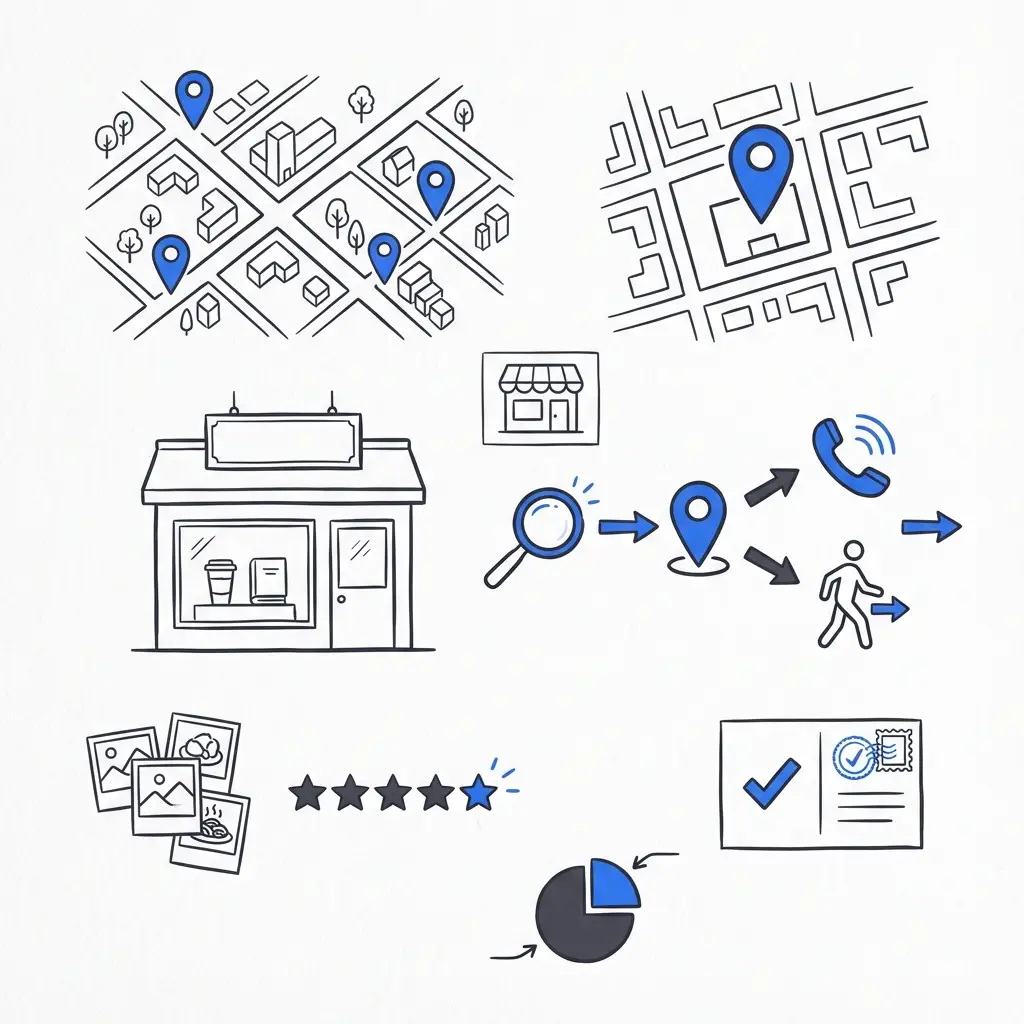
What Google Local Services Ads mean for a law firm right now
Google Local Services Ads are a different animal from the typical search ad. Instead of bidding on keywords and paying per click, law firms pay only for qualified leads — phone calls or messages that meet Google’s criteria. For lawyers who think in terms of intake, triage, and ethical obligations, Google Local Services Ads behave more like a front-desk manager who bills only when someone walks through the door.

In practical terms, these ads put verified legal providers at the top of local search results with badges like “Google Screened” or “Google Guaranteed,” which many consumers trust. That matters: legal searchers look for credibility signals such as verified licenses and quick responsiveness. If your firm can answer quickly and qualify consistently, Google Local Services Ads can drive intent-rich calls that convert.
If you want a discreet hand to set up, verify, and test Local Services Ads for your practice, consider Agency VISIBLE’s setup and audit help — they specialise in making small and mid-sized firms visible and can walk you through the verification steps and early optimization. Learn more through their contact page at Agency VISIBLE’s contact page.
Why LSAs are different from standard Google Ads (and why that difference matters)
There are four practical differences every law firm should understand:
Get discreet help launching Local Services Ads
For a practical partner that helps with verification, optimization, and ongoing management, see the Agency VISIBLE homepage for services and case studies.
1. Billing model — pay per lead, not per click
With Google Local Services Ads you pay for a qualified lead. That aligns costs directly to intake economics instead of impressions or clicks. This makes cost-per-interaction easier to model against average case values.
2. Discovery method — categories and geo-tiles instead of keywords
Google matches search intent to service categories and geography rather than keyword auctions. You won’t be bidding on “personal injury lawyer” the way you would in a regular Google Ads campaign. Instead, you tell Google the services you provide and the areas you serve.
3. Verification — identity, background and license checks
Firms and key staff often must pass background checks and license verifications. That verification is a gating factor: once complete, verified firms can display badges that build trust with prospective clients.
4. Perception — a badge changes caller behavior
The presence of a Google Screened or Guaranteed badge can shift click-and-call behavior toward your profile. For many prospective clients, that badge is an instant credibility shortcut — especially for time-sensitive legal issues.
When set up and managed properly, Local Services Ads deliver intent-driven callers who are closer to hiring; the difference comes down to rapid response, precise service categories, and strong intake scripts that convert leads to retained clients.
Setting up Google Local Services Ads for your law firm: the practical steps
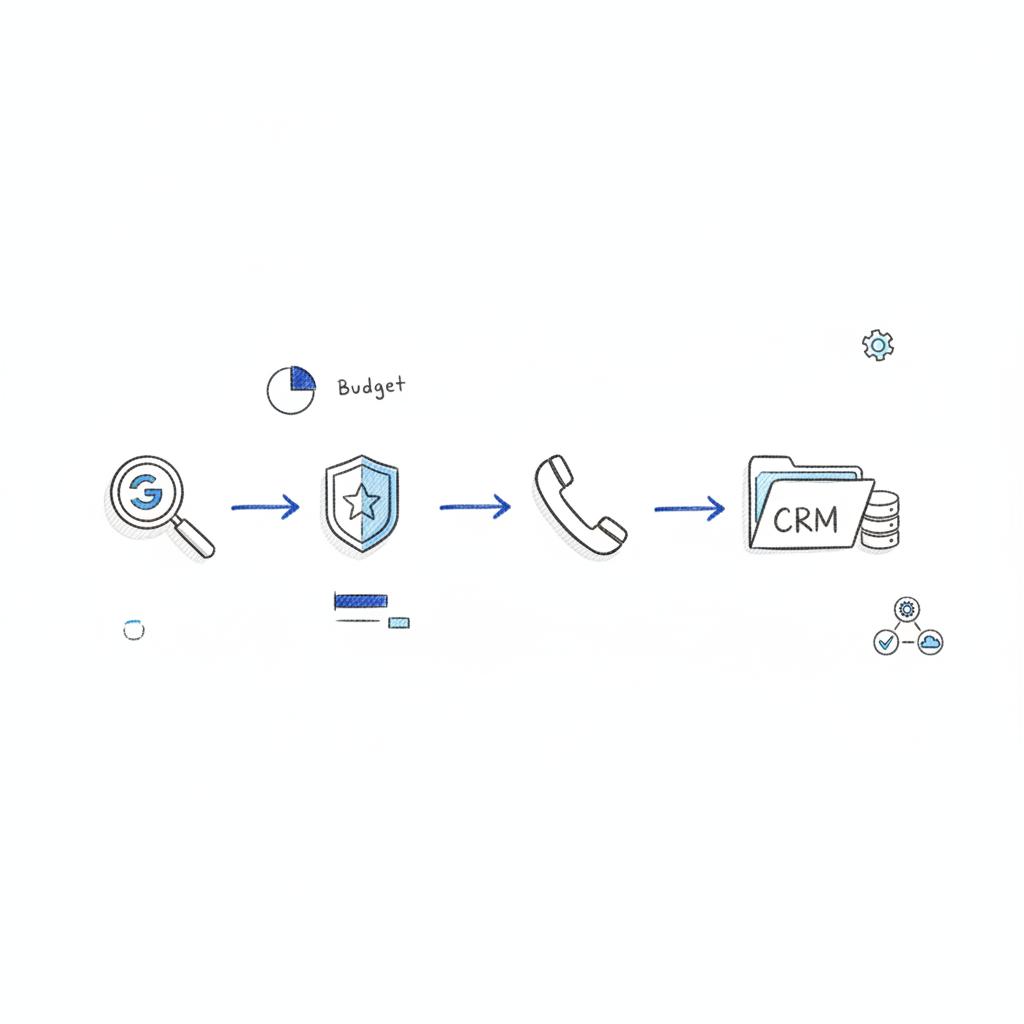
Setting up an LSA profile is straightforward in concept but requires care. The main stages are creating the Local Services profile, choosing precise practice areas and service zones, completing Google’s verification process, and wiring in lead tracking and CRM connections. Expect verification to take anywhere from a few days to several weeks depending on jurisdiction. A quick look at the Agency Visible logo can remind you to prioritize clear, credible branding.
Create a clear Local Services profile
List only the practice areas you actually accept, not aspirational services. Include a primary office address and realistic service zones. Choose how you want to receive leads — by phone, by message, or both — and be explicit about business hours and response expectations. A precise profile reduces mismatches and low-value leads.
Prepare and upload verification documents
For lawyers this means business registration papers, state bar licenses for listed attorneys, and background check consent for owners and key staff. The Google Local Services Ads dashboard centralizes document uploads and displays verification status. Some state licensing authorities are faster than others, so start this early.
Integrate tracking and call recording
Connect call tracking and your CRM during setup. This lets you reconcile billed leads with intake records and tie leads to case outcomes. Good tracking is how you convert billed leads into measurable ROI.
Set a weekly lead budget
LSAs let you cap leads weekly. Use this to match lead volume to intake capacity and avoid overflow. Start conservative and increase as you measure conversion and case value.
Day-to-day management: scripts, speed, and disputes
How a team handles leads is where the difference between paying and profiting appears. Speed matters: many firms report better conversion when leads are answered within an hour, and even better when answered within minutes. A short, consistent script lets intake staff qualify quickly and protect against compliance missteps.
Sample two-minute intake script (digestible and compliant)
“Thanks for calling [Firm]. I’m [name]. Can I confirm you’re calling about [practice area]? Great — which county or city is the issue in? Are you currently represented? What happened and when? Can we schedule a quick callback with [attorney] for a more detailed intake?”
This structure confirms jurisdiction, matter type, representation status and urgency while staying within ethical boundaries — don’t promise outcomes.
Disputing billed leads
If a billed lead isn’t a qualified prospect (spam, wrong number, or outside service area), use the dispute workflow in the LSA dashboard. Document the reason for dispute immediately and attach call recordings, intake notes, and any evidence. A prompt, factual dispute often results in a credit.
Key metrics to track for Local Services Ads
Five numbers will tell the story of performance:
- Cost-per-lead (CPL) — what you pay for each billed lead.
- Lead-to-client conversion rate — percentage of billed leads that become retained clients.
- Qualified leads per week — volume of real opportunities arriving via LSAs.
- Average case value — what a retained matter is worth to the firm.
- Return on investment (ROI) — revenue from clients divided by LSA spend.
Typical CPLs in U.S. legal markets often fall in the low-hundreds of dollars, but practice area and metro size shift that number. Emergency-oriented practices and big-city markets usually cost more per lead. Use local testing to see real numbers for your market.
Compliance and ethics — the must-do checks
Lawyers must map claims and disclaimers to state bar rules. That means:
- Keep attorney listings accurate and up-to-date.
- Avoid language that promises results.
- Keep intake documentation and call recordings in case of disputes or bar inquiries.
Remember: Google’s badges are marketing aids, not legal guarantees. If a client alleges misleading advertising, regulators will look at intake notes and communications — so keep clear, dated records attached to each billed lead.
A six-step implementation checklist
Use this checklist as your sprint plan:
- Create a precise Local Services profile with accurate practice areas and service zones.
- Complete verification: collect bar licenses, business paperwork, and background checks.
- Connect call tracking and CRM for lead reconciliation.
- Set a weekly lead budget aligned to intake capacity.
- Train intake staff on a concise qualification script.
- Run a compliance review to check language and attorney listings against state rules.
Iterate. Launch quickly, measure the first 30–90 days, and tune categories, budget, or zones based on real data.
Real ROI examples and simple math
Numbers make decisions easier. Here are two scenarios that explain LSA math.
Conservative test case
If CPL = $200 and you set a weekly cap of 10 leads, weekly spend = $2,000. If your lead-to-client conversion is 10% and average case value is $5,000, one retained client generates $5,000 revenue. That is $5,000 revenue on $2,000 spend — a straightforward positive test.
Higher-conversion case
Same CPL but a 20% conversion rate yields two retained clients per 10 leads. At $5,000 per matter, that’s $10,000 revenue on $2,000 spend — clearly profitable. The lever points are CPL, conversion rate, and average case value.
Practical tips from pilots and small-firm experiments
Across many tests a few patterns repeat:
- Speed wins: designate one person to own early lead contact and measure response times.
- Script discipline: use a short script that checks jurisdiction, matter-type and urgency.
- Reconcile monthly: match billed leads to intake records to prevent billing surprises.
One small personal-injury firm ran LSAs on a shared reception line. Their CPL was near $250, their conversion about 15% in month one, and they saw a clear path to profitability. Another family law practice had many unqualified calls at first; narrowing service zones and removing some categories reduced wasted leads and raised conversion.
Troubleshooting common issues
Here are common problems and practical fixes:
Too many unqualified leads
Check intake speed, listed services, and service zones. Narrow categories or reduce the zone to stop low-value calls.
Too few leads
Broaden zones, add adjacent categories you actually handle, or raise the weekly budget. Check whether your weekly cap is throttling delivery.
Incorrect billed leads
Gather intake notes, call recordings, and evidence, then dispute promptly in the LSA dashboard. For guidance on ranking and factors that affect delivery, see this resource on Local Service Ads ranking factors: Google Local Service Ads ranking factors.
Integrations and tools that make LSAs measurable
Integrations are not optional if you want to measure LSA effectiveness. At minimum:

- Call tracking with unique tracking numbers assigned to LSA lines
- CRM integration to link lead records to intake, conflicts, and case outcomes
- Regular export of LSA reports to reconcile billed leads and dispute credits
With these systems you can trace a billed lead from first ring through retention and revenue recognition. For additional practical setup and budget guidance for lawyers, see this guide: Local Services Ads for Lawyers: setup, budgets, and ROI, and this practitioner-focused overview: Local Service Ads for Lawyers.
Who should manage LSAs: in-house vs agency
Some firms prefer an internal team to keep intake and consent documentation tightly controlled. Others use agencies to save time: agencies can speed verification, optimize profiles, and manage daily disputes. If you choose an agency, clarify responsibilities: who owns verification documents, who stores call recordings, and who manages disputes?
Decision framework: is this right for your firm?
LSAs fit firms that have predictable intake processes, quick response capability, and case-value ranges that justify pay-per-lead economics. If your firm relies on long referral cycles or very narrow specialties, LSAs might be less cost-effective. Consider LSAs as a complement to other channels – they surface active searchers close to decision.
Advanced tips for scaling and optimization
Once initial tests show promise, try these steps:
- Run A/B tests on intake scripts and call-handling assignments.
- Adjust service categories to capture adjacent work you actually accept.
- Use geo-splitting (if possible) to compare city vs suburb CPLs.
- Keep verification documents current and audit listings monthly.
Remember: LSAs are a data game. Small adjustments in service zones or scripts often change CPL and conversion meaningfully.
Sample compliance checklist for attorney listings
Keep this short audit ready:
- Are the attorneys listed actually licensed in the service jurisdiction?
- Are bar numbers and license statuses current?
- Do any staff listed have background checks and appropriate consents?
- Is all language free from promises or outcome guarantees?
Keep screenshots of the LSA profile and upload records when you update listings.
Weekly routine for an LSA manager
Make this a weekly habit:
- Review billed leads and reconcile with intake records.
- File disputes for invalid leads within Google’s window.
- Check verification status and upload any new documents.
- Review response times and coach the intake team if needed.
- Adjust weekly lead budget to match intake capacity.
How to structure a 30-, 60-, 90-day LSA pilot
Plan a staged rollout:
Days 1–7: Setup
Create profile, upload documents, integrate tracking, and train intake staff.
Days 8–30: Test
Set a small weekly cap and monitor CPL, conversions, and dispute rate.
Days 31–90: Optimize
Tune service categories, adjust zones, test scripts and scale budget to match proven conversion rates.
Real-world examples and what to expect month-to-month
Initial months are noisy: expect a learning phase where you prune categories and adjust zones. Month three is usually more predictive: you will have enough leads to calculate a realistic conversion rate, cost-per-client, and whether you can scale budget profitably.
When to pause or cut LSA spend
Pause if CPL rises beyond your economics, conversion plunges, or intake overload creates poor client experience. Use the weekly cap to lower exposure quickly; don’t let high spend run unattended.
Integrating LSAs with other marketing channels
LSAs pair well with a steady organic presence: local SEO, clear attorney bios, and a well-structured website that reinforces the claims in your LSA profile. Use landing pages that emphasize factual credentials and clear contact paths to improve conversion across channels.
Final practical checklist before you launch
Confirm these at launch:
- Verification documents uploaded and in process
- Call tracking connected and recording enabled
- Weekly lead budget set
- Intake script practiced and responsibility assigned
- Compliance review completed
FAQs — quick, usable answers
Q: Are LSAs allowed for lawyers?
A: In many U.S. jurisdictions, yes — but firms must pass Google’s verification and comply with state bar advertising rules. Always confirm with local bar guidance.
Q: How much do LSA leads cost for legal services?
A: Costs vary by practice area and market. Typical CPLs are often in the low hundreds in U.S. cities, but test locally to see your market realities.
Q: Do LSAs replace Google Ads?
A: No — they are different tools. LSAs deliver verified, intent-driven local searchers with pay-per-lead billing; Google Ads provides granular keyword targeting and creative control. Many firms run both to compare client acquisition costs.
Closing practical thought
Google Local Services Ads are not a magic bullet, but they are a clear, measurable channel to reach people actively searching for legal help. Treat LSAs like you would a new intake hire: train the team, measure conversion, and iterate. With a disciplined pilot and the right tracking, LSAs can become a reliable part of a law firm’s client-acquisition toolkit.
In many U.S. jurisdictions, Google permits legal services in its Local Services Ads program, but your firm must complete Google’s verification and follow state bar advertising rules. Always check your state bar’s guidance before you launch.
Costs vary by practice area and metro. Typical cost-per-lead often falls in the low hundreds of dollars in U.S. markets. Emergency-oriented practices and large-city markets usually cost more. Local testing is the most reliable way to determine your actual CPL.
If your team lacks bandwidth to handle verification, daily disputes, or intake optimization, an experienced agency can speed setup and testing. Agencies like Agency VISIBLE offer LSA workflow support, but decide based on internal capacity and compliance preferences.