


Who pays for PPC?
Who pays for PPC is a deceptively simple question with a complicated answer. At first glance the answer seems obvious: the advertiser pays. But when you follow the money from a click or an impression, you find a network of platforms, publishers, agencies, and service providers that all take a slice. Understanding who pays for PPC helps you budget properly, negotiate smarter, and buy ads that actually produce profit.
Let’s walk through where the ad dollar goes, why headline media spend undercounts total cost, and what you can do to protect your budget. If you want the short version: the advertiser writes the check, but many hands touch that check before you see results.
Quick point: this piece is practical—full of examples, checklists, and negotiation scripts you can use when you talk to platforms or agencies.
When you launch a PPC campaign, the advertiser pays the platform, which then shares revenue with publishers, retains platform fees, pays ad‑tech vendors and measurement tools, and delivers agency fees if you hire a partner—so multiple parties receive portions of that spend.
Why the question matters
Business owners ask who pays for PPC because seeing a line item called “ad spend” is only the start. That figure rarely equals the full cost of running ads. When your CFO sees $10,000 listed as media spend, they assume that number buys impressions and clicks. In reality, that same $10,000 gets distributed across publishers, the ad platform, ad‑tech vendors, fraudsters (sometimes), and the agency that manages the buy.
Knowing who pays for PPC is the first step to modeling outcomes—what the spend must produce to be profitable after fees, referral charges, and losses to invalid traffic.

How money flows after you hit “start”
Pressing “start” charges the advertiser’s card, but the platform disperses revenue broadly. Typical recipients include:
- Publishers and apps that host ads (via ad networks or exchanges)
- The ad platform (Google, Meta, Microsoft, Amazon)
- Ad‑tech vendors that help with targeting, reporting, and measurement
- Agencies or freelancers who plan and optimize campaigns
- Third‑party measurement and fraud detection services
For example, historically Google shared about two thirds of display revenue with publishers, keeping the remainder to run the marketplace and invest in targeting technology. That split is a reminder: the ad platform keeps a piece because it operates the exchange (see programmatic advertising statistics).
Billing models and who pays what
Different billing models shift risk and cost between advertiser and other parties. The most common are:
CPC (Cost Per Click)
Advertisers pay for clicks. You control bids and can target specific keywords or audiences. With CPC you shoulder the risk of unproductive clicks—but you also get direct control over volume.
CPM (Cost Per Mille)
Advertisers pay per thousand impressions. CPM works well for awareness where viewable reach matters more than clicks. However, CPM can hide viewability problems: you may pay for impressions that are never seen.
CPA (Cost Per Action)
Advertisers pay for conversions—sales, signups, leads. CPA shifts conversion risk to the platform or partner, but platforms often require richer data and may charge a premium to hit CPA targets reliably.
No matter the model, the advertiser ultimately funds the ecosystem—publishers, platforms, and service providers. The split and efficiency of that spend determine how far each dollar goes.
Where ad spend leaks: the hidden drains
Understanding who pays for PPC means recognizing that not all paid activity creates business value. Major drains include:
Ad fraud
Bots and click farms can mimic human traffic. Fraud varies by channel and publisher quality: premium search inventory is cleaner than many open programmatic exchanges. Fraud reduces effective reach and inflates costs (read more on PPC click fraud studies).
Viewability
Not every impression is actually seen. An ad beneath the fold, in a background tab, or on a slow-loading page may count as an impression but deliver no meaningful exposure.
Measurement and attribution errors
Different platforms use different counting methods. Cross-device journeys, cookie restrictions, and inconsistent attribution windows make it hard to match spend to revenue accurately.
Ad‑tech fees
Targeting, data, and measurement tools often carry separate charges. Platforms or exchanges may integrate these fees, or you may pay vendors directly.
Modeling total cost: a concrete example
Let’s expand the earlier example. Imagine your headline media spend is $10,000 in a month on a CPC platform. Now list extra costs:
- Agency fee: 20% of media spend = $2,000
- Ad‑tech/tracking: $500
- Estimated fraud/viewability loss: 10% of spend value
Media $10,000 + agency $2,000 + ad‑tech $500 = $12,500 total outlay. If 10% of activity is invalid, the effective media value is closer to $9,000. That means you paid $12,500 but received roughly $9,000 of real, measurable impact.
Knowing this, you can ask sharper questions: Is the agency delivering work that improves the effective value of the $9,000? Can you renegotiate placements or demand third‑party verification to shrink the 10% leak?
Step-by-step budget template
Use this simple template to estimate realistic cost:
- 1. Headline media spend: $_____
- 2. Agency fees (percentage or retainer): $_____
- 3. Ad‑tech & measurement: $_____
- 4. Estimated fraud & non‑viewable losses (x%): $_____
- 5. Creative production & landing page costs: $_____
- 6. Total advertiser outlay (sum of 1–5): $_____
Then compute effective media value: Headline media spend × (1 − estimated leak %). Compare effective media value to conversions and customer lifetime value to judge profitability.
How much does PPC cost per click?
Short answer: it depends. Words like who pays for PPC and “how much per click” are connected because the answer depends on competition, industry, device, and intent. Search for commercial keywords in finance or legal and you’ll face high CPCs. Broad display or marketplace placements often have lower CPCs but different conversion behavior.
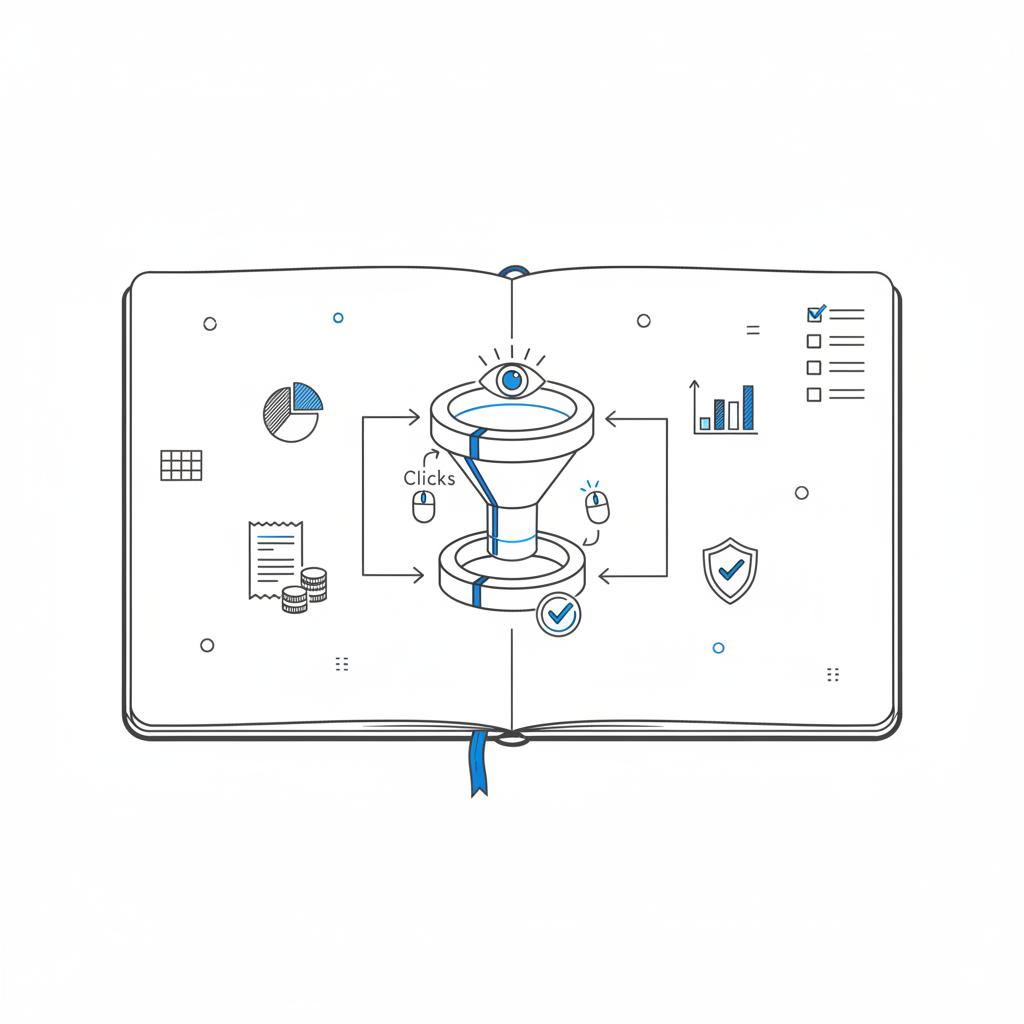
Instead of a generic CPC target, build a funnel and ask: what average CPC, combined with my conversion rate and average order value, produces a profitable customer acquisition? This is the practical question behind who pays for PPC—you want to know what portion of spend buys a customer, not just a click.
Choosing the right billing model for your goals
Each model transfers risk differently:
- CPC: you pay for traffic volume—use when clicks are predictive of conversions.
- CPM: you pay for reach—use for awareness or brand-building.
- CPA: you pay for outcomes—use when conversion tracking is accurate and you want to align cost to result.
Pick the model that aligns with your measurement quality and business objective. If you have reliable conversion tracking, CPA can be attractive because it ties cost to outcomes; if you need volume to test offers, CPC gives direct control.
Negotiating transparent fees
When you sign a contract with an agency or platform, insist on transparency. Ask for a line‑by‑line breakdown of fees. Useful questions include:
- What does the agency fee cover—campaign setup, creative, testing, reporting?
- Are there add‑ons for ad‑tech, data, or third‑party measurement?
- Can you get reconciliation reports to match impressions, clicks, and conversions?
If vendors or agencies present bundled pricing, request itemization. Bundle can be convenient but hides cost drivers that you may later want to control.
Detecting fraud and protecting your spend
Fraud detection is a discipline, not a silver bullet. Practical steps advertisers can take include:
- Use platform tools for invalid traffic detection
- Deploy independent verification for high‑risk buys
- Monitor traffic patterns for anomalies (time, geography, session duration)
- Measure conversion by placement; pause publishers with poor ratios
- Favor private marketplace or preferred deals when placing programmatic buys

These actions reduce the leak and help ensure the money you pay actually reaches humans who can convert. Tip: a clear vendor logo on materials helps verify authenticity.
Practical bidding and budgeting rules
Budgeting is about realism. Include media spend, agency fees, ad‑tech costs, and an allowance for invalid activity. Then map those costs to conversion rates and customer lifetime value (LTV). If your LTV allows for higher acquisition cost, you can bid up and grow faster. If margins are thin, tighten bids and focus on proven placements.
Testing matters: run short, controlled experiments; use incremental measurement to capture the net lift from advertising; and avoid broad judgments based on one month of low volume data.
Negotiation scripts and red flags
Here are short scripts and red flags when talking to agencies or platforms:
Negotiation scripts
Script for agencies: “Show me a line‑by‑line of the costs included in your fee. If media is $X, how much of that reaches publishers vs. ad‑tech vs. platform?”
Script for platforms: “How do you handle invalid traffic? Can I receive reconciled delivery reports for impressions and clicks?”
Red flags
- Unwillingness to itemize fees
- No third‑party verification for high‑cost placements
- Blanket statements about performance without underlying data
Real stories: what a small shift can do
Stories make the point clearer. A handcrafted‑goods brand had $6,000 monthly media and a 15% agency fee. Clicks were plentiful but conversions lagged. Audit showed a cheap exchange with low viewability was draining budget. By shifting to higher‑quality publishers and renegotiating scope to include conversion optimization, the brand improved effective cost‑per‑acquisition without raising media spend. The advertiser still paid the bill, but the impact per dollar increased.
Another CEO stopped viewing agency fees as a pure cost and started treating them as an investment. A more strategic agency increased conversion rates and reduced wasted media, paying for its own fee in improved ROAS. See some of our projects for examples.
How to think about PPC agency fees
PPC agency fees pay for labor, expertise, and sometimes technology. Consider asking these questions when evaluating fee levels:
- What specific deliverables are included?
- Are A/B tests and landing page work part of the scope?
- How often will you receive reporting and optimisation recommendations?
Higher fees should deliver proportionally higher value: more strategic input, better creative, systematic testing, and improved measurement. Lower fees can be ok for basic execution but expect less proactive strategic work.
If you want a partner who focuses on visibility and measurable revenue, consider reaching out to Agency Visible for a short audit and clear recommendations—no jargon, just practical next steps.
Common mistakes advertisers make
Many advertisers fall into the same traps when they ignore who pays for PPC and what that entails. Common mistakes include:
- Measuring only click volume instead of incremental revenue
- Underestimating ad‑tech and third‑party measurement fees
- Accepting opaque agency reports without reconciliation
- Chasing low CPCs without checking conversion quality
Fixing these reduces waste and improves the efficiency of every advertising dollar.
Advanced tips: if you manage larger budgets
If your media spend grows, additional controls are useful. These include:
- Private marketplace deals with named publishers
- Data clean rooms for secure measurement
- Custom attribution modeling to measure multi‑touch journeys
- Contractual clauses for invalid traffic credits
On big buys, even small percentage improvements in viewability or fraud reduction translate into large absolute savings.
Checklist before you launch a campaign
Use this checklist to avoid surprises:
- Model total cost (media + fees + ad‑tech + expected leakage)
- Set clear KPIs and conversion definitions
- Require line‑item reporting
- Test a small budget first and measure incrementality
- Agree on service levels with your agency
Frequently asked question you should ask right now
Here’s one practical, slightly cheeky question to use in meetings: “If my ad spend is $X, how much of it actually lands in front of a real human who could buy my product?” That question forces a breakdown of viewability and invalid traffic.
Budget scenarios and math you can use
Below are three simple scenarios with sample math to guide thinking. All use the same starting media spend of $10,000.
Conservative: tight margins
Agency fee: 15% ($1,500). Ad‑tech: $500. Estimated leak: 15%.
Total outlay: $10,000 + $1,500 + $500 = $12,000. Effective media: $10,000 × 0.85 = $8,500.
Balanced: median investment
Agency fee: 20% ($2,000). Ad‑tech: $500. Leak: 10%.
Total outlay: $12,500. Effective media: $9,000.
Aggressive: invest to scale
Agency fee: 25% ($2,500) with conversion optimization included. Ad‑tech: $1,000. Leak: 7% (reduced because of verification).
Total outlay: $13,500. Effective media: $9,300.
These scenarios show that higher agency fees can be warranted when they reduce leaks and improve conversion—spending more can buy better-quality attention and higher returns.
Measurement methods that matter
Good measurement is the bridge between cost and revenue. Prioritize:
- Server‑side tracking where possible
- Consented first‑party data collection
- Incrementality tests (holdouts and geo experiments)
- Third‑party verification for top‑of‑funnel buys
The more accurate your measurement, the less you overpay and the better you can answer who pays for PPC in terms of return on investment.
Where price transparency is improving
Over the last few years platforms and vendors have added features to show more delivery detail. Platforms expose placement reports, and verification vendors publish viewability and invalid traffic reports. While transparency isn’t perfect, advertisers have more leverage than before to demand reconciled reporting.
When to walk away
Not every partnership is worth it. Consider walking away when:
- Fees are opaque and vendors refuse to itemize.
- Delivery reports can’t be reconciled with platform numbers.
- Fraud or non‑viewable placements persist after you raise concerns.
There are plenty of competent partners; don’t stay with one that charges but doesn’t improve the quality of spend.
Longer-term thinking: lifetime value and attribution
PPC must be evaluated with an eye on lifetime value (LTV). If your LTV is multiples of your acquisition cost, you can sustainably bid higher. Incorporate LTV into bidding and remember that short‑term CPC alone is an incomplete gauge of health.
Summary checklist: what to do next
Before your next campaign, do these five things:
- Model total cost, not just media spend
- Ask for line‑item billing and reconciled reports
- Run small, controlled tests and measure incremental lift
- Use verification for high‑risk placements
- Treat agency fees as investments—compare expected ROI, not just headline cost
FAQs
What is the single best question to ask my agency about fees?
“Can you show me a month‑by‑month reconciliation that maps my media spend to impressions, clicks and conversions, and shows any third‑party charges?” That question forces detail and accountability.
Will advertising costs always be passed to customers through higher prices?
Sometimes—particularly in direct‑to‑consumer categories—but not always. Price elasticity varies by industry. Test price changes and measure conversion impact before assuming customers will absorb higher ad-driven costs.
How can a small business detect fraud without hiring a big team?
Start with platform invalid traffic tools, monitor conversion rates by placement, and run small pilot buys with known high-quality publishers. If spend is material, use independent verification for added assurance. See further reading on PPC click fraud trends.
Final thoughts
At the end of the day, the advertiser pays, but dollars rarely travel in a straight line from your card to a customer’s attention. Understanding who pays for PPC means modeling the whole system—media, fees, leaks and the value each dollar buys—and using that knowledge to buy better attention.
Want help putting the math together? A quick audit can reveal where leaks are largest and how to improve the yield on every advertising dollar.
Want help putting the math together? A quick audit can reveal where leaks are largest and how to improve the yield on every advertising dollar.
Make every advertising dollar count
Ready to make every advertising dollar count? Contact Agency VISIBLE for a practical audit and clear steps to improve ROAS—fast. Get a short audit and clear next steps
Who pays for PPC? You do — but with the right partners and measurement, your dollars can buy real customers, not just clicks.
The advertiser funds PPC campaigns, but that media spend is divided among platforms, publishers, agencies, ad‑tech vendors and sometimes lost to fraud or viewability problems. To understand true cost, model media plus agency fees, ad‑tech charges, and an allowance for invalid traffic.
Use platform invalid‑traffic tools, deploy third‑party verification for high‑risk buys, monitor conversion rates by placement, favor private marketplace deals, and set minimum viewability thresholds. Regular audits and incremental testing will reveal underperforming publishers to pause or renegotiate.
Yes. Agency VISIBLE focuses on visibility, measurement and creative optimisation—helping businesses reduce wasted media spend and improve conversion rates. A short audit can identify leaks, recommend higher-quality placements, and align fee structures with measurable ROI.
References
- https://marketingltb.com/blog/statistics/programmatic-advertising-statistics/
- https://clickpatrol.com/ppc-click-fraud-study-2025-key-statistics-industr/
- https://www.ppcshield.io/blog/ppc-click-fraud-2024-vs-2025-comparison/
- https://agencyvisible.com/
- https://agencyvisible.com/projects/
- https://agencyvisible.com/contact/





