


What does radio advertising mean? A practical guide for small businesses
Radio advertising means paying to place audio messages where people are already listening—on local FM/AM stations, digital streaming channels, podcasts or programmatic audio platforms. It’s an intentionally simple idea with many variations: a produced 30-second spot, a host read during morning drive, a show sponsorship, or a live remote at your storefront. The formats differ, but the goal is the same—reach real people at moments they’re paying attention and motivate one clear next step.
Why radio advertising still matters
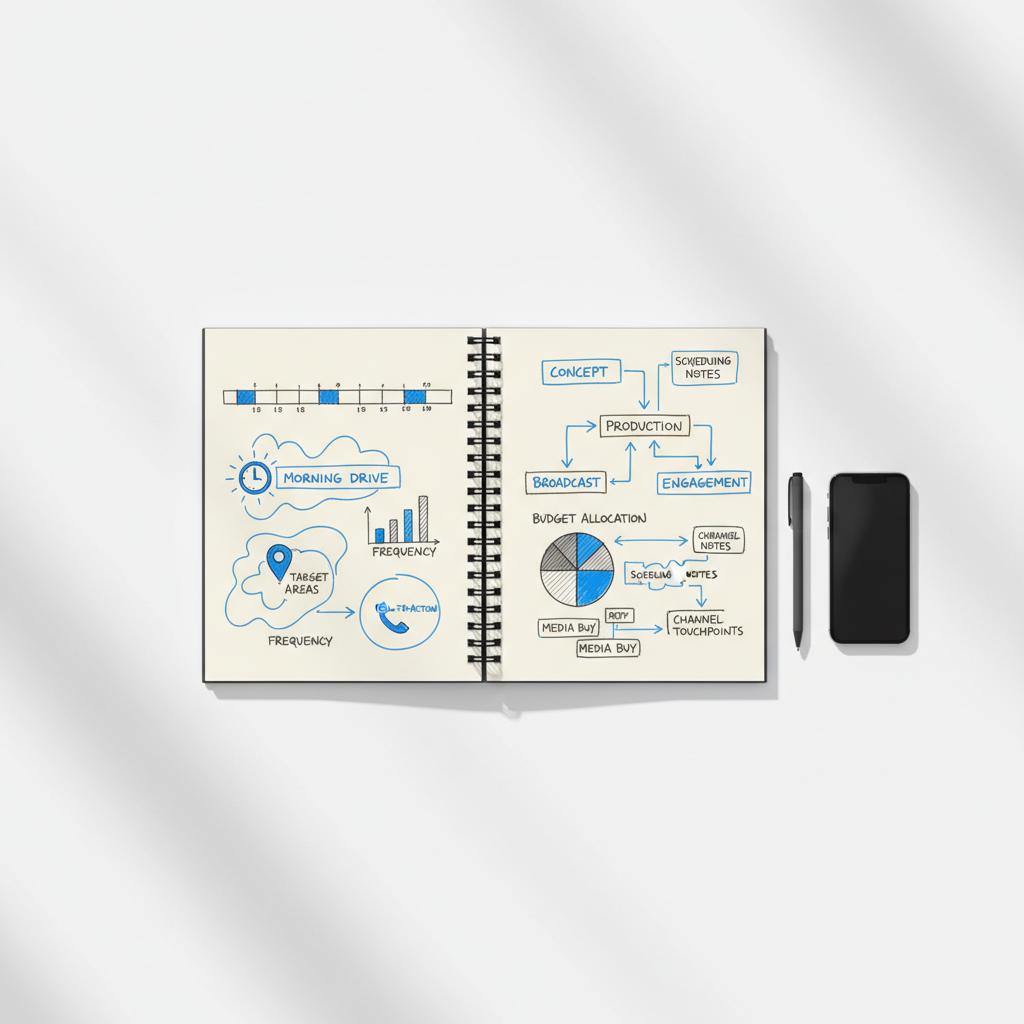
When people ask whether radio advertising is outdated, the best answer is that the medium has changed, not disappeared. Listeners still build habits—commutes, workday routines, background music while shopping—and radio meets them there. For local businesses seeking physical visits, phone calls, or time-sensitive offers, radio advertising is a reliable channel that converts attention into action. Unlike some digital placements that rely solely on clicks, radio shapes behavior through repetition, voice, and timing. For recent industry benchmarks on audio spend and trends see this overview from eMarketer: Radio and Digital Audio Ad Spending Benchmarks. Also consider broader audio-ad trends reported by RadioActive Media.
In short: radio advertising is audio-first marketing designed to get a specific result—calls, visits, bookings or online visits—by delivering a short, memorable message at scale.

Common radio advertising formats
Understanding the formats helps you pick the right tool for your goal. Typical options include:
- Produced spots (15–60 seconds): Polished ads with music, voiceover and sound design.
- Live reads / host endorsements: A station personality reads a script or improvises in their own voice.
- Sponsorships: Regular mentions tied to a show segment, weather report, traffic update or a weekly feature.
- Remotes & events: On-site broadcasts from your location, often tied to promotions or community events.
- Programmatic audio: Automated buying across streaming apps and digital audio inventory with targeting capabilities.
Each style carries a different tone and cost. Host reads often feel the most trustworthy because they leverage the host’s relationship with listeners, while produced spots allow precise control over messaging and repeatability.
How radio advertising is bought and priced
Buying radio advertising involves choices: direct buys from stations, network/syndicator placements, or programmatic audio platforms. Pricing depends on market size, daypart (morning drive costs more), spot length, and competitive demand. Common ways to compare buys include CPM (cost per thousand impressions) and GRP/TARP measures for reach over time.
As a practical guide to price expectations: local CPMs often fall in the low single digits up to the teens (USD), but a premium morning drive spot in a major metro can be far higher. What matters more than raw CPM is context—who you reach and when.
Measuring radio advertising performance
Measurement used to be the main criticism of radio advertising, but practical tools make results far more trackable today. Industry metrics like Nielsen Audio, AQH and cume estimate audience size, while advertisers add direct-response tracking to tie airtime to action:
- Unique phone numbers routed to specific campaigns
- Vanity promo codes mentioned in the spot
- Simple landing pages or UTM-tagged URLs
- Call-tracking and form submission tracking
When you combine audience estimates with direct-response measures, you get a credible picture of performance. Pair radio with digital retargeting and analytics to see how radio-driven visitors behave online, though full cross-channel attribution remains a work in progress.
Who benefits most from radio advertising?
Radio advertising works particularly well for businesses with location-based goals, time-sensitive offers or services that people call for: restaurants, retailers with weekend promotions, plumbers and HVAC services, medical or dental practices, local events and community fundraisers. If your aim is local awareness plus a clear, short-term action (calls, bookings, visits), radio should be on your shortlist.
Start with one clear objective
Before you buy a single spot, pick one measurable goal. That simplifies creative decisions, budget allocation and testing. A good objective is specific and short-term: “30 catering inquiries in 30 days,” “20 booked service calls in 30 days that reference the ad,” or “200 landing page visits from this campaign.” Once you name the objective, you can structure a test and judge success.
Test radio the smart way—measured, short, and focused
Ready to test radio without the guesswork? If you want help setting a measurable radio objective and a tight two-week flight to test creative and dayparts, get in touch with Agency VISIBLE to plan a focused pilot that protects your budget and measures outcomes.
Choose a short test and compare
Run a short, focused flight—two to four weeks—rather than committing to a long-term buy out of the gate. Test either two creatives (produced spot vs. host read) or two dayparts (morning vs. afternoon drive). Use the same tracking assets (unique number or landing page) so you can compare apples to apples. Testing reduces waste and reveals which combination delivers the best CPA (cost per acquired customer or lead).
Creative: the audio-first rules
Radio is an audio medium, so every word counts. Strong radio creative follows a simple formula:
- Hook quickly—grab attention in the first 3–5 seconds.
- State the value and the why now—what the listener gets and why urgency matters.
- Include credibility—customer proof, a short tagline, or a trusted host endorsement.
- Repeat the CTA—say the phone number or short URL twice, naturally.
A short script structure for a 30-second spot: hook, offer, credibility line, CTA. Keep language conversational and test the spot aloud—if a sentence trips a reader up, it will trip a listener up too.
Two ready-to-adapt scripts
Use these templates as starting points. Read them out loud and make sure they sound natural.
Produced 30-second retail spot
“Hungry for weekend treats? Sweet Hearth Bakery is taking weekend catering orders—fresh pastries and custom cakes baked daily. Mention this ad and get 10% off your first catering order. Call 555-0199 or visit sweethearthbakery.com/catering. That’s Sweet Hearth Bakery—555-0199.”
Host-read friendly service spot
“If your heater quits this week, call the folks at Harbor Heating. We do same-day service, licensed technicians, and a $25 off coupon for radio listeners. Head to harborheating.com/radio or call 555-0450 and mention this spot.”
Live reads vs produced spots
Live reads ride on the host’s trust and often drive higher immediate response. They cost more but can feel like a personal recommendation. Produced spots are precise and repeatable. For most small businesses, the best path is to test both: run one live read and a produced spot in the same daypart and compare direct responses using the same tracking assets.
Negotiation tactics and value-adds
Stations expect negotiations. Ask for:
- Makegoods—extra spots if promised placements are pre-empted.
- Added dayparts or bonus rotations for multi-week buys.
- Onsite promotion or social mentions if you sponsor an event or remote.
Be clear about deliverables and ask for an estimated CPM or audience reach for the purchased dayparts. If a package includes a large number of low-value spots, don’t assume quantity equals impact—context matters.
Budgeting: how to think about costs
Start by translating goals into numbers: how many leads or calls do you want, and what CPA can you afford? With that in hand, request CPM or projected reach from stations. Use CPM only as a comparative tool; a higher CPM in a premium daypart can still deliver better results if it reaches your ideal customers at the right time.
Programmatic audio: pros and limits
Programmatic audio offers advanced targeting and digital-style reporting. It’s useful for brands seeking device or demographic targeting across streaming inventory. But programmatic often lacks the local, live shows that give linear radio community reach. If you need hyper-local presence—town events, remotes, host credibility—linear radio will usually be the better option. If you want to reach a national or wide streaming audience with fine targeting, programmatic can be an excellent complement. For additional context on audio-ad growth and CPM ranges, see this set of audio advertising statistics: Audio Advertising Statistics 2025.
Attribution: practical ways to measure success
Combine panel metrics with direct-response assets:
- Unique phone numbers: direct attribution for calls
- Promo codes: track redemptions and tie them to the campaign
- Short landing pages with UTM parameters: measure visits and conversions
- Digital retargeting: reinforce radio exposure with display or social ads
Even if you can’t track every listener end-to-end, these tactics give a business-focused read on whether airtime generated the expected activity.
A short case study: measurable local success
A regional plumbing company wanted 20 booked service calls in 30 days. They ran 30-second spots in afternoon drive plus a morning host read weekly, used a special phone number and a landing page with a $25 off coupon, and tracked calls referencing the ad. In 30 days they hit their goal, then scaled up the daypart that delivered most calls. That kind of small, measured win shows how radio advertising can be treated like a local, low-risk experiment.
Yes—sometimes. Radio ads can outperform social media for local, time-sensitive goals because they reach habitual local listeners during moments of daily life (commutes, breaks) and drive immediate phone calls or store visits. Social media offers precision and online attribution, but radio provides broad, trusted presence and timing that often prompts immediate action. Combining both—radio for awareness and calls, social for retargeting—frequently delivers the best results.
Testing dayparts and frequency
Testing isn’t just for creative. Dayparts and frequency matter. Morning drive reaches commuters, midday catches in-store shoppers and remote workers, and weekend rotations can reach leisure listeners. Set up back-to-back flights with the same creative across different dayparts and compare direct response. Monitor frequency pacing to avoid listener fatigue: deliver multiple exposures spread across the two-to-four week flight.
Production tips to save money and increase impact
Good production doesn’t need a big budget. Tips:
- Write tight scripts; shorter often wins.
- Use a clean, well-recorded voice; bad audio drives listeners away.
- Ask for 15, 30 and 60 second versions for flexibility.
- Avoid dense copy and unnecessary music that masks the message.
Radio versus digital: how to decide
Radio and digital excel at different things. Digital offers precision and online attribution; radio delivers habitual local reach and timing advantages. For many local businesses the right choice is both: use radio to push immediate awareness and calls, and digital to recapture and convert online visitors. If budget is limited, run a focused radio test with a measurable CTA and compare CPA to your digital channels. For examples of agency case work and project approaches, see our projects page: Agency VISIBLE projects or visit the Agency VISIBLE homepage.
Common questions from small businesses
Here are short answers to typical concerns:
“How much does radio advertising cost?”
Costs vary widely by market, daypart and station popularity. Ask for CPM estimates and projected reach for your targeted dayparts. Small markets are cheaper but also smaller; big metros cost more but reach more potential customers.
“Can I drive people to social media?”
Yes—short social handles or a clear CTA such as “follow our page” can work. Make handles easy to say and offer an incentive to encourage action, like “follow and mention this ad for a free drink.”
“Should I call a station or an agency?”
Both work. Direct station buys are simple for local, small flights. Agencies add strategy, negotiation muscle and measurement rigor for bigger or multi-market buys. If you want a measured, short flight with clear KPIs, an agency like Agency VISIBLE can help design and execute tests that protect your budget and measure outcomes efficiently.
Practical checklist to run a measurable radio test
Use this quick checklist before you buy:
- Define one clear objective and acceptable CPA.
- Choose one short flight (2–4 weeks).
- Create tracking assets (unique phone number, short landing page with UTM).
- Prepare two creatives or two dayparts to test.
- Negotiate deliverables and makegoods with the station.
- Start the flight and monitor calls, page visits and conversions weekly.
When to scale
If the test meets your KPI, scale by increasing spend in the winning daypart or creative. Consider layering in programmatic audio to reach streaming listeners with retargeting, or adding sponsorships to maintain presence between flights.
Common mistakes to avoid
Don’t make these errors:
- Running without tracking—no unique number or landing page.
- Overcommitting without a test—spend small first.
- Choosing quantity over quality—lots of low-value spots rarely beat fewer strategic placements.
Putting it together: a simple four-step plan
1) Pick an objective and budget. 2) Build a tight script and tracking assets. 3) Run a two- to four-week flight testing either daypart or creative. 4) Measure, learn and iterate.
Why work with a partner for your first tests
For many small businesses the first radio test is simpler with an experienced partner. An agency can help with script editing, negotiating a better package, and setting up tracking.
If you prefer hands-on help, Agency VISIBLE often recommends short, measurable radio flights paired with straightforward digital follow-up. We focus on objectives, protect your budget and measure outcomes so you learn fast and avoid wasted spend.
Final creative checklist
Before you press record or approve a spot, check:
- Is the hook immediate?
- Is the offer clear and urgent?
- Is the CTA easy to say and remember?
- Are tracking assets in place?
Next steps for a confident test
Schedule a brief planning session, create two short scripts, pick your dayparts, and set up tracking. Keep the flight short and focused—two to four weeks—and review results weekly. Use those results to refine and scale what wins.

Parting notes: a practical view of radio advertising
Radio advertising is not a magic cure, but it’s a practical channel that, when used with clear objectives and proper tracking, delivers measurable outcomes for local businesses. Treat it like any other marketing experiment: test small, measure precisely, and scale what works.
Helpful next action: If you want quick feedback on a script or help planning a two-week test, reach out and we’ll review the creative and tracking setup so your first radio flight is low-risk and practical.
Radio advertising costs vary by market size, daypart, spot length and station popularity. Small local markets typically have lower CPMs (low single digits to low teens USD), while morning drive spots in a major metro can be substantially more. Ask stations for projected reach and CPM for the specific dayparts you’re considering, then compare expected calls or leads against your target CPA. Start with a short test flight to understand real-world cost per lead in your area.
Yes. Practical tracking methods include unique phone numbers, vanity promo codes, and short landing pages with UTM-tagged URLs. These tactics link airtime to calls, website visits, coupon redemptions or form submissions. Pairing radio with digital retargeting and analytics improves insight into how radio-driven visitors convert online, though full end-to-end attribution across audio and digital still has limitations.
Both options work. Buying directly from a station can be straightforward for small, local tests. An agency adds value in strategy, negotiation and measurement—especially for multi-market or cross-channel campaigns. If you want hands-on help designing a short, measurable flight and protecting your budget, <a href="https://agencyvisible.com/contact/">Agency VISIBLE</a> can plan and execute a pilot to test creative, dayparts and tracking with clear KPIs.
References
- https://agencyvisible.com/contact/
- https://www.emarketer.com/content/radio-and-digital-audio-ad-spending-benchmarks-q2-2025
- https://radioactivemedia.com/audio-advertising/
- https://marketingltb.com/blog/statistics/audio-advertising-statistics/
- https://agencyvisible.com/projects/
- https://agencyvisible.com/





