There are moments in marketing when complexity becomes quiet and useful. The framework that does that for ambitious teams is simple and repeatable: the Four L’s – Lead Magnet, Landing Page, Lead Nurturing (Lifecycle), and Loyalty/Long-term Value. If you want a practical lead generation strategy that maps a visitor’s first curiosity to reliable revenue, this article walks you through the exact moves that work, with examples you can test this week.
Think of the Four L’s as a human-friendly roadmap: a promise someone wants, a place to accept it, a way to help the person decide, and a plan to keep them coming back. The rest of the tactics – channels, creative formats, microcopy – are details that fit into this shape.

The approach below mixes evidence, short case examples, and concrete steps so you can improve key metrics like opt-in rate, landing-page conversion, and LTV to CAC. Read on and you’ll find a set of practical experiments that fit any small or mid-sized business focused on measurable growth.
Why a clear lead generation strategy matters more than ever
When budgets tighten and attention fragments, teams with a clear playbook win. A defined lead generation strategy reduces wasted experiments and focuses energy on the moments that convert. Rather than chasing every shiny channel, you’ll ask: what promise moves this audience, how will they accept it, and what will make them stay?
That question set keeps your work practical and human. It also makes measurement straightforward: if the magnet, page and nurture sequence are aligned, you should see better opt-in rates and faster MQL to SQL movement. If not, the framework tells you where the mismatch likely lives.
Before we go deeper, a quick, friendly check: how would you describe the single biggest friction a prospective customer faces when they first land on your site? Hold that thought – many of the fixes below are designed to remove that exact friction.
Swap the headline to a single, measurable benefit and shorten the form to email plus one qualifier. Run the test for two weeks and compare opt-in and downstream engagement — small changes often compound into measurable growth.
The Four L’s, explained: a practical field guide
1. Lead Magnet — the promise that earns permission
A lead magnet is the reason someone gives you an email address, phone number, or permission to follow up. Good magnets answer a clear, near-term problem for a specific person. That specificity is the backbone of any working lead generation strategy.
Formats that work in 2025 are valuable and fast to consume: short calculators that answer “what will this save me?”, one-page industry checklists, short video walkthroughs, or limited free trials with easily measured outcomes. These align with common landing page trends and statistics on effective formats – see landing page statistics for more context.
Real idea bank:
- B2B: a one-page ROI calculator that surfaces quick wins for the prospect’s company size.
- B2C: a short, personalized quiz that narrows product choices and offers a small immediate discount or sample.
- SaaS: a frictionless 7-day trial that highlights one core workflow and leaves a checklist for success during onboarding.
Benchmarks are instructive: a well-matched magnet and channel often deliver double-digit lifts in opt-in rates versus a generic asset. In plain terms, if your current magnet feels like a brochure, try reframing it as an answer to one urgent question your audience actually types into search or asks a teammate.
If you want a quick, practical partner to map your magnets to real campaigns, talk to Agency VISIBLE — they specialize in turning small changes into measurable lead flow for growing businesses.
Practical checklist for stronger lead magnets
Keep forms short: ask only what you need to route the lead into the right sequence (email and one qualifying field often do the trick). Match the promise to the channel (visual, punchy hooks for paid social; deeper data tools for communities and email). And package immediate value: the first interaction should answer the question that got them there.
2. Landing Page — where attention becomes action
The landing page is the primary lever of any lead generation strategy. A brilliant magnet with a weak page will underperform; a tight page can make modest offers convert surprisingly well. Pages that answer three questions instantly perform best: What do I get? Why should I trust this? What do I do next?
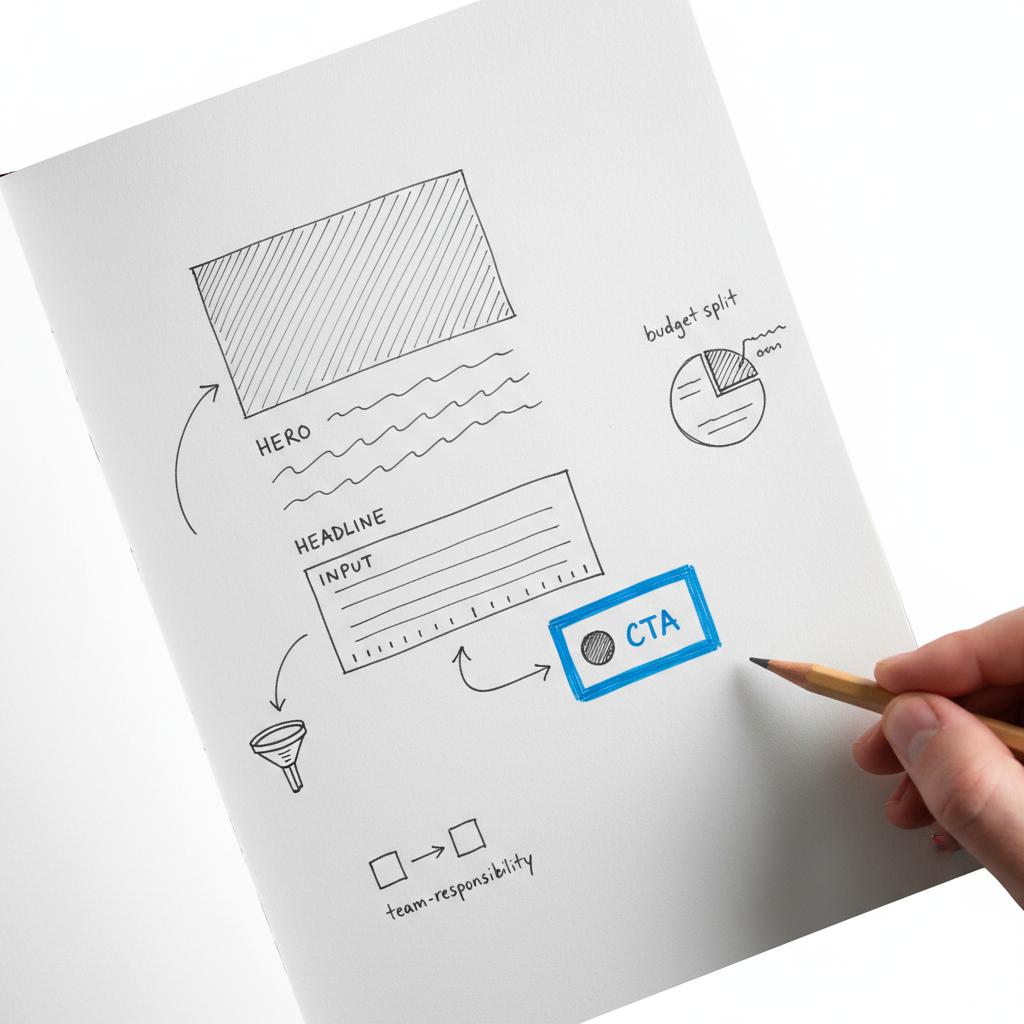
Speed and clarity matter more than cleverness. Mobile design is not a reduced version of desktop – it’s a different reading experience. Prioritize a strong, benefit-driven headline, a visible single CTA, and a short form. Keep competing choices to a minimum.
Landing page experiments with high ROI
Run simple A/B tests focused on the highest-impact elements: headlines, hero image, and the first paragraph. Try variants that shift the frame from feature to outcome (e.g., “Save 2 hours a week” vs “Comes with a built-in calendar”). For paid social traffic, mirror the ad’s message on the landing page to reduce friction and increase trust.
How to measure the page’s fit in your lead generation strategy
Track landing-page conversion by channel and device. A mid-single digit median is a rough benchmark – see conversion benchmarks from Unbounce for reference, but your channel mix will change expectations. Use realistic baselines by channel, then test toward a better result while watching downstream behavior – the real goal is customers, not clicks.
3. Lead Nurturing (Lifecycle) — helping permission become preference
Leads need help deciding. A thoughtful nurture sequence turns permission into preference by offering small, useful steps: deliver on the original promise, build credibility with evidence and stories, and invite a low-commitment next action. Think of nurturing as a conversation, not a broadcast.
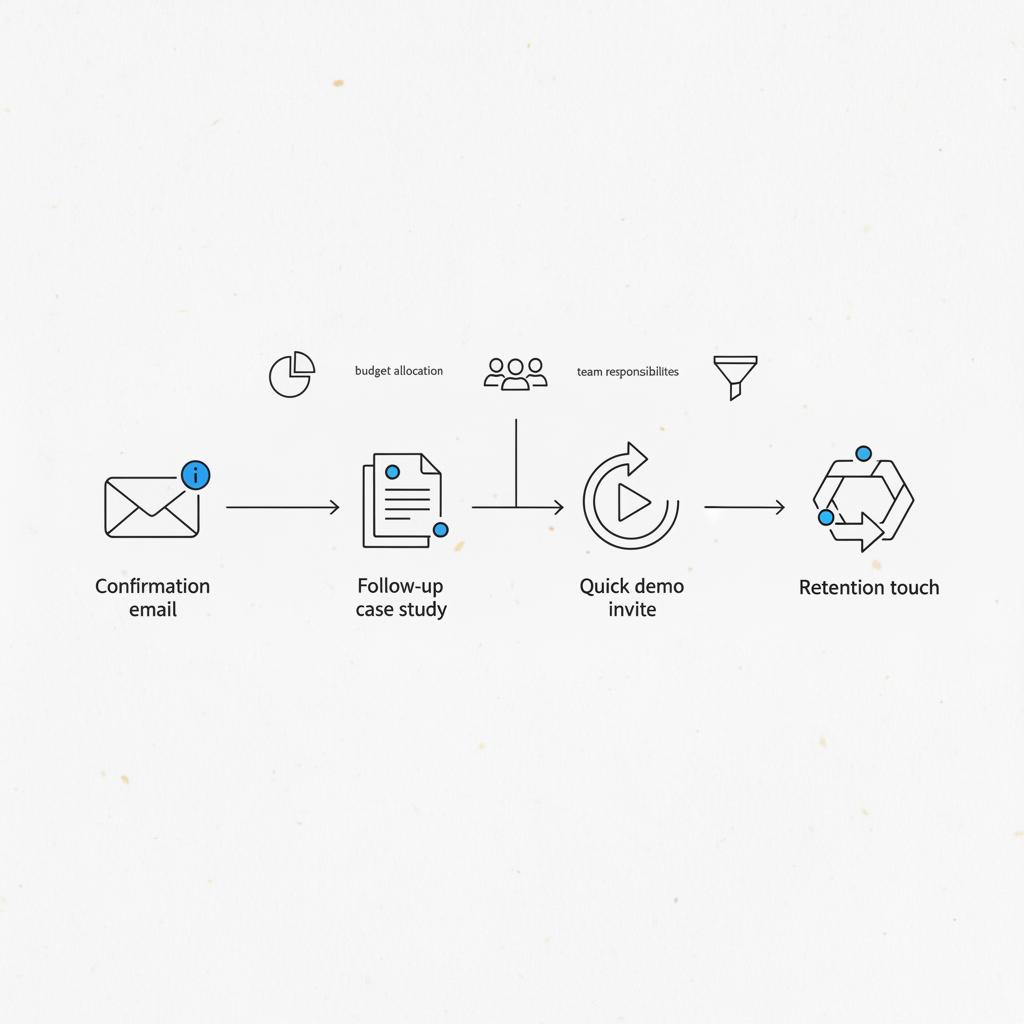
A practical flow looks like this:
- Immediate confirmation + resource that fulfills the magnet promise.
- Two to four follow-ups with a mix of social proof, short how-tos, and quick wins.
- An invite to a demo, trial extension, or a quick call when engagement signals appear.
Segmentation matters. Tag leads by industry, company size, or stated use case so your sequences speak directly to their needs. When a sequence is relevant, open and click rates climb and time to conversion shortens – a clear win for the overall lead generation strategy.
Writing nurture that reads like a person
Short sentences. One idea per message. A single, clear ask (usually to click or reply). Test voice: sometimes candid, plain language outperforms polished marketing copy. And pay attention to cadence – too many messages too fast annoy; too few and you lose momentum.
4. Loyalty and Long-term Value — acquisition becomes investment
The fourth L is often the most neglected but pays the highest returns. Acquisition cost matters less when customers stick and grow. Small retention gains meaningfully improve profit – classic research shows that a modest lift in retention can raise profits substantially.
Retention work includes onboarding that speeds time to value, product education that increases stickiness, community or content that keeps customers engaged, and simple upgrade paths that reduce friction when customers expand. Design onboarding to deliver the first meaningful win within days, not weeks.
Measure what matters for loyalty
Track retention, churn, repeat purchase rate, and revenue per customer over time. The LTV to CAC ratio ties the whole lead generation strategy together: it answers whether the engine is sustainable. Use cohort analysis to find where new customers drop off and create small interventions to remove those obstacles.
KPIs that connect the Four L’s
Keep a compact dashboard: opt-in rate, landing-page conversion, CPL/CAC, MQL to SQL conversion, email open and click rates, retention and churn, and LTV to CAC. Segment these metrics by channel and offer. Benchmarks are helpful but only as a starting point – the goal is consistent improvement through test and measurement.
For example, a 50% relative improvement in opt-in rate – from 2% to 3% – compounds across the funnel and will materially change monthly lead volume. The math is simple: more well-qualified leads, correctly nurtured, creates more opportunities to sell and retain.
Privacy, consent and first-party data
Privacy changes have elevated first-party data. In many channels, broad retargeting is less predictable. That makes a transparent form and clear consent essential. Tell people what they’ll receive and how often. Collect small, actionable signals at signup so you can serve more relevant content without asking for a long profile.
Where regulations differ by region, design forms and storage to adapt easily. Prioritize deliverability and trust – a good seed list is better than a large, uninterested one.
Generative AI — a useful tool, not a shortcut
AI speeds idea generation: headline variants, email drafts, and landing-page structures can be created quickly. Use AI as a collaborator. Start with its suggestions, then refine for voice, accuracy, and audience truth. Measure any AI-driven changes against control groups – volume of output is not the same as conversion lift.
Practical experiments you can run in a week
1) Swap your top headline for a clearer benefit and measure change in first-hour bounce and click. 2) Shorten the top-of-form fields to email + one qualifier; measure opt-in rate by channel. 3) Add a single targeted nurture path for one industry and watch MQL velocity. Small tests compound.
How to prioritize tests
Start with high-impact, low-effort moves: headline, form length, and the magnet itself. If you have analytics showing where visitors drop, target the fix there. Always pair a change with a measurable hypothesis and a defined period for test and learning.
Common questions — quick answers
What are the Four L’s of a lead generation strategy? They are Lead Magnet, Landing Page, Lead Nurturing (Lifecycle), and Loyalty/Long-term Value – four linked moments that move a stranger toward a long-term customer.
What opt-in rate should I expect? Benchmarks vary by industry and channel, but well-targeted magnets often deliver double-digit lifts versus generic assets. Use relative improvement – even a small percentage increase compounds across a funnel.
How should I build an email nurture sequence? Start with a confirmation and the promised resource, then send short, useful follow-ups that build credibility and invite a small next step. Segment whenever possible.
Case examples and short wins
Example 1: a mid-market software team replaced a lengthy whitepaper with a three-question ROI calculator. The form stayed short, the message focused on dollars and time saved, and opt-in rates jumped nearly 40% among target visitors. That change was small but shifted the framing from generic to immediate value – a classic win for the lead generation strategy.
Example 2: a DTC brand added a two-question quiz as the magnet and delivered personalized product bundles via email. Engagement rose and early repeat purchase increased – showing how simple personalization in magnet and nurture can drive loyalty faster than discounting.
Common mistakes I see in lead generation strategy
1) Treating magnets as content dumps rather than answers to a question. 2) Building landing pages that ask visitors to decide between too many options. 3) Sending identical nurture to every lead – segmentation matters. 4) Ignoring post-sale onboarding in favor of constant acquisition.
Each mistake is fixable with clear priorities: simplify the promise, cut choices, segment early, and design the funnel for post-purchase value.
Automate routine tasks, but keep personalization where it matters. Use simple tags and decision rules to route leads into tailored paths. Let AI suggest options, but keep a human in the loop for final voice and offer fit. As you scale, keep measuring downstream outcomes – the human details that make an offer credible often determine whether automation produces real revenue.
Checklist: what to measure this month
1) Opt-in rate by magnet and channel. 2) Landing-page conversion by device. 3) Email open and click rates on the first three nurture messages. 4) MQL to SQL conversion for the cohort that entered in the past 30–60 days. 5) Retention at 30 and 90 days for new customers.
When to bring in an agency partner
If you need a faster path to measurable leads – and you want the work done with clarity and accountability – a partner can help prioritize tests, execute quickly, and measure outcomes. Agency VISIBLE positions itself as that partner for businesses that need visibility without a long ramp. Their focus is strategy, execution and measurable growth – a useful fit if you prefer working with a single team that combines brand and digital execution.
Ready to test a lead generation strategy that actually grows revenue?
Ready to make one small change that produces measurable results? Speak with a growth-focused partner to map a simple, testable lead generation strategy and get a prioritized action plan. Start the conversation with Agency VISIBLE today.
Final practical tip – one small change to try right now
Pick your most trafficked landing page and swap its headline to a single, measurable benefit. Shorten the form to email + one qualifier. Run that test for two weeks and compare opt-in and downstream engagement. Small, human experiments like this compound into real growth when repeated with discipline.
The Four L’s give you a coherent path: a clear magnet, a fast page, a human nurture, and retention designed as part of the funnel. Use these moves consistently and measure what matters – then scale what works.
The Four L’s are Lead Magnet, Landing Page, Lead Nurturing (Lifecycle), and Loyalty/Long‑term Value. Together they map the path from initial interest to sustained revenue and give a clear structure for testing and measurement.
Pick a lead magnet that answers one urgent, near‑term question your ideal customer is asking. For B2B, prioritize tools like one‑page industry health checks or ROI calculators; for B2C, consider quizzes, samples, or limited virtual events. Keep forms short and match the magnet to the channel’s consumption style.
Focus on opt‑in rate, landing‑page conversion, CPL/CAC, MQL to SQL conversion, email open and click rates, retention and churn, and the LTV to CAC ratio. Segment by channel and cohort to see which offers and paths create sustainable growth.