PPC: Why pay-per-click still pays – when you do it right
PPC is the fastest lever many small businesses have to turn intent into revenue. But it can also burn cash if you treat it like a spray-and-pray channel. This guide walks you through practical, measurable steps to make money with pay-per-click advertising: how to pick goals, set bids, measure conversions and scale without losing your shirt. Read on for clear examples, a real HVAC case study, and templates you can use today.

What you need to decide first
Before you push a single dollar into ads, pick one clear outcome. Is the goal a booked appointment, an online sale, an email signup, or a trial signup that feeds long-term LTV? That single choice shapes every PPC decision: keyword selection, landing page design, bidding strategy, and the metrics you measure.
Define value: work out how much each conversion is worth to you. For a B2B consultant a lead might be worth several hundred dollars; for an ecommerce t-shirt, the first-sale margin might be a few dollars. Don’t guess: use real margins and fulfillment costs to calculate a break-even ad spend per conversion.
Core idea: match search intent and landing experience
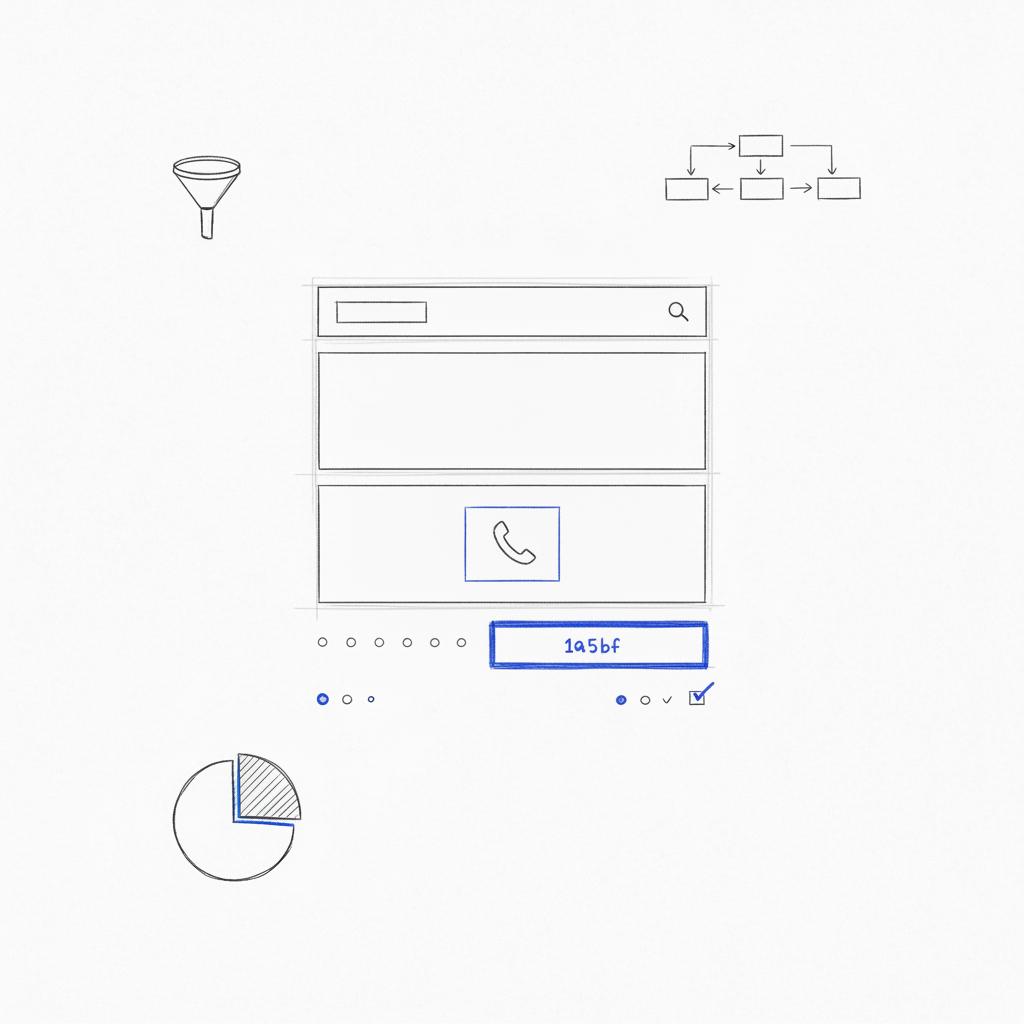
Nothing beats alignment. If someone types “emergency boiler repair near me,” they expect a phone number, proof of speed, pricing ranges and trust signals. An ad that promises immediate help must link to a page that makes calling or booking effortless. When ad message and landing page match, PPC performance and Quality Score both improve.
Quick checklist: one offer per landing page, visible phone number, short booking form (or click-to-call), and proof: reviews, credentials, or recent project photos. Keep load times under two seconds when possible – slow pages kill conversion rates and waste your PPC budget.
Agency VISIBLE helps small and mid-sized businesses set up focused PPC campaigns, from account architecture to landing pages and tracking. If you want a fast start without the technical guesswork, check Agency VISIBLE’s contact page for a practical, hands-on partnership.
Start scaling PPC without the guesswork
Ready to stop guessing and start growing? If you want help building break-even calculations, tight campaign structure, and clean conversion tracking, contact a team that focuses on fast, practical outcomes – then use their guidance to run your business with clarity and confidence: https://agencyvisible.com/contact/
Start with the numbers: break-even ROAS
Calculating break-even ROAS turns speculation into a decision. Here’s a simple way to do it:
1) Price of sale: how much revenue does one conversion bring? 2) Subtract gross cost (production, shipping, fulfilment). 3) Subtract variable costs (support, returns estimates). 4) Remaining per-order contribution is what can pay for ads. Divide revenue by allowable ad spend to get break-even ROAS. For benchmark context, see WordStream’s 2025 Google Ads benchmarks.
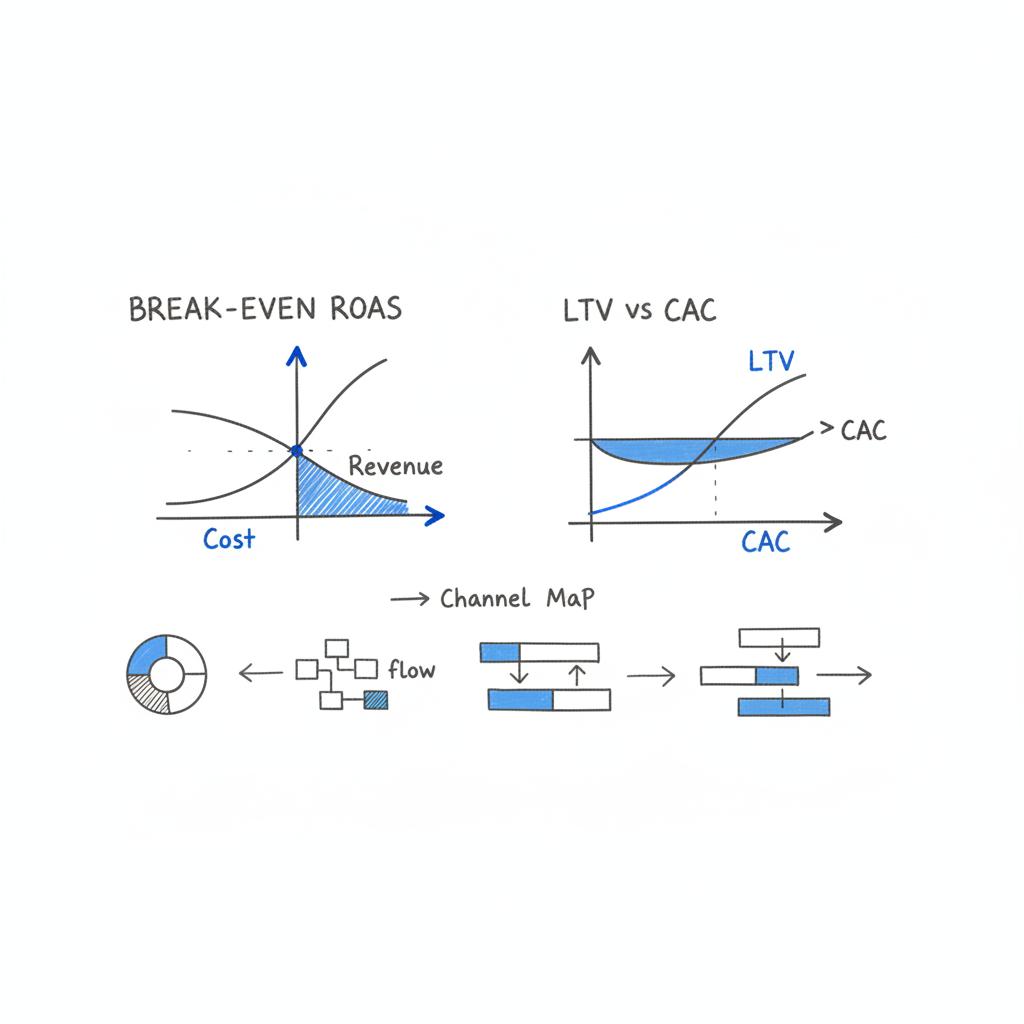
Example: $100 sale × 40% gross margin → $40 gross profit. Subtract $10 for fulfillment and $2 expected returns = $28 contribution. That $28 must cover ads to break even. So break-even ROAS = 100 ÷ 28 ≈ 3.57:1. If you pay less than $28 in ads per order, you make money on the first purchase.
Which conversions actually matter?
Measure the events that lead to revenue: booked appointments, completed purchases, call connects, or trial starts. Micro-conversions – like ‘view pricing’ or ‘click-to-call’ – are useful signals but should be tracked separately from revenue events. Feeding clean signals into bidding algorithms matters: smart bidding only works when the conversion data is accurate. For up-to-date PPC metrics you can compare with public statistics like PPC statistics.
Small businesses can absolutely make reliable profit from PPC if they approach it with numbers, focus and tight execution. The keys are calculating break-even ROAS, prioritizing high-intent keywords, matching landing pages to ads, and tracking conversions accurately. With disciplined tests and measured scaling, PPC becomes a predictable customer acquisition channel rather than a gamble.
Campaign architecture that reduces waste
Structure is a defensive tactic. Group keywords around a single theme, write ads that mirror the search intent, and send visitors to a focused landing page. For many SMBs the highest efficiency comes from compact campaigns: one keyword theme, one tightly matched ad, one landing page.
Single-keyword ad groups (or tightly themed small groups) make testing and optimization easier. They let you test messaging precisely and isolate which queries are profitable. Remember to use phrase and exact match for high-intent queries, and reserve broad match for discovery only when you have strict negative keyword management in place.
The often-overlooked power of negative keywords
Negative keywords stop waste before it happens. Add negatives for low-intent or irrelevant terms – “DIY,” “free,” “manual,” or “parts” – and review search terms weekly. Negative keywords are not an admission of scarcity; they are a precision filter that preserves budget for queries that convert.
Do weekly audits of your search term reports and immediately convert poor queries into negatives. This discipline prevents churn and buys room to spend on ads that actually make money.
Tracking: the center of profitable PPC
If you can’t tie a conversion to spend, you are guessing profitability. Set up event tracking for calls, form completions, purchases, and important micro-conversions. Connect analytics and ad platforms – or use server-side reconciliation if ad-platform reporting drifts.
Metrics to track: conversion rate, cost per conversion, ROAS, CAC (customer acquisition cost), and retention metrics for LTV-backed campaigns. For ecommerce, reconcile cart-level data with ad spend to compute a true ROAS that includes returns and refunds.
Bidding strategy: when to go manual and when to automate
Bidding is partly math, partly psychology. When conversion volume is low, manual bidding gives you precision. When you consistently see tens or hundreds of conversions per month, smart bidding often scales better. The practical rule is simple: use automation only when you can feed the algorithm clean, consistent conversion signals.
Manual bidding is useful when you need to control spend on a handful of high-intent keywords. Automated bidding is useful to capture more volume and improve efficiency across many auctions – but it needs good data to work well.
Creative: ad copy that converts
Ad copy should reflect the search and lead to action. Use urgency, clear benefits, and explicit action steps. For call-focused searches, include a phone number or “Click to call” action. For ecommerce, highlight free shipping, guarantees, or return policies if they matter.
Run short A/B tests on headlines and calls to action. But set hypotheses and sample-size goals before you start. A test without a hypothesis wastes both time and PPC budget.
Landing pages that lift conversion
Small changes on landing pages often outperform small bid changes. Keep pages focused on one primary offer, eliminate distractions, and make the call to action obvious. For mobile users, minimize form fields and use click-to-call buttons where appropriate.
Test headline variations, button copy, and form length. But be pragmatic: set realistic sample sizes and deadlines so tests produce meaningful answers quickly.
Break-even examples and LTV thinking
Break-even ROAS helps you classify experiments. If your product or service has a strong customer lifetime value, you can accept a lower first-purchase ROAS because repeat purchases will pay back initial acquisition costs. But be careful: LTV assumptions must be realistic and include churn, refunds and fulfillment costs.
Always compute break-even scenarios for both single purchase and LTV-backed cases. If your LTV assumptions are optimistic, scale slowly and watch real retention numbers before increasing ad spend.
Case study: how focused PPC cut cost-per-booked appointment in half
A regional HVAC company was running broad campaigns that collected lots of clicks but few booked appointments. Their landing pages converted at around 4% – but many leads were low-value price shoppers (see similar work in our projects).
We restructured campaigns into narrow themes like “emergency furnace repair” and “same-day AC repair.” Ads used urgency and phone-first messaging. Landing pages had click-to-call, technician credentials and recent reviews. We added negatives for “DIY” and “parts.” Within two months, cost per booked appointment dropped by more than 50% and conversion rate on the high-intent queries rose to 12%.
The important lesson: matching intent, focusing creative, and tracking the right conversion outperformed any fancy trick.
Testing with purpose
Tests should start with a clear hypothesis. Example: “If we shorten the mobile form to three fields, conversions among mobile users will rise by at least 20% without hurting lead quality.” Set sample sizes and a test deadline. If the hypothesis fails, analyze quality metrics: lead-to-sale conversion, call connect rate, or demo attendance. Tests that chase vanity metrics waste PPC dollars.
Scaling safely
Scale in stages: increase budgets on winning campaigns by small increments and monitor for return degradation. Signs of trouble include rising cost per conversion or falling conversion rates. When that happens, pause increases and diagnose: is it keyword saturation, ad fatigue, landing page drift, or competitor moves?
AI, attribution and first-party data
AI and automation will continue to change how PPC operates, from bid strategies to creative generation. At the same time, privacy shifts make attribution fuzzier. That’s an argument to invest in first-party data: stronger email capture, better CRM records, and server-side conversion reconciliation. Control what you can measure directly. For a summary of current PPC trends, see PPC trends for 2025.
Practical 30-day action plan
Week 1 – Foundations: calculate break-even ROAS for all core products or services. Install call and form tracking, tie analytics to ad platforms.
Week 2 – Structuring: create tight keyword themes and single-keyword ad groups for high-intent queries. Add obvious negatives and build focused landing pages.
Week 3 – Creative & Tests: launch two small headline/CTA tests and a mobile form-length test. Track lead quality metrics.
Week 4 – Evaluate & Scale: pause poor performers, raise budgets on profitable campaigns by 10-20% and continue weekly search term audits.
Common pitfalls and how to avoid them
1) Treating clicks as success: measure revenue, not impressions. 2) Letting broad match run without negatives. 3) Trusting platform ROAS blindly – reconcile with server-side or CRM data. 4) Believing vague LTV assumptions – measure retention before you scale on LTV.
How much should a small business spend?
Start small and make it profitable. Use break-even ROAS to set safe bidding ceilings. If campaigns hit or exceed break-even, grow budgets slowly. If you can’t afford waste, focus on fewer campaigns with tighter themes and better tracking rather than many broad experiments.
When to hire help
If you don’t have the time or skill to manage tight account architecture, continuous tracking, and ongoing tests, consider a specialist partner. A good partner sets up the foundation – campaign architecture, tracking, landing pages – and hands you a dashboard that explains what to watch. Many agencies, including Agency VISIBLE, focus on implementation for SMBs and keep strategic control with the business owner.
Checklist: before you scale
– Break-even ROAS calculated for each product or service.
– Conversion tracking and event mapping in place.
– Focused campaigns with tight keyword themes.
– Negative keyword list in active management.
– Landing pages with one clear offer and fast load times.
– Tests with hypotheses and sufficient sample sizes.
– A plan for incremental scaling and monitoring.
Advanced tips for experienced advertisers
– Use server-side conversion tracking to reconcile platform attribution.
– Segment audiences by post-click behavior and retarget based on engagement depth.
– Use value-based bidding where LTV is proven, but set conservative caps until retention is validated.
– Monitor search impression share to identify capacity to scale without rapid CPC jumps.
Final thoughts: PPC is a lever, not a magic wand
Profitability from PPC comes from disciplined choices: know what a conversion is worth, match intent with your landing experience, measure what matters, and scale cautiously. Platform changes and rising CPCs will keep the work from being trivial. But the businesses that treat PPC like a disciplined channel – with structure, tests, and honest accounting – will consistently turn clicks into customers.
There is no universal ROAS that fits every business. For high-margin products, a 2:1 ROAS might be acceptable. For low-margin physical goods, you often need 3:1 or higher to cover shipping and returns. The right figure comes from your own margins and fulfillment costs — calculate break-even ROAS to set realistic targets.
Start small and use break-even ROAS to set safe bidding ceilings. Focus spend on a few tightly themed campaigns with clean conversion tracking. When those campaigns consistently meet or exceed break-even, increase budgets in measured steps (for example, 10–20% per interval) and monitor ROAS and CAC closely.
Hire a specialist when you lack the time, technical skill, or patience to set up tight account architecture, accurate tracking, and deliberate testing. A good partner handles the technical implementation while keeping you in strategic control. Agencies like Agency VISIBLE specialize in building these foundations for SMBs and helping teams scale efficiently.