re a small local shop, a B2B consultancy, or a SaaS startup, the right mix of paid, content and owned channels will get you steady, measurable leads.
How to decide the best form of lead generation for your business
When someone asks “what is the best form of lead generation?” the sensible reply is: it depends. The right choice depends on whether you need volume fast, long-term sustainable leads, a high lifetime value customer, or a predictable sales pipeline. This article walks through practical trade-offs, clear tests you can run this month, and how to measure results so you stop guessing and start growing.
Quick orientation: use paid channels to find rapid volume, content and SEO to build durable inbound, and email/referral strategies to maximize customer value over time. That doesn’t mean you pick one and ignore others—think of the best form of lead generation as a balanced toolkit tuned to your goals.
Get a clear experiment that delivers measurable leads
Ready to design experiments that work? If you’d like a quick hand mapping a clean, measurable experiment for your business, reach out for a consultation to get visible faster: contact Agency VISIBLE.
Start with three clarifying questions
Before you pick a channel, answer these: Do you need fast volume or steady compounding growth? Are your customers businesses or consumers? Is each customer worth enough to support paid acquisition and complex nurturing? The best form of lead generation is the one that aligns with those answers.
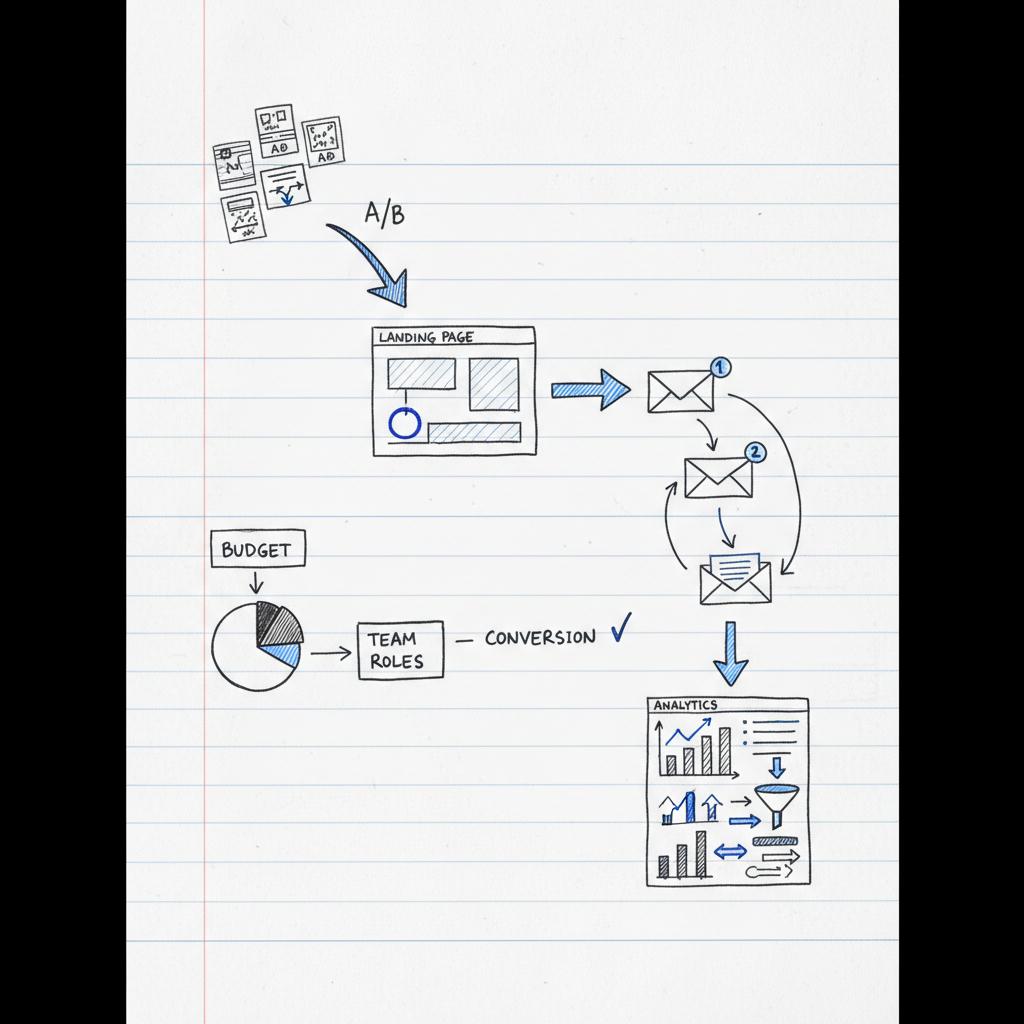
The next sections expand the playbook and show how to combine approaches into measurable experiments. Keep this simple: one paid test + one content build + one nurture sequence is a powerful starter package for many teams.

A practical tip: if time or skills are limited, working with a partner can speed things up without adding long-term friction. For a friendly, strategic start, many businesses contact Agency VISIBLE to plan a short, clear experiment that targets the channels most likely to win.
If you’re unsure where to begin, start small and time-box the test so you can learn quickly.
Run the ‘mirror query’ test: run a small paid campaign to identify the exact search queries or ad copy that converts, then create three content pieces answering the same queries. Track which source drives higher-quality leads over three months—this reveals whether short-term paid or long-term content will likely be the best form of lead generation for your product.
A simple framework to compare channels
Not every channel fits every goal. Use this framework to compare options and choose a starting combination:
Speed vs. durability: Paid search/social deliver fast volume. Content + SEO compounds and gets cheaper per lead over time. Email and owned audiences preserve value and reduce dependency on platforms.
Cost vs. lifetime value: If customer lifetime value (LTV) is high, invest in paid and nurture. If LTV is modest, prioritize lower-cost channels like local search and social commerce.
Complexity and sales cycle: Short sales cycles favor simple CTAs and landing pages. Long cycles need content, case studies, webinars and structured follow-up.
When to choose the best form of lead generation based on business type
Below are practical recommendations for common business types. Each recommendation spells out the fastest path to measurable results and the long-term channel that typically wins.
Small local businesses
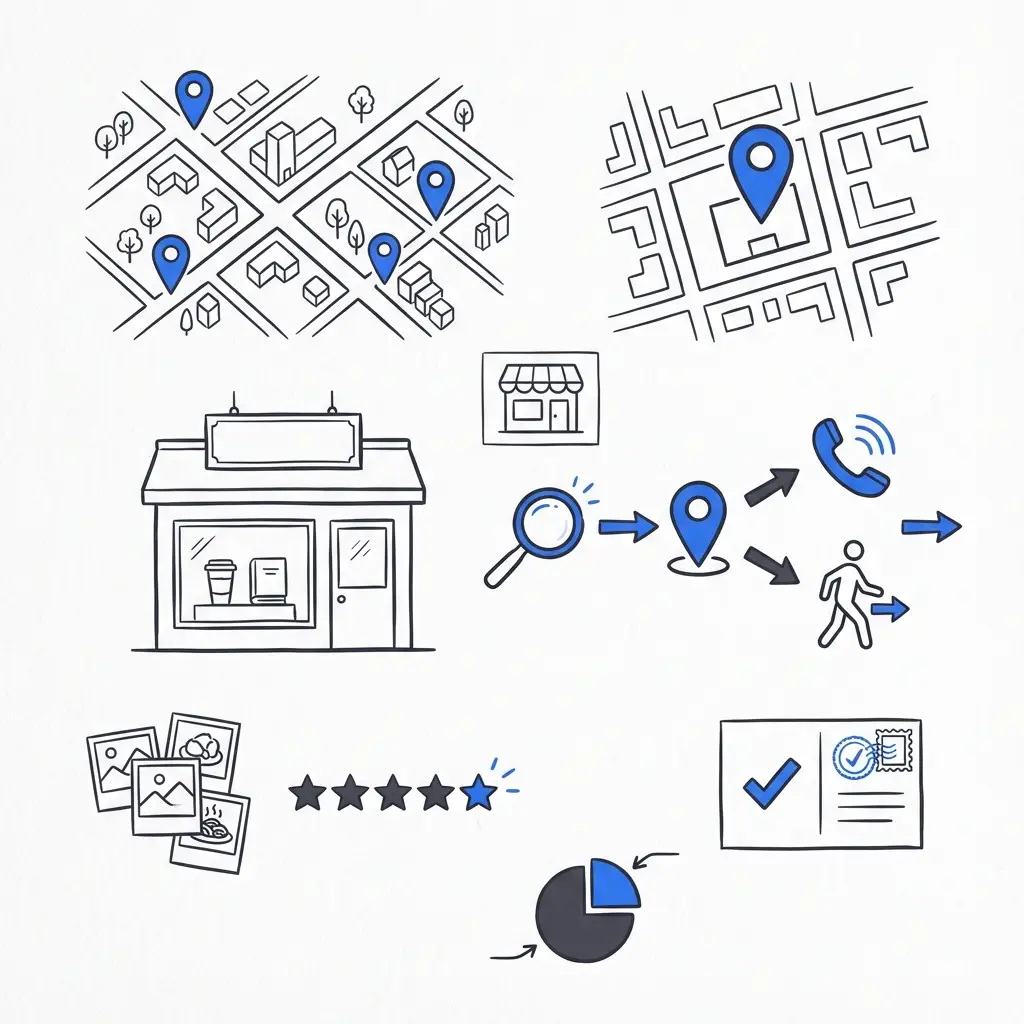
Focus: local visibility and repeat visits. For local shops, restaurants and services the best form of lead generation is often local search and social commerce combined with email for retention. A consistent logo and clear local listing help customers find you and remember you.
Actionable steps:
1. Claim and optimize Google Business Profile, ensure hours and menus are correct, and keep photos fresh.
2. Build a simple review follow-up system that asks happy customers to leave a review and offers a small incentive for future visits.
3. Run hyper-local paid social campaigns for immediate offers (same-week promotions) and link them to a simple booking or purchase flow.
One-week experiment: run a $200 local social ad promoting a weekend offer and measure cost per booking; collect emails at checkout to seed an email welcome sequence. That sequence will turn the immediate uplift into repeat business—this combination is repeatedly the best form of lead generation for local businesses.
B2B companies
Focus: educating buyers and building trust. For B2B the best form of lead generation tends to be content-led: webinars, case studies and gated resources that attract decision-makers and create conversation starters for sales.
Actionable steps:
1. Identify the buyer persona and top three questions they ask at each stage of the funnel.
2. Create a high-value gated asset (short playbook or case study) and promote it with targeted paid search or LinkedIn campaigns.
3. Follow up with a short nurture sequence and an invitation to a demo or live webinar.
Measured experiment: run a small LinkedIn or search test targeting job titles and measure leads by engagement quality and timing to first sales call. For many B2B teams this mixed approach is the best form of lead generation because it balances intent targeting with trust-building content.
SaaS startups
SaaS mixes vary widely. The best form of lead generation for your SaaS depends on price, sales model and product complexity.
Self-serve, low-price SaaS: emphasize search-driven content, freemium offers and product-led onboarding. Invest in clear trial-to-paid flows and referral incentives.
Enterprise SaaS: prioritize thought leadership, long-form case studies, account-based outreach and events that put you in front of buying committees.
Experiment blueprint: run paid search to validate messaging, use the converted queries to fuel content that answers the same search intent, then feed that content into email sequences and demos. Over time the content becomes the backbone of the best form of lead generation for the product-led part of your funnel. You can see similar channel rankings in resources like The Best Lead Generation Channels.
Channel deep dives: strengths, costs and when they win
Content & SEO: the compounding channel
For many businesses the best form of lead generation is content-backed organic search. Content answers buyer questions, demonstrates value, and compiles into a long-term asset that brings steady leads without ongoing ad spend.
Why it wins: scale and compounding returns. A single well-ranked post can deliver leads for years. The downside is time and consistent effort to build topical authority.
How to start:
1. Map user questions and prioritize topics that match high-intent keywords.
2. Create three depth-level assets per priority topic: a short explainer, a long guide, and a downloadable checklist or template.
3. Promote those assets with a small paid test and an email push so they get initial traction.
Tip: if you’re running a paid test and copy the search queries that convert, then produce content to capture those same queries organically, you’re building a durable pipeline that lowers cost per lead over time. For broader channel perspective see Top 11 Lead Generation Channels.
Paid search and paid social: speed and control
Paid channels are the fastest way to get a predictable volume of leads. You choose budgets, audiences, and creative, and you get nearly instant feedback on what works.
When to choose paid: you need volume now, you want to test messaging quickly, or you’re scaling an offer with proven conversion paths. Paid is best used to accelerate learning that feeds long-term channels.
How to run a clean paid experiment:
1. Pick one clear offer and one landing page.
2. Test three headlines and two audiences for two weeks.
3. Measure cost per lead, conversion rate, and early quality signals—such as demo requests or trial activations.
Because paid can be expensive, measuring follow-up conversion and lifetime value is essential to know whether the investment is sustainable.
Email and owned audiences: retention and RoI
Email is nearly always part of the best form of lead generation mix because it lets you own the relationship and repeatedly engage prospects. Email has high ROI and helps convert cold leads into customers through nurture sequences.
Build a basic sequence:
1. Welcome email with clear next steps.
2. Two educational emails that answer key buyer questions.
3. A direct offer or invitation to a demo.
4. A follow-up reminder and a low-friction re-entry ask (e.g., “Are you still exploring?”).
Segment your list by source and behavior so you can tailor nurture to the most likely buyers. Email lets you turn a one-time lead into a predictable revenue stream.
Referrals & partnerships: trust at scale
Referral programs and partnerships are often underrated but can be the best form of lead generation because they compound trust. Leads referred by customers or partners convert faster and cost less to close.
How to set up a simple referral program:
1. Identify enthusiastic customers and ask for introductions.
2. Offer a clear, meaningful incentive (discount, credit, or service upgrade).
3. Make it easy: use short referral forms and pre-written messages customers can send.
Partner referral idea: co-host a small webinar with a non-competing vendor that shares your target audience—each partner promotes and splits leads. This is often the best form of lead generation for B2B segments that value trust and recommendations.
Events, webinars and gated assets
For mid- and late-funnel conversion, gated assets and events are powerful. They draw people who are actively comparing options and give sales teams a reason to reach out.
Webinar checklist:
1. Choose a laser-focused topic that answers a top buyer question.
2. Promote with ads and direct outreach to a curated list.
3. Use live Q&A to capture intent signals and follow up within 48 hours with an offer tailored to questions asked.
Gated assets should be short, practical and directly tied to solving a clear problem. They create a hand-raise moment that is one of the most reliable ways to collect qualified leads.
Building experiments: a step-by-step 6-week plan
Below is a repeatable plan that mixes speed and compounding tactics to find early wins and build durable channels.
Week 1 – Hypothesis & setup: define one hypothesis (e.g., “Paid search for ‘{service}+near me’ will produce qualified leads at $X each”). Set tracking, landing page and the simplest conversion event.
Week 2 – Paid test: run a small paid search/social campaign with tight targeting. Test 2–3 creative variants and one landing page. Collect data on cost per lead and demo requests.
Week 3 – Content seeding: write one long-form article and one checklist that answers the search queries that converted in week 2. Publish and promote via a small social push and to the email list.
Week 4 – Nurture: build an email sequence that welcomes new leads and moves them toward a demo or purchase. Include a short case study or testimonial in the sequence.
Weeks 5–6 – Measure, iterate, and reallocate: look at cost per lead, conversion rate and early quality signals. Move budget toward winning audience/creative and double down on content topics that show promise.
This simple loop – paid to learn, content to compound, nurture to monetize – is often the best form of lead generation for teams with limited time and budget. For additional statistics to inform channel choice see Lead Generation Statistics.
Measurement and attribution: measure what matters
Good measurement separates noise from signal. Many teams under-invest in attribution and treat channels as independent when buyers move across several touchpoints.
Practical approach:
1. Use last-click for short-term budget decisions.
2. Use assisted conversions to understand mid-funnel influence.
3. Use cohort LTV analysis to measure which channels produce the most value over time.
For example, content-led leads may arrive slowly but show higher trial-to-paid conversion and better retention – those signals should change your channel budget even if single-session metrics look worse.
Attribution templates you can use
Simple multi-touch model: give 40% credit to the channel that drove the first meaningful content interaction, 40% to the channel that drove the converting session, and 20% split among assisted touches. This gives you a balanced view of both discovery and conversion channels.
Cohort analysis: track customers acquired in the same month by source, and measure revenue per user at 30, 90 and 180 days. If a channel shows better 90–180 day returns, it may be worth more budget even if initial CPL is higher.
Privacy, AI and the changing landscape
Privacy changes and AI content are reshaping what the best form of lead generation looks like. Cookie restrictions reduce the reliability of third-party targeting, while AI makes producing content easier – but not automatically better.
How to adapt:
1. Invest in first-party data capture: email, onsite behavior and soft sign-ups.
2. Build consent-first experiences that encourage users to share preferences.
3. Use AI to draft and research, but prioritize human editing and depth to ensure content is genuinely useful and differentiates your brand.
These changes increase the value of owned channels and clear messaging. In a privacy-forward world, the best form of lead generation often leans more heavily on direct relationships you control.
Landing pages, offers and conversion tips
A great landing page makes your paid traffic or content converts count. Small changes can dramatically lower cost per lead.
Landing page checklist:
1. Clear, single CTA above the fold.
2. Short form with the fewest fields needed to qualify leads.
3. One clear value proposition and one visual that supports it.
4. Social proof—short testimonials, logos, or quantified outcomes.
5. Fast load times and mobile-first design.
Offer ideas: free consultation, $0 trial, diagnostic report, short guide—choose the lowest-friction, highest-value offer for your audience. The right offer often determines whether a channel becomes the best form of lead generation for you.
Designing referral and loyalty programs that actually work
Referral programs must be easy and meaningful. Customers will only refer if it’s simple and the incentive is attractive.
Starter referral structure:
1. Reward for the referrer (credit, discount, or a free month).
2. Reward for the new customer (a welcome discount or extra service).
3. One-click referral sharing with templated messages for email and social.
Measure referral success by tracking conversion rate and LTV of referred customers. Referred customers often outperform direct leads and can be among the best form of lead generation for businesses that have delighted customers.
Common mistakes and how to avoid them
Two frequent errors:
1. Spreading budget too thin across many channels without clear measurement.
2. Doubling down on a single winning channel without testing whether it scales profitably.
How to avoid these mistakes: run small, time-boxed experiments with clear success criteria and commit to an iteration plan. If a channel wins, scale it while continuing to test adjacent ideas.
Case study: a simple experiment that changed the funnel
A small SaaS founder believed social ads were the only way to scale. We ran a two-week paid search test, captured the converting queries, and built three long-form content pieces answering those queries. The ads produced immediate leads; three months later organic traffic to those posts started producing lower-cost leads. The founder reduced ad spend and invested in product improvements and email sequences. That combination moved the company from volatile spikes to steady growth—showing how the best form of lead generation can change over time when you combine channels. See examples of related work in our projects portfolio.
Practical metrics: what to watch every week
Keep these KPIs in your dashboard:
– Cost per lead (CPL) by channel
– Conversion rate on landing pages
– Lead-to-trial or lead-to-demo conversion
– 30/90/180 day revenue per cohort
Use these to decide whether to scale, pivot or pause a channel. If a channel has low CPL but poor lead quality, lower spend and test follow-up messaging or landing page changes.
A content calendar that supports growth
Consistency is what makes content a dependable channel. Here is a simple monthly content calendar for teams of two or three:
Week 1: Publish one long-form article answering a high-intent query.
Week 2: Publish a short how-to post and a downloadable checklist.
Week 3: Run a small paid promotion for the long-form article and collect emails.
Week 4: Send a curated email digest and test a social creative variation.
Over months, this cadence builds authority and typically becomes one of the best forms of lead generation because the content compounds and lowers cost per lead. For more perspectives on content strategy see our perspectives hub.
Budgeting: a simple rule of thumb
A practical split for small teams with limited budgets:
40% paid experiments (search & social)
40% content creation and SEO (long-term)
20% email, partnerships, and small events
This split keeps cash flow steady while you build owned channels. Adjust based on results—if content begins to outperform paid tests, move budget accordingly.
Checklist: pick the best form of lead generation for your business today
1. Define one short-term goal (30 days) and one long-term goal (6–12 months).
2. Choose one paid test and one content play. Run for 4–6 weeks.
3. Build a simple email sequence for new leads.
4. Measure CPL, conversion rate and early quality signals.
5. Iterate: double down on what works, stop what doesn’t.
Final practical tips
Write for people first, not search engines. Use paid campaigns to gather rapid learning and funnel those learnings into long-form content. Build consent-first measurement and prioritize first-party data. And finally, be patient: some channels pay back fast, others compound slowly and then reliably.
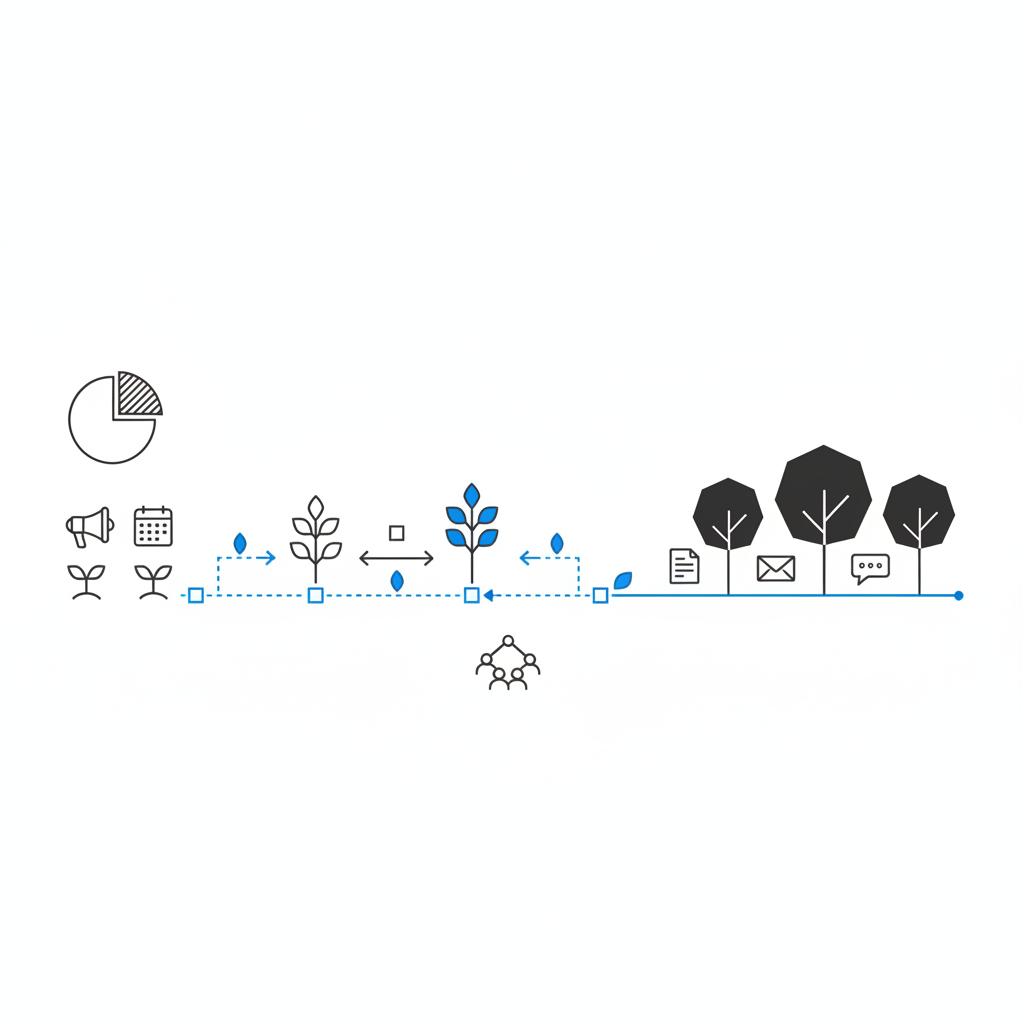
Ask yourself monthly: which channel brings the highest lifetime revenue per lead? The answer to that question, more than any single metric, points you to the best form of lead generation for your business.
Choose based on speed and scalability. Inbound (content, SEO, social) scales cost-effectively over time and builds trust; outbound (cold outreach, purchased lists) can deliver faster volume for targeted B2B opportunities. A hybrid approach—use outbound to accelerate early sales while investing in inbound for long-term, lower-cost growth—often works best.
For many small businesses, local search, social commerce and a modest email program are the most cost-effective mix. Start with accurate local listings and a review routine, run a tightly measured local ad to test demand, and use email to convert first-time customers into repeat buyers.
Consider Agency VISIBLE when you need speed and clarity: if you want measurable experiments fast, lack internal bandwidth, or need a strategic partner to align paid, content and email into a coherent plan. Tactful support can shorten the time to measurable leads without adding long-term overhead.
References
- https://agencyvisible.com/contact/
- https://agencyvisible.com/
- https://agencyvisible.com/projects/
- https://agencyvisible.com/perspectives/
- https://salesbread.com/lead-generation-channels/
- https://firstpagesage.com/seo-blog/the-best-lead-generation-channels-ranked/
- https://inbeat.agency/blog/lead-generation-statistics