


Is Instagram good for contractors?
Short answer: Yes – but only when you treat Instagram like a local, project-first sales channel rather than an influencer playground. If you ask, “Is Instagram good for contractors?” you’re already on the right track: the question points to the right mindset. This guide shows how to turn visual proof into booked jobs without spending days figuring out filters.
Most contractors split into two camps when you ask, “Is Instagram good for contractors?” One group shrugs – “That’s for influencers” – and the other quietly reports, “We get calls every month.” Both are true. The difference is strategy. A single reel or photo won’t fill a calendar, but consistent, local, project-focused content will create trust and measurable leads.
Want a quick, practical audit or a hand building a tested local campaign? Consider a friendly call with Agency VISIBLE — they specialize in making local businesses visible and can help you test Instagram without wasting ad spend.
Who this is for: painters, plumbers, roofers, remodelers and the teams that run them. If you want clear steps that respect your time and focus on results, keep reading.
Yes — a focused 15–30 second reel that shows before, progress and after plus a clear call-to-action and quick follow-up can turn a neighbor into a booked job within days. The reel creates trust and reduces friction, so the homeowner is already halfway to saying yes before you pick up the phone.
Why Instagram can work for trades
Ask again: “Is Instagram good for contractors?” The platform is visual by design and many trades produce visual proof every day. Before-and-after shots, neat trim work, clean flashings, and tidy job sites tell a clear story. Instagram’s Reels format favors short, engaging clips—exactly the kind of quick transformations contractors can show.

Beyond visuals, Instagram has local discovery features. People search their neighborhood, click on locations and browse profile highlights. When a homeowner sees a quick walkthrough and a few strong reviews, they move faster from curiosity to contact. For big-ticket jobs – roof replacements or kitchen remodels – that visible trust shortens the buying cycle.
How the platform helps buyers decide
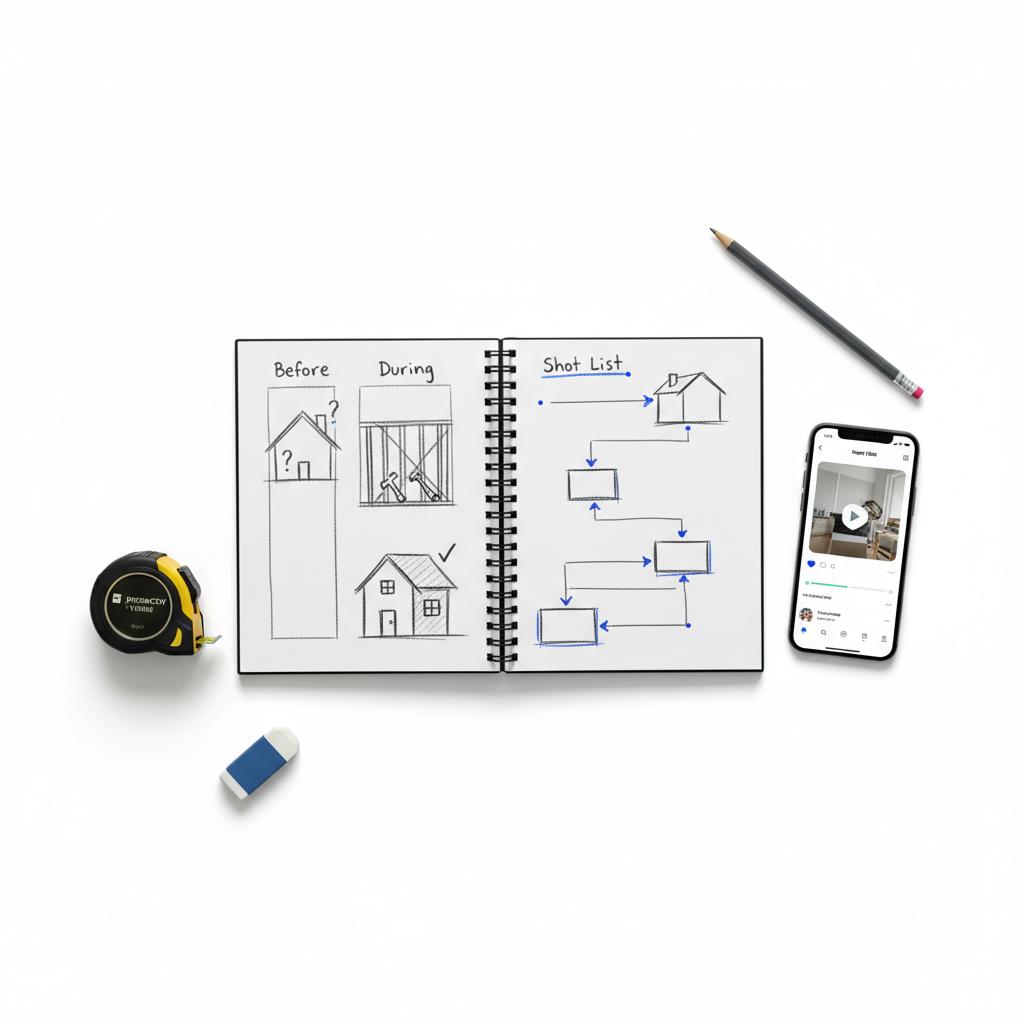
Homeowners don’t want surprises. A 15–30 second reel that shows the process, timeline and a finished result answers a lot of questions without a phone call. That’s why the content types we’ll discuss below matter: they map directly to the stages of the buyer’s journey—notice, interest, trust, and contact.
What content actually moves the needle
Not every photo helps. The posts that earn messages and saved posts fall into a few reliable types. When you ask, “Is Instagram good for contractors?” look at these winners:
Top-performing content types
Before-and-after photos: Instant contrast. Answer the first question a homeowner has: what will it look like?
Time-lapse reels: Compress a full day or week into 15–30 seconds and show care and speed.
How-to clips: Quick tips (e.g., how to prep a surface before painting) position you as helpful and credible.
Video testimonials: Real clients speaking about the result are emotionally persuasive.
Behind-the-scenes site footage: Shows craftsmanship and safe practices without scaring people.
These formats answer different buyer needs: a before-and-after hooks attention; a reel or walkthrough proves process; a how-to and testimonial build trust. Used together, they create a smooth path from initial discovery to a booked estimate.
Posting cadence that fits a crew’s schedule
You don’t need to post daily. You need a reliable rhythm. For many contractors, 3–5 meaningful posts a month is sustainable and effective. Focus on Reels plus two strong photos or short clips.
A simple monthly plan
Week 1: Publish one high-effort reel (before/progress/after).
Week 2: Post a strong before-and-after carousel photo.
Week 3: Share a 15–30 second how-to or tip.
Week 4: Share a short testimonial or a behind-the-scenes clip.
Engagement beats volume. Always reply to comments and DMs within 24–48 hours. That small habit signals to the algorithm and builds local trust.
Profile setup that turns viewers into leads
A clear, contact-ready profile converts casual visitors into inquiries. If you wonder, “Is Instagram good for contractors?” check this checklist and you’ll see how simple changes increase reach and calls. A simple, readable logo in your profile photo helps homeowners recognize your brand.
Profile checklist
Business name: Use your real, local business name. If you operate in multiple towns list them.
Bio: One line of services (e.g., “Painter • Kitchen Remodels • Local 50mi”) plus a phone number or booking link.
Action buttons: Enable call or email actions.
Highlights: Create story highlights for Projects, Pricing Guide, Testimonials, and FAQs.
Link in bio: Use a single UTM-tagged landing page for Instagram traffic so you can track incoming leads.
30/60/90 starter plan — detailed and actionable
Let’s answer the main question again: “Is Instagram good for contractors?” The best way to prove it is a simple test. Below is an actionable 90-day plan you can follow in the field.

First 30 days — Prepare
Goals: clean profile, three founding posts, baseline metrics.
Actions:
– Clean up bio and add action buttons.
– Publish three posts: a before/after, a short how-to, and a testimonial.
– Create highlights with short clips and a materials/timeline FAQ.
– Track baseline metrics: profile visits, follower count, DMs, saved posts, and how many leads say Instagram.
Days 31–60 — Build
Goals: consistent cadence, lead capture, basic testing.
Actions:
– Move to 3–5 meaningful posts per month (one high-effort reel, two supporting clips).
– Add a clear CTA in captions: “DM for a free estimate” or “Tap link for a quick quote.”
– Start a UTM-tagged landing page or Instagram lead form.
– Begin to record lead source in a simple spreadsheet or CRM.
Days 61–90 — Validate
Goals: run modest paid tests, measure CPL (cost per lead), track booked work.
Actions:
– Run a local paid test: $300–$1,000 across 4 weeks.
– Test 2–3 creative variants: before/after reel, testimonial, and “how-we-work” walkthrough.
– Track cost-per-lead, lead quality, and conversion to booked jobs.
– Decide whether to scale based on CPL vs. average job value. For industry CPL benchmarks, see this report: https://firstpagesage.com/reports/average-cost-per-lead-by-industry/
How to measure success — KPIs that matter
Likes and follower counts feel good, but the metrics that pay the bills are different. When you think, “Is Instagram good for contractors?” use these KPIs:
Primary KPIs
– Lead volume (number of inbound inquiries traceable to Instagram)
– Cost-per-lead (for paid tests)
– Booked jobs and revenue coming from Instagram leads
– Time-to-book (how long from first DM to a scheduled estimate)
Secondary KPIs
– Profile clicks and calls from the profile
– Saved posts and shares (content resonance signals)
– Engagement rate (helpful, but tie back to actual booked work)
A practical tip: ask every lead how they found you, then record it. Ask politely at the start of the conversation—most homeowners are happy to say “Instagram.” Combine that with UTM links and a landing page to reduce guesswork.
Paid vs. organic — use both the right way
Answering “Is Instagram good for contractors?” means understanding the roles of organic and paid. Organic builds trust and lives on your profile. Paid scales lead volume and gives measurable CPL. Start with organic as your foundation and add modest paid tests to accelerate learning. For a sense of average social media CPL in 2025, this summary is useful: https://ampifire.com/blog/average-social-media-cost-per-lead-2025-compared-ads-vs-content/
How to structure a paid test
– Budget: $300–$1,000 for a 4-week test.
– Creatives: test at least two creative directions (emotional proof vs. practical explanation).
– Calls-to-action: test “Message us for a free estimate” vs. “Tap for pricing.”
– Audience slices: 10–20 mile radius, then narrower radii around neighborhoods where you’ve done work.
– Run each variant for 4–6 weeks for reliable data. For additional Instagram ad CPL reference, see: https://app.bir.ch/instagram-advertising-costs/cpl-cost-per-lead
Practical creative ideas and on-site filming checklist
Many contractors worry: I don’t have time or fancy gear. The truth? A phone, good light, and a plan are usually all you need. When you think, “Is Instagram good for contractors?” remember the content basics below.
Jobsite filming checklist
– Get consent from the homeowner (a quick text is fine).
– Use a steady phone or small stabilizer.
– Film short clips: before (3–6s), progress (3–6s), after (3–8s).
– Use vertical for reels, horizontal for walkthroughs to repurpose as other formats.
– Add simple captions or voiceovers so people can understand without sound.
– Avoid close-ups of dangerous tasks; use wide shots when tools are in use.
– Offer a short release form for testimonials (one or two lines of permission).
Simple release text you can use
“I give permission for [Business Name] to use photos and short video clips of work done at my home for marketing purposes.” Ask the homeowner to sign or text confirmation—keep it casual and quick.
Filming tips that raise perceived quality
– Film in morning or late afternoon light for softer shadows.
– Keep clips short and honest—15–30 second reels work best.
– Use captions: many users watch without sound.
– Use a lapel mic for testimonials when possible.
– If you can, have a simple branded intro frame (company logo on a plain background) to start your reel.
Trade-specific content ideas
Different trades should emphasize different trust points. When you ask, “Is Instagram good for contractors?” the best answer is trade-specific:
Painters
Show color swatches, edge work, time-lapses of a room going from drab to fresh. Talk about prep time, drying windows, and warranty on paint.
Plumbers
Short explainers on diagnosing leaks, before/after of fixtures, and emergency response clips. Emphasize safety, speed and cleanup.
Roofers
Use drone or ladder-led walkthroughs to show neat flashings, gutter work, and installed shingles. Highlight warranties and insurance coverage.
Remodelers
Share phased walkthroughs: demo, rough-in, finish. Explain timelines and how you protect clients’ homes during work.
Scripts, captions and message templates you can copy
Save time with tested lines. Below are ready-to-use caption and DM script examples that convert.
Caption templates
– Before/After reel: “From tired to refreshed — full kitchen repaint in 3 days. DM for a quick estimate and timeline. #LocalPainter #BeforeAfter”
– How-to clip: “Quick tip: How to spot a slow leak before it becomes an emergency. Share with a neighbor who might need this. #PlumbingTips”
– Testimonial: “Hear what our clients say — three reasons homeowners pick us for big jobs. Link in bio for a quick quote.”
DM response script
– First reply: “Thanks for reaching out! I can help—what’s the address or ZIP so I can check nearby availability? When’s a good time for a quick call or on-site estimate?”
– If lead asks for price: “Great question—prices vary by scope. If you can send a few photos or the address, I’ll give a ballpark estimate and set a time to measure if needed.”
Phone intake script
“Thanks for calling [Company Name]. Can I get your name and address? What problem are you seeing and when did it start? We can do a quick photo estimate or schedule an on-site visit—what works best for you?”
Attribution: tying leads to booked work
It’s tempting to say, “Is Instagram good for contractors?” and stop there. The real question is whether Instagram produces booked jobs and revenue. Attribution is both human and technical.
Technical steps:
– Use UTM-tagged links in your bio and ads (example: ?utm_source=instagram&utm_medium=bio&utm_campaign=90daytest).
– Use a unique landing page for Instagram traffic or a trackable phone number.
Human steps:
– Ask each lead how they found you and record it in your CRM or spreadsheet.
– Note the initial creative that brought them in (which post/ad) so you can see patterns.
Common concerns and how to fix them
Time, cost, and professionalism come up a lot. If you ask, “Is Instagram good for contractors?” these concerns are normal—and solvable.
Not enough time?
Pick one shoot day per month. Record multiple clips in one visit and batch-edit them. One strong reel a month is better than daily low-effort posts.
Afraid of wasting ad spend?
Start small: run a four-week test with $300–$1,000. Track cost-per-lead and compare it to your average job value. If a $400 ad test delivers 2 booked jobs at $1,200 each, that’s a win.
Worried about looking unprofessional?
Authenticity wins. Clean, honest footage of real work resonates more than staged, overproduced videos. Show neat lines, covered floors, and a tidy truck.
Examples and short case studies you can picture
Imagine a mid-size painting company posting a 20-second reel of a kitchen transformation. They add a caption about timeline and warranty and respond quickly to messages. Within days a neighbor DMs for an estimate and the firm books the job the following week. The cost was time, not money. See examples in our portfolio: https://agencyvisible.com/projects/
Or imagine a small plumbing team boosting a 30-second explain-and-fix reel for $350 over a month. The boost yields five leads and one booked emergency replacement—enough to cover the ad and produce profit.
Testing and iterating creative
Testing is the only way to know your local CPL. Try an emotional proof piece and a practical tip side-by-side. Test CTAs—”Message us for a free estimate” vs. “Tap for pricing.” Test audience radiuses and neighborhoods. Let each variant run 4–6 weeks to collect meaningful data.
Tools and small investments that help
You don’t need a big tech stack. A few inexpensive tools will speed things up:
– Scheduling tool for planning posts (Buffer, Later, or native drafts).
– Simple editing app for reels (CapCut, InShot).
– A basic landing page builder for Instagram traffic (Carrd, Leadpages).
– UTM parameters and a spreadsheet or simple CRM to log lead sources. If you want an agency perspective or help building a short test, check Agency VISIBLE: https://agencyvisible.com/
What to expect — timeline and realistic outcomes
When contractors ask, “Is Instagram good for contractors?” they also want to know how long until they see results. Here’s a realistic timeline:
– First month: small spike in inquiries if you post a strong reel and respond quickly.
– 30–90 days: measurable lead flow if you follow the 30/60/90 plan and run small paid tests.
– 3–6 months: clearer picture of cost-per-lead and which creative converts best in your market.
Extra resources: templates, UTMs and tracking examples
Here are ready-made pieces you can copy and use right away.
Sample UTM for bio link
https://yourlandingpage.com/insta?utm_source=instagram&utm_medium=bio&utm_campaign=90daytest
Simple lead-tracking spreadsheet columns
Date | Lead Name | Phone | Email | ZIP | Source (Instagram) | Post/Ad ID | Initial Contact Date | Booked? (Y/N) | Revenue | Notes
30/60/90 entry checklist (one-line per item)
– Day 1: Update bio, set action buttons, add phone number.
– Day 3: Post first before/after reel.
– Day 10: Create highlights and upload how-to clip.
– Day 30: Review baseline metrics and set up landing page.
– Day 45: Launch first $300 ad test.
– Day 75: Review results, calculate CPL, and decide next steps.
Legal and safety notes when filming
Always prioritize safety and consent. Get homeowner permission to film, avoid showing faces without consent, and keep dangerous close-ups out of frame. When in doubt, show the finished work and steps rather than tools in motion.
When Instagram might not be the right fit
Instagram is powerful for visible trades. If your service is invisible or purely industrial with long procurement cycles, other channels might yield better ROI. Still, even many B2B services find value in showing project outcomes and client stories.
Final checklist before you start
– Clean profile and contact info set.
– One strong reel ready to post.
– UTM-tagged landing page or lead form.
– Tracking spreadsheet or CRM ready.
– A plan to respond quickly to DMs and calls.
Quick reminder
Answer this again in your head: “Is Instagram good for contractors?” The short, honest answer: yes—if you commit to consistency, local targeting, and measuring real business outcomes. Instagram won’t replace word-of-mouth, but it amplifies it when used right.
Test Instagram with a simple, measurable 90-day plan
Ready to test Instagram without wasting time or money? If you want a short audit and a tested 90-day starter plan built for your service area, get in touch with Agency VISIBLE—they help local firms build measurable lead flow quickly.
Frequently asked questions
Is Instagram good for contractors?
Yes. For visible trades, Instagram is one of the most direct ways to show proof of work and shorten the path to a booked job. The right content and a small paid test will quickly show whether it’s a fit for your market.
How long until I get leads?
You may see inquiries in the first month after a strong reel. Expect 60–90 days for steady results with consistent posting and a small paid test.
How much should I spend on ads?
Start small: $300–$1,000 for a four-week local test. Use that data to calculate a realistic cost-per-lead for your market.
Yes. For visible trades—painting, roofing, remodeling and plumbing—Instagram is an effective channel when used with a local, project-focused strategy. High-quality reels and before-and-after posts build trust quickly, while modest paid tests reveal cost-per-lead and conversion rates. Combine measured organic posts with small ad tests and track leads to assess real business impact.
Plan for an initial time investment to set up your profile and shoot one solid reel per month. Financially, start with a small paid test of $300–$1,000 over four weeks to get initial CPL data. With consistent posting and quick follow-up, many contractors see inquiries within the first month and clearer trends within 60–90 days.
Yes—Agency VISIBLE specializes in tailored local tests and measurable campaigns for small and mid-sized businesses. They can audit your current presence, build a 30/60/90 plan, and run low-risk paid tests to measure cost-per-lead and conversion. Contact them for a practical, no-nonsense approach.
References
- https://agencyvisible.com/contact/
- https://firstpagesage.com/reports/average-cost-per-lead-by-industry/
- https://ampifire.com/blog/average-social-media-cost-per-lead-2025-compared-ads-vs-content/
- https://app.bir.ch/instagram-advertising-costs/cpl-cost-per-lead
- https://agencyvisible.com/
- https://agencyvisible.com/projects/





