How much will your project actually cost?
The question of website development cost pops up at every stage of business growth — whether you’re sketching your very first landing page or planning a full redesign for a scaling enterprise. The short answer is: it depends. The clearer answer is one that ties cost to purpose, scope and the people who will build and support your site.
Below you’ll find a practical, experience-driven guide to expected price ranges in 2024–2025, recurring line items that quietly add up, common pitfalls that inflate budgets, and a checklist you can use when evaluating proposals. Throughout, we focus on measurable outcomes and realistic budgeting so you can decide what to spend and why.
If you’d like a quick, human walkthrough of budgets and options, consider reaching out to Agency Visible — they specialize in balancing cost with clear, measurable outcomes. Book a short consultation at talk to Agency Visible to see how a staged approach can reduce risk and match costs to business value.
Why cost varies so much
There isn’t a single number for website development cost because websites do different jobs. A simple brochure site, an information-rich blog, a 100-SKU e-commerce store and a headless commerce platform all demand different levels of investment. Key drivers of cost are technical complexity, the number of integrations, design and UX standards, content workload and the people involved.
When you lift the curtain, nearly every line on a quote is negotiable or optional – but only if you know what each line means. Let’s unpack the ranges so you can place your project in the right bucket.

Typical cost ranges explained
Below are practical ranges you’ll see in the market. I’ll call out where the biggest differences come from so you can understand why the numbers diverge. For a broader breakdown of common costs see this guide.
DIY and site-builder route
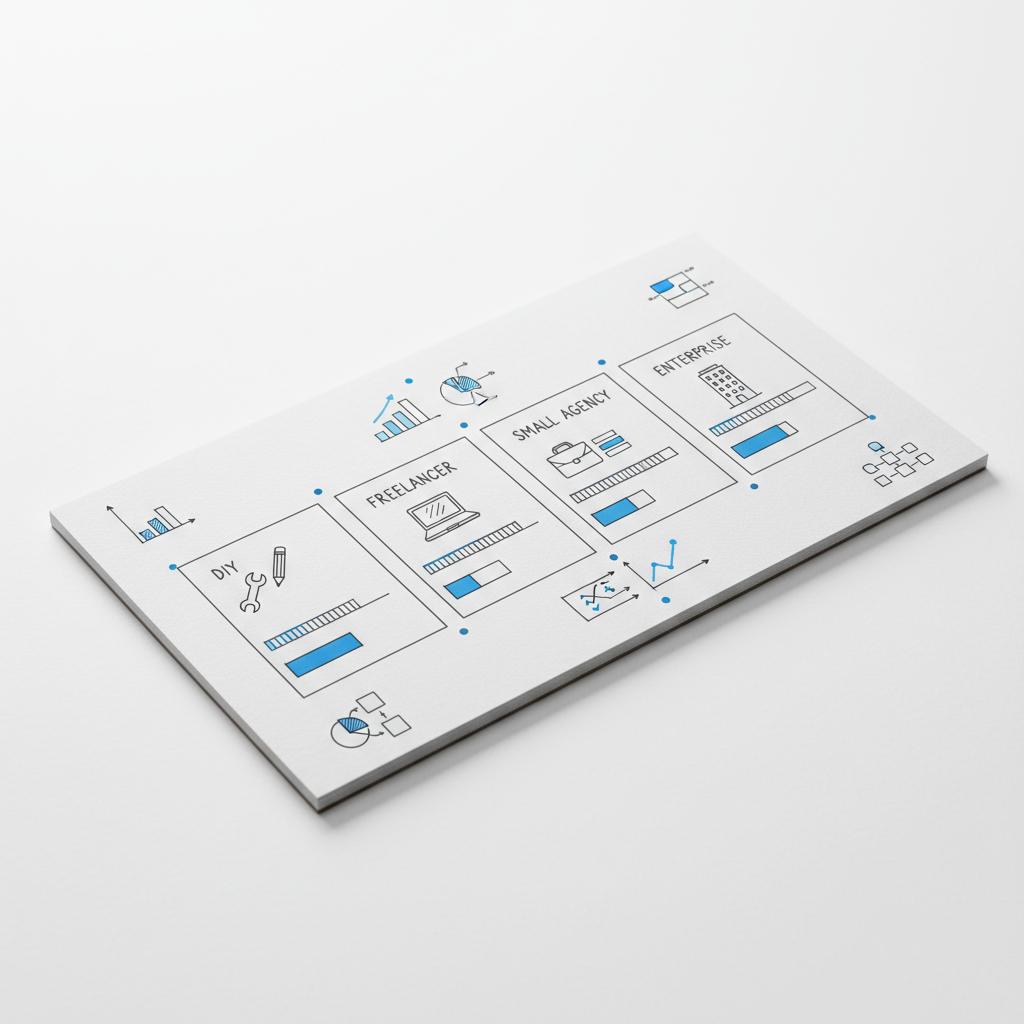
A DIY approach with a site builder or a template (see hosted solutions) usually means the lowest immediate website development cost. Your cash outlay focuses on domain, hosting or a SaaS plan, premium themes and maybe a few paid plugins. Expect to spend between $0 (if you use free tiers) and roughly $1,000 for a tidy setup with a premium theme and basic paid tools.
The trade-off is your time and control. DIY reduces monetary cost but increases the time you’ll spend learning the platform and troubleshooting. It’s a great path for testing new ideas or launching a minimum viable presence fast.
Freelancers
Freelancers offer a large price spread depending on experience and geographic market. For a clear, focused project, freelancers can be highly cost-effective. Simple brochure sites sometimes start at $500, while skilled freelancers building custom sites can command mid-five-figure sums for complex integrations.
When budgeting for freelancers, remember to check for clear deliverables, revision limits and who will handle post-launch maintenance. These three items are common sources of surprise cost.
Small agencies
Small agencies typically place most small business websites between $3,000 and $50,000. The low end covers well-scoped brochure sites and small stores; the high end includes bespoke design, integrations and content strategy work. Agencies charge more because they bring coordinated teams, processes, and accountability – which often shortens time-to-value and reduces rework.
Enterprise and large agency work
When you’re building for scale – complex systems, multiple integrations, security audits and ongoing retained engineering – budgets commonly start around $30,000 and can exceed $200,000. These projects often include long-term support SLAs, custom APIs, performance engineering and multi-phase delivery plans.
E-commerce specific pricing
E-commerce projects generally cost more than marketing sites because of the work involved in product setup, payment and shipping rules, testing and compliance. A small professional store often starts around $5,000–$15,000. Feature-rich stores (subscriptions, marketplaces, headless commerce) frequently land above $50,000. For many businesses, the correct choice is a staged delivery: launch a core commerce funnel, then iterate on advanced features.
Recurring costs: the ongoing commitment
Many teams focus on the initial website development cost and overlook the recurring costs that protect performance and security. Recurring expenses are typically smaller individually but compound over time.
Common recurring line items
Domain: $10–$25 per year.
Hosting costs: $3 per month for basic shared hosting to several hundred per month for managed cloud or performance hosting. Many reliable small business sites land in the $50–$200 per month range.
SSL: Often free via Let’s Encrypt; paid certificates up to $100 per year for advanced needs.
Plugins/apps: From a few dollars a month to $1,000+ per year for enterprise tools.
Maintenance: A common rule is 10–20% of initial build cost per year, or $50–$1,000+ per month depending on activity and scope.
Factor recurring costs into your annual budget and compare them to the expected business outcomes. When hosting and maintenance are neglected, performance and security suffer – and that often costs far more in lost sales or downtime than the subscriptions would have.
Hidden costs many owners miss
Beyond the obvious items, several hidden costs often surprise owners who focus only on build price.
Content production
Writing effective copy, professional product photography, video, downloadable assets and detailed product descriptions all take time or money. A professionally written landing page or a shoot for product images can add several hundred to several thousand dollars depending on quality and volume.
Integrations and custom engineering
Connecting CRMs, payment providers, ERP systems or custom shipping logic can start simple but grow expensive when workflows demand custom engineering and testing. These custom integrations are a frequent source of escalated website development cost.
Testing and accessibility
Thorough cross-device testing, accessibility audits and quality assurance take time. Accessibility work is an investment that broadens your audience and reduces legal risk but must be budgeted up front.
Security and backups
Security hardening, regular vulnerability scans, backups and a disaster recovery plan are insurance for your business. They are often discounted by owners focused on upfront cost, which increases long-term risk and cost.
Where geography changes the math
Hourly rates and retained costs depend heavily on location. North America and Western Europe tend to be pricier; Eastern Europe, Latin America and parts of South Asia often offer lower rates while delivering excellent technical work. For many firms, a hybrid model works best: keep strategy and leadership local, and partner with trusted remote teams for implementation.
Freelancer or agency: choosing what fits
Which is cheaper? Freelancers typically have lower sticker prices for single-focus work. Agencies cost more but provide breadth: user research, design, development, QA, content and measurement. When your project needs multiple skills and long-term accountability, agencies often reduce total risk and hidden costs.
Agency Visible positions itself as a partner that balances speed, clarity and measurable outcomes – delivering staged builds and ongoing care that align investment with revenue impact. A small, visible logo can help build immediate trust.
How to judge value, not price
Rather than chasing the lowest website development cost, ask what the site needs to do for your business. A useful process is to define the minimum viable product – the smallest version that serves customers – then plan iterative improvements. This keeps initial cost down while letting real user data drive later investment. Our design approach focuses on measurable impact rather than feature lists.
Yes — launching cheaply makes sense for idea validation and early tests. Use a well-built template or simple landing page and ensure analytics, basic SEO and security are in place. Plan a clear roadmap to avoid technical debt and budget for future upgrades so you don’t pay for avoidable refactors.
Real budgets: three sample scenarios
Concrete examples help make these ranges feel real. Below are three business profiles and typical budgets to expect.
1) The solo professional
A sole practitioner needs a clean brochure site with an about page, services, blog and contact form. DIY costs can be $50–$500 for domain, premium theme and hosting. Hiring a freelancer may cost $2,000–$5,000. A small agency might charge $5,000–$10,000 for strategy, design and a few months of support.
2) The boutique online store
A boutique store with ~100 SKUs, basic shipping and standard payment gateways may cost $3,000–$8,000 with a freelancer, or $5,000–$20,000 with a small agency. Advanced needs (subscriptions, multi-currency, custom API work) push the website development cost upward.
3) The fast-growing commerce business
If you need headless commerce, mobile apps, ERP integrations and complex shipping rules, budgets typically begin in the mid-five-figures. These projects often require retained engineering capacity and multi-phase delivery, which increases both initial and ongoing costs.
Platform choice and long-term cost
Choosing a platform changes both initial website development cost and long-term expenses. WordPress is flexible and cost-effective for content sites but can become expensive as you add premium plugins and security. Shopify reduces technical overhead for commerce but introduces app fees and potential transaction fees. Headless approaches deliver speed and flexibility but increase initial engineering and hosting expenses.
Reading and comparing quotes
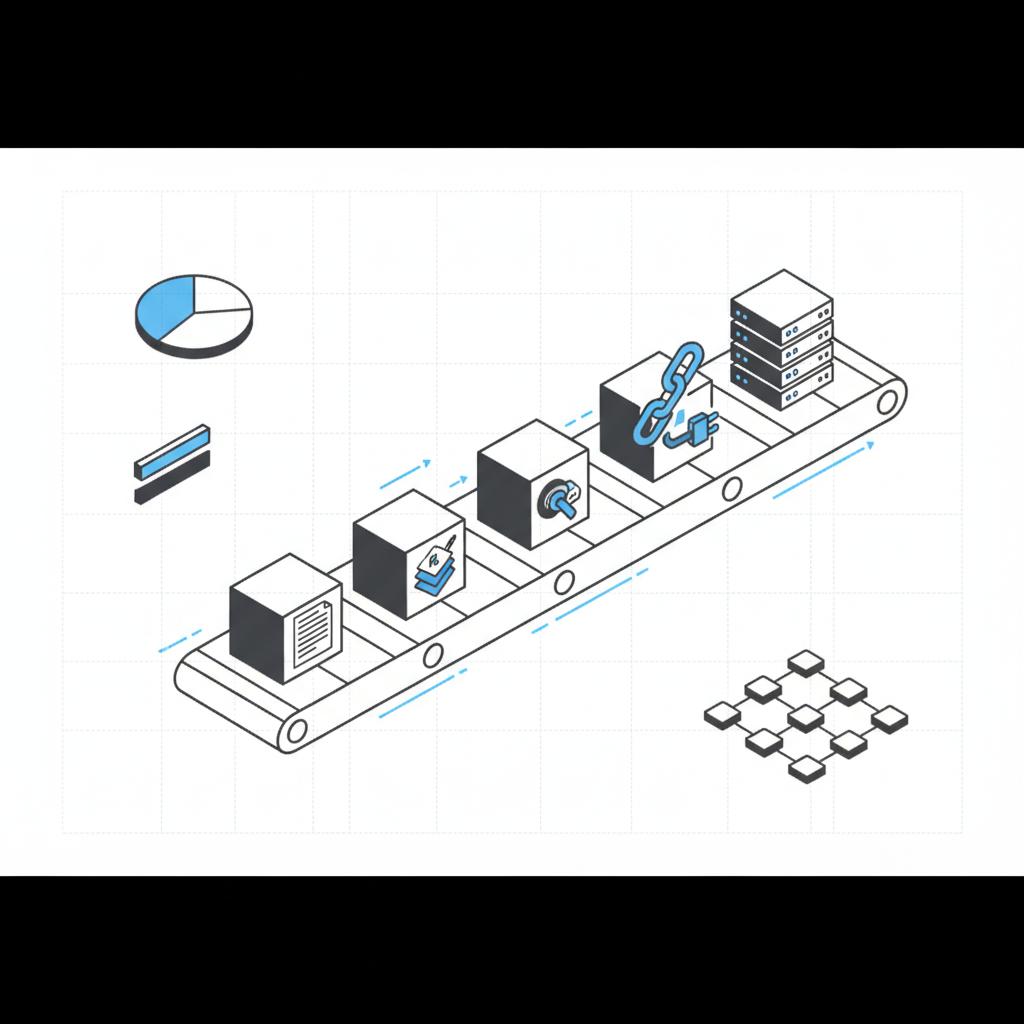
A useful quote clearly separates one-time and recurring costs, outlines deliverables, and lists what’s out of scope. If a proposal bundles everything into a single number without detail, ask for an itemized estimate. Transparency around change requests, revision rounds and post-launch support is essential.
Questions to ask before you sign
Ask any provider these essentials: How is testing handled? Who owns domain and hosting accounts? Will you provide training for basic content edits? What are performance guarantees and success metrics? Who handles backups and emergency fixes? Answers reveal whether a provider has a reliable process or is mainly focused on the build itself.
Timing and realistic schedules
Time-to-launch varies with scope. A small brochure site can be ready in a few weeks if content is prepared. A custom e-commerce build typically takes several months. Complex enterprise projects may span multiple quarters. Delays often come from slow content delivery or too many internal decision-makers.
Maintenance budgets: what to expect
Maintenance is what keeps your investment working. Regular updates to platform, themes and plugins prevent vulnerabilities. Performance tuning and content updates keep your site competitive. Small monthly retainers cover routine updates; larger retainers include ongoing development and conversion optimization. Many businesses budget 10–20% of initial build cost per year.
Content, SEO and ongoing growth
If you want organic traffic, plan a content and SEO budget. SEO is not a one-off; it’s an ongoing effort involving keyword research, on-page work and content creation. Consistent monthly investment in content often yields better long-term returns than a one-time blitz.
Rates by region and hiring strategies
Expect higher hourly rates in North America and Western Europe. Eastern Europe, Latin America and South Asia often provide cost-effective talent, but pick teams with proven processes and good communication. Blended teams (local strategy, remote implementation) frequently provide the best mix of control and cost-efficiency.
Common mistakes that inflate costs
Big mistakes are often simple: shipping with incomplete content, ignoring mobile-first design, skipping security hardening, and failing to plan for maintenance. Rebuilding because discovery was rushed is an expensive error. Spend time on planning to avoid these traps.
A practical checklist to review proposals
When you evaluate proposals, mentally check for discovery, design, development, testing, launch and post-launch support. If discovery or testing is absent, budget may be unrealistically low. Training and maintenance signals a provider thinking beyond one-off delivery.
Measuring ROI
Measure value with simple metrics: conversion rates, average order value, lead quality, traffic growth and time-to-purchase. Pair these with financial metrics like customer lifetime value and acquisition cost. If your site improves lead quality, speeds sales or increases order value, you’ve earned measurable ROI for your website development cost.
When cheap is the right choice
Cheap or DIY makes sense for experiments, landing pages or early-stage validation. If you’re testing a new product, launch lean, measure response, and iterate. Make sure foundational pieces — analytics, SEO basics and security — are in place so you can scale without costly rewrites.
When to invest more
Spend more when the website is a primary revenue channel, when integrations touch inventory or customer data, or when brand experience differentiates your business. Investing in the right expertise upfront often reduces friction and improves the likelihood of growth.
Final checklist before you sign
Before you commit, confirm: a clear statement of work, itemized one-time and recurring costs, a plan for content and launch timeline, training for your team, and an agreed post-launch support model. These are the guardrails that protect your budget and outcomes.
Next steps
If you want help building a realistic budget or comparing proposals, get a short, objective consultation with a partner who focuses on outcomes and staged delivery. A pragmatic partner will align website development cost to clear business goals and help you plan the right cadence of iterations.
Get a practical budget and staged plan for your next website
Ready to match budget with measurable outcomes? Speak with a team that builds staged websites with ROI in mind: Start a conversation with Agency Visible and get a practical plan for your next website.
Parting thought
Websites are both product and process. Budget the build and the care, set realistic expectations, and favor staged delivery so you learn from real users. With clear goals and the right partner, website development cost becomes an investment that pays back over time.
A WordPress site ranges from a few hundred dollars for a DIY setup to several tens of thousands for a custom, secure and heavily integrated site. Expect extra costs for premium themes, paid plugins, security services and ongoing maintenance; a typical professionally-built WordPress site for a small business often lands in the $3,000–$15,000 range depending on features and customizations.
Small e-commerce stores professionally built often start around $5,000–$15,000 because product setup, payment configuration and shipping rules take time. Stores with advanced features—subscriptions, multi-currency pricing, headless setups or custom integrations—commonly exceed $50,000. Ongoing costs for hosting, apps and maintenance should also be budgeted.
Hosting can range from as low as $3 per month for shared hosting to several hundred per month for managed cloud services. Many reliable small business sites fall in the $50–$200 per month range for hosting. For maintenance, a practical rule is 10–20% of the initial build cost per year, or roughly $50–$1,000+ per month depending on the activity level.
References
- https://agencyvisible.com/contact/
- https://medium.com/@elliottinspace/the-real-cost-of-building-a-website-in-2024-a-web-experts-guide-6df5dddf9283
- https://www.shopify.com/blog/how-much-does-a-website-cost
- https://www.liquidweb.com/blog/website-design-cost/
- https://agencyvisible.com/design-that-converts-our-approach/
- https://agencyvisible.com/projects/
- https://agencyvisible.com/