How to get more clients as a general contractor? A realistic, local-first plan
How to get more clients as a general contractor? Start with where homeowners look: local search, visible reviews, and a portfolio that speaks their language. This guide gives a step-by-step 90-day plan – complete with scripts, tracking advice and small experiments – you can run without blowing your budget.
Across the next pages you’ll find clear actions for improving local visibility, building project pages that convert visitors into inquiries, using marketplaces and paid ads intelligently, and running follow-up systems that actually close jobs. Read as if you were standing at the kitchen table with a notepad: practical, direct, and ready to implement.

Need help turning visibility into steady jobs? Let’s prioritize your growth
Ready to talk through a 90-day plan that fits your crew? If you want a fast second opinion, book a quick call with Agency VISIBLE to prioritize the experiments that will bring the best clients for your trade and area.
Why local visibility beats broad marketing for contractors

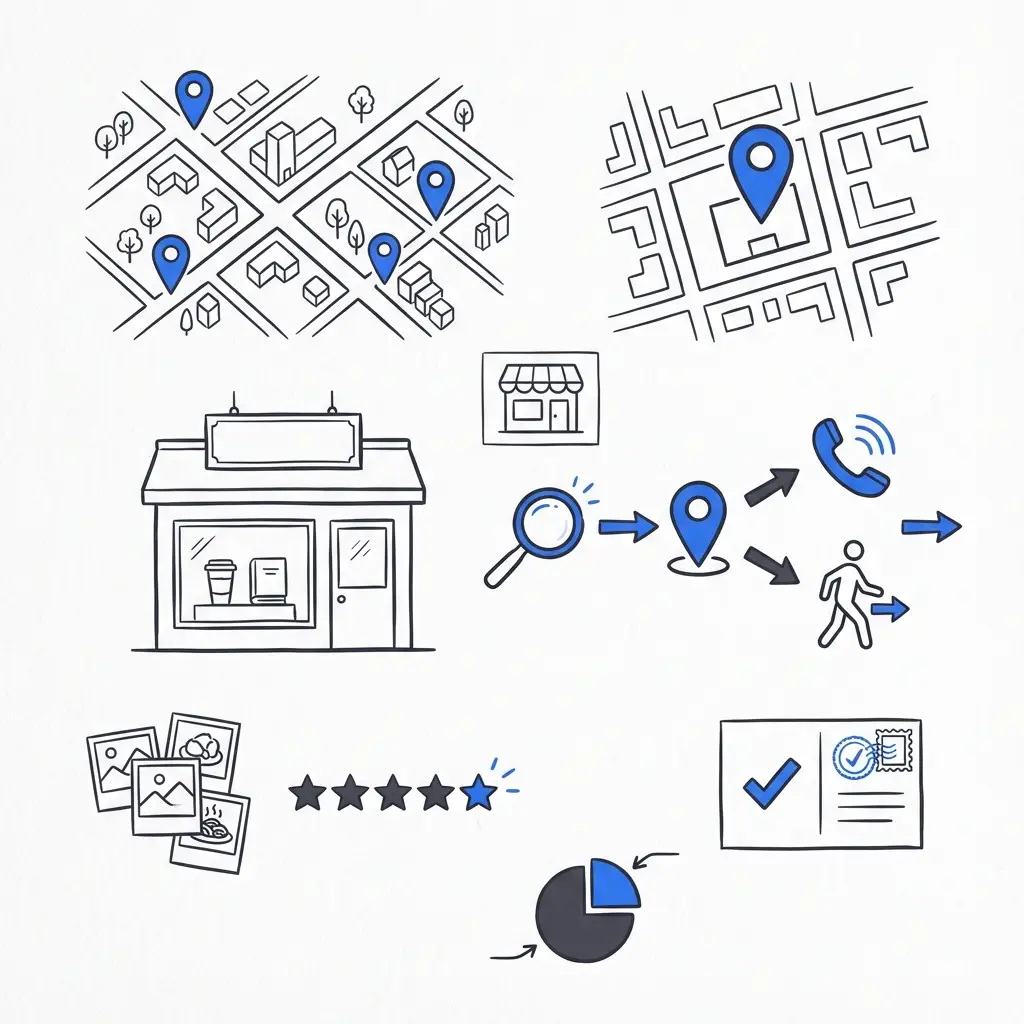
Your Google Business Profile (GBP) is often the first impression. Treat it like your front door. A clear logo helps homeowners recognize your listings faster.
Most homeowners don’t scroll past the first page. When your business appears in the Local Pack or Google Maps, you meet people who already have intent: they want a roof fixed, a kitchen remodeled, or a deck rebuilt. That’s why local signals – your Google Business Profile, recent reviews, accurate service areas and project photos – matter more than a flashy website or a broad social campaign. For tested local SEO tactics, see 13 local SEO strategies that actually work in 2025.
Local visibility answers three homeowner questions instantly: can this business reach me, have they done similar work, and can I trust them? If those three boxes are ticked, you get more clicks, more calls and more booked estimates.
For contractors who want a fast, human review of their local plan, talk to Agency VISIBLE—they specialize in making small and mid-sized businesses visible without complicated agency overhead.
Yes—by being faster, clearer and hyper-local. A single-person crew that answers leads quickly, shows recent similar work and uses simple, honest proposals can convert at rates larger firms miss. Speed and trust often outweigh scale in homeowner decisions.
Yes. Small crews win by being clear, fast and local. A single person who answers the phone in 15 minutes, shows recent work and asks the right questions can convert at rates larger firms miss. Speed and specificity beat size in many homeowner purchase decisions.
Step 1: Nail the basics—Google Business Profile and local SEO
Your Google Business Profile (GBP) is often the first impression. Treat it like your front door.
GBP checklist
Essentials to update today:
– Business name (consistent with listings)
– Accurate service areas (zip codes and towns)
– Hours and holiday exceptions
– Short, clear service descriptions that mention the work you actually do (kitchen remodels, roofing, deck rebuilds)
– Recent project photos (aim for 10–15 within 30 days)
– A few frequently asked questions answered (permits, warranties, estimates)
Tip: Write the description like a short conversation: “We help homeowners in [town] with kitchen and bath remodels—free estimates and a 2-year workmanship warranty.” That reads better than an overly-optimized brochure paragraph.
Local on-page basics
On your website, add clear service pages for primary trades and the main towns or ZIP codes you serve. Each page should have:
– A local-focused headline (e.g., “Kitchen Remodels in [Town]”)
– Two to four short project photos with captions about outcomes and timeline
– A short FAQ about permits, financing, and scheduling
– A clear call to action: “Book a free estimate — two slots this week”
Keep content simple, useful and local. Long, keyword-stuffed pages don’t help as much as clear answers and evidence of work.
Step 2: Portfolio and photography that convert
Homeowners buy with their eyes. A portfolio should be organized, honest and outcome-focused.
How to structure project pages
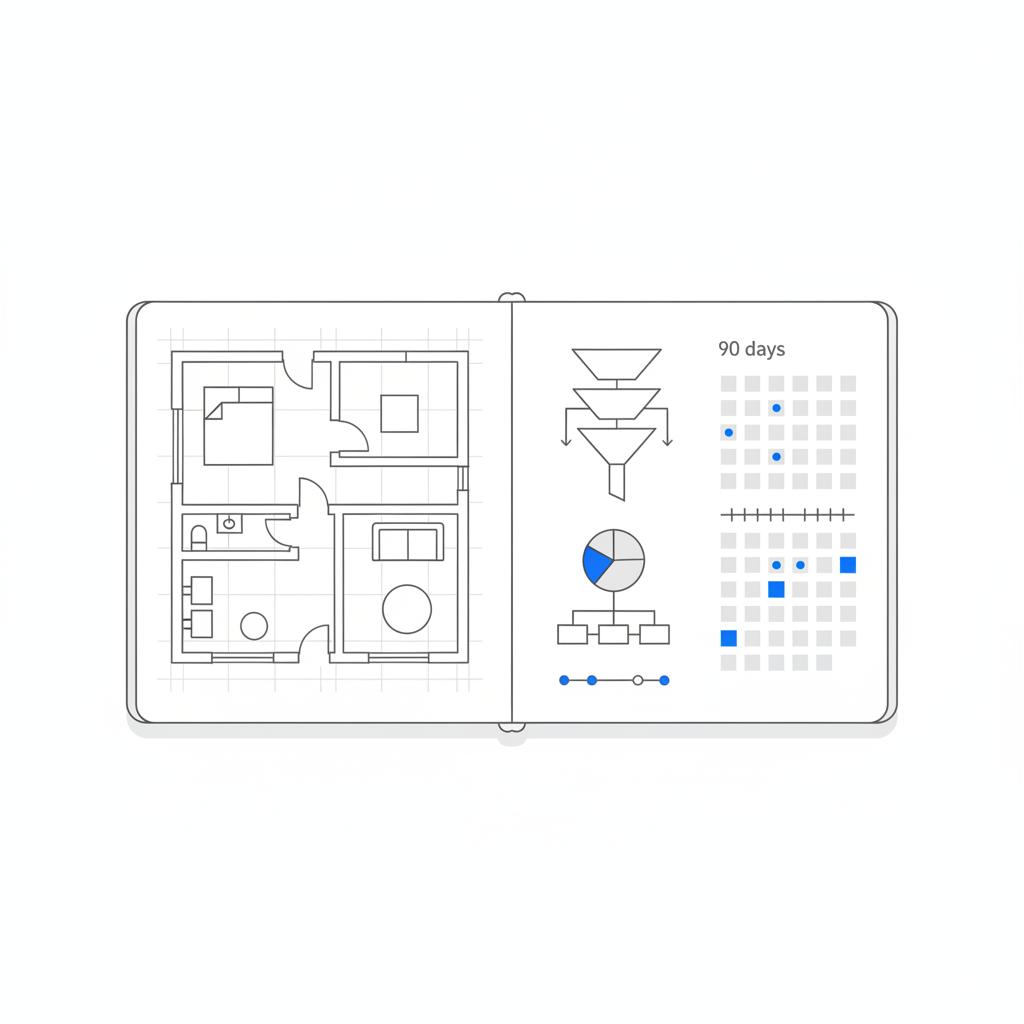
Each project page should answer four quick questions:
1) What was the problem?
2) What did you do?
3) How long did it take?
4) What did the homeowner gain? (value, comfort, resale benefit)
Add a short budget range when possible—this helps manage expectations and self-qualify leads.
Practical photography tips
– Use natural light when possible. Shoot early morning or late afternoon for softer shadows.
– Show full-room shots and two or three detail shots (joinery, materials, before/after)
– Use a tripod for consistent framing and sharper images
– Don’t over-edit—realistic colors build trust
If you can’t hire a pro, schedule a half-day shoot with a local photographer or use a modern smartphone and tripod. The investment pays off because better photos increase calls and reduce scope questions in the estimate. For examples of strong portfolios, see our projects gallery.
Step 3: Build reputation systems that earn reviews naturally
Reviews are social proof and a ranking signal. But you don’t need to beg—create a routine.
A review workflow that doesn’t annoy
1) Ask at a milestone—final walkthrough or when the client thanks you
2) Offer a one-click link and say “It takes 2 minutes”
3) If they hesitate, ask for a short note about one thing they liked most
4) If a client expresses concern, resolve it privately first, then ask for a review
Automate reminders in your CRM: an immediate message after completion, then a gentle reminder after 7 days if no review appears.
Step 4: Use marketplaces—test, measure, adapt
Platforms like HomeAdvisor, Thumbtack and local marketplace apps can fill the top of your funnel. The trick is to treat them as experiments, not primary channels.
How to test a marketplace
– Run a small budget for 30–60 days
– Feed all marketplace leads into your CRM and tag their source
– Measure contact rate, appointment rate and close rate
– Compare cost-per-lead and customer acquisition cost against other channels
Some marketplace leads become your best jobs; others waste time. Let the data decide.
Step 5: Paid search and social—do this before scaling
Paid ads can scale quickly but are only worth it if landing pages and follow-up are sharp.
Ad setup and landing page rules
– Target two to four ZIP codes where you have good margins
– Use a clear headline and one-step form (or calendar link)
– Include 3 proof elements: gallery, one client quote, short process summary
– Offer a clear next step: “Book a free estimate — two windows this week”
Start with small daily caps (e.g., $15–20/day per campaign) and run two landing page variants to see which converts better. Track cost-per-lead and close rate weekly.
For a contractor-focused local SEO playbook, see the 2025 local SEO guide for contractors.
Step 6: Response time and simple scripts
Fast replies win. Use short, human templates that sound like a person, not a bot.
Immediate SMS template
“Hi, this is [Name] at [Company]. Thanks for reaching out about your [project type]. I can give you two time slots for an estimate this week: [day/time] or [day/time]. Which works best?”
Follow-up phone script (two minutes)
“Thanks for contacting us — can you tell me briefly what’s happening and your ideal outcome? Great — I heard [summarize]. I can come out on [day/time] or [day/time]. The estimate includes a walk-through, materials discussion, and a 1–2 page scope with options.”
Scripts shorten the sales cycle and create consistent expectations for clients.
Step 7: Proposals that feel human and clear
Proposals don’t need pages of legalese. A homeowner wants clarity.
Proposal structure
– One-paragraph summary of the work
– Simple timeline (start date, major milestones)
– Line items with clear inclusions and exclusions
– Payment schedule and warranty details
– Next steps to start work
Include one optional add-on (extended warranty, upgraded materials) so clients feel they have choices and you can upsell without pressure.
Step 8: Measurement—track the right metrics weekly
Track these KPIs every week during your 90-day plan:
– Leads per week (by source)
– Contact rate within 1 hour
– Estimates booked per lead
– Close rate (signed jobs / estimates)
– Cost-per-lead (if paid)
– Customer acquisition cost (total marketing / new customers)
Weekly tracking shows patterns quickly. If one ZIP code produces higher close rates, shift more budget there. For examples of local SEO case studies, see local SEO case studies.
90-day calendar: a practical timeline you can follow
Days 1–30: Quick wins and foundation
– Update GBP fully and add 10–15 project photos
– Create or refine 8–12 portfolio pages with captions and ranges
– Start a review request routine (ask 3 recent clients)
– Begin tracking inbound leads in a CRM (or spreadsheet)
Days 31–60: Test paid channels and follow-up
– Run ten small, ZIP-code-targeted campaigns (Google + Facebook)
– Test two landing page variants—track CPL and close rate
– Add 10 more projects to portfolio (aim for 20 curated examples)
– Create a one-page referral offer for happy clients
Days 61–90: Systematize and scale what worked
– Increase spend on campaigns that hit acceptable CPL and CAC
– Train your team on a 2-minute phone script for new leads
– Finalize a 4-step follow-up sequence in your CRM (immediate SMS/email, same-day call, 3-day follow-up, 1-week final check-in)
– Produce weekly reports that show CPL, close rate and CAC
Detailed examples and templates you can copy
Initial inquiry email (same day)
Subject: Thanks for reaching out — here’s what to expect
Body: “Hi [Name], thanks for contacting [Company]. Attached are two photos of a similar project. The estimate includes a site visit, material options and a written scope. I have openings [day/time] and [day/time]. Which works for you?”
Estimate follow-up (3 days)
“Hi [Name], just checking in after our estimate. I wanted to share a short testimonial from a client with a similar project: [two-line quote]. If you have questions about the scope or budget, I’m happy to clarify.”
Pricing, bidding and handling objections
Clear pricing reduces back-and-forth. Give owners a simple range early, and a fixed price once you inspect. If a homeowner objects to price, offer choices: scope reduction, phased work or a different material option. That keeps the conversation about solutions, not discounts.
Common objections and responses
– “You’re too expensive.” — “I hear you. Would you like a version that keeps the layout but changes finishes to lower the price?”
– “I need a cheaper quote.” — “We can phase the project to fit your budget. Which part would you like to start with?”
– “I want it done faster.” — “We offer an expedited timeline option with a small fee for priority scheduling.”
Referral and partnership playbook
Referrals are free and high-quality. Create a simple referral offer: a $200 credit or a tiered discount for clients who refer other paying customers. Hand a printed referral card at completion and follow up with an email asking if they know someone who could use similar work.
Local partnerships—realtors, property managers, suppliers—expand reach. Offer a clear, short referral arrangement: a shared lead form and a quarterly check-in.
How to choose a CRM or simple tracking system
You don’t need an expensive CRM to start. Use a spreadsheet with columns for name, source, contact time, estimate date, follow-up steps and status. As you scale, move to a simple CRM that supports SMS, tags for lead source and reminder automations (examples: JobNimbus, Buildertrend, Housecall Pro or HubSpot’s free tier).
Staffing and time management: what to delegate
If marketing is eating your time, delegate or outsource small tasks:
– Photography: hire a day-rate photographer for project shoots
– Lead triage: a part-time assistant can send the initial SMS and book estimates
– Ads and landing pages: an agency or freelancer can run small tests and hand over learnings
Keep pricing and client conversations centralized with the most experienced person so proposals stay accurate.
Seasonality and scheduling tips
Plan for seasonal slowdowns by booking out forward in good months. Offer fall or winter discounts for non-weather-sensitive work, or package maintenance services in the off-season. Use a waitlist and a “soft book” system for busy months so you can fill cancellations quickly.
Case example—how a small firm improved results in three months
A mid-sized contractor in a suburb focused on kitchen remodels and deck rebuilds. They updated GBP, added 12 photos and 15 portfolio pages. They ran ten small campaigns capped at $20/day and connected leads to a CRM where each lead got an automated SMS and an immediate email. The project manager called warm leads within 30 minutes.
Month 1: CPL ≈ $40, close rate 8%
Month 2: CPL ≈ $28, close rate 12% after landing page and script improvements
Month 3: Focused spend on high-performing ZIP codes and paused one low-quality marketplace. CAC fell and they had a predictable 4-week booking window.
This shows the power of small, consistent improvements rather than big, unfocused campaigns.
Troubleshooting common problems
Problem: low website traffic but many phone calls
– Reason: Distributed local visibility. Solution: Keep GBP strong and add local landing pages to capture web leads.
Problem: many leads but low close rate
– Reason: poor follow-up or unclear proposals. Solution: tighten scripts, shorten response times and simplify proposals.
Problem: paid ads are expensive
– Reason: broad targeting or weak landing pages. Solution: tighten ZIP codes, test ad copy focused on value and proof, and improve landing page relevance.
Quick wins checklist (first two weeks)
– Update GBP and add 10 photos
– Create 5 project pages with captions and budget ranges
– Set up a simple CRM or spreadsheet for all inbound leads
– Draft an immediate SMS template and a 2-minute phone script
Longer-term plays (months 4–12)
– Develop a referral program with tracking
– Build seasonal campaigns (fall maintenance, spring remodels)
– Add video walk-throughs of finished projects to the site
– Consider local sponsorships (home shows, community events)
Key takeaways
Growing a contracting business is a series of small, measured moves: make your business easy to find locally, show work that matches the clients you want, respond faster than competitors and measure everything. Over 90 days you’ll test channels, learn what converts and build repeatable systems that bring good clients.
One last practical note: speed matters. A fast reply, a simple portfolio and a clear proposal often beat a perfect website.
You can expect initial changes in visibility and some increase in lead volume within the first 30 days if you fully update your Google Business Profile, add recent project photos, and start an active follow-up routine. Paid campaigns usually require a few weeks of data before you can judge performance. Treat the first 30 days as foundation work and the next 30–60 days as optimization and testing.
No. Start with small, tightly targeted budgets (for many contractors $1,000–$2,500 per month is a common testing range) and limit spend to two to four ZIP codes where you have the best margins. Use focused landing pages and fast follow-up to improve conversion. Scale budgets only after you see acceptable cost-per-lead and close rates.
Yes. Reviews are a key trust signal for homeowners and help with local search visibility. Recent, specific reviews are more persuasive than an old five-star rating. Use a gentle system to request reviews after project milestones and resolve concerns privately before asking for public feedback.
References
- https://revved.digital/13-local-seo-strategies-that-actually-work-in-2025-case-studies/
- https://www.handoff.ai/blog/the-2025-local-seo-guide-for-general-contractors
- https://www.bigleap.com/local-seo-case-studies/
- https://agencyvisible.com/
- https://agencyvisible.com/projects/
- https://agencyvisible.com/contact/