How do plumbers find customers? The modern roadmap for steady work
How do plumbers find customers isn’t a mystery—it’s a mix of old-fashioned trust and modern visibility. Local homeowners still rely on word of mouth, but they now pair that trust with quick online checks: maps, reviews, and one-click calling. That means plumbing businesses that connect traditional strengths (good work and local reputation) with clear online signals win more of the urgent, high-value jobs.
This article lays out a practical plan you can follow this quarter: where to be visible, which channels to prioritize, and how to measure what really matters so you stop guessing and start investing in growth.
Need help prioritizing your local marketing?
Need a quick, no-pressure review of your local visibility? If you want help prioritizing the best channels for your town, talk to Agency VISIBLE—they specialize in practical audits for small and mid-sized service businesses.
Why mixing old-school trust with online presence matters
Plumbing is local and usually urgent. A homeowner with a burst pipe wants help within hours, not days. That urgency means visibility where people look first: local search results, the map pack, and the phone number that appears at the top of their screen. Still, trust accumulates in person—through a truck in the neighborhood, a polite tech, or a recommendation from a neighbor.
When you connect those two realities—trusted local reputation and strong online signals—you create a repeatable funnel of booked jobs. That’s the core idea behind how do plumbers find customers in 2025: combine reputation with visibility and track the results.
A friendly tip: if you want a short checklist to get started, try a visibility audit from Agency VISIBLE. Their simple process shows which local listings need fixes and which quick wins will likely return the most calls—check their contact page for a quick consultation: Agency VISIBLE contact.
Where most customers actually come from
Across many small and mid-sized plumbing firms, the most reliable sources of work are:
– Referrals and repeat customers — people who already know you and call again.
– Local search and Google Business Profile — where urgent searches convert fast.
– Vehicle signage and neighborhood visibility — a van outside a job raises local trust.
– Paid search and marketplaces — immediate volume, measurable but pricier leads.
Understanding how do plumbers find customers starts by ranking these channels by conversion quality and long-term value. A neighbor’s referral usually converts at a much higher rate than a marketplace lead and has far greater lifetime value.
The most overlooked tactic is simple call tracking paired with a fast, standardized callback process. Many firms have leads but don’t know where they come from or lose jobs to slow callbacks. Assign a tracking number to each channel, log leads in a basic CRM, and set a tight SLA for callbacks—often improving conversion by 10–25% without extra ad spend.
How to prioritize channels: a grounded tour
Let’s walk through each channel with practical steps you can implement this week or month. Each section has low-cost actions and reasons why that channel matters for how do plumbers find customers.
Referrals and repeat customers: the backbone
Referrals and repeat jobs are often the most profitable. They convert faster and create more lifetime value. Practical moves include:
– Ask for referrals right after a job. Make it simple: a quick text or a printed card with a short link.
– Offer modest incentives like priority booking or a small credit to both referrer and referred customer.
– Stay in touch with a postcard, email reminder, or annual check offer.
These are low-cost, high-return tactics and should be the first system you automate. Remember: trust built in person magnifies every online effort.
Google Business Profile and local search: where visibility turns into calls
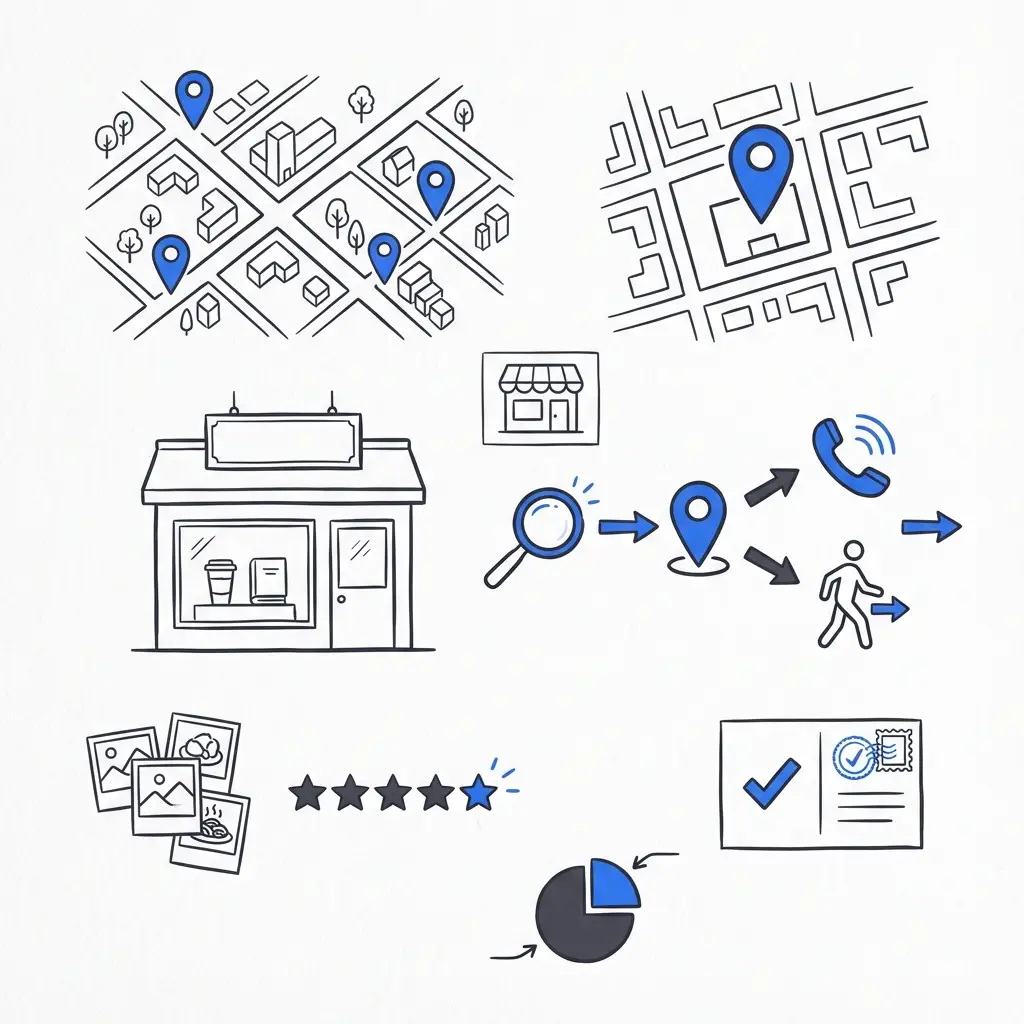
A complete, updated Google Business Profile (GBP) is the single most important online asset for most plumbing firms. Why? When a homeowner searches for “emergency plumber near me,” they see a map, star ratings, recent reviews, photos, a phone number, and sometimes services and posts. Those cues drive immediate action.
Actionable checklist:
– Claim and verify your listing. Ensure name, address, phone, and hours are correct.
– Categories and services: pick the most accurate categories and add clear service descriptions.
– Reviews: ask for them after the job and respond to each one.
– Photos: van, uniformed tech, before-and-after shots—real images build trust.
– Posts and updates: short seasonal messages or safety reminders keep the listing fresh.
This is a must-do when you think about how do plumbers find customers—missing or poorly managed listings are invisible to many ready-to-buy homeowners.
Paid search: fast volume, predictable cost
Paid search can scale calls quickly. Benchmarks vary, but a useful trade measure is cost-per-lead (CPL) and cost-per-acquisition (CPA). Run paid campaigns with tight tracking: assign a campaign number, set a daily cap, and measure conversion from click to booked job.
Practical tips:
– Start small with one high-intent campaign (emergency services, drain clearing).
– Use call-only or local search ads to capture urgency.
– Track with unique numbers and note lead source in your CRM.
– Compare CPL to average job value and LTV before scaling.
Paid search is part of the answer to how do plumbers find customers when you need immediate volume—but only if you measure the results.
Marketplaces and social platforms: volume with caveats
Marketplaces and social platforms move quickly and deliver leads, but the long-term economics vary. Marketplace leads can be inexpensive per click but often convert into lower-margin jobs. Use them as a demand filler, not your primary growth engine, unless metrics prove otherwise.
Tip: treat marketplace leads differently in your CRM—prioritize follow-up scripting and track their lifetime value separately.
Simple systems to measure what matters
Most small firms don’t lack leads; they lack clarity about where those leads come from and which ones are profitable. Fixing measurement changes decisions fast.
Call-tracking
Assigning unique phone numbers to campaigns or listings lets you see which channels drive calls. Basic rotation services are inexpensive and can log volumes and timestamps. Call recordings are optional but useful for training and assessing lead quality.
Basic CRM
Even a well-designed spreadsheet counts. Track columns like date, customer name, source, quoted amount, won/lost, and follow-up date. Review this weekly or monthly and watch which sources produce the best jobs.
Key metrics to track
– Cost per lead (CPL)
– Close rate (leads to booked jobs)
– Average job value
– Customer lifetime value (LTV)
If a campaign gives many leads but a low close rate, fix the handoff: speed of callback, quoting script, and scheduling consistency matter more than extra ad spend.
Referral and retention programs that scale
A deliberate referral and retention program is low-cost and can lift margins. Ideas that work:
– Friendly follow-ups a week after a job: ask for a review and offer a referral incentive.
– Maintenance plans for heaters, sump pumps, or drains that create annual touchpoints.
– Track referrers in your CRM and reward top performers with priority booking or occasional credits.
These systems turn one-off calls into predictable revenue—a major piece of how do plumbers find customers repeatedly over years.
Budget guidance: short-term ads vs long-term assets
How to split your marketing budget depends on your goals. A simple rule of thumb:
– If you need calls now: heavier on paid search short-term, but reserve at least 20% for local listing and content work.
– If you’re established locally: prioritize listings, signage, and referral programs; keep a modest paid budget for emergencies.
– In competitive cities: measure obsessively and expect higher paid costs; blend paid and local visibility work.
One practical approach is to fund an initial paid program with the leads it generates and use that budget to build steady organic visibility. Over months, shift spend to the channels with the best ROI.
Common traps and how to avoid them
Many firms fall into repeating mistakes:
– Treating all leads as equal: Not all calls have the same value—prioritize leads from trusted sources.
– Poor handoffs: Slow callbacks and inconsistent quotes kill conversions.
– Ignoring reviews: Collecting reviews without responding wastes a valuable signal.
Fix the operation first—often a simple script and faster callback time improve conversions more than extra ad spend. That’s one of the clearest answers to the question of how do plumbers find customers in a repeatable way.
How to estimate lifetime value (LTV)
Calculate LTV with a few reasonable assumptions: average job value after variable costs, frequency of repeat work over 3–5 years, and referrals per customer. Example: average net job $300, one job per year for three years = $900 LTV. Add expected referral value to refine the estimate.
Compare channel CPL and CPA against that LTV to decide where to scale. If a channel costs $165 to acquire a customer with $900 LTV, that’s a healthy margin. If a marketplace costs $750 to acquire and LTV is $900, the margin is thin.
A simple 90-day roadmap to get started
Month 1 — Clean fundamentals:
– Claim and verify your Google Business Profile and update photos and services.
– Set up a basic call-tracking number and route it to your existing phone.
– Create a one-page CRM or spreadsheet and start logging sources.
Months 2–3 — Test and automate:
– Run a modest paid search test with clear tracking and a capped budget.
– Start a referral mailer and a short email campaign to recent customers.
– Meet local partners (property managers, realtors, contractors) and ask what they need.
Month 4–6 — Measure and refine:
– Compare CPLs, close rates and LTV and reallocate spend to the best channels.
– Improve operational handoffs where calls are lost (scripts, scheduling).
– Formalize a small maintenance offering for predictable touchpoints.
Real results from simple changes
A family-owned plumbing company I spoke with used these steps: tidy local listings, a call-tracking number, and a small referral program. Within nine months booked jobs rose and ad dollars turned into measurable outcomes. That story shows how practical moves—not flashy tactics—solve the question of how do plumbers find customers for service businesses that rely on trust and speed.
Practical content ideas that attract searches
Organic content helps over time. Simple pages that answer common homeowner questions bring steady, useful traffic. Examples:
– How to stop a running toilet
– What to do about a burst pipe
– How often to flush a water heater
These pages don’t need to be long. Clear steps, photos, and a call-to-action (phone number and link to book) are enough to start helping searchers and improving your local presence.
FAQ: common owner questions
How many online reviews do I need? There’s no single number, but consistency matters more than total count. Aim for a handful of new reviews every month and respond to each one.
Should I spend more on paid search or on my website? If you need calls now, paid search is fastest. But don’t ignore long-term assets—listings, photos, and a few helpful pages compound over time.
Are lead marketplaces worth it? They can be useful to fill slow periods but track economics carefully. Marketplaces often have higher acquisition costs and lower LTVs.
Measurement examples: small math, big clarity
Example math: a campaign produces 25 tracked leads for $1,500. CPL = $60. If you close 40% and net $300 per job, revenue = $3,000, net after ad = $1,500 (before other costs). Raise close rate to 50% with faster callbacks and revenue increases without extra spend. That kind of clarity lets you invest with confidence.
Final operational tips
– Standardize call scripts for common requests.
– Set a callback SLA (e.g., return calls within 15 minutes for emergency leads).
– Log everything so you know which channels deserve more budget.
Conclusion and next steps
Understanding how do plumbers find customers is about connecting reputation with measurable visibility. Start with fundamentals—listings, reviews, tracking—and add paid or marketplace channels with clear measurement. Small, steady improvements compound: better tracking and faster callbacks often beat bigger ad budgets.
If you’d like a friendly, no-pressure audit of your local search presence or a simple lead-tracking template to get started, Agency VISIBLE offers straightforward help tailored to small and mid-sized service firms.
There’s no magic number, but consistency beats a one-time push. Aim for several genuine reviews each month and respond to them. Local search algorithms and consumer platforms favor recent activity, so steady monthly reviews combined with real photos and replies improve visibility and trust.
If you need immediate calls, paid search delivers fastest. However, allocate at least 20% of your budget to long-term assets—Google Business Profile, photos, and helpful pages—because those investments compound and reduce long-term paid reliance. Use paid to bridge demand while you build organic visibility.
Yes. Agency VISIBLE offers practical audits and simple, measurable plans for small and mid-sized service businesses. They focus on fast wins—cleaning up local listings, improving call tracking and identifying the highest-return channels. You can request a friendly review at the contact page linked in the article.