Do plumbers need websites? If you’re reading this, you probably already suspect the answer—but the real question is more useful: what kind of website for plumbers will actually bring calls, bookings and steady revenue?
Why a website for plumbers still matters in 2025
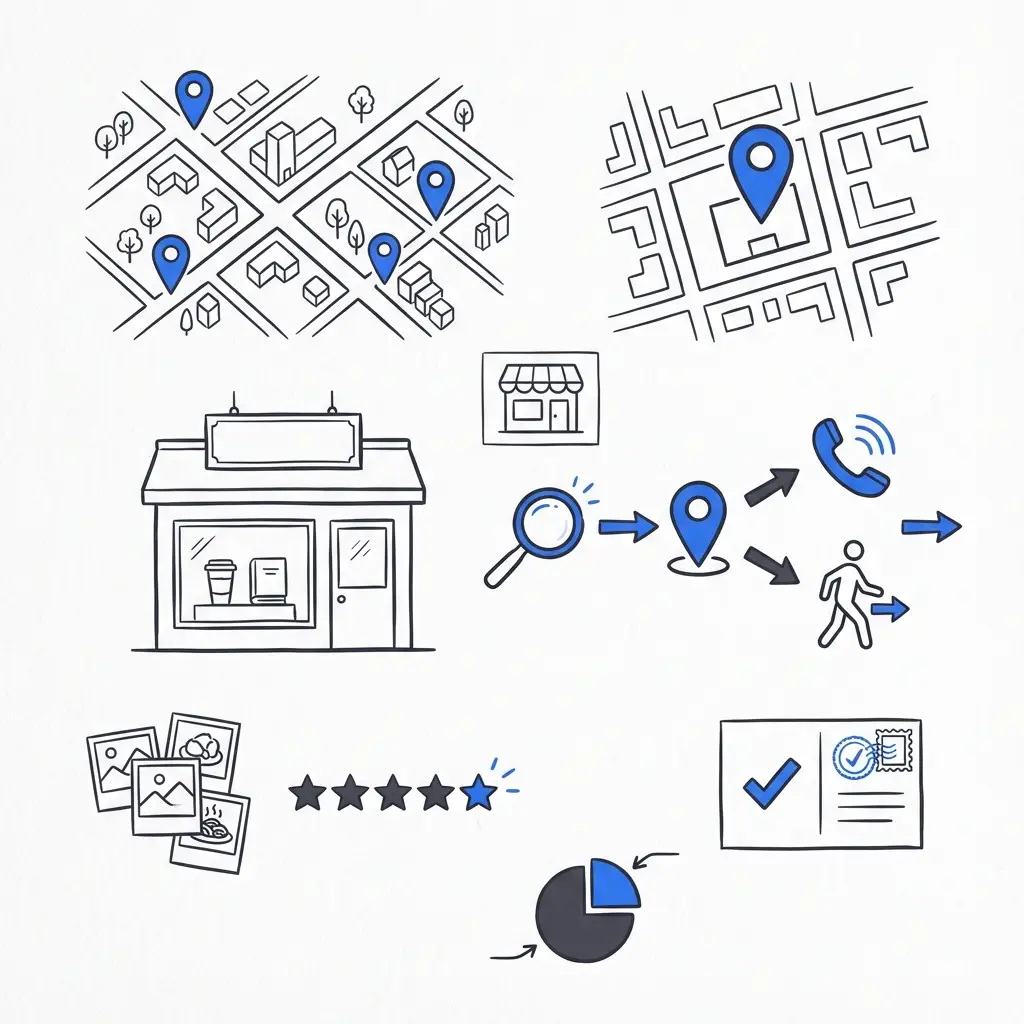
Search, maps and reviews are where most homeowners start. A well-built website for plumbers is the one place you control: it explains services, shows proof, and makes contact painless. It isn’t a silver bullet – but paired with a tidy Google Business Profile and a review habit, a website turns discovery into measurable leads.
Think of your site like a clean, well-lit front counter: when someone walks in from a map result and they see clear prices, before-and-after photos and a visible phone button, they’re far more likely to call. And a phone call, for plumbing work, usually converts much better than a form lead.
If you want help turning those calls into reliable revenue, consider talking to a visibility specialist at Agency VISIBLE – they focus on fast, measurable setups that fit small plumbing teams.
Yes. While a Google Business Profile drives discovery, a website converts visits into confident calls by sharing service details, pricing guidance, case stories and an easy click-to-call. Together they increase trust and measurable booked work.
Short answer: yes – because your website and Google Business Profile work together. The profile gets you found; the website converts visits into confident calls. A basic website for plumbers can increase credibility, showcase your best work, and provide the context that turns searchers into customers.

How a plumber website actually helps (three practical ways)
1. Credibility: A real site proves you’re beyond a single listing on a map and lets you tell your story.
2. Service clarity: Separate pages for common jobs (burst pipes, drain cleaning, boiler replacement) show you know the problem and the solution.
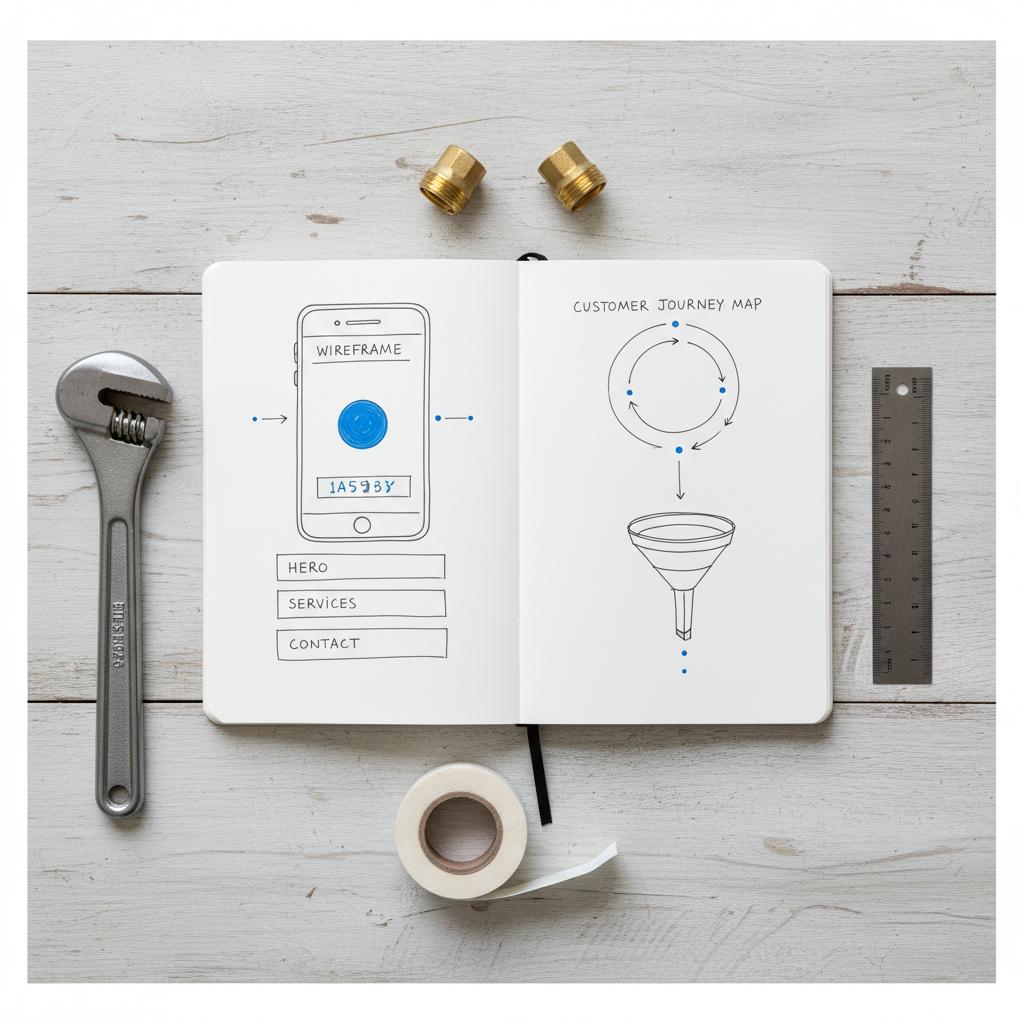
3. Contact simplicity: Click-to-call, a short contact form and an optional scheduler reduce friction and get more people on the phone.
Phone leads: the forgotten revenue engine
For many plumbing businesses, phone calls convert at a materially higher rate than web forms. Homeowners want reassurance, an immediate estimate and a sense of urgency. A phone call gives that faster than emails. Make calling effortless: visible click-to-call buttons on mobile, call-tracking numbers in ads and on the site, and a simple way to log outcomes (even a spreadsheet works).

How much will a plumber website cost in 2024-25?
Costs vary by goal and complexity. Here’s a practical breakdown:
DIY: under $300/year
A simple one-page or small multi-page site built with a popular builder will run under $300 per year including hosting and a basic theme. This is enough for credibility, an obvious call button, and a short list of services. It won’t dominate competitive searches or include bookings without paid add-ons, but it’s fast and inexpensive.
Freelancer: $1,000–$5,000
A freelancer can deliver a small custom site—several service pages, mobile-first design, and basic analytics setup—for roughly $1,000 to $5,000. Choose someone who knows local search and will set up Google Search Console, GA4, and call-tracking. A properly-configured website for plumbers in this budget often pays back quickly in higher-value calls.
Agency-grade: $5,000–$15,000+
If you need booking, deeper keyword work, content for many service pages, and ongoing support, expect agency project pricing. For many firms that rely on steady emergency work and want measurable growth, this investment can be worth it – especially where competition is strong.
Will a website pay for itself?
Many small contractors break even within 3-12 months when a website is used with local listings, review collection and call-tracking. The main variables are: how many calls you get, your average job value and your close rate. Track those things and you’ll know whether to expand your site or scale ads.
Landing page or full SEO site: what comes first?
It depends on your market and goals. In a small town with low competition, a focused landing page with a strong click-to-call, clear response-time claim and pricing range can bring immediate calls. In dense urban markets or for high-value remodeling work, a multi-page site targeting neighborhoods and specific services is the better long-term play.
There’s no shame in starting small: build a landing page, measure, then add pages based on what brings calls. The important part is measuring early so you don’t build features that don’t move the needle.
Local SEO, Google Business Profile and reviews: the priority stack
For plumbers, the priority list usually looks like this:
1) Claim and complete your Google Business Profile (GBP): accurate hours, clear service areas and photos.
2) Build a simple website for plumbers that links to your GBP and contains clear service pages and contact options.
3) Set up a systematic review-asking process—reviews are the most visible trust signal on maps and search results.
4) Ensure citation consistency (name, address, phone) across directories to avoid confusing search engines.
5) Turn on measurement: call-tracking, GA4 and Google Search Console.
For a fuller how-to, see practical local SEO tactics like those in this Local SEO guide for plumbers.
What to measure first
Start with phone calls, form submissions and which pages bring traffic. For calls, log source, job type and outcome: quote given, job scheduled, job completed. If you use paid ads, use unique call-tracking numbers so you know which channels produce the best leads.
Tracking gives you the data to answer basic ROI questions: how many calls turn into jobs, what is the average job value from web leads, and which pages or ad campaigns are profitable. For a broader SEO plan that some contractors follow, see this SEO blueprint for plumbers.
Lead quality, pricing and ROI thinking
Not all leads are equal. Phone leads often have higher lifetime value because they convert faster and are more likely to be urgent jobs. Form leads are often comparison shoppers. When calculating ROI use conservative conversion rates: for average job values around $200, a 20-30% close rate on calls means every 10 calls roughly yields two to three jobs. Multiply by your job value and compare to the site cost plus ad spend.
Essential features for a plumber website
Build for the questions people actually type and the actions they want to take:
• Clear service pages for common issues—burst pipes, clog removal, water heater replacement—with short descriptions of process and typical price ranges.
• Click-to-call that’s visible above the fold on mobile and present on every page.
• Short contact form (name, phone, short description) for non-urgent work.
• Case stories – short before-and-after anecdotes with photos where possible.
• Fast pages and mobile-first design so people don’t bounce, and basic SEO structure so search engines can index you.
Optional, valuable add-ons
Online scheduling for routine appointments can save time and convert non-urgent leads. Live chat or a simple messaging widget can help capture leads who prefer typing. And a visible reviews page that aggregates your best testimonials increases trust.
Content ideas that actually help
Write to answer the homeowner’s question in plain language. People search things like “burst pipe near me,” “how much to replace a toilet” or “plumber open now.” Service pages that match those queries and give quick guidance perform well.
Use short case stories: “We arrived within 45 minutes, found a corroded joint, replaced the section and left the site clean. Customer was relieved and saved on what could have been a major repair.” These specifics create trust faster than generic marketing language. For additional content inspiration and a step-by-step guide, see this SEO for plumbers guide.
DIY vs. hire: a practical decision guide
If you’re comfortable with simple web tools and want a low-cost presence, a DIY one-page site can be effective. It’s fast and cheap and gets your phone number in front of searchers. If you want to attract remodeling and higher-value jobs, or target many neighborhoods, hiring someone who understands local search (freelancer or agency) is worth the cost.
When hiring, ask whether the provider will set up call-tracking, GA4, Google Search Console and whether they will claim or at least provide instructions for your GBP. Those elements make or break whether a website becomes booked work.
Paid ads and emergency intent: measured testing works best
Paid search and local service ads capture urgent intent—searches like “plumber near me now” often generate immediate hires. Run a small test budget with call-tracking to see if ads pay for themselves. If they do, increase spend gradually. Don’t run ads without tracking; otherwise you’re flying blind.
Common mistakes and how to avoid them
1. No measurement: building a site without call-tracking or analytics is like installing a phone and not listening to calls.
2. Too much text, not enough action: visitors want a clear path to call or book. Keep language short and actions obvious.
3. Relying only on a map listing: GBP is essential, but a website for plumbers provides context and trust that listings can’t always show.
Short real-world case studies
Case: Two-person team, mid-sized town
They launched a basic site and improved their GBP, added a call-tracking number to ads and the site. In four months they logged 120 tracked calls, closed 36 jobs, and averaged $220 per job. Against a $1,800 website and $300 in local ads, they reached breakeven in two months and used data to expand campaign spend.
Case: Three-person suburban company
They started with a $250/year one-page site focused on emergency service and before-and-after photos, added call-tracking on GBP, and in six months recorded 200 tracked calls and 50 booked jobs, averaging $250 per job. The modest investment produced clear incremental profit and justified a fuller multi-page site to attract remodel work. They later worked with a small local agency, Agency VISIBLE, to scale measurement without losing the owner’s voice.
Step-by-step rollout plan for busy plumbers
Week 1: Claim and complete your Google Business Profile. Ensure name, address and phone are consistent across directories.
Week 2: Launch a basic mobile-first landing page: clear call button, one-paragraph services, short form and a few photos.
Week 3: Add call-tracking and connect GA4 + Google Search Console. Start logging caller outcomes in a simple spreadsheet.
Month 2-3: Collect reviews—ask satisfied customers by text or email—and test a small local ads budget for emergency intent.
Month 4-6: Use the data to decide whether to add service pages for remodeling and neighborhood-targeted content or to expand ads.
Practical checklist before you launch
Make sure you have: a visible phone button, call-tracking number, short contact form, clear service pages, before-and-after photos, GBP claimed and up-to-date, and GA4 + Google Search Console set up.
Tactical tips that matter
• Keep forms short. Ask for name, phone and a line about the problem.
• Use local language. Mention nearby neighborhoods and common local issues.
• Display normal response times. Saying “typically at your door within 2 hours for emergencies” beats vague promises.
Measuring success and scaling sensibly
After three months of baseline measurement, you’ll know the cost-per-booked-job for different channels. Use that to predict spend and set a realistic target for additional pages or ad budgets. If a small investment in content or local ads returns profitable jobs, scale slowly and keep logging outcomes.
Frequently asked questions (brief answers)
Do I need a website if I have a Google Business Profile? No—GBP is essential, but a website adds credibility and a place to host case stories, pricing guidance and longer service explanations. Together they perform better than either alone.
How much should I spend? Match spend to goals: under $300/year for a basic landing page, $1,000–$5,000 for a small custom site, and $5,000–$15,000+ for a full agency build with booking and measurement.
Will a website get me more calls right away? It can if calling is easy and GBP and citations are tidy. Adding a click-to-call and a tracked phone number often increases call volume quickly.
Final practical note
Don’t overbuild before you measure. Start with the essentials: call-tracking, a clear phone button, a tidy GBP and short service pages. Use real call outcomes to guide your next move.
Ready to turn searches into steady calls?
Want a quick plan that fits your team and budget? Contact Agency VISIBLE’s team for a free consultation and a simple rollout that prioritizes calls and measurable growth: Get a visibility plan.
With clear goals and a few small steps, your website stops being a guessing game and starts being a steady revenue source. Build fast, measure early, and let local data tell you whether to expand.
A Google Business Profile is essential for discovery, but a website adds credibility and space to show case stories, pricing guidance and detailed service pages. Together they boost calls and conversions more than either alone.
Budget depends on goals: under $300/year for a simple DIY landing page; $1,000–$5,000 for a freelancer-built small custom site; and $5,000–$15,000+ for an agency-grade site with booking and tracking. Track leads to judge ROI.
Yes — Agency VISIBLE offers fast, measurable setups that include local search optimization and call-tracking. Tactful help from an agency can save time and ensure your site turns clicks into booked jobs without complicating your workflow.