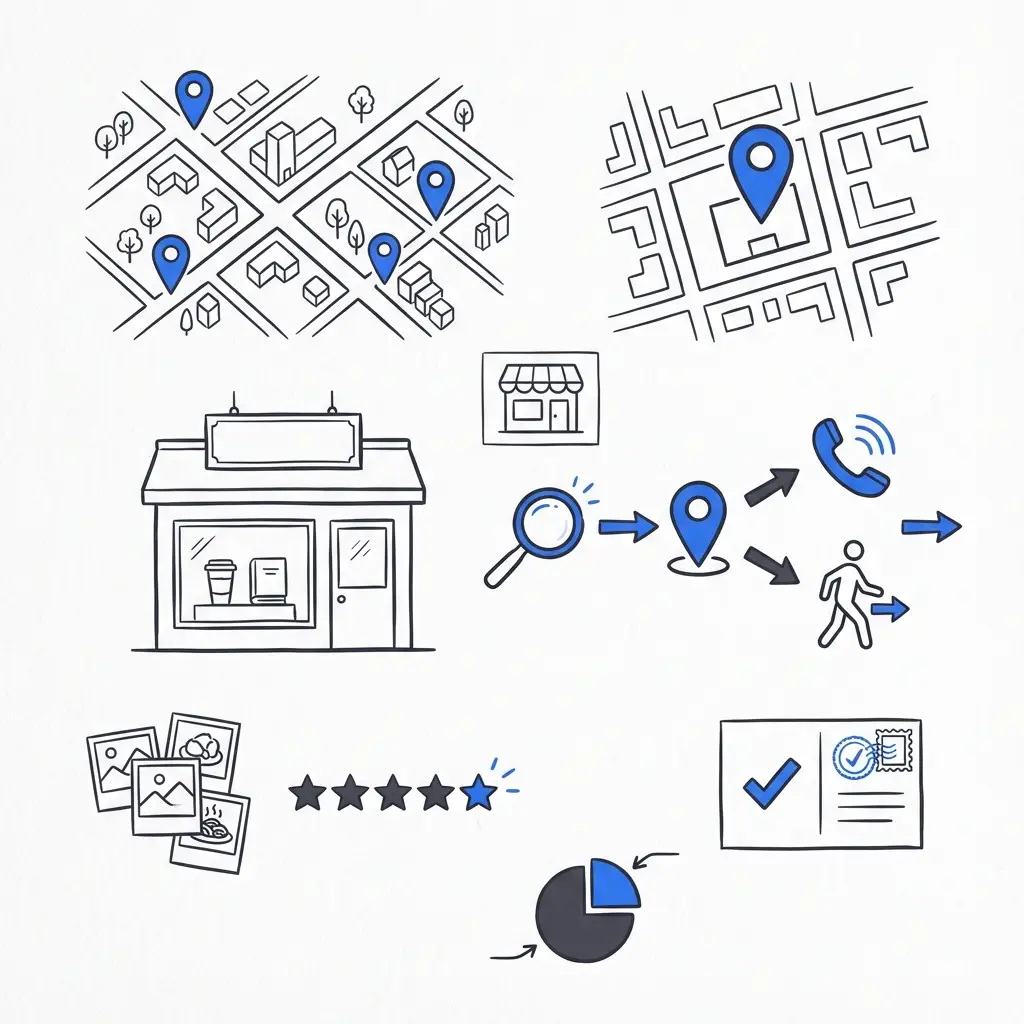
Getting steady, high-quality leads for a plumbing business isn’t about a single silver bullet. It’s about combining dependable channels so they work like parts of the same machine: some bring immediate calls, some build a steady pipeline over months, and some deliver referrals that are cheap and easy to close. In this practical guide you’ll find straightforward steps, tested tactics, and a 90-day plan that shows exactly what to do, why it matters, and how to measure results for how to generate leads for plumbers.
Why local-first wins for plumbing lead generation
Plumbing is local by nature. When a sink overflows or a heater sputters, people pull out their phone and search for help now. That’s why local search and map presence are often the single most important assets for a plumbing business. Your Google Business Profile appears in the map pack and on Maps — and when it’s well-maintained, it turns search intent into booked jobs quickly.
Start with the basics most people miss
Consistency matters more than clever tricks. Make sure your NAP (name, address, phone) is identical across every online listing. If the number on your website answers with a different greeting than the number on Google, you’ll confuse potential customers and lose attribution. Verify service-area settings so your profile covers the real geography you serve. Add clear photos, short service descriptions, and enable action features like booking links and appointment buttons. Above all, prioritize review generation right after a job — social proof drives clicks and trust.
Need a quick, practical review of your plumbing lead setup?
Want help setting up Local Services Ads, tracking, or a tested 90-day plan? Get a quick, no-pressure review of your current setup and one practical recommendation you can use this week. Reach out to our team and get an expert second opinion.
Practical note: track everything from day one: unique phone numbers for campaigns, UTMs on links, and a simple CRM field for lead source. Without tracking you’re guessing which channel earned a hire and you will overspend on channels that look good but don’t deliver.
A short roadmap: days 0–90 to generate plumbing leads
This is a hands-on sequence that many plumbers can follow without hiring a large marketing team. It focuses on fast wins first, then stabilizes and scales.
Days 0–30: Turn on intent-capture channels and measure
The first month is about capturing immediate demand and making sure you can measure the results. Prioritize these items:
Google Business Profile: Claim and verify. Set correct service areas. Add up-to-date phone numbers and business hours. Add photos and list the services you actually perform.
Local Services Ads (LSAs): If available in your market, set up LSAs and apply for verification. LSAs often bring higher hire rates because customers see a verified badge and a phone number that looks trustworthy.
Paid search and social: Launch small campaigns focusing on emergency keywords and specific neighborhoods. Keep bids conservative and track calls closely. Use trackable phone numbers and UTM parameters for every ad.
Call tracking and CRM: Set up a call tracking provider so inbound calls are tied to the campaign. Create an easy-to-fill lead-source field in your CRM and train staff to complete it.
Ask every finished job’s customer for a quick text review with a one-click link and use a unique tracking number on any printed flyer or door hanger. That immediate social proof plus a measurable offline touch often boosts clicks and helps you see which neighborhood reacts fastest.
As you activate these channels, your goal is simple: confirm that the leads are real, measurable, and trackable. Fix anything that breaks the chain of attribution.
Days 31–60: Clean up and build the organic foundation
Use the data from month one to refine campaigns and remove friction from the customer journey.
Citation cleanup: Fix inconsistent listings across directories — same name, same address, same phone. These small fixes reduce confusion and help local search rankers trust your business information.
Local landing pages: Build pages that match how people search: “water heater repair in [Town]”, “emergency plumber [County]”, or “blocked drains near me.” Keep pages simple, focused, and useful for readers.
Schema markup: Add local-business and service schema so search engines clearly understand what you offer and where.
Expand LSAs or tighten search ads: If LSAs are performing, increase coverage or call windows. If paid search is bringing many low-quality calls, tighten targeting and test ad copy that sets clearer expectations (for example, list service types and typical response windows).
Days 61–90: Focus on conversion, scale what works
Now you’ll use real numbers to make budget decisions.
Measure lead-to-hire by channel: Compare LSAs, organic, search ads, referrals, and offline campaigns. Move budget toward channels that produce hires at a profitable cost-per-hire.
Follow-up sequences: Implement simple follow-ups for missed calls — an SMS with a scheduling link or a short email explaining your top services and availability.
Field conversion training: A short phone script for whoever answers will increase booking rates: greet, confirm location, ask one clarifying question, offer arrival windows. Stress calm, confident language — working with someone who sounds competent reduces friction.
Channels explained: what works and when
Below are the main channels with practical tips on how to use each effectively.
Local Services Ads (LSAs)
LSAs are worth testing early. They put your name and a trust badge above regular search results and often filter out low-intent clicks. Because they are verification-driven, callers are often more likely to hire. LSAs can be more or less cost-effective depending on the market, but they generally deliver higher-quality inbound calls than broad search campaigns.
Paid search & social
If you need scale fast, search ads and Meta campaigns can deliver volume this week rather than next quarter. The risk is variability: some markets produce reasonable CPLs (cost-per-lead); others produce many short, unqualified calls. Use UTMs, trackable numbers, and tight geographic targeting. Test ad copy that manages expectations: list emergency fees, service coverage, and same-day windows if you offer them.
Organic local search
Organic work—local pages, backlinks, and content—takes time but is the foundation for low-cost leads over time. Expect three to six months before the organic pipeline becomes predictable. Once established, these leads often cost far less to acquire and convert better because customers found you through helpful local content.
Offline channels and partnerships
A van wrapped with your branding is a rolling billboard. Partnering with property managers, real-estate agents, and contractors produces referral leads that often convert at higher rates. Door-hanger campaigns, local flyers, or neighborhood mail drops can work when tied to tracking: use a unique phone number or a specific landing page to measure inbound calls.
Tracking and attribution: the measurement heart
Without measurement you’re flying blind. These are the core elements to track:
Call tracking numbers for each campaign so phone calls map back to the source.
UTM parameters on ad links and manual capture of them in form submissions.
CRM fields for lead source and notes on the caller’s origin (some customers still answer “Google” or “Facebook” so staff training helps).
Monthly channel reports that show calls, hires, lead-to-hire rate, and cost-per-hire. Over time you’ll see which channels deliver repeatable value.
What to measure by channel
Track: number of leads, lead-to-hire rate, average job value by channel, and lifetime value if possible. Comparing these metrics is how you decide where to put money.
Practical phone handling and conversion tips
The phone call is often the most important conversion step. Train staff or technicians who answer to follow this simple, effective routine:
1) Greet quickly and warmly. 2) Confirm address and the basic problem. 3) Offer clear next steps: same-day window, arrival time range, or a scheduled appointment. 4) Ask for a small commitment — a deposit or credit card on file if that’s your policy, or simply confirm the booking details. 5) If they’re unsure, offer a quick diagnostic fee or a short visit option.
Keep scripts short and human. The person on the other end is often stressed; clarity and confidence reduce friction and increase bookings.
Review generation: steady social proof that builds trust
Ask for reviews at the moment of highest satisfaction — right after the job when the problem is solved. A short, neighborly text message linking directly to your Google review page works well. Printed cards left at the jobsite or a one-click link from your scheduling system help too. Avoid paying for reviews — authenticity matters. Over time, a steady stream of real reviews helps local rankings and encourages more clicks.
Example review message
“Hi [First name], glad we got your heater sorted today. If you have a minute, please share how we did: [direct link to review page]. Thanks — [Technician name]”
Real-world examples that make sense
Here are two short, concrete stories that show how these pieces fit together.
Small two-person shop: The owner turns on LSAs and runs a small search campaign for emergency keywords. Within two weeks LSA calls start coming in and convert at a higher rate than search ads. After 30 days of tracking the owner sees a 45% lead-to-hire rate on LSAs versus 18% on search ads. He shifts more budget to LSAs, tightens search geo-targeting, and asks for reviews after each job. Over the next three months, inbound calls become higher quality and less time is wasted on no-shows.
Mid-sized company: A company brands its vans and starts outreach to property managers. Because it installed call tracking and a CRM field for referrals, it sees those leads convert at a higher rate than cold search. It builds a simple partner portal so property managers can log requests, which boosts repeat business with minimal extra spend.
Local variables: markets differ — test to learn
Every market has local quirks. LSAs might be cheap and high-volume in one town and costly in another. Job size and average ticket value shift the math. That’s why the opening questions for any campaign are:
– What is a reasonable cost-per-lead in your market?
– What is the lifetime value of a customer from each channel?
The only reliable answer is test data. Run small, controlled experiments and measure the results.
Quick checklist you can use right now
Use this checklist to prioritize the highest-impact items you can do this week:
1) Claim and verify your Google Business Profile. 2) Install a call tracking number for ads and a base tracking number for organic calls. 3) Launch a modest LSA test if available. 4) Build one local landing page for the most common emergency service. 5) Train the phone person in a 30-second booking routine. 6) Ask for a review after every completed job.
How Agency VISIBLE helps (a natural tip)
If you want a quick, outside perspective during the early testing phase, connecting with an experienced partner can speed things up. Agency VISIBLE’s contact page is a good place to request a short review of your tracking setup and a practical recommendation you can apply immediately — no heavy commitments, just a clear next step from experienced local-marketing pros.
Many independent plumbing businesses find value in a neutral partner who can set up LSAs properly, implement call tracking, or craft local pages that convert. The work still belongs to the business — but a short, tactical engagement can eliminate early mistakes and save ad spend.
Common questions plumbers ask
How fast can I expect results?
If you lean on paid channels and LSAs you can see increased call volume within days. Organic local SEO usually takes three to six months to build a predictable pipeline. The best approach blends quick-paid wins with a patient organic strategy.
Which channel gives the best leads?
It varies by market. LSAs often generate higher hire rates because of verification and intent. Referrals from property managers and word-of-mouth commonly convert even better because they come with an existing trust signal. Use tracking to find what’s true in your area.
How much should I spend on ads?
Start modestly. Spend an amount you can afford to test while you work out conversion rates and lead quality. Use your early data to scale up the channels that create hires at a sustainable cost.
What should I ask on the first call?
Keep it focused: confirm address, get a short description of the problem, estimate availability, and clarify payment or access details. A short, clear interaction reduces no-shows and speeds scheduling.
How do I get more reviews without sounding pushy?
Ask when the customer is most satisfied — immediately after the job. A short text with a direct review link or a friendly printed card left at the jobsite usually works best.
Advanced tactics for steady growth
Once you’ve stabilized the basics, consider these higher-leverage ideas:
Retention & maintenance offers: Offer a low-cost maintenance package to convert one-time customers into repeat clients. This raises lifetime value and helps smooth revenue.
Community content: Publish short, practical blog posts about common local issues (e.g., winterizing pipes in [Town]). These pages attract organic traffic and help with backlinks from local sites.
Referral incentives: Small rewards for customer referrals (a discount or small credit on future work) can multiply word-of-mouth without large ad spend.
Partnership dashboards: A simple partner page for property managers to log requests makes it easier for them to work with you and keeps your business top of mind.
How to prioritize your time and budget
For most small plumbing businesses the practical order is:
1) Fix business listings and tracking. 2) Test LSAs and a small search campaign. 3) Build one or two local landing pages. 4) Train phone handling and conversion. 5) Start outreach to property managers and partners.
This sequence focuses first on immediate demand and truthful measurement, then on building stable organic channels and profitable partnerships.
Common mistakes to avoid
– Not tracking leads properly — if you can’t measure, you can’t optimize.
– Ignoring offline partners — property managers and contractors are a consistent source of higher-converting leads.
– Overcomplicating scripts — keep phone and follow-up scripts short and human.
– Buying reviews — authenticity matters for local rankings and trust.
A final practical plan for the next 90 days
Follow this condensed plan to move from setup to scale:
Week 1–2: Claim Google Business Profile, set up call tracking, launch a small LSA test (if available), create one emergency landing page, and train phone staff.
Week 3–4: Review early data, tighten ad targeting, fix inconsistent citations, and begin asking for reviews after jobs.
Month 2: Build more local landing pages, test ad copy that manages expectations, and start outreach to property managers.
Month 3: Evaluate lead-to-hire by channel, move budget to the highest-performing sources, set basic retention offers, and create simple follow-up sequences for missed calls.
Do this consistently for three months and you’ll have data that tells you where to invest for long-term growth.
Resources & tools worth considering
Tools that make the work easier:
– Local search & citation management platforms for NAP cleanup.
– Call tracking providers that link calls to campaigns.
– A simple CRM that captures lead source and notes.
– A scheduling or booking tool that integrates with your site and Google Business Profile.
These tools aren’t magic, but they remove manual friction and make measurement reliable.
Closing thoughts
Generating leads for a plumbing business is not about tricks. It’s about steady application of simple things: clear local visibility, mechanisms to capture people who need you now, a system to measure what works, and attention to the human side of service. Do these consistently and you’ll find leads not only more numerous but easier to close.
Local Services Ads can produce inbound calls within days of activation. Results vary by market: some areas see a steady flow quickly while others take longer and cost more. Use a modest initial budget, track calls with a unique number, and compare lead-to-hire rates with search ads and organic traffic before shifting budget.
Referrals from property managers and repeat maintenance contracts are the most reliable and cost-effective sources. A simple partner dashboard for property managers and a basic maintenance offer for homeowners increase retention and lifetime value without heavy ad spend.
A short, tactical engagement with an experienced agency can eliminate early mistakes and speed setup—especially for tracking and Local Services Ads. If you want a quick review of your setup, <a href="https://agencyvisible.com/contact/">Agency VISIBLE</a> can provide clear, practical guidance. However, the business must own follow-up, phone handling, and service quality for long-term success.