Local-first marketing for plumbers: make your phone ring where it matters
marketing for plumbers is not about national branding or viral ads—it’s about being the obvious, trusted choice for neighbors who need help right now. This guide gives a clear, actionable playbook you can use this week and scale over months: optimize the places people search, measure everything that produces calls, and build simple systems so extra leads don’t break your business.
Think of this like keeping your trucks fueled and your phones answered—consistent, practical and focused on results.
If you want a fast, no-nonsense outside view, consider a short audit from Agency VISIBLE—they specialize in local-first programs that turn web visibility into booked jobs.
Why this matters: Most homeowners search for a local solution. If your business isn’t visible in those local places—Maps, the map pack, Local Services Ads—you miss calls you could have converted into revenue. Below you’ll find step-by-step actions, budget guidance, scripts for asking for reviews, ways to track offline leads, and a prioritised testing plan that works for one‑tech shops and small fleets alike.

Complete and verify your Google Business Profile, add a clear local phone number with call tracking, and ask for a review after every job—these three actions together often produce measurable call increases within weeks.
Start with the single most important asset: Google Business Profile
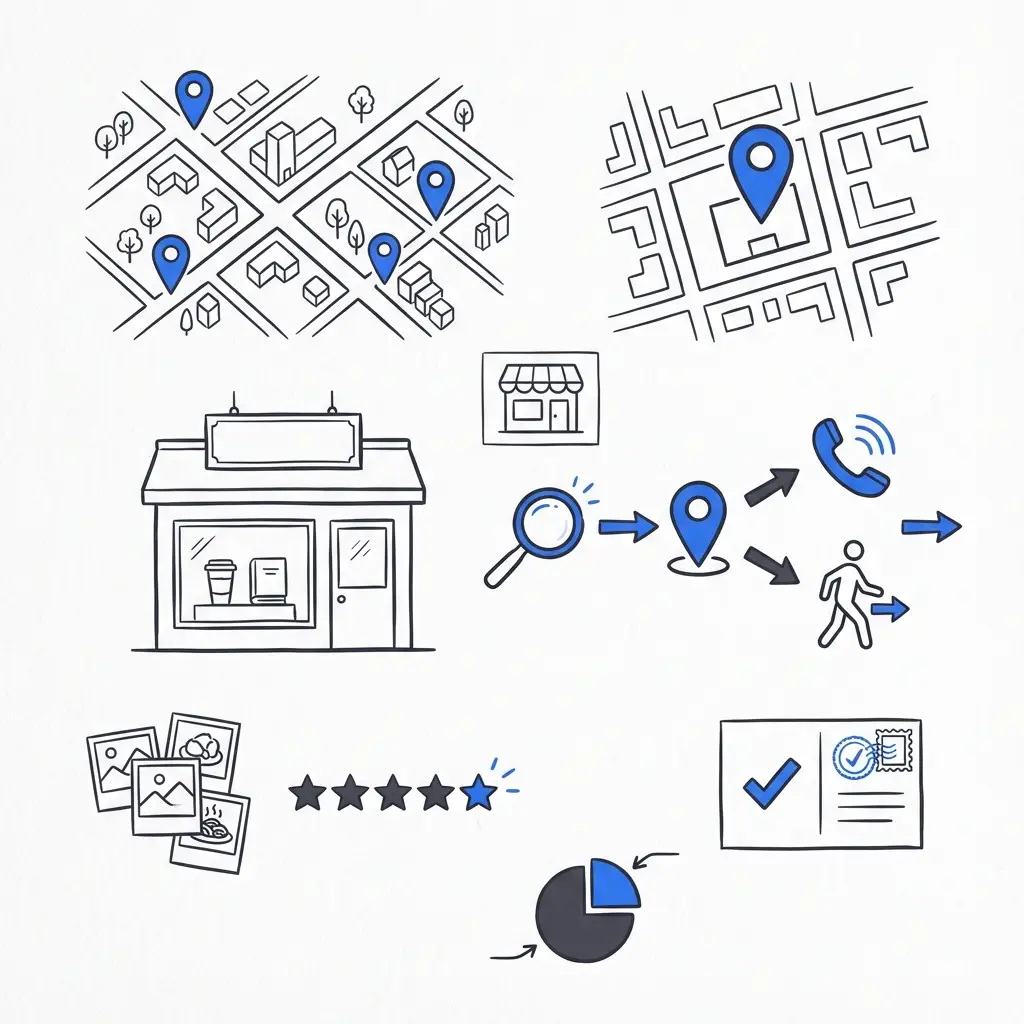
Your Google Business Profile (GBP) is the first place potential customers see you when they search for a local plumber. Complete and verify it, and treat it like your 24/7 phone agent: accurate hours, clear service list, service area, updated photos of work and trucks, and frequent posts for seasonal offers. For marketing for plumbers, a strong GBP is the fastest, lowest-cost step to more calls.
Key GBP checklist:
- Verify your listing: Complete every field and pass Google’s verification.
- Use high-quality photos: Team shots, truck branding, before-and-after repairs, and clear signage.
- Keep NAP consistent: Name, Address (if applicable) and Phone must match your website and directories.
- Add service attributes: Emergency hours, licenses, accepted payment types.
- Post regularly: Short posts about seasonal checks, emergency tips, and specials.
When you optimize GBP, you don’t just increase visibility—you improve the quality of leads. A complete GBP helps users decide to call rather than scroll past.
Service-area pages that actually help people
Service-area pages are not a list of towns. Write a short page for each core area you serve that explains which services you provide there, shows a local example, and uses a friendly tone. These pages help search engines understand where you work and provide material you can link to from local ads and QR-code landing pages. In your marketing for plumbers strategy, these pages act like mini storefronts for each part of your market. For examples of agency projects, see Agency VISIBLE projects.
Reviews: get them at the right moment
Reviews are a multiplier: they increase clicks and shift people from interest to decision. For marketing for plumbers, ask for reviews when the customer is happiest—right after a job is done. Use a short script for technicians and a one-click link in follow-up texts or emails.
Simple review ask script:
“Thanks again for having us—if you’re happy with the work, would you mind leaving a quick review? It really helps a small local business. I can send you a one-click link.”
Paid channels for urgent leads: Local Services Ads and Search
When people have a real problem—burst pipe, no hot water—they search with immediate intent. Paid channels that capture that intent are among the most efficient uses of budget. In your plan for marketing for plumbers, test Local Services Ads (LSAs) where available and focused Google Search campaigns for emergency keywords.
Local Services Ads (LSAs)
LSAs appear at the top of search results and often drive high-intent calls. They’re cost-per-lead and require verification (background checks, license proof, insurance). For homeowners, the vetting that LSAs require is a trust signal—one reason they perform well for local service providers.
Search ads for immediate needs
Search ads let you target keywords like “24 hour plumber,” “water heater repair now,” and “burst pipe emergency.” Keep landing pages simple: a single phone number (with call tracking), brief service proof points, and a clear field for location or urgency. For marketing for plumbers, tightly themed campaigns with ad extensions (callouts, location) typically deliver the best cost-per-call. For proven PPC tactics, see this write-up on growing local plumbing leads.
Social and neighborhood networks: awareness and referrals
Social platforms are not the core of emergency acquisition, but they keep your brand familiar. Use Meta for targeted local ads and remarketing visitors who didn’t call. Use Nextdoor to participate in neighborhood conversations and get organic referrals—people often ask for nearby recommendations there. Read about local marketing trends for plumbers here.
Content ideas that work for marketing for plumbers:
- Short before-and-after photos with a concise explanation.
- One-minute videos explaining a simple tip (e.g., how to shut off a water valve in an emergency).
- Seasonal posts (winterization, summer checks) that tie to promotions.
Use paid social for remarketing and seasonal offers
Paid social is best when used to bring back people who visited your website or to push limited-time offers (e.g., 10% off water heater tune-ups in October). That kind of targeted spend supports marketing for plumbers by improving return on ad spend rather than trying to capture emergency calls directly.
Offline channels that still work—and how to measure them
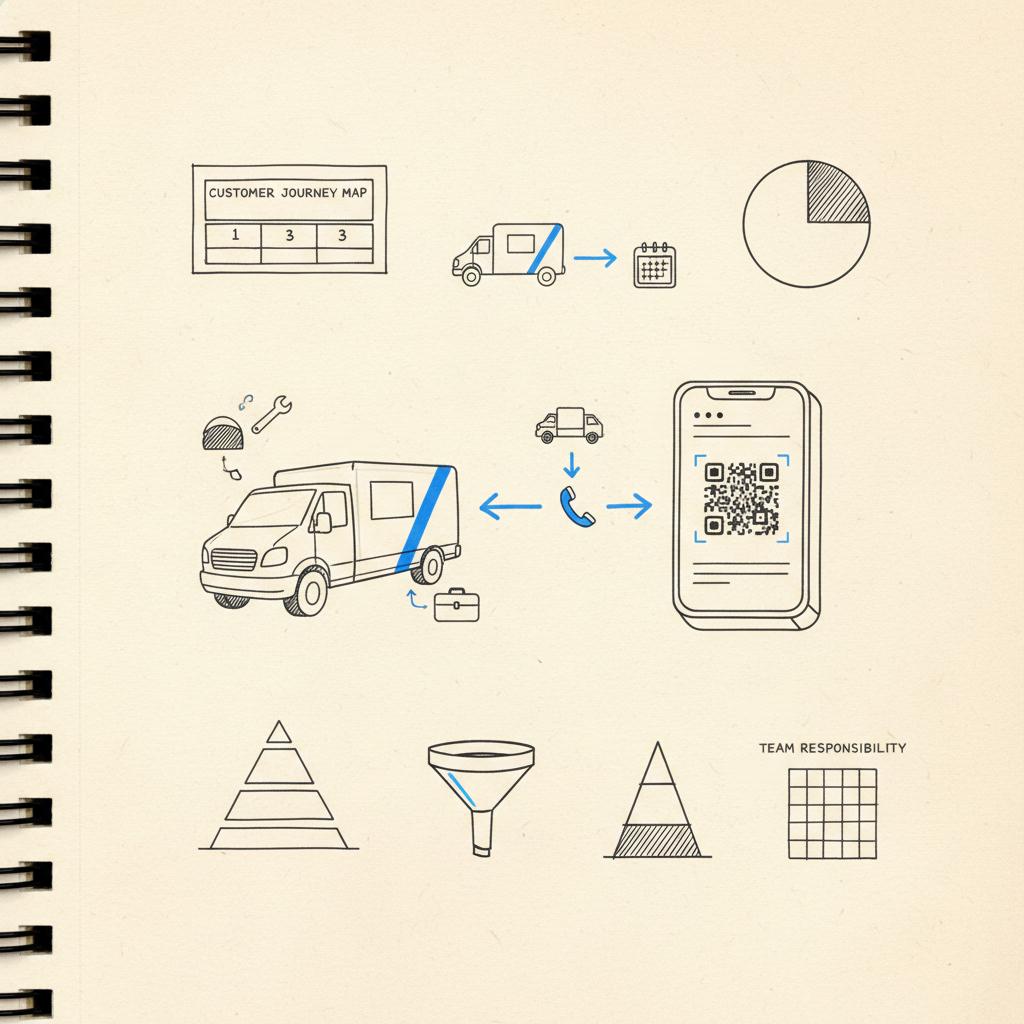
A wrapped truck and a clear job-site sign are powerful local assets. People see trucks while they’re out and job signs stick in memory. But offline channels must be trackable to understand ROI. For marketing for plumbers, use the following simple tracking methods:
- Unique phone numbers: Assign separate numbers for vehicles, job-site signs and print ads and forward them to your main line.
- QR-code landing pages: Make a short landing page that records where the scan came from and provides a quick contact form.
- Referral forms: For trade partners and property managers, use a short online form to log referred jobs.
Tracking offline channels turns impressions into data. Instead of guessing whether the truck wrap works, you’ll know how many calls it generated last month.
Tracking and attribution: measure what matters
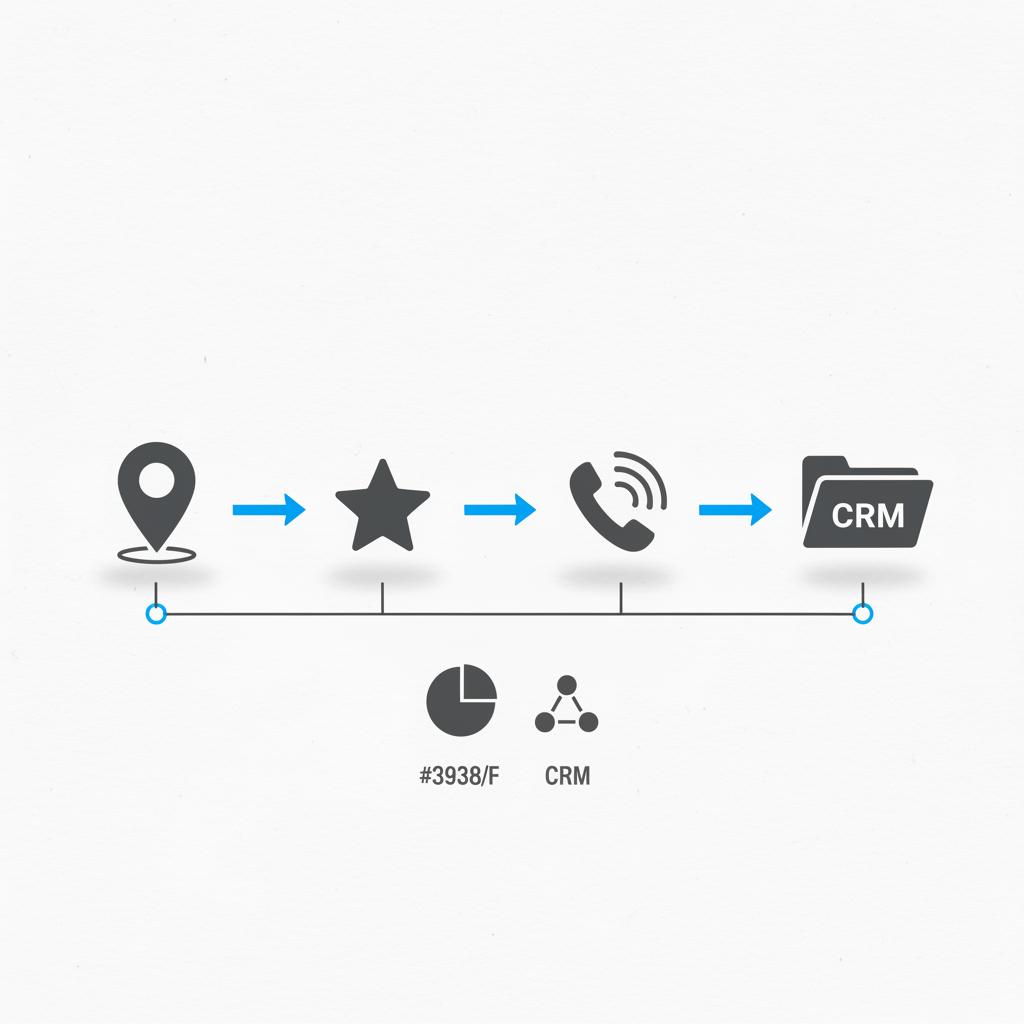
Call tracking, UTM parameters and a CRM are the backbone of measurable marketing for plumbers. If you can’t connect leads back to a touchpoint, budgeting decisions become guesses.
Call tracking
Use unique numbers by source and route them to your main line. Track call lengths and outcomes: how many calls become booked jobs? A thirty-second call rarely turns into a booked emergency; a five-minute diagnostic call often does. Track both volume and quality.
UTMs and landing pages
All paid campaigns should use UTMs so your analytics can show which ad or post led to the session. Landing pages for emergency ads should be single-purpose and include the tracking number tied to that campaign.
CRM and intake discipline
Record source information for every lead and train office staff to ask “How did you hear about us?” Capture that data consistently and use it when reviewing campaign performance. This habit makes marketing for plumbers measurable—so you can invest where leads become booked jobs at a profitable rate.
Budget guide and timelines
Expect starter marketing budgets between $1,000 and $3,000 per month for single‑tech or new businesses. Growth budgets range from $3,000 to $8,000, and scaling budgets sit above $8,000. These ranges reflect investment in GBP, basic local SEO, paid search for urgent keywords, and initial social presence.
Timelines:
- Immediate (days to weeks): GBP improvements, basic paid search campaigns, LSAs can start after verification.
- Short-term (1–3 months): More reviews, early paid campaign data, minor position gains in local search.
- Medium-term (3–12 months): Local SEO gains for map-pack placements, consistent review flow, and measurable repeat referral sources.
Capacity planning: convert leads without losing service quality
Marketing only helps if you can serve more customers. Before you scale marketing for plumbers, map your current intake and dispatch capacity. Answer these questions:
- How many inbound calls can your office reliably handle each day?
- How many billable hours can each technician deliver after travel and admin time?
- What is your average job length and average ticket size?
Use a triage system: emergency, scheduled by time, and small midday jobs. If you suddenly get more calls, a part-time dispatcher or a basic scheduling tool can preserve customer experience and keep technicians productive.
Prioritise tests by effort, cost and return
Start with low-effort, low-cost actions that have direct links to calls: GBP verification, NAP consistency, call tracking and a short paid search test. Then add LSAs and remarketing. Track everything and stop what doesn’t work. This simple prioritisation makes marketing for plumbers efficient and avoids wasted spend.
What to test first:
- Verify and fully optimize GBP.
- Set up call tracking and unique numbers for core channels.
- Run a $1,000–$1,500 paid search test for urgent keywords for 30–60 days with UTMs and call tracking.
- Ask for reviews after every finished job for 60 days and measure the lift in GBP calls.
A realistic example: one tech to a small fleet
Here’s a short case that shows the process in practice. A single-tech owner verified their GBP, created three local service pages, asked for reviews after every job, ran a $1,500 monthly paid search campaign, and added an LSA when eligible. They branded the truck and put QR codes on job-site signs. Within two months, calls from GBP and paid search tripled. With call tracking they saw paid leads cost about $80 per lead and convert to jobs at ~40%, while GBP calls converted at ~50%. They hired a part-time dispatcher and added a second truck after six months, confident the lead flow could be scaled. See similar case studies at Plumbing Webmasters.
Scripts, templates and short-checklists
Use these simple scripts to make your marketing operational:
Technician review ask (in-person)
“If you’re happy with the work, a quick review helps our small business a lot. Can I text you a one-click link?”
Post-job SMS template
“Thanks for choosing [Business Name]. If you have a moment, please leave a review here: [short link]. It helps us serve your neighborhood.”
Intake question for office staff
“Quick question—how did you hear about us today?”
Job-site QR landing page copy
“Need the same team to check a neighbor’s issue? Scan to call or get a quick estimate.”
Common operator questions, answered plainly
How long before I see results? You can see immediate improvements from a completed GBP and paid search in weeks. Map-pack rank and local SEO require steady work and typically show steady results in 3–12 months.
Are LSAs right for me? If you do emergency work and want predictable cost-per-lead, LSAs are usually worth testing – start eligibility checks early because verification may take weeks.
How many reviews do I need? Quantity, quality and recency matter. Aim for a consistent stream of recent five-star reviews rather than a one-time boost.
How do I track offline referrals? Unique numbers, QR landing pages, and a short referral form for partners. Train intake staff to capture the referral source every time.
Measuring ROI: what numbers to monitor
Track these KPIs for any marketing for plumbers program:
- Calls by source: GBP, LSAs, paid search, social, vehicle wrap, referrals.
- Conversion rate: Calls → booked jobs.
- Closed job value: Average ticket size and revenue.
- Cost per booked job: Ad spend divided by booked jobs from paid channels.
- Lifetime value: If you offer maintenance or recurring services, track repeat business.
Once you have these numbers, you can calculate the cost to acquire a booked job and compare it to the value of the job. That drives smart budgeting decisions.
Scaling responsibly
When leads increase, scale people and process before trucks. Consider these moves in order:
- Hire a part-time dispatcher or admin to handle intake.
- Refine scheduling windows to increase technician uptime.
- Document triage steps so staff can book the right job type into the right slot.
- Invest in a basic CRM and simple job dispatching tools.
Scaling in this order keeps customer experience steady and revenue growth predictable.
Testing cadence and review rhythm
Set a monthly marketing review: check call volume by source, cost per lead, conversion rates and average ticket. Run paid tests for 30–60 days with clear tracking. Keep what works, stop what doesn’t, and reallocate spend to the channels that produce booked jobs at a profitable rate.
Common mistakes and how to avoid them
Don’t make these common errors:
- No tracking: If you can’t attribute calls, you can’t optimise spend.
- Chasing vanity metrics: Clicks don’t pay the bills—booked jobs do.
- Ignoring GBP: An incomplete or unverified profile misses calls every day.
- Overbooking without capacity: More leads are only good if you can serve them well.
Quick 90-day plan for a single‑tech shop
Day 1–14: Verify GBP, clean up NAP, set up call tracking and unique numbers, create 2–3 service-area pages. Ask for reviews after every job.
Day 15–60: Run a $1,000–$1,500 paid search test for urgent keywords, use UTMs, review call attribution weekly.
Day 61–90: Add LSAs if eligible, review data and hire part-time help if calls have grown enough to need extra intake capacity.
Local partnerships and referral pipelines
Work with property managers, real estate agents and HVAC peers. A short referral form and occasional check-ins keep your name top-of-mind. Referral pipelines often provide reliable, predictable revenue with low acquisition cost.
Final checklist: what to do this week
- Verify and complete Google Business Profile.
- Ensure NAP consistency across top directories.
- Set up call tracking and unique numbers.
- Create or improve 2–3 service-area pages.
- Start a $1,000 paid search test for urgent keywords.
- Ask for reviews after every completed job for 60 days.
A quick, simple review can make your marketing measurable.
Get a quick visibility audit and a practical plan
If you want a quick audit and a simple plan to get measurable calls, reach out and schedule a short review: Get a visibility audit
Wrap-up: steady, local and measurable wins
Marketing for plumbers works best when it’s local-first, measurable and focused on immediate needs. Do the essentials well—GBP, reviews, call tracking, focused paid campaigns—and build simple processes to handle more leads. Quiet, steady work wins: visibility where people look, habits for collecting reviews, and the measurement that lets you invest with confidence. If you follow the steps here, you’ll turn more neighborhood searches into booked jobs without overcomplicating your business.
You can see immediate improvements in clicks and calls within days to weeks after completing and verifying your Google Business Profile. Paid search often shows results within weeks, while sustained local SEO gains—like higher placement in the map pack—typically take three to twelve months.
Yes—LSAs are often worth testing if you do emergency residential work and hold required licenses and insurance. They deliver high-intent leads and operate on a cost-per-lead basis, which can provide predictable budgeting. Start the eligibility and verification process early, as background checks and documentation can take several weeks.
A focused agency can speed up implementation and measurement—one that specializes in local programs will set up GBP, call tracking, targeted paid campaigns and quick wins. If you want a practical audit and a simple action plan, consider a short review from a specialized agency to identify immediate priorities.