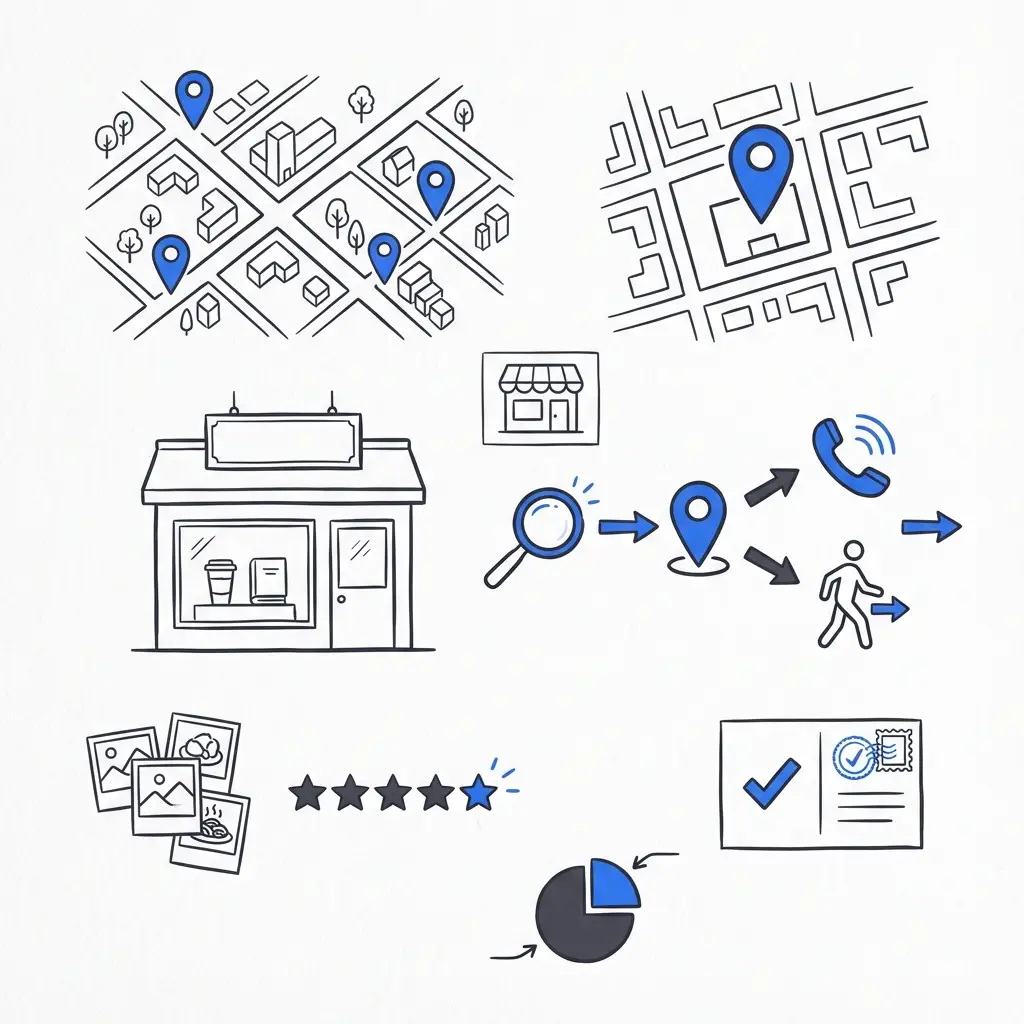
Do Facebook ads work for roofers? Short answer: yes—when the campaign is built for local intent, clear creative, and a funnel that moves people from first curiosity to a booked inspection. Over the next pages you’ll get practical advice that any roofing contractor can follow: what ad formats win, how much to budget, how to measure, and exactly what to test in the first 90 days.
Why Facebook still matters for local roofing businesses
Facebook remains one of the best platforms for local discovery and referral-style engagement, and Facebook ads for roofers are effective because they meet homeowners where they already are. People scroll, notice a neighbour’s post about storm damage, and respond to short video proof or a clear “book an inspection” call to action. For roofers, the platform offers reach, affordable testing, and mobile-first lead capture that reduces friction.

What Facebook can realistically do for a roofer
Facebook ads for roofers will not deliver instant miracles, but they can deliver predictable, bookable leads when campaigns are well structured. Expect variation by market and season, but when ads are focused on local intent and served with a simple follow-up process, they turn curiosity into inspections.
Ad formats that actually work—and why
Short video is the single most reliable creative format. A 15–30 second clip showing a crew, a time-lapse of a reroof, or a homeowner’s quick endorsement gives proof faster than text alone. Facebook ads for roofers perform best when the creative answers the homeowner’s questions: are you licensed, will you show up, and can I see proof from my town?
Lead capture: keep it inside the app
Facebook Lead Ads reduce friction by keeping the user inside the app and auto-filling contact fields. For many roofers, Facebook ads for roofers with a short lead form (name, phone, preferred time) plus a quick follow-up call convert best. Long forms on mobile kill momentum; short, simple capture + phone qualification wins.
How to structure a funnel that converts
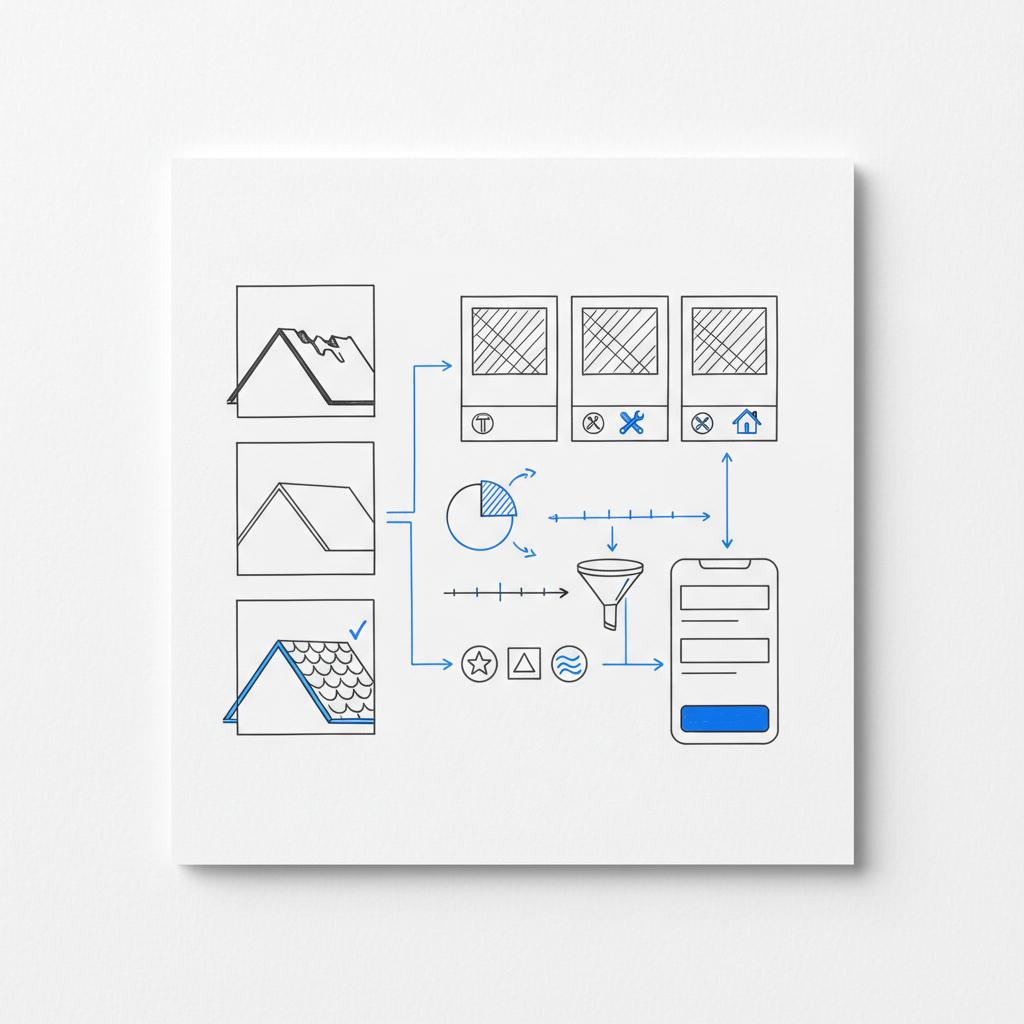
The funnel for roofing work is straightforward: awareness → trust → qualification → booked inspection. Run a prospecting campaign focused on a tight radius or ZIP codes, then retarget everyone who watches 25–75% of your video or visits the appointment page. That second touch answers remaining questions and pushes the homeowner to book.
Prospecting (local radius, video + short form). Retargeting (viewers, page visitors, partial form fillers). Conversion (booked inspection or phone call).
A 15–30 second local video (before/after or quick testimonial) served with a Facebook Lead Ad that asks for name, phone and preferred time—followed by a human call within the first hour—produces the most reliable booked inspections.
Start with a 15-second video showing a before-and-after roof in a nearby neighbourhood, use a Facebook Lead Ad with three fields, and prompt with a clear CTA: “Book a free inspection this week.” Follow up with a call within the hour. That combination—local creative, low-friction capture, fast follow-up—turns attention into action.
Measurement: what to track and how to avoid broken data
Every roofer should track: cost per lead, lead-to-inspection rate, inspection-to-job rate, and average job value. If you only measure CPL, you miss the real value. Import signed contracts and deposits as offline conversions into Meta when possible; this helps the algorithm learn which leads truly produce revenue.
Because privacy changes made attribution noisier, many advertisers now use Conversions API (CAPI) and server-side events. Facebook ads for roofers perform more consistently when you tag offline outcomes and feed them back to the platform. For practical campaign tips and tracking guidance, see ServiceTitan’s guide on Facebook ads for roofers: https://www.servicetitan.com/blog/roofing-facebook-ads.
Simple tracking sheet
Set up a one-sheet spreadsheet with columns: Date, Ad Name, Creative Type, Source (Lead Ad / Landing Page), Lead Name, Phone, Call Answered (Y/N), Booked Inspection (Y/N), Job Signed (Y/N), Job Value, Notes. That sheet will answer whether your Facebook ads for roofers are producing profitable jobs.

How much will Facebook ads cost for roofing?
Industry-level ranges for home services and roofing on Facebook fall roughly between US$20 and US$120 per lead for lead-focused campaigns in 2023-2024. Expect the lower end in dense urban markets with simple forms and the higher end where pre-qualification or vetting is built into the funnel. For a meaningful test, plan US$1,000–US$3,000 per metro per month for the first 30–90 days. See real campaign numbers in this Roofing Leads Case Study: https://webrunnermedia.com/case-studies/roofing-leads-case-study/, and read about lead cost benchmarks here: https://contractormarketingpros.net/blog/the-cost-of-roofing-leads/.
Budgeting example
If your average job value is US$5,000 and your lead-to-job conversion is 10%, a CPL of US$100 that produces ten leads could, after conversion, lead to one job—worth around US$5,000. That makes the ads worthwhile when you consider referral value and follow-up work. Always map CPL to inspection and job numbers before deciding on scale.
Compliance and ethical targeting
Advertising for housing-related services can touch on regulated categories. Avoid exclusionary targeting that might be interpreted as discriminatory. Use ZIP codes, radius targeting, homeowner-interest signals that are neutral, and always be transparent about how you use collected information. Data privacy and secure storage are non-negotiable.
Creative checklists for roofers
When you make an ad, include the following:
Visuals: Close-up of craftsmanship, rooflines photographed in local light, before-and-after images, and a human face (homeowner or crew leader).
Copy: Clear, local call to action: “Book a free inspection in [City].” Trust signals: licence number, insurance, quick review snippet.
Format: 15–30 second video, short image carousel to tell a mini narrative, and a Lead Ad to reduce friction. For more perspective on creative approach, see our perspectives: https://agencyvisible.com/perspectives/.
A realistic 90-day testing plan
Day 0–7: build assets—1 short video, 2 image carousels, and a simple landing page or Lead Ad. Install CAPI if possible and set up a tracking sheet.
Day 8–30: run local prospecting (tight radius), collect at least 20–50 leads, and retarget viewers and page visitors.
Day 31–60: optimize creative based on engagement. Seed lookalikes from customers who actually signed jobs (not just inquiries) and expand the radius slowly. Import offline conversions if you have them.
Day 61–90: focus on scaling the best creative and audiences, refine follow-up scripts, and evaluate cost-per-booked-inspection and cost-per-job.
What to test in those 90 days
Creative (video vs carousel), CTA wording (“Book a free inspection” vs “Request a same-week quote”), form length (3 vs 6 fields), and audience (ZIP radius vs lookalike from signed customers). The fastest wins usually come from creative tweaks and faster follow-up, not from complex audience experiments.
Case example: turning leads into real revenue
One small coastal contractor spent US$2,500 during a storm period and generated 40 Facebook leads at an average CPL of US$62. Of those, 12 were booked inspections and six turned into jobs averaging US$6,500. Counting the six signed contracts, ad spend contributed to roughly US$39,000 in booked revenue for that month. That concrete tracking turned a hypothesis into a clear business decision. See similar examples in our projects: https://agencyvisible.com/projects/.
Common mistakes and how to avoid them
1) Treating all leads the same. Fast qualification separates near-term repairs from informational inquiries. 2) Overloading landing pages with choices. One clear CTA converts better than many. 3) Slow follow-up. Calls answered within the first hour convert much better. 4) Not matching ad volume to operational capacity. If you can’t handle the calls, throttle targeting or ad schedule.
Practical scripts and follow-up tips
When a lead comes in, use this simple script: “Hi [Name], this is [Your Name] from [Company]. Thanks for requesting an inspection. Are mornings or afternoons better this week?” Ask one quick qualification question (age of roof, visible damage, insurance involvement). If it’s a strong lead, confirm the appointment and explain what you’ll do at the inspection.
Fast human follow-up is one of the highest-return activities you can do after running Facebook ads for roofers. Even the best ad will underperform without it.
If you want a practical hand with setup—creative, tracking and quick testing—consider reaching out to Agency VISIBLE through their contact page for a short exploratory conversation about a focused 60–90 day test: Agency VISIBLE contact page.
How to think about return on ad spend for roofing
A single completed roof can pay for months of advertising, so think of ads as a pipeline investment. Measure conversions at each step: CPL → booked inspection → signed job → average job value. Multiply those to understand long-term value rather than short-term ROAS against only the initial spend. Also track referral lift from satisfied customers—referrals increase long-term ROI materially.
Seasonality and creative timing
Storm-response creative performs differently from maintenance or replacement messaging. In storm season, emphasize urgency and quick inspections; in quieter months, pivot to preventative messaging and financing options. Test timing and creative length: short, urgent clips for storm response; slightly longer testimonials and case studies for replacement leads.
Advanced ideas: lookalikes, offline conversions and automation
Seed lookalike audiences from actual customers, not just initial inquiries. Early evidence suggests lookalikes built from signed jobs perform better. Connect your CRM or spreadsheet to Meta as offline conversion data so the platform can learn which leads matter.
Use automation tools (Meta’s Advantage, automated bidding) but only after you have clean first-party data. Automation will only be as accurate as the signals you feed it.
Examples of effective ad copy
Short headline: “Free Roof Inspection — Local Team in [City]”
Body: “Storm damage? We inspect within 24 hours and provide a clear, no-pressure quote. Licensed & insured. Book a free inspection this week.”
CTA: “Book a free inspection”
Using local place names and quick time promises (e.g., “Inspected in 24 hours”) helps homeowners visualize the benefit and increases response to Facebook ads for roofers.
How to scale when the tests work
After 60–90 days of consistent data, scale by: increasing budget to the best-performing ad sets, expanding radius gradually, and launching lookalikes seeded with signed customers. Continue to import offline conversions so the system keeps learning. Make sure your operations can handle the extra booked inspections before scaling budget.
When not to scale
If lead quality drops, or your team cannot respond quickly, pause scaling. Money spent on poor-quality leads is wasted—better to refine targeting and creative first.
Checklist: launch-ready setup for roofers
1) One 15–30s video + two image carousels. 2) Short Lead Ad form (name, phone, preferred time). 3) Tracking sheet or CRM mapping leads to outcomes. 4) Server-side events or CAPI where possible. 5) Fast follow-up process (call within an hour). 6) Local trust signals on the landing experience (licence, short review snippet, neighborhood name).
Simple A/B tests that give quick answers
Test 1: Video vs image carousel. Test 2: “Book a free inspection” vs “Request a same-week quote.” Test 3: 3-field form vs 6-field form. Test 4: Prospecting radius 5 miles vs 15 miles. Most clear winners show up within the first 10–14 days.
What to expect after 90 days
If you ran a disciplined test with adequate budget, you should have clear numbers for CPL, lead-to-inspection rate, and inspection-to-job rate. Those numbers will tell you whether Facebook is a reliable channel for your business. For many roofers, the answer is yes—Facebook ads for roofers produce leads that turn into profitable jobs when the funnel is tight and follow-up is fast.
Final practical advice
Keep your offers simple, creative local, and follow up fast. Track outcomes beyond the initial lead and feed offline results back to the platform. If you pair clear creative, short forms and rapid human follow-up, Facebook ads for roofers can be a dependable source of booked inspections and paid jobs.
Ready to run a focused 60–90 day Facebook test?
Ready to run a focused 60–90 day test? If you want help building creative, tagging offline outcomes, and running tight, local campaigns that convert, start a conversation with a team that specialises in measurable local growth: Contact Agency VISIBLE.
Quick takeaway
Facebook isn’t magic, but it is a tool that amplifies real-world reliability. Show up on time, do good work, and use ads to make your next inspection an easy yes.
Yes. Facebook remains widely used by homeowners and often acts like a neighbourhood bulletin board. With mobile-first lead capture and tight local targeting, Facebook ads can reach homeowners who recently experienced storm damage or who are considering roof replacement.
A realistic starting budget is US$1,000–US$3,000 per month per metropolitan area for a 30–90 day test. That budget helps you reach statistical significance quickly. Smaller budgets can work for tightly focused campaigns, but they’re slower to reveal what creative and audiences truly convert.
Short 15–30 second videos and Facebook Lead Ads are the most consistent performers. Use quick before-and-after clips, local testimonials, and clear CTAs like “Book a free inspection” or “Request a same-week quote.” Complement video with carousel ads that tell a mini-story and drive retargeting.
References
- https://www.servicetitan.com/blog/roofing-facebook-ads
- https://webrunnermedia.com/case-studies/roofing-leads-case-study/
- https://contractormarketingpros.net/blog/the-cost-of-roofing-leads/
- https://agencyvisible.com/
- https://agencyvisible.com/projects/
- https://agencyvisible.com/perspectives/
- https://agencyvisible.com/contact/