How to get commercial deals as a roofer? – Overview
If you’ve ever wondered how to get commercial deals as a roofer? you’re in the right place. This guide lays out clear, repeatable steps that roofers can use to find, bid for, and close commercial contracts. Whether you’re moving from residential work into larger projects or expanding an existing roofing company, these tactics will save time, reduce guesswork, and help you win better, more profitable commercial deals.
Why commercial deals matter
Commercial projects change the game: larger budgets, longer timelines, repeat clients like property managers and facility teams, and visibility that brings more leads. But they also come with higher expectations – documentation, insurance, and contracts matter. If you want to learn how to get commercial deals as a roofer? the first step is understanding what commercial buyers need: reliability, proof, and clarity.
Below you’ll find a mix of trust-building, sales tactics, proposal templates, and field-tested outreach scripts. Use what fits your business and test the rest.
Tip: If you want help turning your website and proposals into consistent lead machines, consider talking to Agency VISIBLE — they specialize in making small businesses more visible to the right commercial buyers.

First things first: qualifications, documents, and credibility
Commercial clients expect documentation. Before you go after commercial deals, assemble a package that shows you’re ready to be trusted on a larger stage.
Get a practical visibility audit and outreach plan
If your website, proposals, or outreach aren’t converting, consider reviewing examples of agency work and case studies to see how messaging and design can convert property managers and facility teams — see Agency VISIBLE’s projects or visit their homepage for examples.
Essential documents and credentials
Make sure you have these in place—each of these items answers the silent question a buyer has: “Can I rely on this contractor?”
- General liability insurance and certificate of insurance (COI) — show limits and list typical types of projects covered.
- Workers’ compensation — essential for most commercial contracts.
- Business license and contractor registration — local or state as required.
- Tax ID and W-9 — many businesses request these before paying.
- Safety plan and OSHA compliance — a short summary of your safety practices goes a long way.
- References and past commercial project summaries — short case studies that include scope, timeline, and outcome.
When a buyer asks, have a single PDF folder that contains the items above. It beats sending fragmented emails and builds trust immediately.
Certifications that close doors
Some certifications are optional but act as trust accelerants:
- Manufacturer certifications (e.g., major membrane or shingle systems)
- Trade association memberships (local roofing associations, NRCA)
- Safety and training badges (OSHA 10/30)
Listing these on your website and in proposals communicates that you take quality and compliance seriously.
Where to find commercial roofing opportunities
Knowing where to look is half the battle. Here are practical lead sources with clear next steps for each.
1. Property managers and facility managers
These are prime targets. To reach them:
- Create a short, targeted outreach email that highlights relevant past work.
- Offer a free roof inspection with a short report and photos.
- Follow up with a proposal and a clear maintenance plan.
Property managers value predictable partners. If you can show a plan to minimize disruption and control costs, you’ll be ahead.
2. General contractors and construction managers
Many commercial roofs are part of larger builds or renovations. Build relationships with GCs by:
- Visiting job sites and introducing yourself and your foreman.
- Offering competitive, clear partial bids for roofing scopes.
- Delivering fast, clean proposals with timelines and staging plans.
3. Real estate developers and building owners
Developers plan many projects ahead of time. To get on their radar, provide:
- Portfolio packages showing commercial scope and cost ranges.
- Case studies that explain project management and warranty handling.
4. Public procurement and municipal bids
Municipal work requires registration and careful bidding. Start by:
- Registering as a vendor with local government portals.
- Reading past bid packages to understand formatting and bond requirements.
5. Insurance claims and adjusters
Storms drive demand. Team up with adjusters and emergency restoration firms. Offer quick inspections and documented damage assessments.
How to position your roofing company to win commercial work
Positioning is more than a logo. Clear positioning answers a buyer’s question in seconds: “Are they the right roofer for my job?” Here’s how to do it.
Clarity in messaging
On your homepage and marketing materials, say plainly what types of commercial work you do: low-slope membrane, TPO, EPDM, built-up roofing, metal roofing, green roofs, solar-ready roofs, or reroof and maintenance programs. Repeatedly ask yourself: does this sentence tell a busy property manager what I do?
Differentiate by service and risk management
Commercial buyers often choose based on how well risks are managed. Emphasize:
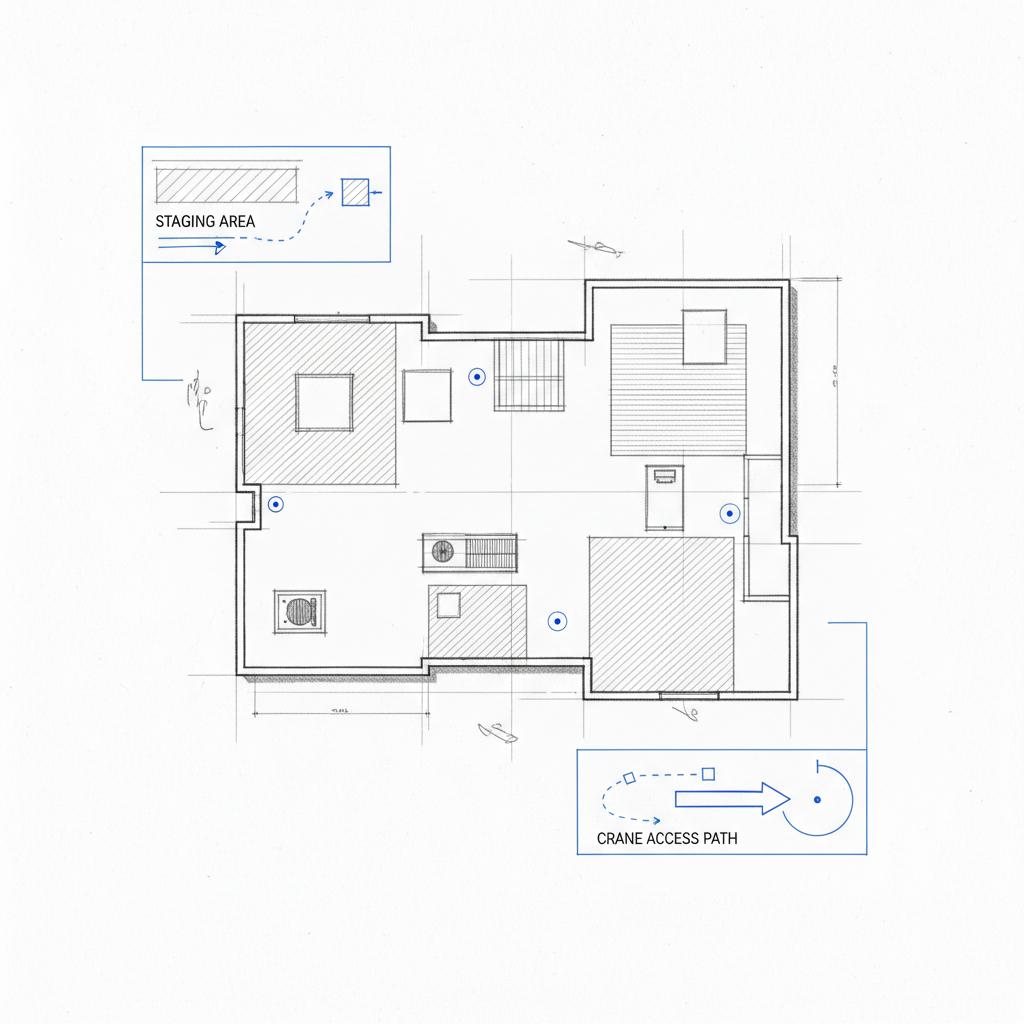
- Clear staging and logistics plans
- Temporary protection and weather contingency plans
- Project communication cadence (daily logs, weekly reports)
These operational details reduce perceived risk and make you easier to hire.
Winning proposals and pricing: practical templates
A proposal should be clear, scoped, and easy to accept. Below is a compact template you can adapt.
Commercial roofing proposal template
1. Executive summary: Short, one paragraph describing the work and benefits.
2. Scope of work: Bullet points with materials and processes.
3. Timeline: Start date, major milestones, and completion date.
4. Price & payment schedule: Lump sum or phased payments, mobilization fee, retainage.
5. Assumptions & exclusions: List what is not included or conditions that change price.
6. Warranty & maintenance: Manufacturer and work warranties plus optional maintenance plans.
7. Next steps & signature: Clear call to action to accept and schedule a kickoff.
Use photos, drawings, and a short risk-reduction section to make the proposal feel safe. When you submit bids, include a one-page summary for busy decision makers.
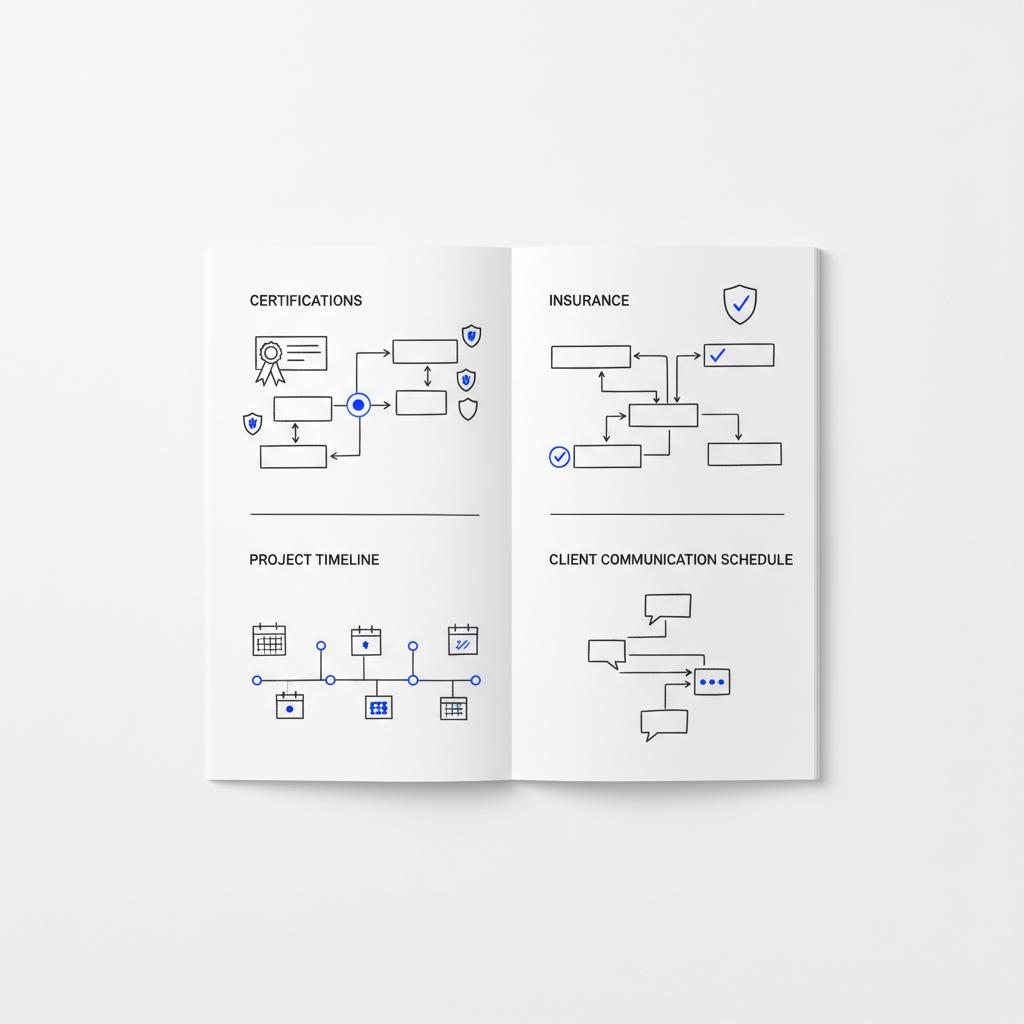
Use photos, drawings, and a short risk-reduction section to make the proposal feel safe. When you submit bids, include a one-page summary for busy decision makers.
Pricing strategies that win
Commercial pricing is about clarity: provide clear tiers or options and explain what causes price variation. Consider:
- Option A – Standard roof replacement with manufacturer’s warranty.
- Option B – Premium materials and a 10-year maintenance plan.
- Option C – Fast-track schedule for projects with tight timelines.
Buyers appreciate optionality because it helps them match budget and risk tolerance.
Sales outreach and relationship tactics
Winning commercial deals often comes down to consistent, respectful outreach. Here are scripts and cadences that work.
Email and LinkedIn outreach sequence
Keep messages short and focused. A four-step sequence might look like this:
- Message 1 (Intro): Quick intro, one-sentence value (example: reduced downtime), and offer a free inspection.
- Message 2 (Social proof): Two-line case study or client quote relevant to property type.
- Message 3 (Call to action): Specific ask for a 15-minute call or a site visit calendar link.
- Message 4 (Final nudge): A friendly close with a recap of the inspection offer and availability.
Response rates rise when you personalize: mention the property, recent work they had done, or a shared connection.
Cold calling script (30 seconds)
“Hi, I’m [Name] from [Company]. We help property managers reduce roof-related downtime and extend roof life. Can I schedule a quick site inspection so you have an accurate condition report? It’s a short visit with photos and a no-obligation estimate.”
Follow-up and persistence
Most commercial deals require multiple touches. Track interactions in a CRM and set reminders. A polite persistence strategy – touch at week 1, 2, 4, and 8 – balances attention without annoyance.
Showcasing your commercial work: portfolio and case studies
Photos and short stories sell work. A good case study includes:
Problem — the client’s need or constraint
Action — what you did and how you managed risks
Result — timeline, cost control, and the client’s quote
A clear logo on project photos helps clients recognize your brand.
Include before-and-after photos, drone shots of completed roofs, and schematic details when appropriate. Place a dedicated “Commercial Projects” section on your site and show thumbnails that lead to full case studies.
Marketing channels that deliver commercial leads
Not every marketing channel is equal for commercial work. Focus on channels where decision makers spend time.
SEO and content marketing
Create pages about commercial roofing types, commercial roofing warranties, and how roofing integrates with building maintenance. Publish helpful guides—these drive organic traffic and build credibility. Remember to target local search terms tied to commercial needs. For tactical ideas on building a branded online presence and driving leads, see create a branded online presence.
LinkedIn and local industry groups
LinkedIn is a natural place to find property managers, FM groups, and developers. Share short case studies, inspection checklists, and safety photos. Join local business associations and chamber events where facility teams network.
Trade shows and supplier events
Supplier events put you in front of manufacturers, developers, and other contractors. Show up prepared with business cards, quick portfolio sheets, and a one-minute presentation about how you handle commercial risk.
Estimating and bid preparation tips
Accurate estimating requires systems. Use checklists and templates so nothing is missed. Key items:
- Accurate measurements and material takeoffs
- Access and staging plans (scaffolds, lifts, parking)
- Temporary protection and waste removal costs
- Permits and inspection fees
If you struggle with time estimates, partner with an estimator or use software that helps translate roof area and pitch into material and labor estimates. For more lead generation and tool ideas, check resources like Top 10 tools to generate leads for commercial roofers and practical lead lists such as 20 best roofing lead generation ideas.
Negotiation and closing the deal
Closing a commercial deal is about removing friction. Address common buyer objections up front:
- Cost uncertainties: Offer clear breakdowns and optional upgrades.
- Time concerns: Provide a mitigation plan for weather and access limits.
- Quality worries: Share warranty details and references.
Ask for the business with a clear next step: “If we agree today, we can start mobilization on [date].” Make the acceptance path simple—email back, e-signature, or a brief purchase order.
Operations: delivering reliably on commercial jobs
Execution is where trust is cemented. On commercial sites, management and communication matter more than ever.
Site management checklist
Daily logs, photos, safety briefings, and weekly progress reports reduce anxiety for buyers. Show this in your proposal as part of your service package.
Quality control
List the steps you take before handing a project back: leak tests, flashing inspections, cleanup standards, and a final client walk-through.
Maintenance and recurring revenue
Commercial roofing often becomes recurring business. Offer maintenance contracts with clear scopes and scheduled inspections. A maintenance client is a long-term revenue stream and a source of referral work.
Pricing for long-term value
Instead of chasing the lowest price, price for the relationship. Offer transparent maintenance schedules, early-warning inspections, and negotiated renewal terms. Clients who see long-term value are easier to retain.
Use of technology to win and manage commercial deals
Tools help you scale: aerial drone inspections, project management software, digital signatures, and cloud-based proposal generation cut friction. Use tools that create clear deliverables—inspection reports, annotated photos, and timelines.
Common mistakes to avoid
Avoid these frequent pitfalls that lose commercial deals:
- Sending skimpy proposals without timelines or exclusions
- Not having a COI ready when requested
- Underbidding and creating scope creep
- Poor communication during the bid-to-execution transition
Fix these, and you’ll close more reliably.
Follow-up and account management
After a job, do a 30-day follow-up and a 6-month check. These small actions keep roofs in your care and generate referrals.
Scaling your team for commercial work
As you win larger jobs, invest in systems and people: a project manager, a safety officer, and a dedicated estimator. These roles reduce the owner’s burden and increase throughput.
Real outreach examples and scripts
Use these messages and adapt to your voice. They work because they’re short and focused—exactly what busy managers appreciate.
Email template — inspection offer
Subject: Quick roof health check for [Property Name]
Hi [Name],
I’m [Your Name] from [Company]. We help property teams reduce roof-related downtime. I’d like to offer a free 20-minute roof inspection and photo report—no obligation. When’s a good time next week?
Thanks,
[Name] | [Phone]
Voicemail template
Hi [Name], this is [Name] with [Company]. I’m calling to offer a quick roof inspection and free photo report to help you prioritize repairs. My number is [Phone]. Thanks.
Measuring success
Track these KPIs to know if your approach is working:
- Number of qualified inspections booked per month
- Conversion rate from inspections to proposals
- Proposal-to-win ratio
- Average contract value
Common question that often surprises roofers
Many roofers are surprised by what wins commercial work: it’s often a small operational detail like a clear staging plan or an easy insurance handoff rather than flashy marketing. That’s why the question below matters.
Offer free, well-documented roof inspections to five local property managers and use the photo report to follow up with a concise proposal—this tactic builds trust and generates actionable leads within weeks.
When to get help
If your website, proposals, or outreach aren’t converting, a trained partner can speed up the process. An agency or consultant can help you refine your messaging, create tidy proposal templates, and build a simple lead-generation funnel that attracts property managers and general contractors.
Careful, tactical marketing help
Marketing for commercial roofing should be practical: crisp service pages, case studies, and local SEO. A partner that understands both roofing and B2B buying cycles can give you leverage quickly.
Next steps checklist: what to do this week
Use this checklist to act fast:
- Assemble a single PDF folder with insurance, COI, licenses, and two case studies.
- Create a one-page commercial roofing services sheet.
- Offer five free inspections to local property managers.
- Publish a short case study on your site and link it in outreach emails.
- Set reminders for a 4-touch outreach cadence and log results in a CRM.
Closing thoughts
Breaking into commercial roofing is a process of proving reliability at a larger scale. From clear proposals and strong documentation to targeted outreach and reliable execution, every step compounds. If you follow the playbook above, you’ll find that winning commercial deals becomes a repeatable part of your business – not a one-off lucky break.
Thanks for reading—now go inspect a roof, write one clear proposal, and start winning more commercial work.
Before you bid, prepare a packet with general liability insurance (COI), workers’ compensation, business license, W-9, safety plan, and at least two commercial references or case studies. Having these ready speeds up procurement and signals professionalism to property managers and GCs.
Pricing varies by scope, materials, access, and site logistics. Provide clear tiers (standard, premium, fast-track) and sample case studies with final prices. Include assumptions and exclusions so buyers understand variables like substrate repairs or unforeseen decking damage.
Yes. Agencies that specialize in B2B and local service marketing can refine messaging, build case-study pages, and create outreach funnels to attract property managers and developers. For a direct consult, you can contact Agency VISIBLE for targeted help.
References
- https://agencyvisible.com/contact/
- https://agencyvisible.com/
- https://agencyvisible.com/projects/
- https://www.roofingwebmasters.com/commercial-roofing-leads/
- https://www.growform.co/20-best-roofing-lead-generation-ideas/
- https://www.convex.com/blog/the-top-10-tools-to-generate-leads-for-commercial-roofers