How to create a website for a roofing business?
Every homeowner search starts with a question. When they type “roofing contractor near me” or “roof leak repair [city],” your website often becomes the first real conversation you have with a potential customer. If you’re wondering how to create a website for a roofing business that actually brings leads, this guide walks you through practical steps, copy you can use, and the decisions that matter most.
We’ll keep it simple, mobile-first, and focused on turning curiosity into calls. Along the way you’ll find checklists, examples, and clear next steps to implement this on your own or hand off to a partner.

Launch a lead-focused roofing website—fast
Ready to talk to a team that builds sites for roofers? If you want a quick, reliable partner to launch a lead-focused site, get in touch with Agency Visible to discuss a plan and timeline that fits your crew’s schedule.
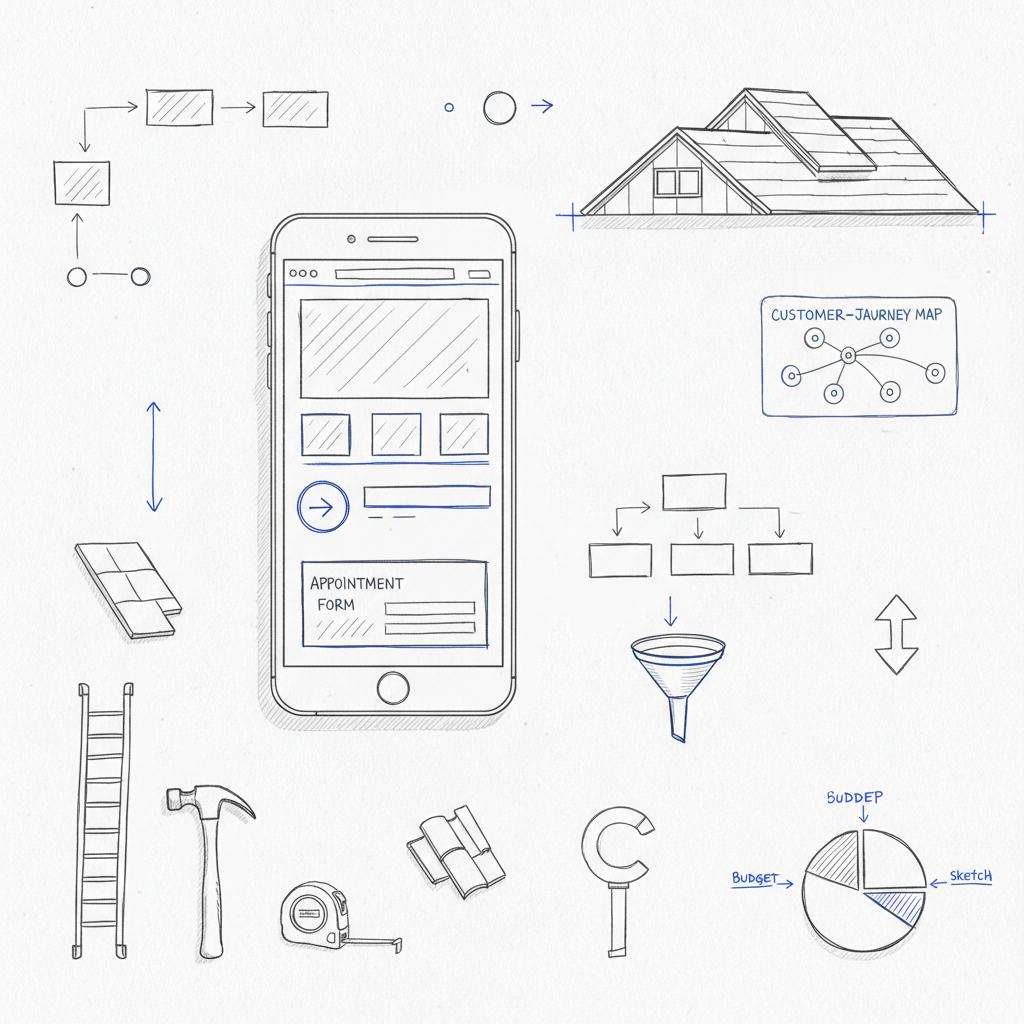
Think of your website as the second impression a homeowner gets after they see your Google Business Profile. A clear, fast, and honest website answers the questions a homeowner has right away: how much, how long, and can you show proof? That’s the difference between a visitor who clicks away and a homeowner who calls.
When you learn how to create a website for a roofing business, your focus should be on local visibility, trust through proof, and friction-free contact methods. This isn’t about flashy animations – it’s about trust, clarity, and speed.
Yes—if your goals are local visibility and rapid lead generation, a quality managed site-builder with clear service pages, a project gallery, and prominent click-to-call can be enough to generate real calls within weeks. For advanced needs like CRM integration or custom estimators, consider an agency later.
Start with local visibility and a solid map presence
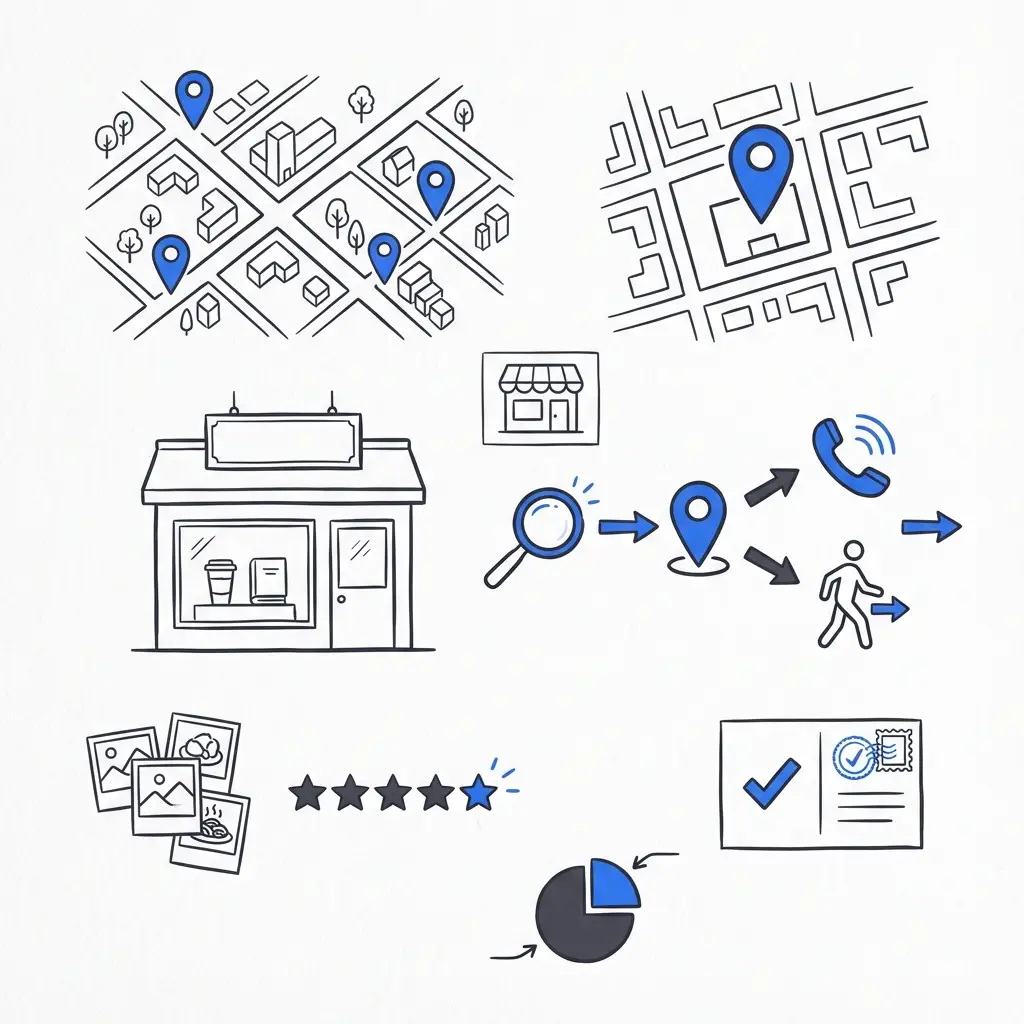
Most homeowner searches are local and mobile. That means your Google Business Profile must be complete: accurate hours, a clear phone number, updated service categories, and recent photos. But your website must reinforce those signals. When you answer search intent clearly—through dedicated service pages and local content—Google and homeowners both respond.
Service pages that match homeowner questions
Each core offering should have its own page: roof replacement, leak repair, emergency tarping, gutter work, and inspections. A good service page answers the practical questions in plain language: who you serve, typical timelines, common cost factors, and what the homeowner should expect on day one.
Here’s simple structure for a service page you can copy:
Heading: Clear and local (e.g., “Roof Replacement in [City]”)
Short intro (2–3 sentences): What you do and who you help.
Why choose us: 3 short bullets that focus on outcomes (speed, warranty, proof).
Typical timeline & costs: Plain explanation of factors that change price.
Gallery: 6–12 photos with captions.
Call to action: Click-to-call + short form.
Proof builds trust—show what you actually do
Photos, before-and-afters, and short case stories speed up trust-building. Add captions that answer: what was the problem, what materials were used, and how long it took. Include vendor approvals and warranty details if you have them—these details reduce uncertainty much faster than a slogan.

Remember: a dozen well-chosen images with captions beats hundreds of poor photos. Local neighborhood shots help homeowners imagine the job on their own roof (see examples on our projects page).
Make contacting you dead simple
On mobile, a homeowner should have one obvious action: call. Use a click-to-call button above the fold and an extremely short contact form accessible from every page. Ask only for name, phone, address, and a short description. Consider a simple booking option if you have the team to honor scheduled slots.
When you’re thinking about how to create a website for a roofing business, treat contact as the main conversion. Everything else on the page should help that action feel safe and worthwhile.
Technical basics – speed, images, and responsiveness
A polished site that loads slowly is a liability. Focus on mobile-first templates, good hosting (or CDN), compressing images intelligently, and modern image formats (WebP). Use responsive images so phones only download what’s needed.
If you build with a site-builder, choose one that handles responsive images and CDN delivery. If you build custom, plan to monitor Core Web Vitals and page load times from day one.
Content and SEO that actually helps homeowners
Answer real questions. Homeowners search for “cost to replace roof [city]”, “how long does roof replacement take?”, or “how to know if my roof needs replacing.” Create short, clear pages that answer these queries. Avoid jargon—explain what homeowners gain or risk with each material choice, and what typical warranties actually cover. For more on roofing SEO strategies, see this guide from ServiceTitan.
Use these content ideas:
Pages and posts that convert
– “How roof replacement cost is calculated” — short list of factors (size, pitch, materials, permits, access)
– “What to expect on installation day” — timeline, safety notes, and cleanup details
– Seasonal checklists — spring inspection, winter prep
– Short FAQs per service page — answer the six most common concerns
Structured data and review management
Use LocalBusiness, Service, Review, and FAQ schema where appropriate. Structured data increases the chance of richer search features and better click-through rates. Also, actively manage reviews: ask happy customers to leave a review, respond quickly and professionally to criticism, and display recent reviews on the site.
Lead capture tailored to intent
Not all leads are the same. A wet-roof emergency needs click-to-call; a planned re-roof may start with an estimate request. Offer both: call buttons for urgent contact, and a short estimate form for planned work. If you use instant-estimate tools, make sure they set clear expectations and collect enough detail for your team to follow up usefully.
Design patterns that convert
Use these design patterns to improve conversion:
– Prominent phone number in the header, large on mobile
– Sticky call-to-action for phones (bottom bar or header button)
– Project gallery with local examples and captions
– Short social proof section: 3 recent reviews + accreditations
– Minimal forms (name, phone, address, short description)
For examples of standout roofing website designs, see this collection of best roofing websites: Roofing Website Design | Best Roofer Web Design Examples.
Analytics and attribution
You can’t improve what you don’t measure. Start with Google Analytics (or a similar tool), phone-call tracking, and event tracking for form submissions. Even a simple spreadsheet or CRM that logs lead source—organic, paid, referral, or direct—will let you make smarter decisions about where to invest.
Call-tracking helps when most leads come from search. It ties phone calls to the ad or search result that produced them so you can estimate cost-per-lead more accurately.
Which route should you choose: DIY builder or agency?
Here’s a practical way to decide:
Choose a managed site-builder if: you need a fast, budget-friendly launch with mobile-friendly templates, hosting, and basic performance. Ideal for teams that want speed and control without big upfront investment. You can compare roofing-focused builders at Roofing Webmasters.
Choose an agency if: you need custom lead routing, CRM integrations, custom estimate calculators, or a marketing plan that includes paid ads. An agency can build systems that scale and track performance across channels.
Most roofing firms benefit from a hybrid approach: launch fast with a managed system, collect data, then add agency-level features when the numbers justify the investment.
If you want a partner that understands roofing businesses and can both launch quickly and scale thoughtfully, consider contacting Agency Visible. Their approach focuses on speed, measurable results, and clear next steps—helpful for roofers who need visibility without getting lost in technical details. Contact Agency Visible
What to ask a web partner or agency
When you talk to a potential partner, ask:
– How will you measure leads and attribute sources?
– Can you show examples of roofing or contractor sites you’ve built?
– What’s included in hosting and performance monitoring?
– How will forms and calls be routed to our team?
Step-by-step checklist to build or update your roofing site
Use this checklist to get practical work done in a few weeks:
1. Claim and optimize Google Business Profile (hours, phone, services, photos)
2. Create service pages for each core offering with local headings
3. Build a project gallery with 8–12 high-quality photos and captions
4. Add click-to-call button in header and a visible CTA on every page
5. Use responsive images and modern formats to speed loads
6. Add LocalBusiness and Service structured data
7. Implement basic analytics, event tracking, and call tracking
8. Start capturing reviews and display recent reviews on site
9. Test your site on mobile for speed and clarity
10. Create a plan to iterate based on data (monthly or quarterly)
Copy templates you can drop into pages
Service intro (example):
“At [Company], we replace roofs in [City] using trusted materials and a simple process: inspection, written estimate, efficient installation, and a thorough cleanup. Typical projects complete in 1–3 days depending on size.”
Call-to-action prompt (example):
“Call us now at XXX-XXX-XXXX for emergency tarping, or request a quick estimate with our short form.”
Examples of quick wins that often move the needle
– Add a large click-to-call button at the top of every page
– Publish 6–10 high-quality project photos with captions
– Create a short page answering “how roof replacement cost is calculated”
– Ask recent customers for reviews and display 3 on the homepage
For inspiration and layout ideas, check this collection of standout roofing sites: https://hookagency.com/blog/best-roofing-websites-roofing/.
Handling reviews and reputation—do it like a neighbor
Ask happy customers to leave reviews via text or email with a direct link. Thank reviewers promptly. If someone complains, respond politely, offer to investigate, and outline next steps. A calm, helpful reply to a negative review shows future customers you care and can turn an unhappy customer into a brand advocate.
Budget and timelines
If you use a managed CMS with a quality template, you can often launch in a few weeks with a modest up-front cost. Custom agency builds will take longer and cost more but deliver deeper integrations and advanced tracking. A common strategy is to start lean and upgrade when the data shows which features will increase leads the most.
Frequently overlooked technical details
– Use descriptive filenames and captions for images (helps accessibility and SEO)
– Ensure your site uses HTTPS and has a valid SSL certificate
– Make your phone number text-copyable and easy to tap on mobile
– Use a simple caching strategy to speed repeated visits
Measuring success—what metrics to watch
– Number of calls (tracked by call-tracking)
– Form submissions and completed bookings
– Organic impressions and clicks (Search Console)
– Time on site for project pages (shows engagement)
– Conversion rate for mobile visitors (primary channel for roofers)
Do-it-yourself vs. hiring help — a fair comparison
If you enjoy managing digital work and have time, a managed CMS gives control and speed. If you prefer to focus on crews and customers, an agency that understands contractors can be more effective and free you to run the business. Either way, choose a path that matches your bandwidth and growth goals.
Real-world anecdote
A mid-sized city roofer had a site with a small footer phone number and few local photos. After adding service pages, a big click-to-call, and a gallery with captions, calls increased within three months and time-on-site rose – most of the lift came from removing friction and showing local work. This change was low-cost and fast, but it had measurable impact.
Advanced tips for later growth
Once basics are working, consider:
– Running local pay-per-click campaigns tied to landing pages for high-intent searches
– Adding an online estimate calculator that sets expectations clearly
– Integrating site leads with your CRM for automated follow-up
– Creating neighborhood case studies (e.g., “Roof replacement in [neighborhood]”) for very local search intent
Common questions answered (short)
Top priority for a new site? Local visibility, clear service pages, and an easy way to contact you.
How long to see results? Click-to-call and UI changes can increase leads in weeks; organic SEO often takes months.
Do I need structured data? Yes – structured data improves rich results and typically increases clicks.
Closing thoughts
Building a site that converts is about clarity: make it easy to find you, answer the homeowner’s questions plainly, show real work, and make contact effortless. Start with the essentials, measure, and add complexity only when the data supports it. Learn more at Agency Visible.
When you’re done reading, pick three small changes you can make this week: add a clear phone button, publish a project gallery, and claim your Google Business Profile. Those actions alone will often create measurable momentum.
Ready to move fast or want someone to manage the details for you? See the contact link near the top to reach a partner who understands roofing businesses.
The single most important element is local visibility paired with an easy way for homeowners to contact you. A clear phone number (click-to-call), dedicated service pages, and real project photos often move the needle faster than design flourishes.
If you need a fast, budget-friendly launch, a managed site-builder is a strong choice. If you require CRM integrations, custom estimate tools, or a full marketing program tied to paid campaigns, hiring an agency is usually worth the investment. Many roofers launch on a builder and later partner with an agency to scale.
Quality beats quantity. Aim for 8–12 well-captioned photos that show whole-house shots and close-ups of workmanship. Include before-and-afters and local neighborhood examples to help homeowners identify with the work.