


Why roofing needs a different lead playbook
Roofing is a high-value, urgency-driven service. That means the game for leads for roofers is not the same as it is for lawn care or plumbers. One good replacement can pay for months of marketing, so quality and speed matter more than raw volume. In this guide you’ll get practical steps, real channel benchmarks, and simple systems you can test and measure in the next 30 days.
How to read this guide
Think of this as a toolbox. Each section gives a clear action you can take, a reason why it works, and what to measure. If you’re managing a small crew, focus on two or three tactics and track them closely. The strongest systems combine predictable paid sources with durable local SEO and referral partnerships.

Fast, dependable channels that deliver predictable volume
Google Local Services Ads (LSAs) are often the best starting point for consistent leads for roofers. LSAs favor intent and proximity, and many roofers report cost-per-lead ranges in the $25–$45 band. That’s efficient when those leads convert well—so pair LSA tests with rapid follow-up and tracking. For a practical playbook on LSAs, see the Roofer’s Playbook for Google LSAs.
Google Search ads capture active searchers but can be expensive. If you use search, route traffic to focused landing pages that match the searcher’s intent (e.g., “storm damage inspection” vs. “full roof replacement”). Paid social (Facebook/Instagram) can produce lower initial CPLs—often $20–$30—but quality varies: many social leads are browsing, not actively buying. For tactical tips on search ads for roofers, check this Google Ads guide for roofers.
Budget thinking that keeps you profitable
Use a simple math model. If your average job is $8,000 and you convert 10 percent of raw leads into sales, you need about ten leads per job. A $35 CPL therefore costs you $350 per closed sale—reasonable for high-ticket work. Channels with higher CPLs can be cheaper per job if their close rate is higher; referrals and insurance-partner leads often behave this way.
Local SEO: building durable, lower-cost volume
Local SEO buys durability. A well-optimized Google Business Profile, service-area pages, consistent NAP data, and regular photos and reviews lead to steady organic searches for “roof repair near me” and “roof replacement today.” High-quality organic leads often convert better because search intent is stronger.
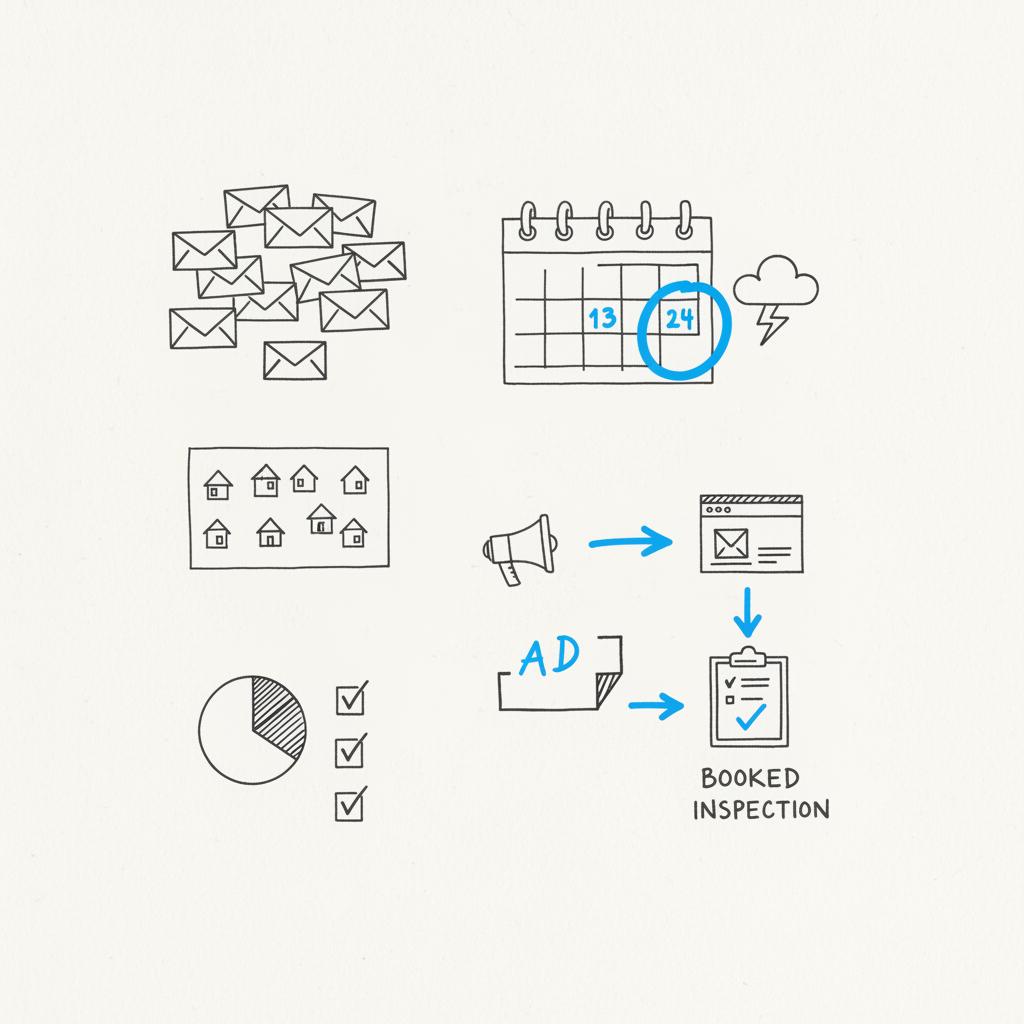
Don’t treat GBP as an afterthought. Make sure your profile answers homeowner questions at a glance: service area, recent photos of finished roofs, clear review snippets, and an easy way to call or book. When your GBP answers the right questions quickly, it increases contact rate and improves ad performance across channels. Tip: use your logo consistently so homeowners instantly recognize your brand.
Landing pages and the post-click journey
A paid click without a conversion-friendly landing page is an expensive missed opportunity. The page must be fast, clear, and single-minded—don’t send an ad about storm damage to a generic homepage. Instead, build pages that say what you do, who you serve, and what the homeowner should expect next. Include visible phone numbers, a short form (name, address, phone, short issue), and trust signals like license numbers and 5-star reviews.
Example page structure that converts:
- Hero: Offer + call-to-action (e.g., “Same-day storm damage inspections — Call now”)
- Proof: Before/after photos, quick stats (years in business, roofs completed)
- Process: What happens when you book an inspection
- Pricing ranges: Provide typical project ranges to screen price-shoppers
- Short form: 3 fields + click-to-call
Qualification systems, CRM workflows, and tracking
Track every lead to its source. Use UTMs on ads, unique call-tracking numbers for paid channels, and push all leads into a CRM with a clear source tag. When a lead becomes a job, record that outcome back into the CRM. That loop gives you accurate cost-per-acquisition and tells you which channels actually pay the bills.
Set up simple routing rules in the CRM: urgent leads get a 15-minute callback SLA; non-urgent leads get same-business-day contact. Encode who handles which leads, and use templated follow-up messages so nothing slips through.
Sample qualification script (phone)
Intro: “Hi, this is [Name] with [Company]. I saw your request—are you experiencing active leaking or visible damage right now?”
Qualifiers: roof age, visible damage, insurance involved, best time for a visit.
Close: “We can do an inspection today/tomorrow—does [time] work? If you have photos, text them to this number so we can speed things up.”
Referral and partnership channels: high close rates, low friction
Insurance adjusters, property managers, and real-estate agents often send the best leads. They’re warm and usually decision-ready. Build formal referral programs: clear terms, a simple submission form, and fast follow-through. Track referrals separately in your CRM to compare their close rates and lifetime value against paid channels.
A practical tip: if you want a fast, impartial review of your measurement setup, request a short audit from Agency VISIBLE. A brief audit can reveal tracking gaps, misrouted leads, and quick wins that improve close rates without extra ad spend.
Offline tactics that still work when targeted
Direct mail, targeted canvassing, and neighborhood flyers can work—when they’re precisely timed. A flyer dropped in a neighborhood after hail or wind damage, or a postcard to older roofs within a distance radius, can yield high-value appointments. The key is list quality and timing; model the unit economics before you roll the campaign.
Example: one roofer mailed a simple checklist after a hailstorm and turned five appointments into three signed replacements. The mailing paid for itself because each job was high-value and the timing was tight.
AI chatbots and conversational triage
Chatbots can speed booking and reduce missed leads if they’re configured to triage well. Use bots to ask the right qualification questions and to offer immediate calendar slots. Crucially, ensure every bot lead is handed off to a person quickly and logged in the CRM. Bots are great assistants, not replacements for human follow-up.
Need a fast, measurable plan to improve roofing leads?
Need help setting up fast follow-up and tracking? Get a clear next step in minutes—contact Agency VISIBLE for a short, low-pressure plan and see simple fixes you can implement this week.
Testing plan: what to try first (30-day play)
Run two parallel experiments for a month:
- LSA trial: Enable LSAs (if eligible), cap daily spend, and measure CPL and close rate.
- Local SEO / GBP sprint: Update five recent photos, request three new reviews, and add a storm-damage landing page to your site.
Track both experiments in the CRM and compare cost-per-booked-job. Use short windows (2–4 weeks) to limit exposure and learn quickly.
How to improve lead quality and close faster
Speed and qualification are the two levers. Promise and deliver quick callback SLAs (15-minute priority for urgent, same-business-day for others). Use short forms to collect minimal but decisive information. When a lead signals immediate risk—active leaking, structural concern—fast-track them for same-day inspection.
Use value-based talking points to handle price shoppers: emphasize warranties, photos of completed jobs, local references, and financing or insurance help. That wins respect more than undercutting price.
Ad creative and audience ideas that work
For paid social, use homeowner-focused creative: before/after photos, short video walkthroughs of a completed replacement, and testimonial snippets. Target by recent weather events, home age, and homeowners (not renters). Try an offer like a free storm-damage checklist or a limited-time inspection window to increase urgency.
For search ads, match the ad copy to intent. Use tight ad groups for “roof leak repair,” “roof replacement cost,” and “storm damage inspection” and send each group to a tailored landing page.
UTM and call-tracking setup
Apply UTMs to every paid URL: source, medium, campaign, content, and term. Use unique call-tracking numbers for LSAs, search, and social so you can see which channels produce phone calls. Push every tracked call into the CRM with the UTM metadata attached.
Common mistakes that waste money
Don’t drive broad search traffic to a generic homepage. Don’t run ads without call-tracking and UTMs. Don’t let leads land as anonymous office calls. And don’t skip qualification—volume without a process creates admin work but no profit.
Seasonality and local variations
Local conditions and seasonality matter. CPLs rise after storms and in highly competitive metros. LSAs’ availability and performance vary by market. Run short, localized tests after weather events and check LSA eligibility in your area regularly.
Detailed checklist: the next 30 days
Week 1: set up UTMs, unique call-tracking numbers, and CRM source tags; audit GBP and update photos and services.
Week 2: build a focused landing page for your top offer and create a short follow-up script and SLA document for your team.
Week 3: launch an LSA trial and a small paid social creative test; route all leads into the CRM and tag sources.
Week 4: review results, calculate CPL and CPA, and decide where to scale. Document referral outreach and set meeting cadences with top partners.
Templates and scripts you can copy
Short landing page headline
“Same-day storm damage inspection — fast estimates, licensed crews.”
3-question contact form
Name / Address / Short description (or upload photo) — keep it quick.
Follow-up SMS template
“Thanks for contacting [Company]. We can inspect your roof [date/time]. Please reply with photos or call [phone].”
Measuring success: the KPIs that matter
Track these at a minimum:
- Leads per channel
- Close rate by channel
- Cost per lead (CPL)
- Cost per acquisition (CPA) or cost per booked job
- Average job value
Calculate CPA = CPL / close rate so you can compare channels fairly.
Scaling when you find a winner
When a channel proves profitable, scale carefully: increase budget by 10–25 percent per week and watch CPL and CPA. Keep testing creative and landing pages—what works at one spend level can break at higher volumes if you don’t maintain conversion rates.
When to call in help
If tracking is messy, leads are anonymous, or you’re spending without clarity, a short audit can be the fastest path to better results. A third-party review will highlight missed UTMs, untagged calls, and landing-page gaps in a day or two.
Main question for roofers
Many owners ask what matters most when budgets are tight: should they advertise or fix their local listings? The answer is both, but sequence matters. Start with local listings and basic tracking, then add a short paid test so you know what channels actually pay off.
Fix your phone tracking and adopt a clear callback SLA (15-minute priority for urgent leads, same-business-day for others). Track every call to its source and route urgent leads immediately—this often doubles contact and booked inspections quickly.
Practical examples and mini case studies
Case: a mid-sized roofer ran a four-week LSA test with capped spend. They paired LSAs with a new storm-damage landing page and a 15-minute SLA. Their CPL was $38 and their close rate on LSA leads was 12 percent—resulting in an effective CPA of ~$317 and two signed replacements in the trial.
Case: a small crew focused on GBP improvements—added 10 photos, collected five new reviews, and published a service-area page. Organic calls increased 35 percent in two months and the crew was able to reduce paid spend while keeping steady volume. For further reading on roofing lead generation trends, see this guide: Roofing Lead Generation 2025. If you’d like examples from an agency perspective, check Agency VISIBLE’s projects.
Advanced tips and tools
Use short UTM templates, templated follow-up messages, and conditional CRM routing to reduce human error. Consider a simple IVR prompt that routes ‘leaks’ to priority staff. If you use bots, log every interaction in the CRM and monitor conversion rates from bot leads vs. phone leads.
Budget templates and calculation examples
Example: $8,000 average job, 10% close rate on raw leads, $35 CPL → CPA = $350. If your overhead and crew costs allow, this is profitable. If overhead is high, try channels with lower volume but higher close rates (referrals, adjuster partnerships).
Final practical advice
Focus on a few reliable sources, measure everything, and tighten your follow-up. Prioritize LSAs and local SEO, support them with targeted landing pages, and nurture referral channels for high-close-rate work.
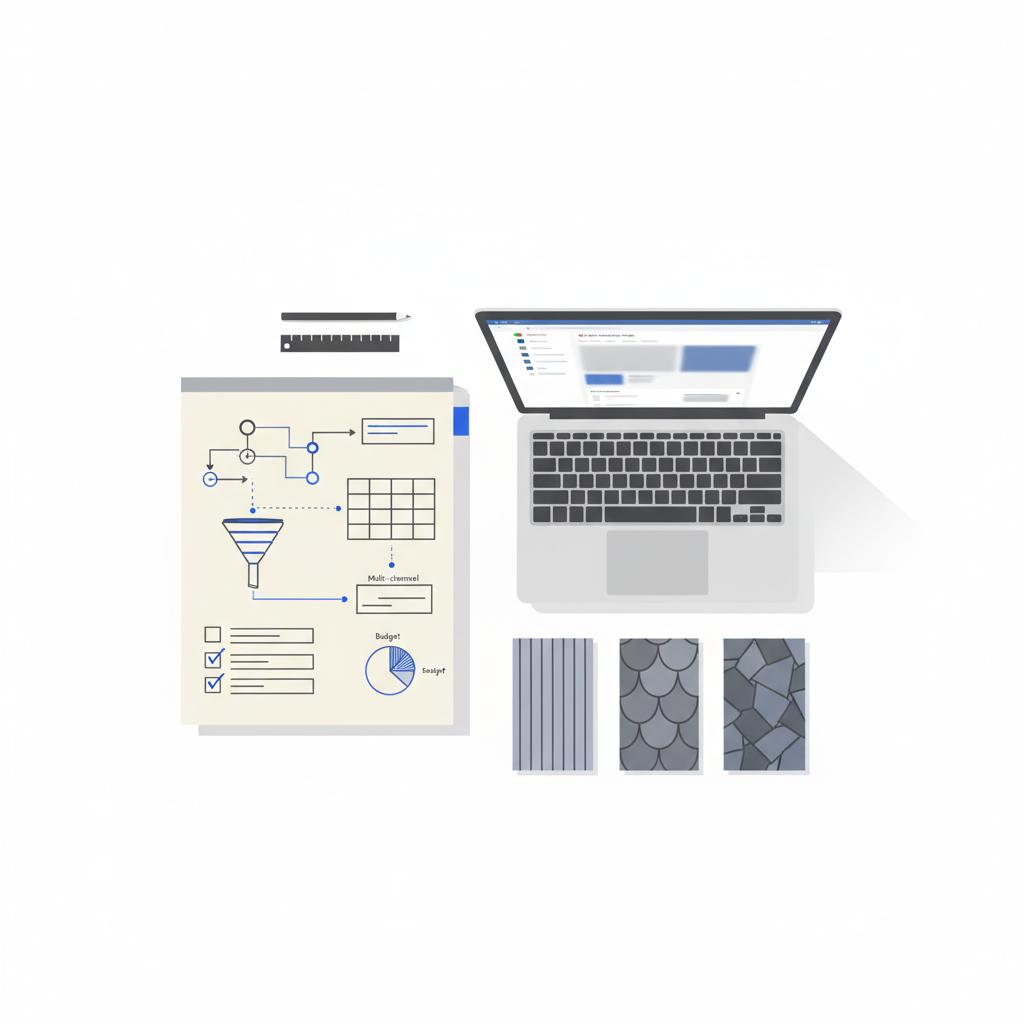
Quick debugging checklist
- Are UTMs applied to all ads?
- Do you have unique call-tracking numbers?
- Is every lead pushed into the CRM with a source?
- Do you have a clear SLA for callbacks?
- Are your GBP and landing pages updated?
Do these five things and you’ll cut waste quickly.
Next steps you can take today
Update your Google Business Profile, add one landing page for your top offer, implement call-tracking, document a callback SLA, and run a short LSA test if eligible. Track everything and iterate weekly.
Long-term growth habits
Keep a monthly review of channel CPL and CPA. Reward referral partners who send reliable work, and keep your GBP fresh with new photos and responses to reviews. Make measurement a habit—not a one-time fix.
Resources and tools
Simple tools to use: Google Business Profile, call-tracking providers, a lightweight CRM that supports source tags, UTM builders, and basic landing-page builders that integrate with your CRM and calendar.
Wrapping up
Lead generation for roofers is about choosing a small number of reliable channels, measuring their true cost and close rates, and tightening follow-up. With clear tracking, short SLAs, focused landing pages, and a few high-quality referral relationships, you’ll see steadier booked work and less waste in ad spend.
Start with your Google Business Profile and local SEO. These create a steady baseline of organic leads that improve the returns on any paid media you run. If you can add one paid channel, test Google Local Services Ads (LSAs) with tight tracking and a capped spend to measure CPL and close rates.
Benchmarks from 2024–2025 show LSA leads commonly in the $25–$45 range, paid social often around $20–$30, and paid search higher depending on competition. Always compare CPL with close rate to determine the real cost per booked job.
Yes—Agency VISIBLE offers short audits and practical fixes that focus on measurement, tracking, and conversion. A brief review can reveal missing UTMs, untagged calls, and landing-page issues and surface quick wins that improve your cost-per-acquisition.





