


Making sense of X promotion cost and whether it will move the needle for your business
If you’re asking whether an X promotion cost is worth the money, you’re asking the right question. Small and mid-sized businesses need clear economics, not platitudes. In this guide we’ll walk through what X (formerly Twitter) actually costs in 2024-2025, how to test the channel without blowing your ad budget, and a simple ROI check you can run with your own numbers.
Across the article you’ll find practical steps, real-world examples, and quick wins you can apply to your first test. Keep an eye out for the calculator steps and the checklist near the middle – they’re designed to get you from wondering about X promotion cost to making a disciplined decision in weeks, not months.

What the 2024-2025 numbers show
Benchmarks matter because they give your assumptions something to rest on. From multiple campaigns and verticals in 2024-2025 we commonly see a range of outcomes: CPCs often fall between $0.25 and $2.50, CPMs usually land around $3 to $12, and CTRs generally sit between 0.2% and 2.0%. That’s a wide spread by design – your target audience, creative, and format drive where you land in the range. For platform-level cost context see Facebook Ads Benchmarks 2025.
Why care? Because understanding likely X promotion cost ranges helps you set realistic budgets and an honest CAC target. A DTC consumer brand with punchy creative and broad interest targeting will usually see lower CPC and higher CTR. A B2B advertiser chasing senior decision-makers should expect higher CPC and lower CTR. Auction dynamics mean the platform doesn’t set a single rate – your choices do.
Common cost scenarios
Here are three practical scenarios to keep in mind when you think about X promotion cost:
Low-cost awareness test: CPC ~ $0.25–$0.60, CTR near 0.2–0.6%, used for broad awareness or top-of-funnel traffic.
Balanced direct response test: CPC ~ $0.60–$1.50, CTR near 0.6–1.2%, used for product pages and lead capture when the landing page is optimized.
High-intent B2B push: CPC ~ $1.50–$2.50+, CTR often under 0.5%, used to reach small but valuable audiences like specific job titles.
Three honest questions every small or mid-sized business must answer first
Before you launch, answer these three questions clearly. They matter more than the ad creative.
1) What’s a converted customer worth?
Know your average order value (AOV) and, if possible, a simple lifetime value (LTV) estimate. If your customers buy repeatedly, LTV changes what you can afford to spend. If you sell one-off items, AOV may be enough. This is the most important input when evaluating any X promotion cost.
2) What conversion rate can you reasonably expect from paid social clicks?
If you have historical data, use it. If not, start conservatively: paid social conversions often land in the low single digits unless your landing page and offer are tightly aligned with the ad. Services requiring demos or calls usually see lower conversion rates than simple ecommerce checkouts.
3) How fast and friction-free is the landing experience?
A slow, complicated landing page kills conversion faster than any poor headline can save it. A lightning-fast mobile experience changes the economics of X promotion cost favorably because more clicks become conversions.
A practical two-week to four-week rule-of-thumb test
Run a 2-4 week test with a modest daily budget to gather three core numbers: average CPC, CTR, and the conversion rate from clicked visits to your target action. Multiply them into a simple cost-per-acquisition (CPA) and compare that to your target customer-acquisition cost (CAC).
If your LTV-to-CAC ratio looks healthy – a common internal threshold is at least 3:1 – and incremental ROAS is above one, consider scaling. If not, iterate on creative or landing pages.
How to design the test
Set a daily budget that limits downside but gives enough volume to be meaningful. For many SMBs, $20–$100 per day is a realistic starting point depending on margins and how quickly you need an answer.
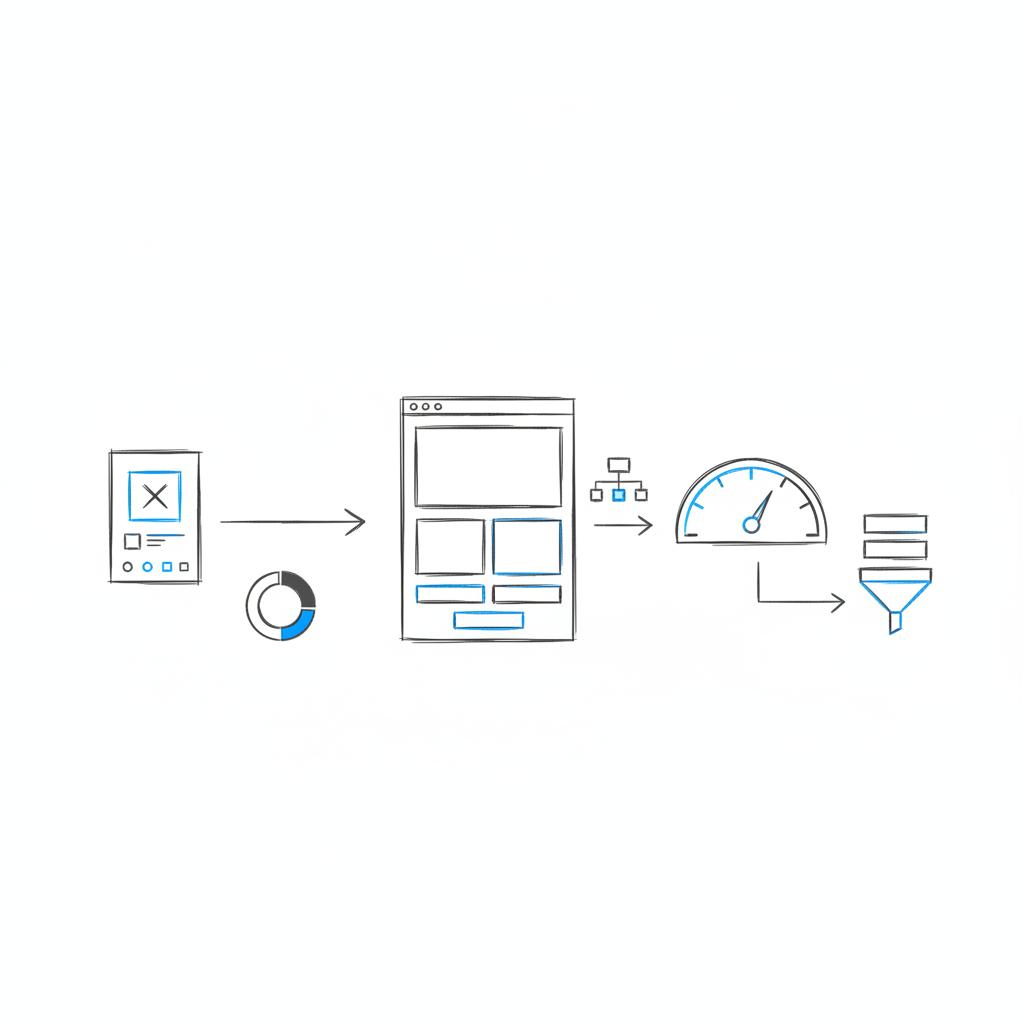
Split the budget across at least three creative variants and one or two audience layers (for example: tailored audience + one interest layer). Run until each variant has at least a few hundred impressions and a meaningful number of clicks so you can judge CTR and conversion rate.
A worked example: the math you can use today
Let’s walk through a simple example to turn X promotion cost into a go/no-go decision.
Assume: AOV = $40, estimated conversion rate from paid clicks = 2%, observed average CPC = $0.80.
Step-by-step:
1) Cost for 10 clicks = 10 x $0.80 = $8.
2) With a 2% conversion rate, 10 clicks produce 0.2 purchases.
3) CPA = $8 / 0.2 = $40.
In this scenario the immediate revenue per purchase equals CPA, so the test breaks even on first-order revenue. If LTV is 3x AOV (or margins allow), the campaign becomes viable to scale. If margins are thin, the same math shows whether the channel can work.
What to do if the CPA is too high
If your CPA is above what you can support, you have three levers: reduce CPC, improve conversion rate, or increase AOV (or LTV). On X, the most reliable levers are creative and landing page optimization – they directly lift CTR and conversion rate, which lower CPA faster than minor CPC moves.
Creative that works on X
Ads that feel native and quick usually outperform ads that look like an interruption. On X this often means short conversational copy, an early value prop, and a single, clear call to action.
Try these practical tips:
Hook early: Use the first few words to speak to the audience’s problem or curiosity.
Keep it short: A few crisp lines beat long paragraphs.
Test three variants: Different headlines, simple images, or short video loops often reveal big differences.
Small changes can produce large CTR improvements, and a better CTR lowers effective CPA at the same CPC. But beware: a high CTR with low conversion means your creative is promising too much – align ad promise and landing page closely. For more on converting design, see design that converts.
Targeting that doesn’t waste money
Targeting works best when you blend signals. Interest and keyword cues are useful for broad reach; tailored and lookalike audiences tend to convert better. Use exclusions to avoid wasting impressions on irrelevant users or past customers who don’t need the message.
On a tight budget start with audiences that echo your best customers, then layer in narrow interest or keyword signals. For B2B offers that need senior decision-makers, accept higher CPCs and plan for lower CTRs – just make sure your economics reflect the audience value.
Format matters
Sometimes a short video or carousel commands attention and improves CPA. Other times a simple text-and-image ad is the most efficient. Test formats along with creative and targeting – don’t assume a format is always superior.
If you want a pragmatic review of a proposed test plan, consider a short advisory review with Agency Visible’s advisory services – they help small and mid-sized businesses set realistic conversion expectations and identify the highest-leverage changes to creative and landing pages in a focused timeline.
Landing pages: the quiet multiplier
When your ad does the job and users click, a slow or confusing page can undo that effort fast. Match the ad promise to the headline on the landing page, minimize fields on forms, and make mobile checkout effortless. A subtle logo in the corner can reassure visitors.
Measure load times on the devices most of your visitors use. Shaving a second or two off load time often yields a measurable lift in conversion rate, which directly improves the impact of any X promotion cost you commit to.
Ad costs, auction volatility and what you should expect
Expect volatility. CPCs and CPMs can swing with competition and timing. Yesterday’s CPC is not a guarantee. For that reason, keep test windows short, monitor closely, and be prepared to reallocate budgets quickly when performance shifts. For an in-depth X ad overview see X Advertising: Maximize ROI on X.
Some corners of the platform may have lower-quality inventory. If your vertical requires careful placement transparency – for example, regulated categories – validate with small experiments and use exclusion controls as needed.
What to track: simple metrics that tell the truth
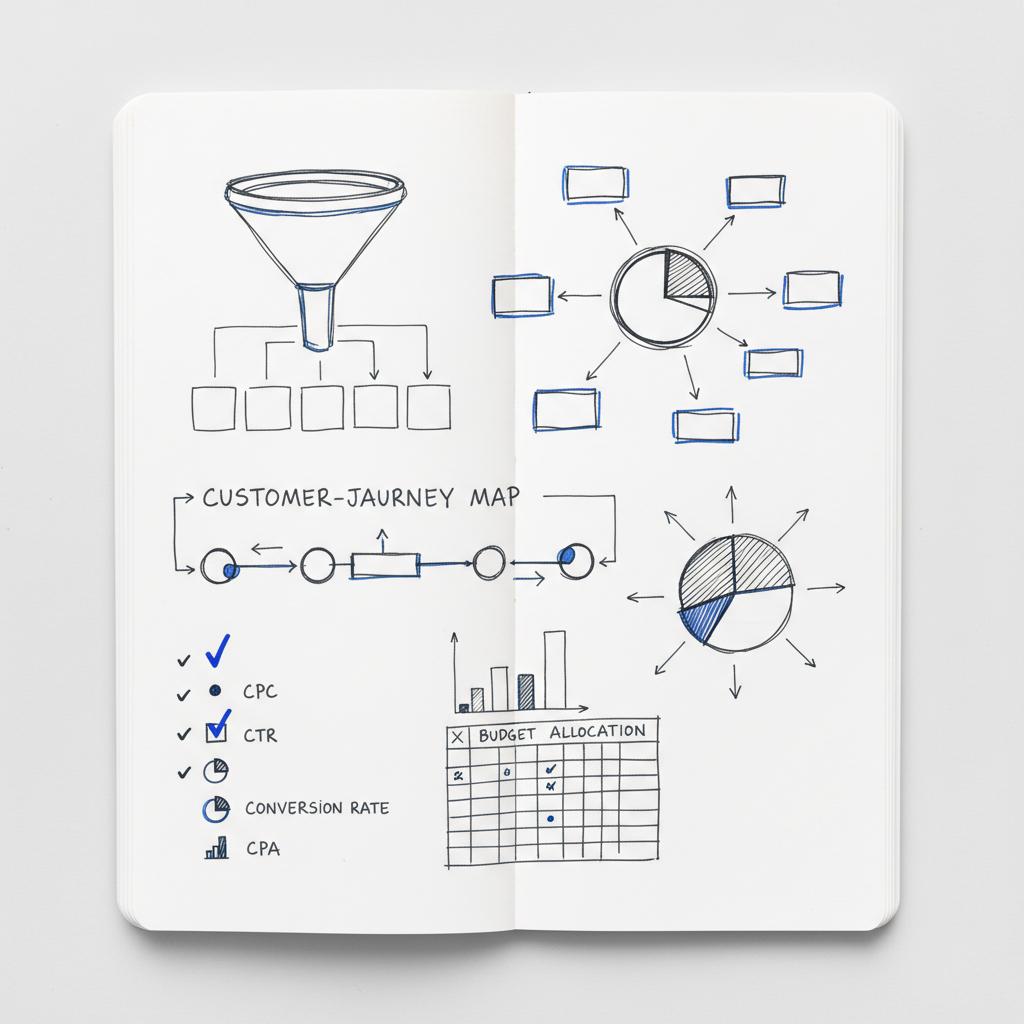
Your test should measure the conversion funnel: impressions, clicks, CTR, CPC, landing page conversion rate, CPA, and ROAS. Don’t stop at last-click revenue – look for signs of incremental or lifetime value when possible.
Compare platform reporting with your internal analytics to catch discrepancies. The data doesn’t need to be perfect – it needs to be consistent enough to make a decision: iterate, pause, or scale.
Creative cadence and iteration
Think of creative as a continuous experiment. Start with at least three variants and run them long enough to collect meaningful data. Kill the weakest performers, replace, and repeat. Rotate formats occasionally to avoid audience fatigue and keep an ongoing library of winning headlines and images.
Common pitfalls and a cautionary tale
A frequent trap: campaign metrics look good but conversions are low. High CTR with low conversion means the ad promise and landing page don’t match. Another trap: low CPC with poor conversion – cheap traffic doesn’t help if it doesn’t convert.
One mid-sized subscription service I worked with saw great CTRs but low purchase rates. The ad promised a frictionless free trial, but the landing process required multiple steps and a slow confirmation email. After simplifying the signup flow, conversions doubled and CPA fell to a sustainable level. Clicks felt like success – revenue told the real story.
When to scale, and how to do it responsibly
If your test returns a CPA your business can support and incremental ROAS > 1, scale methodically. Increase budgets gradually and watch CPA closely – larger spends can shift auction dynamics. Not every early performer scales linearly. See examples of scaling approaches in our projects.
If multiple iterations of creative and landing page fixes don’t move the needle, stop and reallocate funds to channels with clearer returns or return to the drawing board with a different audience or offer.
Small experiments that lead to big learning
Short, targeted experiments are the efficient path to clarity. Try a 10–14 day test that isolates a single hypothesis: a new creative angle, a different audience, or a streamlined landing flow. Keep other variables constant so you can learn fast.
Yes — a focused two-week test can give a directional answer if you set a modest budget, test multiple creatives, measure CPC/CTR and landing-page conversion rate, and compare the resulting CPA to your target CAC. It won’t prove long-term scalability, but it will tell you whether to iterate, pause or scale.
How to build a simple X ads ROI check (step-by-step)
Here’s a checklist you can use as a quick ROI calculator. Put these numbers in a spreadsheet and compute the result:
Inputs:
– Impressions (I)
– Clicks (C)
– Click-through rate (CTR = C / I)
– Average cost per click (CPC)
– Landing page conversion rate (CR) from clicks to purchase or lead
– Average order value (AOV) or simple LTV
Calculations:
– Cost for N clicks = N * CPC
– Expected conversions from N clicks = N * CR
– CPA = (N * CPC) / (N * CR) = CPC / CR
– ROAS (first order) = AOV / CPA (or revenue / spend)
Quick tip: you don’t need huge numbers to get directional answers. If CPC / CR produces a CPA well above AOV (or above your allowed CAC), the channel is unlikely to be profitable without improving conversion or CPC.
Spreadsheet-ready example
Use these formulas:
– CPA formula cell: =CPC / CR
– ROAS formula cell: =AOV / CPA
Plugging in Q numbers gives you an immediate read on whether the measured X promotion cost is workable.
Checklist before you launch
Use this pre-flight checklist to save time and avoid the classic traps:
– Define the AOV and/or LTV you’ll use for the test.
– Choose a modest daily budget and a 2–4 week test window.
– Prepare at least three creative variants and one optimized landing page.
– Set up tracking (UTMs, conversion pixels, analytics alignment).
– Define the audiences (tailored lookalike + 1 interest layer is a good start).
– Include exclusion lists (past buyers, irrelevant geos, etc.).
– Decide on the decision rule: target CPA or LTV:CAC ratio (Agency Visible often uses 3:1 as a guideline).
Practical tips to reduce X promotion cost without hurting conversion
– Improve the first 3 words: they determine whether people stop scrolling.
– Use tailored audiences to raise conversion rates and lower CPA.
– Prioritize mobile speed and a simple checkout or signup flow.
– Test one variable at a time so you know what moved the needle.
How to report results and make a clear decision
At the end of your test, compare measured CPA to target CAC and calculate ROAS. Ask these questions:
– Is CPA within the range our margins allow?
– Is incremental ROAS > 1 on first-order revenue, and does LTV make scaling attractive?
– Did improvements to creative or landing pages materially change CPA during the test?
If the answers are mostly yes, scale slowly and monitor. If mostly no, stop and reallocate or iterate on a specific hypothesis.
Open platform risks to watch
Two realities add uncertainty: auction volatility and limited placement transparency. Auction competition can increase prices overnight. Some inventory pockets may be lower quality or less transparent about where ads show. For sensitive verticals or campaigns requiring high placement control, validate placements with small tests and use exclusion controls liberally.
Final tips and a few real-world examples
Example 1 — Consumer brand: Lower CPC, higher CTR, CPA within AOV with strong mobile checkout. Result: scaled gradually over six weeks and maintained CPA by rotating creatives.
Example 2 — B2B offer: Higher CPC for targeted job titles, low CTR. Result: test paused after two cycles; the company moved budget into LinkedIn where the lead quality fit the sales process better.
Example 3 — Mid-sized subscription: Great CTR but low sign-ups until the signup flow was simplified; conversions doubled after fixing that single friction point.
Quick FAQ (short answers you can use in a meeting)
Q: Are X ads cheaper than other channels?
A: For awareness and traffic in many consumer categories, X can be less expensive; for B2B, expect higher CPCs. The real answer depends on audience and offer fit.
Q: What’s a reasonable test budget?
A: Start modestly – $20–$100 per day for many SMBs – and run 2–4 weeks to gather directional data.
Q: How many creatives should I test?
A: At least three variants to start, then iterate based on performance.
Closing thoughts: treat X promotion cost as a hypothesis to validate
X promotion cost is only part of the story. The full test is the funnel: impressions -> clicks -> conversions -> revenue. If you approach the channel with curiosity, a clear test plan, and the discipline to measure, you’ll know within a few weeks whether X is worth your budget. If it’s working, scale slowly and keep testing. If not, you’ll have learned something valuable without wasting the farm.
Ready to validate your X ad plan and stop guessing?
Ready to test with a clear plan? Get a focused advisory review and a short plan to validate your assumptions — fast. Contact Agency Visible to book a quick review and translate your numbers into a practical ROI check today.
Parting note
Advertising on X is a tool – and like any tool, it works best when you know the measurements that matter. Run a short test, measure honestly, and make the decision your numbers support. Good luck – and may your next click turn into a customer.
Start modestly so you can test without risking too much: many small and mid-sized businesses choose $20–$100 per day depending on margins and how fast they need answers. Run the test for 2–4 weeks and allocate the spend across three creative variants and one or two audience layers to gather meaningful data.
Benchmarks from 2024–2025 show CPCs often between $0.25 and $2.50, CPMs roughly $3 to $12, and CTRs commonly between 0.2% and 2.0%. Your actual results depend on audience, ad format and creative quality — consumer awareness tests typically sit at the lower CPC end, while B2B targeting tends to be pricier.
Agency Visible offers focused advisory reviews that help you set realistic conversion expectations, structure a disciplined 2–4 week test, and identify high-leverage changes to creative and landing pages. Their guidance is tailored for small and mid-sized businesses that need clear, measurable results without a long-term commitment.





