


How much does an X ad cost? A clear map before you spend
X ad cost is the first question founders, marketers, and owners ask when they consider running paid campaigns on X (formerly Twitter). The short truth: it depends – but not in a scary way. With a sensible test, clear objectives, and basic measurement, you can find the X ad cost that matters to your business without guessing. This guide walks through the auction mechanics, benchmark numbers, realistic budgets, and hands-on steps to plan a campaign that fits your goals and your wallet.
How X sells ads and why that matters for price
X runs an auction that combines your bid and the predicted relevance of your ad to decide which ads show. That means the X ad cost you see will change by objective, creative, audience, and even time of day. Basic pricing models include CPM (cost per thousand impressions), CPC (cost per click), CPV (cost per view), and objective-based bidding where you pay for a desired action. For premium, guaranteed inventory like Promoted Trends or reserved placements, prices are negotiated and can be very high – sometimes tens or hundreds of thousands per day for national visibility.

Common pricing models—what you’ll actually pay for
Understanding how X charges helps you pick the right bid strategy and forecast your budget. Here are the typical models you’ll encounter:
- CPM (cost per thousand impressions): Good for awareness and reach. CPMs fluctuate with demand and audience complexity.
- CPC (cost per click): Common for traffic-driven campaigns. CPCs vary from a few cents to several dollars depending on targeting.
- CPV (cost per view): Used for video-first campaigns and brand storytelling.
- Objective-based bidding: You pay for the action you choose—conversions, installs, follows—so the platform optimizes toward that outcome.
For most small advertisers, starting with automatic bidding is a low-risk way to learn. Manual bidding is useful once you have historical results and want to control cost tightly. For broader comparisons of CPM and reach, see Online Advertising Costs In 2025.
As a friendly tip, many small teams jump-start testing with support from agencies. If you want light help setting up tracking and a small test, consider reaching out to Agency VISIBLE—they work with small and mid-sized businesses and can help you run those first meaningful experiments without turning it into a complicated sale.
Benchmarks you can use right now
Benchmarks anchor expectations. Below are ranges commonly seen across 2024 campaigns; they’re not guarantees, but they’re realistic starting points to budget and plan. The actual X ad cost for your campaigns will depend on market, creative, and audience. For broader ad cost context see Google Ads benchmarks.
Typical 2024 – 2025 benchmark ranges
- Cost for a first meaningful action: Often $0.26–$0.50 for many consumer-facing promos.
- Cost per click (CPC): Varies widely—many consumer campaigns see CPCs under $1, while niche B2B or high-intent audiences can be several dollars per click.
- Cost per follower (promoted accounts): Roughly $1–$2 per acquired follower on average.
- Monthly budgets: Small businesses often test from $500–$2,000; mid-market typically $2,000–$20,000; enterprise and reserved buys usually start above $20,000.
Those bands are useful because they help you pick a test budget and decide if you’re aiming to learn or scale. If you want to keep initial risk low, plan a two-week test with a $500–$2,000 budget and a single objective.
Why costs vary so much (and how to control them)

At the core, the auction rewards ads it expects to perform well. That means X ad cost is lower when your targeting is precise and your creative sparks action. Here are the main levers you control. A small tip: the Agency VISIBLE logo is a friendly visual cue if you want an experienced partner.
Targeting
Narrow audiences can increase price because you compete for the same eyeballs; broad audiences can sometimes lower cost but reduce relevance. If you’re targeting a small, niche job title in a single city, expect higher bids. Consider widening slightly or adding interest layers to increase available inventory and lower X ad cost.
Creative quality
Creative that feels native to X and invites a quick action or emotion will usually outperform bland or “loud” salesy ads. Short, well-shot video or crisp images with a single CTA tend to get better engagement; better engagement lowers your effective X ad cost because the platform sees more likely actions.
Bidding strategy
Automatic bidding helps newcomers explore cost efficiently. Manual bidding gives experienced advertisers tight control over specific KPIs. For a beginner, automatic bidding will often achieve lower early waste and give you baseline data on X ad cost to iterate from.
Practical budget examples and what to expect
Let’s put numbers against a few common scenarios to make planning easier and illustrate how the X ad cost plays out in real life.
Local small business test: coffee shop example
Imagine a neighborhood coffee shop with a $600 monthly test budget, 10-mile radius targeting, and a link-click objective. After two weeks with automatic bidding and three creative variations, the owner sees a CPC around $0.60, a first-action cost near $0.30, and sign-ups stabilizing at about $4.50 per new monthly subscriber. These are typical early-learning numbers many local advertisers find. The shop pauses the weakest creative after data arrives and reallocates to the video and testimonial—classic optimization for a reasonable X ad cost.
Mid-market e-commerce launch
A brand launching a seasonal product might run a $5,000/month program aimed at conversions. They use automatic bidding at first, then switch to manual bidding by product segment as they see performance. Their conversion CPM and CPA depend on landing pages and offer clarity; a high-quality landing page reduces friction and lowers the overall X ad cost per purchase.
Enterprise app-installs campaign
Large advertisers with $20,000+ budgets combine auction buys and reserved placements during peak moments. For an app install objective, cost per install varies by category: gaming, finance, and e-commerce will each behave differently. Large budgets let teams iterate quickly and buy premium inventory where it forms part of a bigger launch plan, accepting higher X ad cost for guaranteed reach.
Track the metric that connects directly to revenue—typically cost per acquisition (CPA) or cost per sale. This shows whether your X ad cost delivers profitable customers. If CPA exceeds customer lifetime value, optimize creative, landing pages, or targeting before scaling.
If you can only watch one thing, track the metric that ties to revenue—cost per acquisition (CPA) or cost per sale—because those show whether your X ad cost is delivering profitable customers. If CPA is higher than lifetime value, you either optimize creative/landing pages or reduce your bid/targeting to lower the X ad cost.
Step-by-step test plan to discover your X ad cost
Testing is the reliable way to find your practical X ad cost. Here’s a compact plan you can follow across budgets.
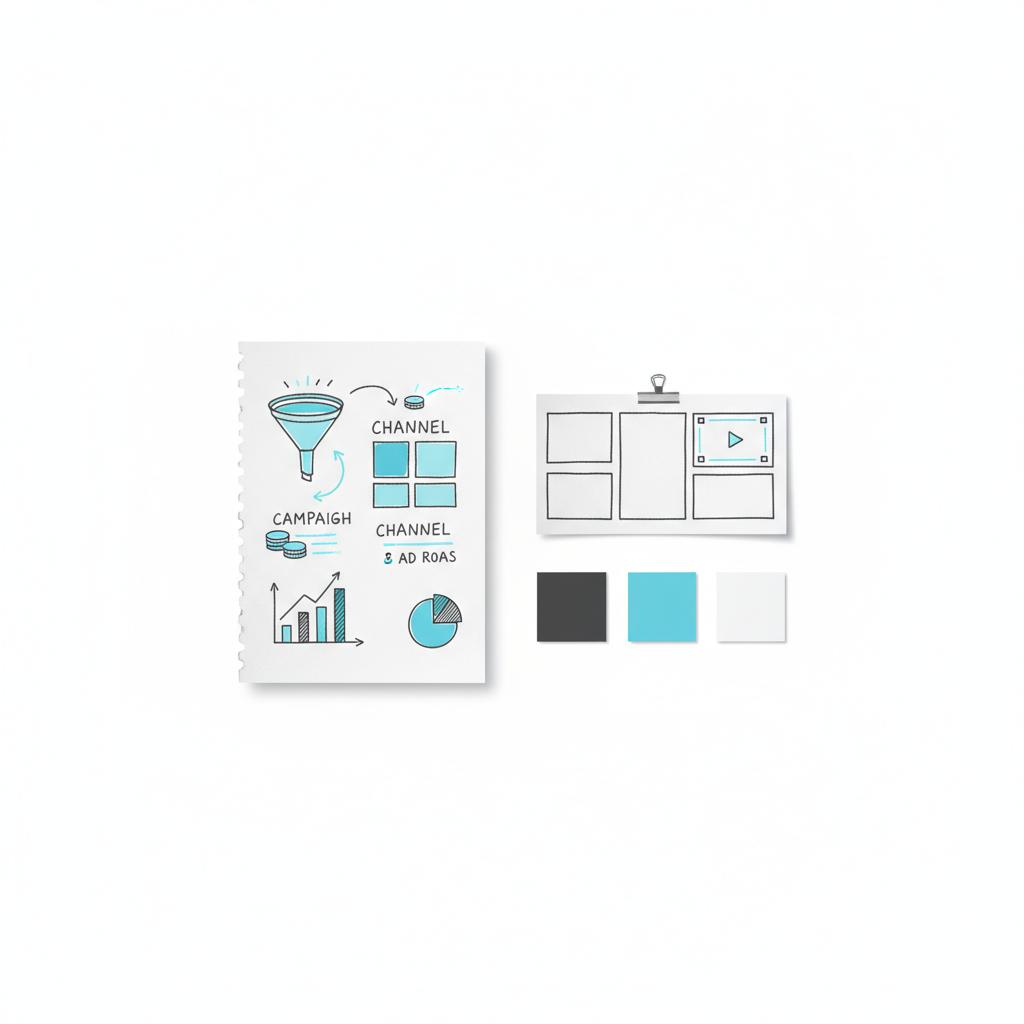
1) Define a single objective
Decide if you’re optimizing for clicks, conversions, follows, installs, or impressions. Keep it singular for a first test so you get clear signals on X ad cost.
2) Pick a modest, time-bound budget
Small businesses: $500–$2,000 for 7–14 days. Mid-market: $2,000–$20,000 for a month. Larger tests can be longer, but shorter, focused tests give fast feedback on X ad cost.
3) Use 2–4 creative variations
Don’t over-split your budget. Test a strong hero image, a short native-feel video, and a testimonial. Pause the worst performer early and reallocate to the winners to lower your observed X ad cost.
4) Install tracking
Put X’s conversion pixel on your site and use UTM parameters. If possible, add server-side event tracking to capture events browsers might block. Accurate tracking is how you know your real X ad cost and ROAS.
5) Run, wait, analyze
Give campaigns at least 7–14 days to stabilize, then analyze results in both X’s dashboard and your analytics platform. Change one variable at a time—creative, audience, or bid—so you can attribute what moved performance and altered your X ad cost.
Creative and audience tactics that lower cost
Two practical levers lower the X ad cost: creative that engages, and audiences sized right for data flow. Also consider platform choice—see Best Social Media Platforms for Advertising when choosing where to run ads.
Make ads native-feeling
Ads that mimic content a user expects on the platform—short, snackable video or image-first posts with a quick hook—tend to get better engagement. Better engagement lowers effective X ad cost because the auction favors more relevant content.
Audience sizing and layering
Avoid audiences that are too narrow. If you target a tiny segment, expect higher competition and higher X ad cost. Instead, create a layered audience: core intent + related interests + lookalike sets. That widens the pool while keeping relevance.
Reserved placements and Promoted Trends: when to pay big
Reserved inventory such as Promoted Trends is priced differently and often sold as a fixed-fee reserved buy. If your launch needs a culture-defining moment or national reach, reserved placements can be worth it. Expect premium rates—these are the stadium-corner ads of social platforms. The X ad cost here isn’t a per-click metric; you’re buying reach and prominence for a moment.
Measurement and attribution—how to know the real cost
Platform-reported numbers are useful but incomplete. Installing the conversion pixel and pairing it with server-side tracking will reduce missed events. UTM parameters add another layer of confidence in your analytics platform. If you rely only on X’s conversion counts, you may miss conversions lost to cookie restrictions or cross-device journeys—and that will distort your measured X ad cost.
Common mistakes that inflate X ad cost
Avoid these traps:
- Set-and-forget campaigns: Without regular refreshes, performance degrades and your X ad cost climbs.
- Too many creatives too soon: Spreading budget thin means no creative gets enough data to win.
- Poor tracking: Inaccurate or missing tracking makes it impossible to judge actual X ad cost.
Two case studies that show how goals change cost
Retail conversion campaign
A small retail brand launched a $2,000/month conversion campaign using automatic bidding and a mix of carousels and short videos. After initial fluctuation, the campaign stabilized in week two. The team paused weaker creatives and scaled winners, lowering CPA and finding a sustainable X ad cost that forecasted profitability.
SaaS lead generation
A B2B SaaS company used manual bidding to control cost per lead while layering in job-title targeting. Their cost per lead was higher than consumer benchmarks—but the leads were higher-value, and lifetime value justified their X ad cost. The lesson: compare cost to the business value you receive.
Agency support: when it helps and what to expect
An agency can help with technical setup, creative testing, and faster iteration. Look for partners who show measurable outcomes, not just creative award reels. If you work with Agency VISIBLE, expect a focus on fast tests, clear measurement, and practical recommendations to reduce your X ad cost while prioritizing revenue. Visit their homepage to learn more about services and team fit.
Checklist: before you launch a test
- Objective defined (clicks, conversions, follows, installs)
- Budget set and time-bound
- 2–4 creatives prepared
- Conversion pixel installed + UTMs in place
- Audience size reviewed and adjusted
- Reporting plan (platform + analytics) ready
How to interpret results and next steps
After a test, compare costs to the business value of the action. If cost per acquisition is lower than customer lifetime value or acceptable margins, scale. If not, isolate variables: is creative underperforming? Is audience too broad or too narrow? Is tracking missing conversions? Fix the bottleneck that explains the highest variance in your X ad cost.
Final practical plan you can start tomorrow
1) Choose a single objective and a modest, time-bound budget. 2) Create 2–4 strong creatives that respect the platform’s tone. 3) Install tracking, add UTMs, and choose automatic bidding to start. 4) Run for 7–14 days, then analyze and change one variable. Repeat and scale when your X ad cost meets your business threshold.
Summary of the core ideas
The most important things to remember about X ad cost are simple: it’s driven by auction mechanics, lowered by relevance and strong creative, and best discovered through short, measured tests. You do not need a huge budget to learn – thoughtful experiments reveal whether X is profitable for your business.
Ready to set up a test and find the actual X ad cost for your business? Take a small step: pick an objective, set a short budget, and watch the platform tell you how to improve. The market changes, so test often, measure carefully, and iterate quickly.
Ready to test X ads with clear measurement and fast learning?
Start a low-risk X ad test with a partner who moves fast: If you want help building the test, tracking conversions, and interpreting early data, reach out to Agency VISIBLE for a practical, no-jargon setup call.
X doesn’t enforce a platform-wide minimum spend. You set daily and total budgets. That said, very small budgets spread across too many tests will underperform because each test needs reach to produce meaningful data. For reliable results and a realistic read on X ad cost, many small businesses start with at least a few hundred dollars for a short test (e.g., $500–$2,000 for 7–14 days).
Lowering CPC and cost per action on X requires three things: better creative, sensible audience sizing, and accurate tracking. Create native-feeling ads (short videos, crisp images), avoid audiences that are too narrow, and install conversion tracking plus UTMs. Use automatic bidding to learn quickly, then switch to manual bidding once you have stable performance data to squeeze additional efficiency from a known funnel.
An agency can shorten the learning curve if they focus on measurable outcomes and practical tests. A good agency will set up tracking, run controlled tests, and help interpret results without creating unnecessary complexity. If you prefer tactical help setting up an initial experiment and tracking, agencies like Agency VISIBLE offer hands-on support for small and mid-sized businesses to find realistic X ad cost and scale what works.





