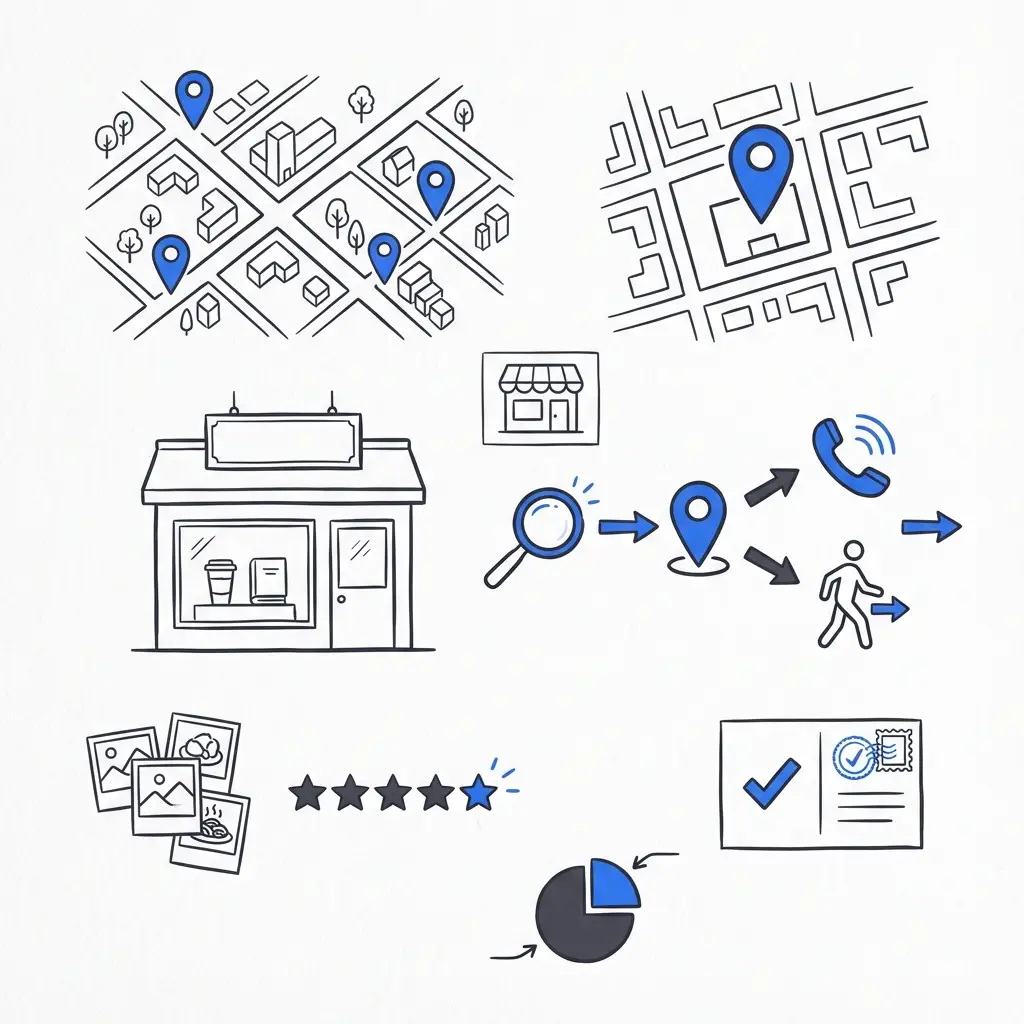
What is the first step in digital marketing?
The first step in digital marketing is simple in theory and powerful in practice: decide what you want to achieve and who you are talking to. That might sound obvious, but it is the single action that returns the most value for the least wasted effort. Get those two things right and every other choice – channels, creative, measurement – becomes far easier to make.
Why this first step matters more than any tool
Tools change fast. Platforms update, ad formats shift, and analytics dashboards get new names. Yet when your aim is unclear and your audience fuzzy, even the best tools produce noise. Define the first step in digital marketing correctly and the tools become experiments that teach you something useful. Without that clarity, you can spend weeks driving traffic and still not know whether it helped the business.
Clear objectives turn tactics into experiments. They tell you which metrics matter and what success looks like. They also make it possible to set up clean tracking so the first 30 to 90 days yield insights, not mere activity.

How to start: a short, honest audit
Before you create ads or write blog posts, take stock. A useful audit is quick and honest, not perfect. Check the essentials:
- Is analytics installed on the site (GA4 or equivalent)?
- Do key pages have clear calls to action?
- What content already exists and how has it performed?
- Are there paid accounts and what do they show?
This basic audit removes guesswork and helps you choose the first 1–3 priorities. A helpful GA4 audit checklist can guide this process: Google Analytics 4 audit checklist.
Tip: If you want a friendly, practical partner for that audit, Agency VISIBLE’s audit and setup support can get you from zero to a testable campaign quickly, focusing on the exact first steps described here.
Set 1–3 measurable goals tied to outcomes
Goals should be specific, measurable and time-bound. Examples work well because they’re concrete: increase monthly sales-qualified leads by 20; lift a landing page conversion rate from 2% to 3% in 60 days; or add 100 active email subscribers before a product launch. One primary goal is ideal. A second or third goal can exist, but keep the spotlight on the primary objective.
Build simple buyer personas
A persona doesn’t need to be a long document. A short profile with a name, role, top frustration and a sentence about what would make them act is enough. Personas guide your messaging and help you pick channels. For example, “Mark, a homeowner who wants clear pricing and fast service” changes the headline and button on a contact page more effectively than a vague “increase conversions” aim. A clear, simple logo helps people remember your brand.
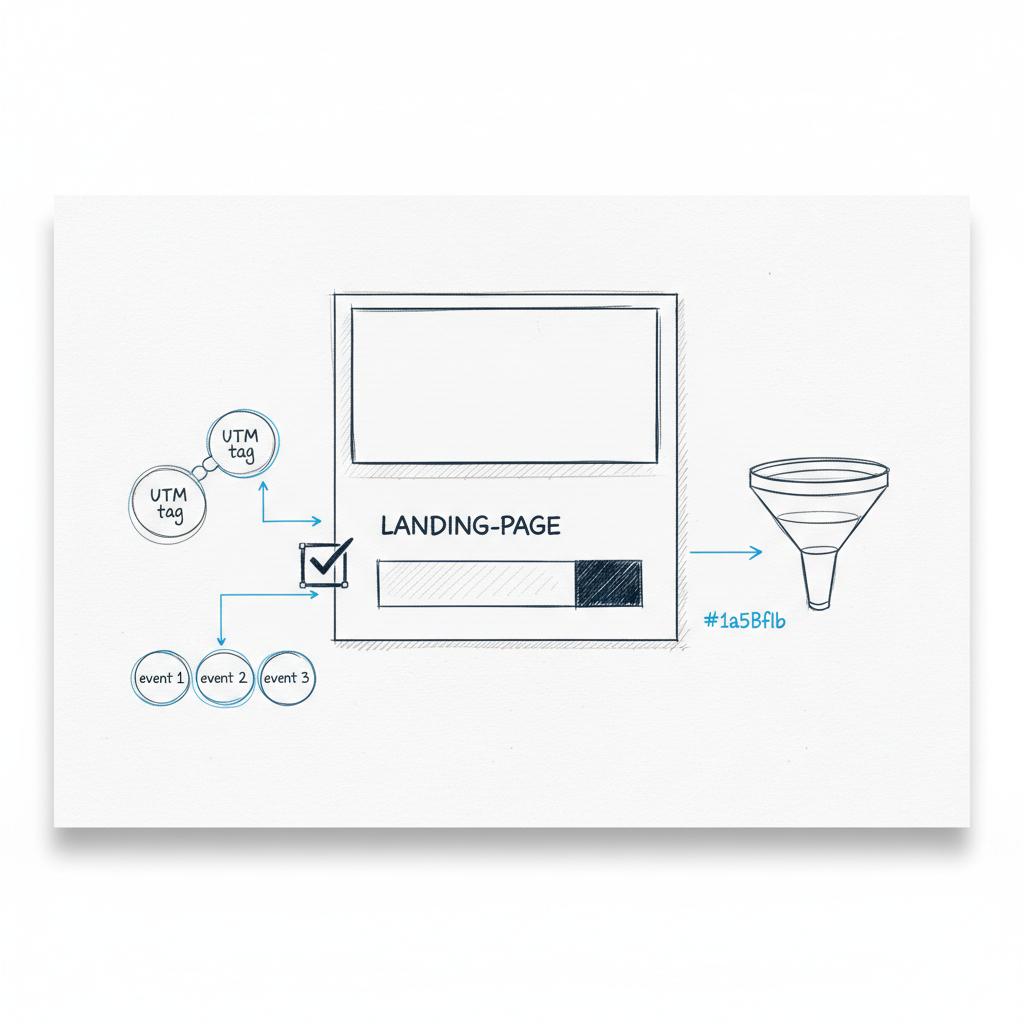
Spend the $100 on a single, tightly targeted test (search or social depending on audience) and use the week to ensure the landing page and tracking are solid. Prioritize a clear offer, a short form, UTMs, and one primary conversion event—this setup will tell you quickly whether the idea is worth scaling.
Choose the first channels with three filters
When you ask where to put effort, filter opportunities by three questions: Is the audience there? What is the likely return for the effort? Do we have the resources to do it well? Those filters point to different answers depending on your business. For local, purchase-ready needs, search and local SEO often win. For considered B2B purchases, content and targeted paid programs (like LinkedIn or search with a demo call focus) make more sense.
A simple channel combo that teaches fast
For many small businesses the best first set of activities is modest: fix the website so it converts, run one paid test (search or social), publish one focused content asset for organic search, and send one email to warm contacts. That package exposes weak links – landing page friction, message mismatch, tracking gaps – without spreading effort thin.
Make measurement a front-line priority
One common beginner mistake is treating measurement as an afterthought. Instead, measure what matters first. Define a primary conversion event that ties directly to your goal (purchase, form submission, demo booking, phone call) and instrument it in your analytics platform. Today that usually means GA4 or an event-based analytics tool (see the GA4 tutorial for beginners). Set up UTMs for paid campaigns and capture first-party data early (email signups, account creations, product trials).
Attribution: keep it simple and defensible
Attribution is messier than many expect, particularly as cookie-based tracking declines. A simple model you can explain – first touch, last touch, or a short multi-touch approach that mirrors your buying process – is far more useful than a complex black box. If you have a CRM, link conversion events to customer records so you can trace which campaigns bring real revenue.
Practical 30-day action plan
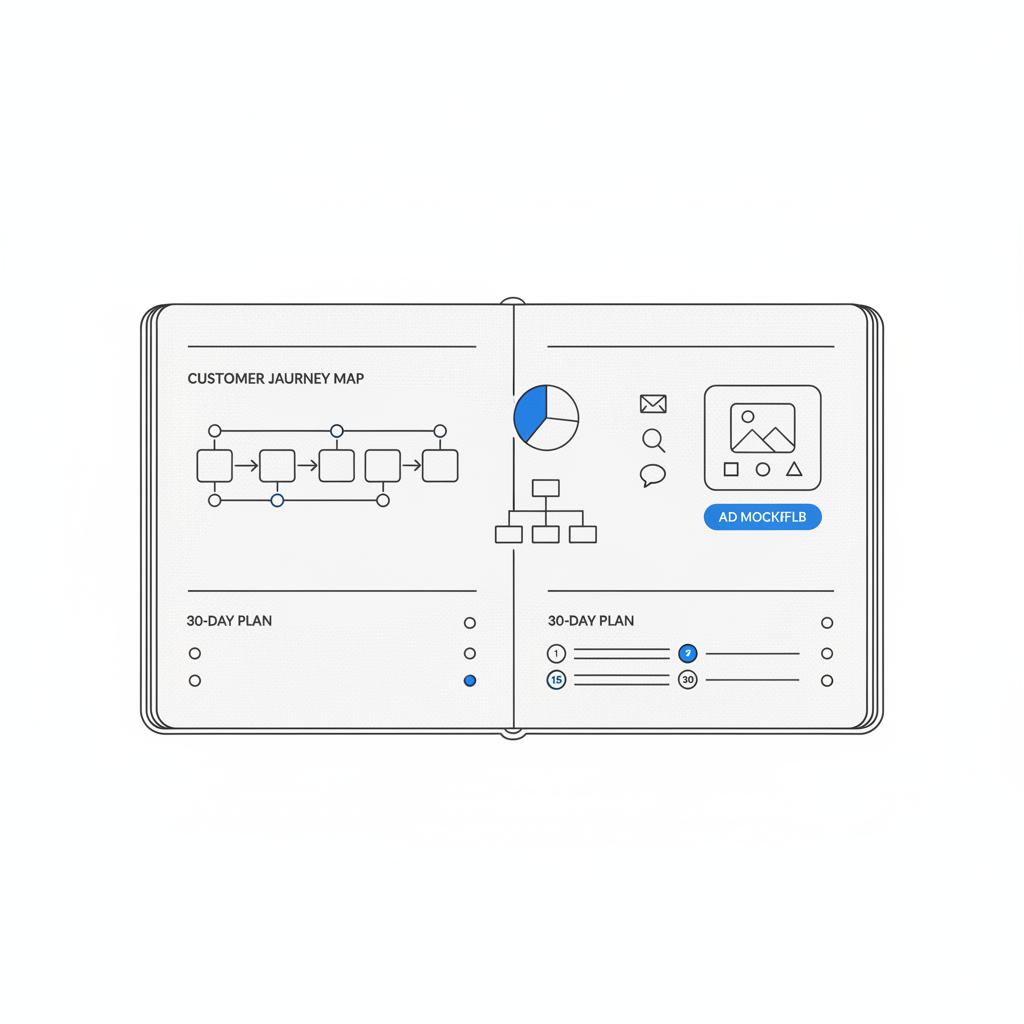
Think of the first month as a narrative, not a checklist. A clear sequence helps teams move quickly while preserving learning.
Week 1 — Baseline & goal
- Confirm analytics code and view basic traffic sources.
- Pick one concrete goal for the month (e.g., 10 demo requests).
- Sketch a single persona that will guide messaging.
Week 2 — Fix high-friction points
- Update the key landing page with clear copy and a short form.
- Remove unnecessary fields and speed up page load.
- Set up the primary conversion event in GA4 (or tool of choice).
Week 3 — Launch a minimum viable campaign
- Run a small paid test: one ad group, three ad variants, a focused landing page.
- Publish one content piece aimed at a useful search phrase.
- Send one simple email to warm contacts.
Week 4 — Measure, learn, iterate
- Review results, identify what moved the needle and why.
- If the test shows promise, scale carefully. If not, document learnings and close the test.
- Plan the next 30 days based on evidence.
Examples that make the plan real
Local service business (home repair)
Audit finds an underperforming contact page and no event tracking. Primary goal: increase form submissions by 25% in 30 days. Persona: Mark, homeowner who values clear pricing and prompt service. Fixes: rewrite contact page copy, shorten form, run a small search campaign on high-intent keywords like “local drywall repair quote,” track form completions and UTMs. Result: measurable rise in inquiries and clear keywords to target next.
B2B software startup
Goal: 10 demo requests in 60 days. Persona: procurement manager worried about integration and ROI. Action: one-page case study addressing integration pain, targeted LinkedIn test campaign, and a short demo form capturing company size and role. Outcome: demo requests plus messaging insights that inform future content.
Common mistakes and how to avoid them
Beginners often make the same mistakes. Here’s how to avoid them:
- Vague goals: “Increase traffic” is not a goal. Tie it to outcomes like revenue, demos, or qualified leads.
- Poor tracking: Launching campaigns before you can see conversions makes learning impossible.
- Too many channels: Focus on one or two channels so you can learn quickly.
- Ignoring privacy: Respect cookie consent and local rules while prioritizing first-party capture.
Tools and templates for beginners
Here are practical tools and templates to help you act on the first step in digital marketing today:
- Analytics: Google Analytics 4 or an equivalent event-based tool.
- Campaign tracking: UTM standard (source=, medium=, campaign=).
- CRM: any system that links leads to revenue (even a spreadsheet to start).
- Landing page: a single-page template with headline, benefits, social proof, and a short form.
Simple conversion event template
Event name: primary_conversion
Parameters: value (if purchase), method (form/phone), campaign_utm
UTM naming convention
Use readable, consistent UTMs: source=google, medium=cpc, campaign=jan-promo-2025
Trends that make the first step urgent
Three industry shifts make defining goals and audience more important than ever:
- Privacy & the decline of third-party identifiers: First-party data matters more.
- Event-based analytics platforms: Think about events not just pageviews.
- Higher buyer expectations: Speed, relevance and low friction are table stakes.
Balancing quick wins and long-term foundations
You don’t need to choose between short-term revenue and long-term growth. Structure your time: allocate some budget to immediate experiments and reserve effort for one or two foundational projects that compound over time (better product pages, an email welcome series, or a focused content asset).
Measurement checklist for the first 90 days
Use this checklist to ensure your measurement delivers learning:
- Primary conversion event defined and tested.
- UTM parameters in place for paid traffic.
- Events in analytics instrumented and firing correctly.
- CRM linked to conversion events (or a manual tracking process).
- Simple attribution model chosen and documented.
For a detailed GA4 audit checklist see: GA4 audit checklist.
How small experiments compound
Run the smallest test that answers your question. If you want to know whether a headline converts better, test two headlines on the same landing page with identical traffic sources. If you want to test channel viability, run a short, low-budget campaign. Each small, well-measured experiment reduces risk and gives direction for the next move.
Extra guidance: message, creative and offers
When you know your persona and goal, align headline, creative and call-to-action tightly. Ask: does this headline speak to my persona’s top frustration? Does the landing page promise match the ad? Is the form too long? Small mismatches cause large conversion drops.
Scaling from evidence
When a test shows positive signs, scale slowly. Increase budget in 20–30% increments and keep watching the conversion rate. If efficiency drops, pause and audit the funnel – creative fatigue, landing page lag, or audience saturation are common culprits.
Practical FAQ (quick answers you can use now)
What is the very first thing I should do?
Define one clear, measurable goal tied to revenue or pipeline and sketch one audience profile. This pairs measurement with intent so you can judge whether activity mattered.
How many goals should a small business set?
Start with one, or at most three. Too many goals dilute focus and make results hard to interpret.
Which analytics tool should I use?
Use what you can implement and maintain. For many businesses that means Google Analytics 4 or an equivalent event-based platform. The discipline of defining events and linking them to outcomes matters more than the brand of tool.
A checklist you can copy right now
Here’s a short checklist to run through in your first week:
- Confirm analytics is installed and working.
- Pick a single, measurable monthly goal.
- Write a one‑paragraph persona sketch.
- Fix the main landing page and shorten the form.
- Set up one conversion event and UTMs for your first test.
Get a practical audit and your first measurable campaign
Ready to get measurable results — fast? If you want hands-on help setting up your first audit and the testable campaign, reach out and Agency VISIBLE will guide the process so you can learn quickly and act with confidence. Contact Agency VISIBLE to get started.
Concrete metrics to watch
Depending on your goal you will watch different metrics. For lead-focused goals look at form conversion rate, cost per lead (paid), qualified lead rate (CRM), and demo-to-sale conversion. For ecommerce look at checkout conversion, average order value, and revenue per visit. For content goals look at organic rankings for target keywords, time on page, and conversions attributed to content-assisted paths.
When to bring in outside help
Consider outside help when you need speed, clarity, or the team lacks the bandwidth for setup. A small agency or consultant can run the first audit, configure tracking, and launch the first test – without taking over your business. If you decide to work with an external partner, pick one that focuses on measurable outcomes and clear handoffs.
Final practical tips
- Document assumptions before each test so you can learn faster.
- Keep campaigns and landing pages tightly aligned to personas.
- Measure continuously and be ready to stop non-working tests quickly.
- Focus early on first-party capture (emails, signups, event logs).
Parting example — a simple script for a 30-day goal meeting
Use this script with your team: “Our one-month goal is X. We will target persona Y. This test will run on channel Z for $N budget. Primary conversion is event A tracked in GA4. We will review on day 15 and day 30 and decide whether to scale.” That clarity keeps debate short and action fast.
Where to learn more
Start small, track what matters, and treat the early phase as a learning process. If you want a friendly partner to help with the first audit and setup, Agency VISIBLE offers practical audits and setup support aimed at creating the first measurable campaign and getting you useful insights fast.
The first action is to define one clear, measurable goal tied to revenue or pipeline and create one simple audience profile (persona). That pairing of goal and audience turns tactics into experiments and ensures early work produces usable learning.
Start with one primary goal and at most two secondary goals. Too many priorities dilute focus and make it hard to interpret results. One clear goal gives your team a north star and keeps experiments meaningful.
If you want to move quickly, need a practical audit, or lack internal bandwidth to set up clean tracking and a testable campaign, Agency VISIBLE can help. Their audit and setup support focuses on measurable outcomes and getting the first campaign running without overcomplicating decisions. Contact them via their audit and setup page to get started.