How do I advertise my painting business? A local-first roadmap that actually works
If you run a painting business, you’ve likely asked yourself, how do I advertise my painting business at least once—and for good reason. Getting steady, well-paying local leads is part strategy, part timing, and part reputation. This guide lays out a clear, practical plan you can act on in the next 30, 60 and 90 days to get consistent, profitable work.
Why local matters more than flashy national campaigns
Home improvement is a local decision. If someone types how do I advertise my painting business into search, they’re almost always looking for a nearby pro who can visit, quote, and deliver without a long wait. Focus on the neighborhoods where your crew performs best—older homes needing careful trim work, or new developments that want quick exterior refreshes—and center your messaging and ads around those places.
Think of local marketing like painting trim: the work that looks small makes everything else look finished. Local-first marketing prioritizes proximity, trust signals, and quick response time. Done right, this approach brings higher-quality leads and better margins.

Local-first marketing prioritizes proximity, trust signals, and quick response time. Done right, this approach brings higher-quality leads and better margins.
Start here: Google Business Profile & local SEO
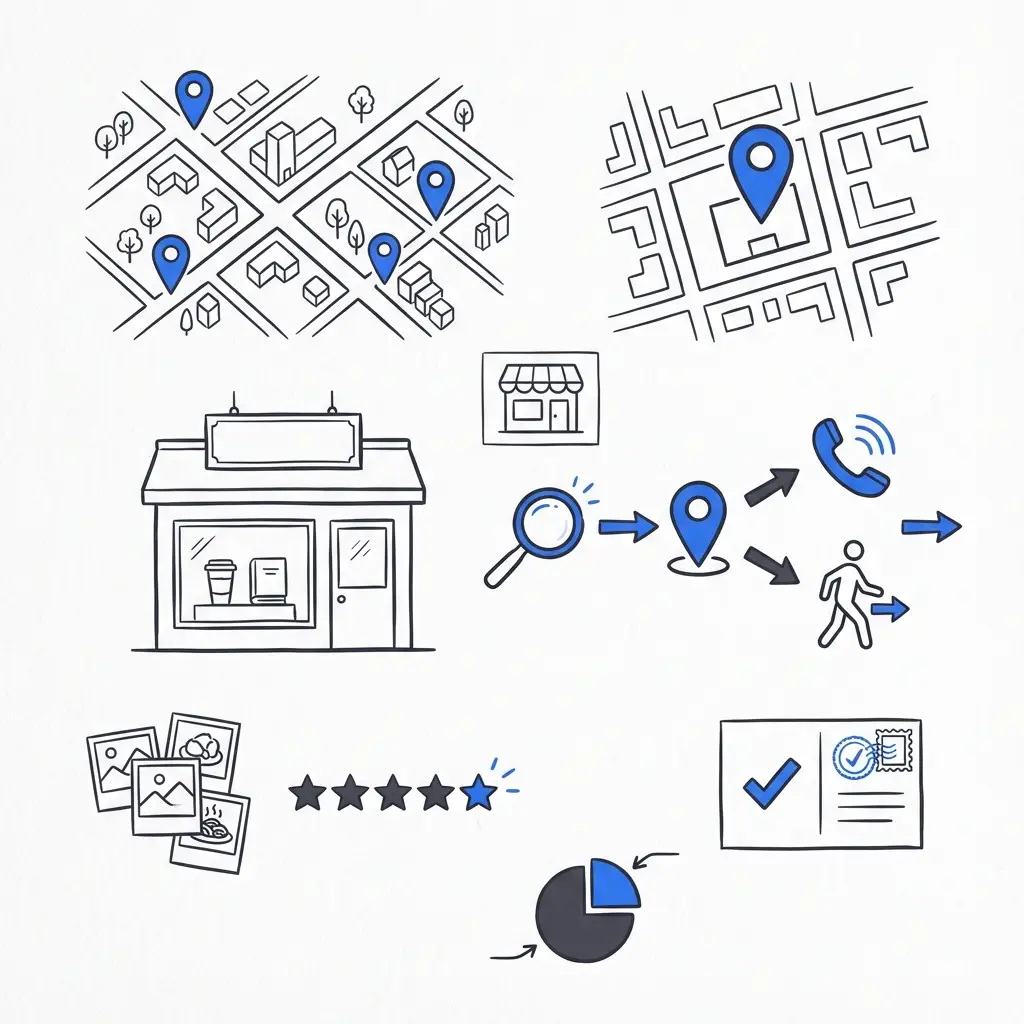
Your Google Business Profile is the digital front door for neighborhood searches. When potential clients search for how do I advertise my painting business or “house painter near me,” a complete and well-maintained profile invites clicks and calls. Make sure your profile includes:
Clear service list: interior painting, exterior painting, cabinet refinishing, deck staining, commercial painting.
Recent photos: show completed rooms, trim close-ups, and before-and-afters—not just tools or logos.
Hours and service area: list the towns and neighborhoods you serve. Use language homeowners use in conversation—“kitchen refresh,” “trim repaint,” “exterior touch-up.”
Regular review activity: ask happy customers to leave short reviews and respond to all reviews promptly.
Local-first ads: why Google Local Services Ads should be first on your list
One of the best paid channels for painters is Google Local Services Ads (LSA). LSA connects local people actively looking for quick help with pre-screened, local pros. If you’re wondering how do I advertise my painting business with the best chance of leads that convert, set up LSA first. It often brings higher-intent leads than standard search ads.
LSA is not perfect everywhere – costs per lead vary by metro and season – but it’s usually the most direct way to reach homeowners who want a local pro now. Start the eligibility process early (background checks, insurance verification), and use the first 30–60 days to measure lead quality and cost. Read more about LSA setup at Google Local Services Ads for Painters and Optimize Google Local Service Ads for Painters.
Paid search and Meta: volume and visual proof
After LSA is running, use paid search and Meta (Facebook & Instagram) to scale. Paid search catches people with clear intent; Meta helps build awareness with strong visuals—before-and-after carousels, short cabinet transformation videos, and neighborhood-targeted ads.
When you run Meta campaigns, focus on creative that answers the homeowner’s question before they click: show a tidy finished room, a clear cost range, and an easy next step. That reduces friction and boosts conversion. Keep ad copy simple and local—mention towns, neighborhoods, and the types of jobs you prefer.
Landing pages that convert
A single focused landing page beats a long generic homepage for ad traffic. A good painting landing page answers three questions fast: who are you, what can you do, and how does the homeowner get started?
Include:
Strong local headline (“Kitchen cabinet painting in [town]”)
Visual proof—before & after images and a quick project story
Clear CTA—click-to-call and a short lead form (name, phone, brief project description)
Trust signals—reviews, badges, brief warranty or guarantee blurb
How to handle incoming leads like a pro
The fastest reply usually wins. If you’re asking yourself how do I advertise my painting business and then plan to wait hours to respond, you’ll miss jobs. Set a standard: answer texts within a set time, call back quickly, and confirm appointments with a reminder message.
If you aren’t ready for a full CRM, use simple tools: a shared calendar, Google Sheets to track leads, or a lightweight scheduling app. Standardize a short phone script that moves callers from inquiry to booked estimate quickly (script samples are below).
A 90-day test-and-scale plan
The best way to learn what works in your market is to run small tests, early and often. Here’s a straightforward 90-day plan designed to validate channels before you scale.
Days 1–14: foundation
Claim and fully fill out your Google Business Profile. Upload at least 8–12 strong photos of finished work. Start the LSA verification process. Build one clean landing page for your primary service (interior or exterior) and set up simple tracking—use a phone number that forwards to you and a UTM on your contact form.
Days 15–45: test paid channels & referral systems
Launch LSA once eligible. Start a small paid search campaign and a small Meta campaign to capture local interest. Keep budgets conservative—enough to capture 20–40 leads so you can judge conversion and average ticket size. Run a review-generation push: ask recent customers for Google reviews via a short follow-up SMS with a direct link.
Days 46–90: double down on winners
Scale what’s profitable. If LSA shows strong conversion and acceptable CPL when adjusted for average ticket value, increase spend slowly. If Meta yields strong booked jobs from visual creatives, invest more in your best-performing videos and carousels. Keep documenting lead source, cost, and final invoice value for every booked job.
Run a short, measurable test: spend a limited budget to capture 20–40 leads across LSA, paid search, and Meta; track source, booked rate, and final job value for each lead—compare cost per booked job and net profit to decide which channel to scale.
Low-cost organic tactics that keep working
Paid ads help you find customers fast. Organic tactics build long-term value at low cost. If you’re still thinking how do I advertise my painting business, don’t forget to invest in referral and repeat-customer systems:
Referral program: Offer simple rewards like a discount on future work or a gift card when a past customer refers someone who books. Make it easy: provide a one-line message customers can forward or a form to submit referrals.
Regular review requests: Ask for feedback after each job using a one-click link to your Google profile. Respond to reviews with thanks and short details about the project. See proven strategies for residential lead generation at Residential Painting Lead Generation.
Project stories and micro-case studies: Short narratives (2–3 sentences) about a challenge, the solution you used, and the homeowner’s reaction help both search engines and humans understand your strengths.
Simple scripts and templates
Having short scripts makes follow-up consistent and faster. Here are practical examples to use from day one:
Phone opener: “Hi, this is [Your Name] from [Business]. Am I speaking with [Customer Name]? Thanks. Can you tell me one sentence about what you want painted? I can offer a free on-site estimate—when’s a good time this week?”
Text follow-up after estimate: “Thanks, [Name]. I’ll email the estimate within 24 hours. If you have questions, reply here and I’ll get back quickly.”
Review request: “Hi [Name], thanks for letting us paint your [room]. If you enjoyed the work, a quick Google review helps our small business. Here’s the link: [short link]”
Offline tactics that still win neighborhood jobs
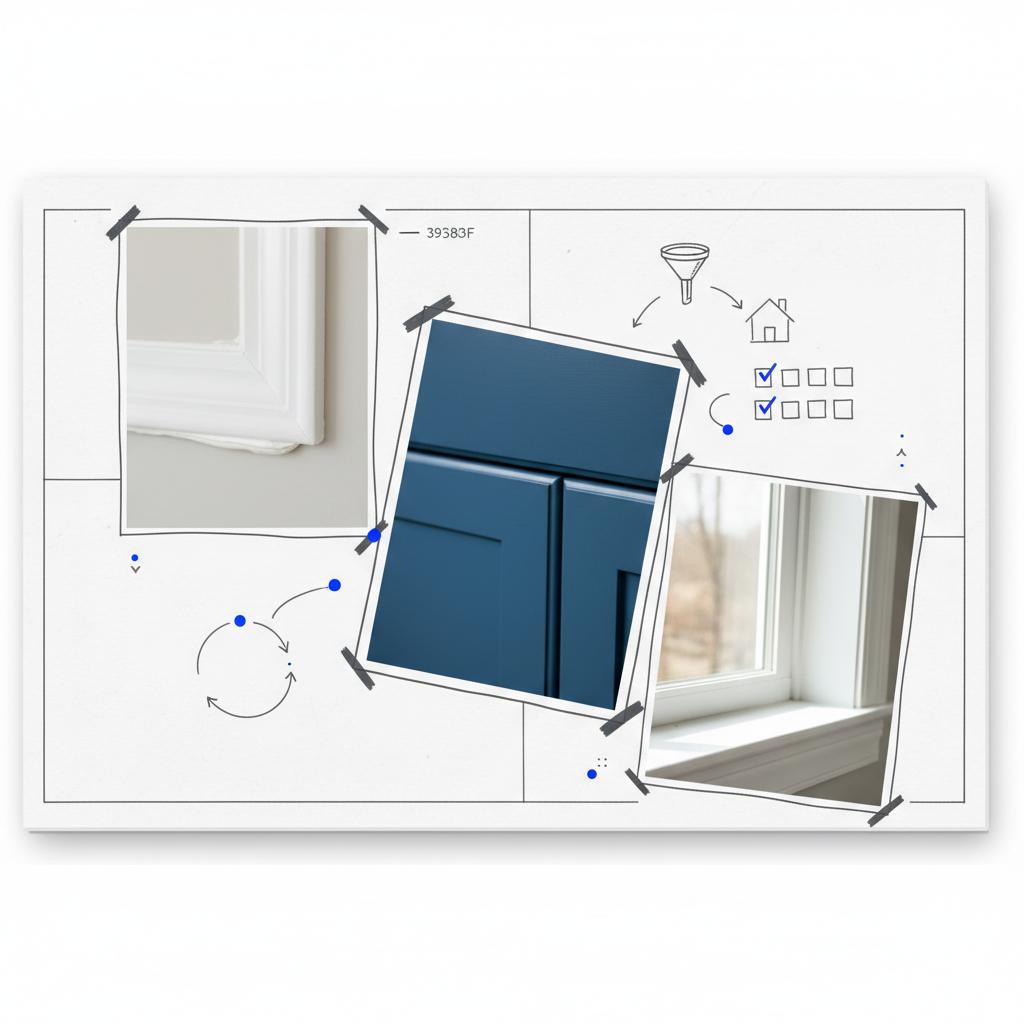
A wrapped van, tidy yard signs, and well-designed door-hangers still work. They cost little relative to their visibility and send an important signal: you show up and take pride in your brand. A wrapped van communicates professionalism and can be the reason a neighbor calls after seeing you parked on the street.
Timing matters: drop door-hangers for exterior campaigns in spring and fall; distribute flyers for interior work in late winter when homeowners plan spring projects. Keep offline targeting tight—only distribute within neighborhoods you want to work in.
Budget examples and simple ROI math
Use uncomplicated math to evaluate channels. Track these numbers for each channel: cost per lead (CPL), conversion rate to booked job, average job value, and gross margin on those jobs.
Example: If LSA cost per lead = $60, conversion = 20% (1 booked job per 5 leads), average ticket = $2,000, and gross margin = 40%, then:
Revenue per booked job: $2,000
Gross profit per booked job: $800 (40% of $2,000)
Cost to get that booked job: $300 (5 leads at $60)
Net profit: $500 per booked job (gross profit minus ad spend). That’s a healthy return. If the math was worse, you’d adjust targeting, landing page, or creative.
Metrics to track and a simple dashboard
Track the few metrics that actually matter: leads, booked jobs, average ticket, cost per lead, conversion rate, and response time. A simple spreadsheet will get you started—one tab for leads, one for booked jobs with final invoice, and another for campaign spend.
Set a goal for response time—aim for under 30 minutes for inbound leads during work hours. Even shaving response time by an hour can dramatically increase your booking rate.
Hiring and capacity: how to scale without losing quality
When demand grows, capacity bottlenecks can kill reputation. Scale carefully: hire a helper, bring on a reliable subcontractor, or use temporary crews for overflow. Keep quality checks in place: spot inspections, photo documentation of finished work, and a short customer satisfaction call a few days after completion.
Advanced local SEO tactics
Beyond your Google Business Profile, build local pages that speak to specific services and neighborhoods. For example, create pages like “kitchen cabinet painting in [neighborhood]” with short project stories and photos. These pages help when homeowners search with neighborhood terms.
Use consistent NAP (name, address, phone) across all online listings and encourage citations on local directories. Short, local press or community posts (e.g., sponsoring a little league team) can create backlinks and local credibility.
Sample ad copy and creative ideas
Here are simple ad copy examples to test:
LSA headline: “Cabinet Painting — Free Local Estimate | Call Now”
Paid search: “Top-Rated Painters in [Town] — Free In-Home Quote”
Meta carousel copy: “Before → After: Kitchen Cabinets Restored in [Neighborhood]. See the full job.”
Creative tips: include a short 15–30 second clip of a visible transformation, a quick pan of a finished room, or a swipeable before-and-after carousel. Use close-up shots of trim lines, clean drop cloths, and branded vans parked outside to show professionalism.
Example case expanded: Maria’s story
Maria, a painter in a mid-sized suburb, asked herself, “how do I advertise my painting business so I can focus on painting and not chasing leads?” She started small: completed her Google profile, uploaded 10 photos, and applied for LSA. Within a month she was getting steady LSA leads. Her tracking showed LSA leads converted at 20% with an average ticket of $2,500.
Maria made two smart moves: she added a referral bonus for past customers and began a weekly social post showing a cabinet transformation. Within three months she had a predictable flow of work and could hire one helper. Her growth was measured—and sustainable.
Common mistakes painters make (and how to avoid them)
Don’t spread budget too thin. Don’t ignore lead follow-up. Don’t assume online presence is a one-time setup—update photos and ask for reviews regularly. And don’t scale before nailing down your operational process: inconsistent quality or slow response will undo the best ad campaigns.
Where Agency VISIBLE can help
If you’d rather bring in a focused partner to speed setup and testing, Agency VISIBLE helps small businesses claim local listings, set up Local Services Ads, and run initial paid-media tests so you waste less time on trial-and-error.
Working with a small, practical agency can be a time-saver—especially if you prefer to spend your hours painting, not learning ad platforms. For examples of past work, see our projects. That said, the essentials in this guide are doable for any owner willing to be consistent.
Scaling responsibly and protecting your reputation
When a channel proves profitable, increase spend slowly and keep an eye on job quality. Bring on vetted subcontractors for overflow and maintain the same quality checks you used when you were smaller. Reputation scales more slowly than leads—protect it.
Seasonal tactics and timing
Match marketing to seasons: push exterior painting and deck staining in spring and early summer; market interior refreshes and warranty touch-ups in late fall and winter when homeowners plan spring projects. Use local weather data to time campaigns and set realistic windows for exterior work.
Templates you can copy today
Use these quick templates to speed setup:
Landing page headline: “Local Painters in [Town] — Free in-home estimate in 48 hours”
Short project story: “Old oak cabinets were dulled by years of wear; we prepped, primed, and used a durable enamel finish—homeowner reaction: ‘It feels like a new kitchen.’”
Door-hanger message: “Freshen your home this spring — local painters available for free estimates. Call [phone].”
What to do next: a short checklist
Day one: claim Google Business Profile, add 8–12 photos, start LSA verification.
Week one: build one focused landing page and implement simple tracking (unique phone, UTM tags).
Week two–six: run LSA and small paid tests; collect 20–40 leads to evaluate.
Week six–twelve: scale the best channel, start a referral program, and hire if needed.
Measuring success and iterating
Marketing is iterative. Use your first 30–60 days as an experiment. If a channel gives you fewer leads but bigger jobs, scale it. If a channel gives lots of low-value leads, cut it back and focus on referral and repeat-customer strategies while you refine targeting.
Final practical notes and quick scripts
Keep phone replies short and local. Be ready to answer: when can you come by, what’s included, and what payment methods you accept. Offer a short guarantee—“we leave your home as tidy as we found it”—and ask for a photo and a quick review at job completion.
Start simple: Google Sheets + shared calendar + click-to-call phone number. Then consider lightweight CRM or scheduling tools like Housecall Pro, Jobber, or a simple appointment plugin for your site. Use any tool that helps you respond quickly and track outcomes.

Wrapping up: the local-first difference
If your question is still how do I advertise my painting business, the answer is local-first, test-driven, and repeatable. Focus on the neighborhoods and job types that fit your strengths, claim your local listings, test LSA and a small set of paid channels, and build referral systems that compound over time.
Ready to get visible and book more local painting jobs?
Ready to stop guessing and start getting visible? If you want a quick consult to get Local Services Ads set up or a simple 30-day plan, contact Agency VISIBLE for a short, practical conversation about your market and next steps.
Marketing a painting business is not glamorous, but it’s measurable: track a few numbers, respond fast, and keep your quality high. When you do that, the phone starts to ring and the business grows in a steady, manageable way.
For a small painting business, start small and measurable. Budget $300–$1,000/month for testing across Local Services Ads, paid search, and Meta—aim to gather 20–40 leads in your first 30–60 days to measure cost per booked job and average ticket. Once you validate a profitable channel, scale that channel gradually and keep 10–20% of monthly revenue aside for marketing reinvestment.
Google Local Services Ads are often the most direct way to get high-intent local leads for painters because leads come from people actively seeking a local pro. That said, LSA performance varies by market. Use the first 30–60 days to test LSA alongside paid search and Meta. If LSA produces better conversion and job value in your area, prioritize it; otherwise shift budget to the channel that produces profitable booked jobs.
Yes. Agency VISIBLE offers practical local setup services—claiming and optimizing local profiles, guiding LSA eligibility, and running early paid tests. If you prefer to focus on jobs instead of tech setup, a partner like Agency VISIBLE can speed the process and reduce trial-and-error. Contact them for a short consult to see what’s sensible for your market.