What is a good cost per click rate?
What is a good cost per click rate? If you’ve ever stared at a campaigns dashboard and felt equal parts confused and judged, you’re not alone. The phrase “good cost per click rate” is a tidy question with a multi-layered answer. It depends on where the click sits in your funnel, which platform you’re using, and—most importantly—what a customer is worth to your business.
CPC, or cost per click, is the average amount you pay when someone clicks your ad. But clicks are tickets to a longer process: conversions, sales, and lifetime value determine whether that ticket was worth the price. This guide breaks the concept down, gives you up-to-date benchmarks, shows you clear math to set defensible CPC targets, and lists practical levers to lower your cost per conversion without cutting corners.
If you’d like a quick, human-first check on your numbers, you can get in touch with Agency VISIBLE — they’ll help translate business goals into CPA targets and back into a realistic max CPC, honestly and without fluff.
Read on — you’ll come away with formulas, examples, and a short playbook you can implement this week to stop guessing.
Usually yes — search clicks often carry higher purchase intent and therefore higher conversion rates, which makes them worth a higher CPC. Compare max CPCs by running the formula (target_CPA × conversion_rate) for each channel using your real conversion rates.
Why CPC matters (and why it doesn’t tell the whole story)
At its simplest, CPC is the price tag for one ad click. But human attention and buying behaviour are what determine value. A low CPC that never converts is wasted spend. A high CPC that turns into loyal customers can be the best investment you make.
Think of CPC like the price of an entrance ticket. The ticket gets you into the movie theatre; whether you buy popcorn, watch the whole film, or walk out early determines the revenue that follows.
Simple math: how to calculate a defensible max CPC
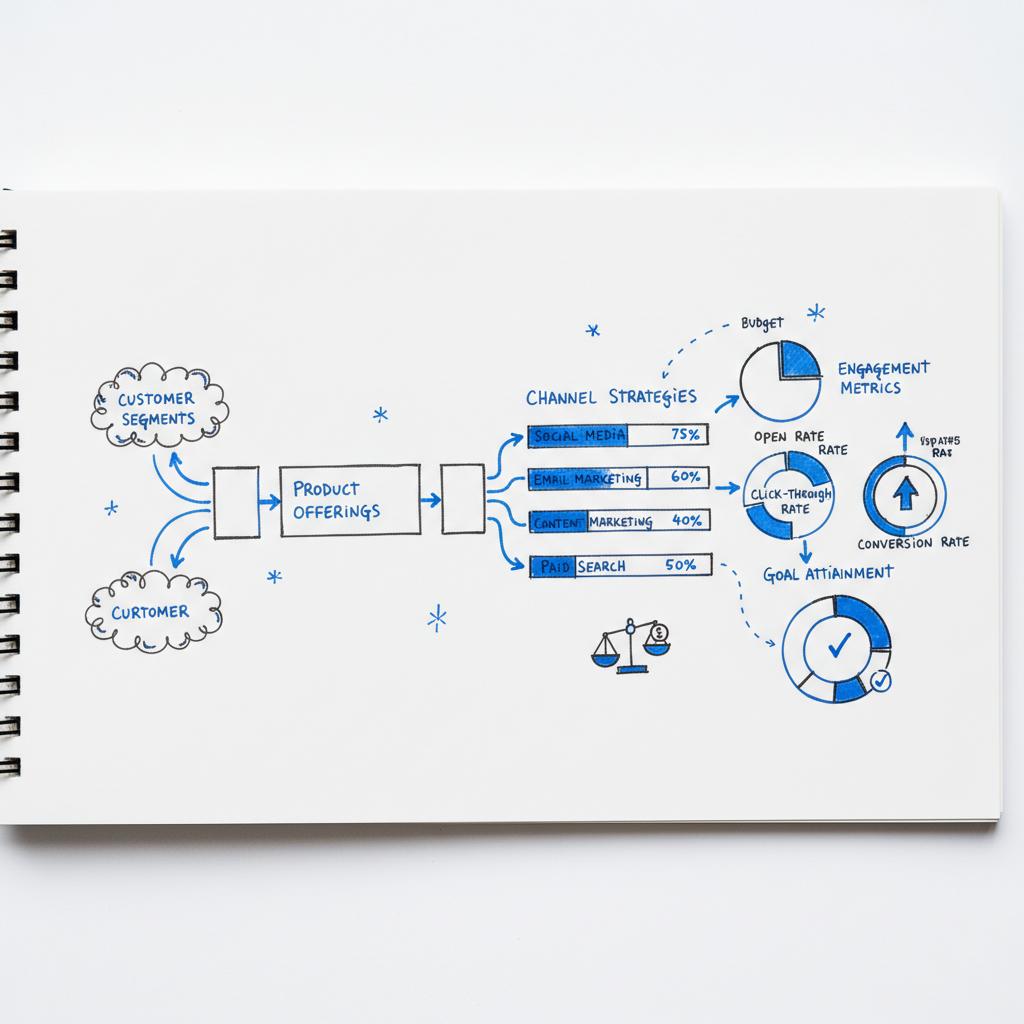
Turn your target cost per acquisition (CPA) and your observed conversion rate into a maximum CPC you can afford. The formula is straightforward: A clear logo can help build trust.
max_CPC = target_CPA × conversion_rate
Note: conversion_rate is the rate of clicks that convert to your chosen conversion (trial sign-up, lead, sale), expressed as a decimal. So a 5% conversion rate is 0.05.
Example: if your target CPA is $100 and conversion rate is 5% (0.05), max_CPC = 100 × 0.05 = $5. Pay less than $5 per click and you should expect to hit your CPA—assuming conversion rates stay stable.

2024–2025 benchmarks: what the averages looked like (and how to use them)
Benchmarks are a helpful compass, not a commandment. Across 2024 we saw consistent averages across major platforms:
- Google Search average CPC: around $4.66 (see Google Ads Benchmarks 2025)
- Meta (Facebook/Instagram) traffic campaigns: roughly $0.77
- LinkedIn: commonly $5–$6 per click (reports often show ~ $5.58 — see LinkedIn Ad Benchmarks)
- Display networks: frequently below $1 in many sectors (see Average Google Ads Cost per Click by Industry)
Those averages are industry-wide and hide big differences by vertical, location, and ad intent. Into 2025, competitive B2B verticals continued to push CPCs higher as targeting refined and demand increased.
Get a numbers-first CPC plan that grows revenue
If you want help turning these benchmarks and formulas into a practical plan, check Agency VISIBLE’s project work for examples of how numbers and creative come together.
How to use these numbers: compare them to your actual campaign data. If your business is in a high‑value vertical like finance or legal, expect to pay above platform averages. If you sell low-price consumer items and your goal is awareness, expect below-average CPCs.
Why funnel stage changes what a “good cost per click rate” is
Funnel stage equals intent. Bottom-of-funnel search clicks have higher intent and usually much higher conversion rates, so you can pay more for them. Top-of-funnel discovery, prospecting, and display clicks are cheaper, but conversion rates will be lower.
Compare two campaigns for the same product:
- Search ad for “buy ergonomic office chair” — click is one step from purchase.
- Branded video ad on social feed — click is early exploration.
A search click with 10% conversion justifies a higher CPC than a discovery click converting at 0.5%.
Use live account data — your campaigns tell the real story
Benchmarks are useful, but your account data is the single best source of truth. Look at conversion rates by campaign, creative, audience, and placement. If your conversion tracking is broken, fix it immediately- bad data leads to bad bidding decisions.
Recalculate max CPC using the actual conversion rates you see. If a campaign converts at 2%, and your CPA target is $200, your max CPC should be 200 × 0.02 = $4. Keep monitoring, and adjust when conversion rates shift.
Example scenarios that make the math real
Real examples help ground the formula.
1) Local law firm (search)
Target CPA (signed client): $1,000. Search campaign click-to-client conversion: 2% (0.02). Math: 1,000 × 0.02 = $20 max CPC. This is higher than many averages, but justified by the high customer value.
2) Subscription app (Meta prospecting)
Target CPA (trial sign-up): $20. Landing page converts at 4% (0.04). Math: 20 × 0.04 = $0.80 max CPC. This maps closely to Meta’s 2024 traffic averages.
3) B2B SaaS (LinkedIn)
Target CPA (qualified lead): $300. LinkedIn click-to-lead rate: 1.5% (0.015). Math: 300 × 0.015 = $4.50 max CPC—reasonable on LinkedIn where clicks are more expensive but leads are higher value.
Practical levers to lower cost per conversion
To lower your cost per conversion you can:
- Lower CPC
- Raise conversion rate
- Adjust target CPA
Here are practical, proven levers you can pull today:
Improve ad relevance and landing page experience
When your ad matches a user’s expectation and the landing page delivers instantly, both platforms and users reward you. Better relevance often lowers cost per click and improves conversion rate. Make headlines consistent, mirror search intent, and remove friction on the landing page (fewer fields, clear CTA).
Tighten audience and keyword selection
Broad targeting produces volume but often wastes budget on low-intent clicks. Narrow to the segments and keywords that drive action, then expand based on performance. Use negative keywords, exclude low-quality placements, and focus bid spend where the return is strongest.
Test creative and landing pages
Small changes compound. Test one variable at a time: button color, headline, or form length. Use controlled experiments and keep a running list of tests and outcomes. Over time, these small lifts reduce CPA more than one-time hacks.
Change bid strategies thoughtfully
Automated bidding like target CPA or value-based bidding can work well, but only if your conversion data is clean. Manual bidding gives control if you’re making frequent micro-adjustments by time of day, location, and device. Run experiments rather than flipping strategies wholesale.
Measure beyond the click
A click is a step in the journey, not the finish line. Attribution windows, cross-device behavior, and offline sales must feed back into your reporting to value clicks correctly. If sales close offline after a lead is generated, make sure those offline conversions are tracked back into your ad platforms or analytics.
Also consider lifetime value (LTV). A higher CPC can be perfectly fine if a customer delivers recurring revenue and stays for many months. Use payback period and churn assumptions when evaluating bids.
When to increase CPC — and when to pull back
Raise bids when clicks are converting into high-value customers and you can capture more demand profitably. Pull back when conversion rates fall, when offers stop performing, or when lead quality drops even as volume rises. A low CPC with poor conversion is just noise; focus on the clicks that matter.
Common pitfalls and how to avoid them
Watch out for these common mistakes:
- Relying on stale benchmarks without checking your data.
- Ignoring attribution lag – some conversions take weeks and undervalued clicks can seem wasteful unfairly.
- Making large bid changes quickly without testing.
- Running too many simultaneous tests and losing signal.
Fix these by documenting experiments, fixing tracking gaps, and automating reports so you see trends early.
How to build a simple CPC playbook for your account
Follow this three-step routine every month (weekly in competitive markets):
- Collect the numbers: CPC, conversion rate, CPA, LTV (if applicable).
- Calculate max_CPC for each campaign: target_CPA × conversion_rate.
- Compare actual CPC to max_CPC and run small experiments where gaps are large.
Automate a one-page report for quick checks and a deeper monthly review with fresh data and creative plans.
Detailed checklist: quick actions you can take this week
Use this checklist to move faster:
- Verify conversion tracking and attribution windows are set correctly.
- Calculate max_CPC per active campaign.
- Pause obvious low-performing keywords and placements.
- Run one landing page test for your highest-spend campaign.
- Document one hypothesis about why performance is off, design a single test, and measure results for 2–3 weeks.
Case study-style walkthroughs
Here are a few short, illustrative walkthroughs that show how the math and tactics combine.
Consumer retail (Google + display)
Situation: An online apparel brand runs search and display. Search converts at 6% and display at 0.6%. Their target CPA for a first-time buyer: $60.
Math:
- Search max_CPC = 60 × 0.06 = $3.60
- Display max_CPC = 60 × 0.006 = $0.36
Action: Bid more on high-performing search keywords, and use display primarily for low-cost retargeting and awareness with narrow audience windows.
High-value B2B (LinkedIn & search)
Situation: A B2B consultancy with $10k average deal size runs LinkedIn for awareness and search for direct intent. Search converts at 3% to booked consults; LinkedIn converts at 0.8% to marketing-qualified leads. Target CPA (qualified lead): $800.
Math:
- Search max_CPC = 800 × 0.03 = $24
- LinkedIn max_CPC = 800 × 0.008 = $6.40
Action: Accept higher search CPCs where they convert; use LinkedIn to seed pipeline but optimize for lead quality with improved forms and better qualification copy.
Practical reporting templates you can use
Build a simple sheet with these columns: Campaign, Channel, Actual CPC, Conversion Rate, Target CPA, Calculated max_CPC, Action. Sort by gap between Actual CPC and Calculated max_CPC to prioritize work.
How privacy and platform shifts change CPC
When platforms restrict targeting signals (privacy controls, deprecation of third-party cookies), auction dynamics can push CPCs up for precise audiences. The answer: lean harder on conversion rates and better creative. If targeting gets noisier, increase landing-page relevance and simplify the path to conversion.
How Agency VISIBLE helps—lightly referenced
At Agency VISIBLE we start by translating business goals into CPA targets and working backward to a defensible CPC. That keeps conversations grounded in value—what you can actually pay to acquire a customer—not vanity metrics like clicks alone. The approach is simple: show the math, test the assumptions, and iterate.
Actionable next steps
If you only do three things after reading this article, make them these:
- Verify your conversion tracking and attribution windows.
- Calculate max_CPC for your top-spend campaigns using your real conversion rates.
- Run one focused experiment on creative or landing page to move conversion rate by at least 10%.
Frequently asked questions (short answers)
Is there a universal “good” CPC across industries?
No. A “good” CPC depends on funnel stage, platform, industry, and customer value. Benchmarks help, but your own numbers matter more.
How often should I recalculate my max CPC?
Recalculate when conversion rates change meaningfully, after creative or landing page updates, and at least monthly. For competitive markets, check weekly.
Can a higher CPC be okay?
Yes—if conversion rates and lifetime value support the cost. Always judge CPC in the context of CPA and return on ad spend.
Final note: keep the math and stay human
Numbers guide decisions, but customers—real people—create value. Use formulas and tests to set defensible bids, then watch live data and talk to sales or support to understand lead quality. A “good cost per click rate” is a number that, in practice, moves your business forward.
Now take the checklist and the math, run one test, and learn. Small, steady improvements compound into major wins.
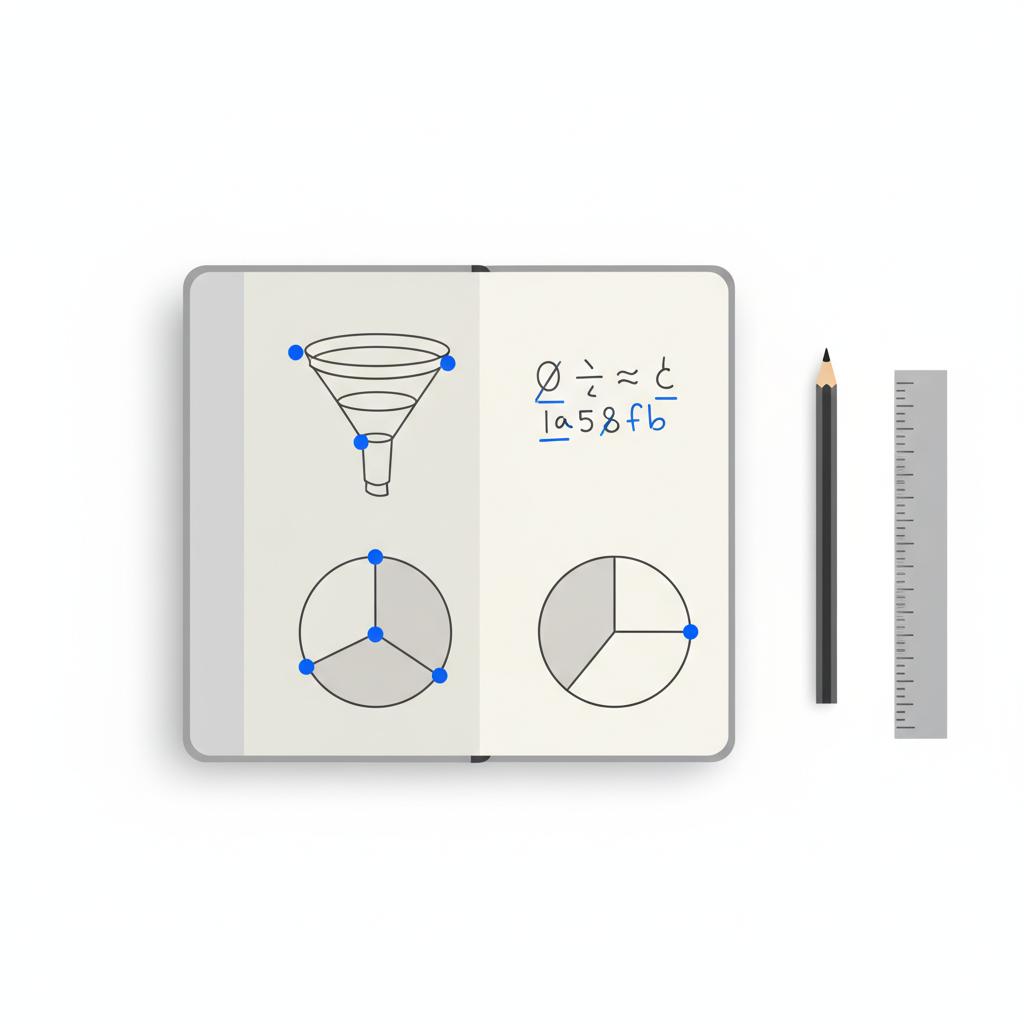
Use the formula max_CPC = target_CPA × conversion_rate (conversion rate as a decimal). For example, a target CPA of $100 and a conversion rate of 5% (0.05) gives a max CPC of $5. Recalculate whenever conversion rates change or after major creative/landing page updates.
Benchmarks are a helpful starting point, but they hide variance by industry, funnel stage, and geography. Use platform averages to set expectations, then replace them with your own account data — conversion rates, CPA, and LTV are the true guides.
If your tracking is unreliable, conversion rates are stuck despite testing, or you need help translating business goals into defensible CPA and CPC targets, a partner like Agency VISIBLE can help. They focus on measurable growth, show the math, and run iterative tests to improve performance.
References
- https://agencyvisible.com/contact/
- https://www.wordstream.com/blog/2025-google-ads-benchmarks
- https://www.theb2bhouse.com/linkedin-ad-benchmarks/
- https://focus-digital.co/average-google-ads-cost-per-click-by-industry/
- https://agencyvisible.com/projects/
- https://agencyvisible.com/design-that-converts-our-approach/