Should a handyman have a website?
If you answer “yes” or “maybe”, you’re already thinking like a smart business owner. A handyman website is more than a digital business card — it’s the place that proves you can be trusted, shows real work, and makes it easy for a customer to book. In a world where most homeowners search on their phones, a good handyman website can be the difference between a call and a missed opportunity. See why a website still matters.

Why a focused online presence matters
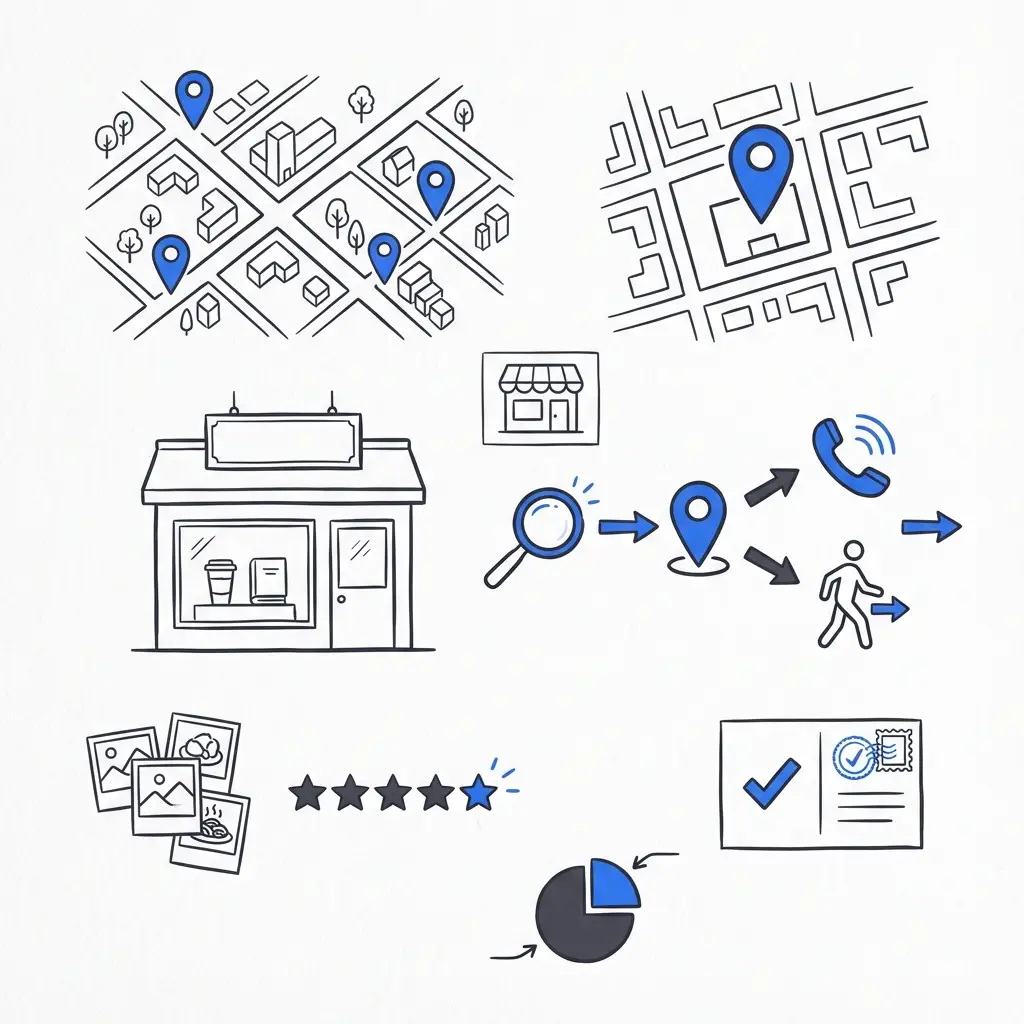
When someone types “local trades near me” or looks up repairs on a map, the first touch is often a listing like Google Business Profile. That listing gets people interested. The handyman website is where interest becomes action: it shows examples, explains prices, and offers a clear booking path. Think of it as the warm, well-lit interior of your van — it either reassures a homeowner or drives them to the next name on the list.
How customers find and decide
Most homeowners start with a map or a short search. That’s why a clean Google listing plus a fast, mobile-friendly handyman website is the most practical combo. The listing brings the attention; the website converts it into a call, form fill, or booked job. Without a site, you leave questions unanswered and trust unbuilt.
Key takeaway: a listing opens the door; a handyman website gets the job.
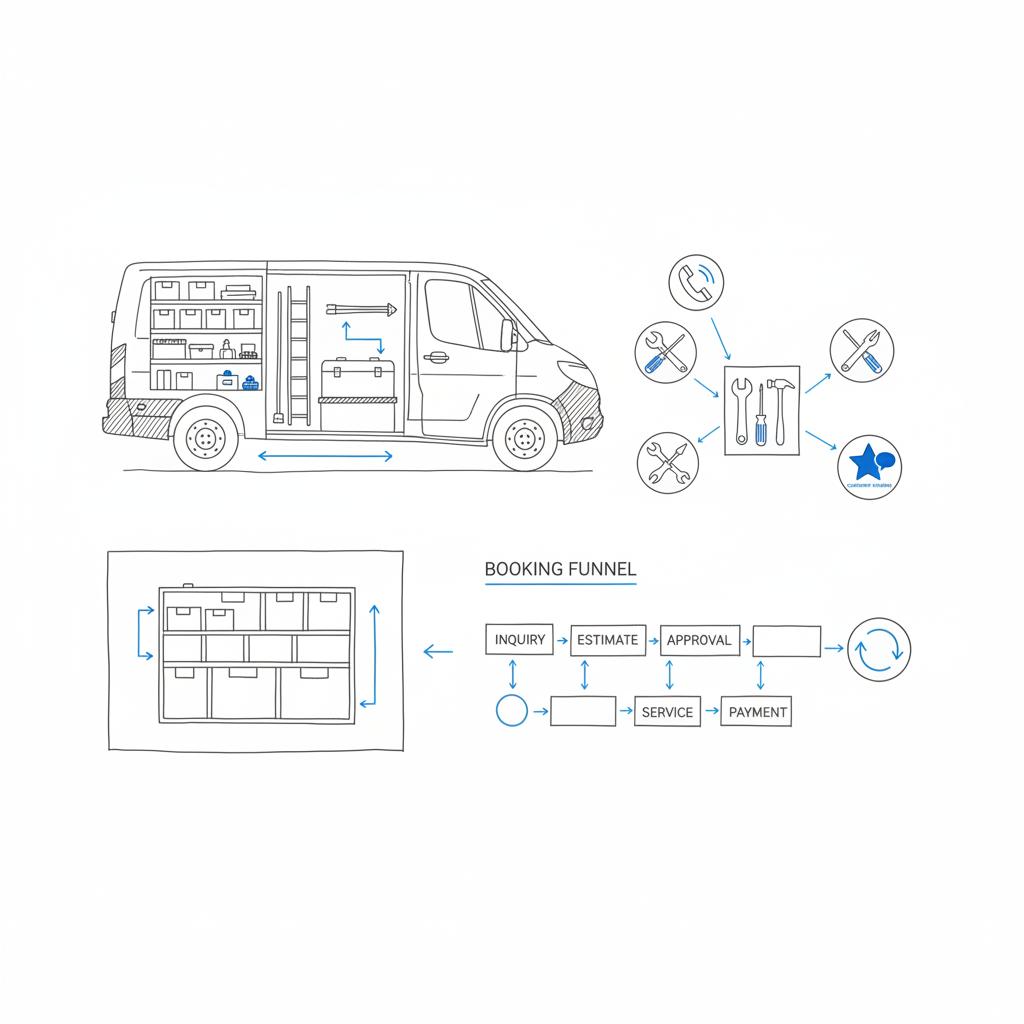
Expectations have shifted rapidly. Visitors now assume pages load quickly on a phone, they can tap to call, and they can see recent reviews and before-and-after photos. If your site looks like it was built in 2010, many potential customers will move on. Instead, aim for clear contact options, simple pricing clues, quick proof of your work, and a fast booking path. A clear, recognisable logo can build quick trust.
Mobile-first is essential
More than half of local searches happen on mobile devices. A slow, hard-to-read page kills momentum faster than anything else. That’s why click-to-call, visible phone numbers, and a short booking form are non-negotiable on a handyman website. If someone can’t contact you in two taps, they’ll call the next provider.
What content converts
Visitors want three things: proof you can do the work, clarity about pricing or how to get an estimate, and an easy way to book. Short testimonials with job type and suburb, several before-and-after photos, and local service pages (e.g., “cupboard repairs in Northbridge”) perform best. Make those elements easy to find on the handyman website. For more on SEO benefits for handyman services, see this guide: SEO benefits for handyman services.
Many handymen prefer to keep marketing simple and get help from a team that understands local services. If you’d rather hand the technical work to someone, consider starting a conversation with Agency VISIBLE — they specialise in visibility for small service businesses and can help make a handyman website that actually drives calls rather than just looking nice.
What a handyman website really needs
No need for dozens of pages. Local service sites convert better when lean and direct. Here are the core pages and elements every handyman website should include:
Essential pages and elements
Homepage: Clear value statement, phone number, and one-call booking button.
Services: Short, localised descriptions — name the suburbs and types of work.
Portfolio / Before & After: Real photos and short captions.
Testimonials: Recent, specific reviews with job details.
Contact / Booking page: Click-to-call, short form, estimate request.
Pricing cues: Example prices or a call-out fee to manage expectations.
Small technical steps that matter
Don’t ignore the little bits: LocalBusiness schema, compressed images for mobile speed, and click-to-call links. These simple technical moves make your handyman website more visible in search and more usable for customers.
Costs explained – from shoestring to pro build
How much does a handyman website cost in 2025? It ranges widely based on who builds it and what you need:
Low-cost DIY route
Using a builder template with a basic domain and hosting can cost under $200 in the first year. It’s fast and cheap, but you’ll trade off custom copy, unique photography, and technical setup. For a one-person operator who wants a presence quickly, this is a sensible start.
Freelancer or contractor
A well-done freelancer build often sits in the $1,500–$3,500 range. You get better layout, stronger copy, and some setup for booking or forms. It’s a balance of cost and quality and is ideal when you want a polished site without ongoing agency fees.
Agency builds
Professional agency projects for service businesses usually range from roughly $3,000 to $10,000 for the initial build. The higher investment includes strategy, professional photography, optimized content, and technical SEO setup. If the site’s job is to drive higher-value work and reduce time spent handling calls, an agency-led approach often pays back quicker. See examples of agency work on their projects page.
Maintenance and ongoing costs
Monthly maintenance or marketing can be $50–$500 depending on how much you want ongoing optimisation, security, or paid ads. Factor these into your cashflow when you decide between DIY, contractor, or agency.
Quick ROI example
Let’s put numbers to it. If your average job is $250, and a well-made handyman website plus a cleaned-up GBP brings five extra booked jobs a month, that’s $1,250 monthly. A $3,000 professional site can pay for itself in a few months. If your average job is $600, the math is even more favourable. The deciding factors are lead volume, conversion rate, and how long you expect the site to bring business.
DIY, hire a contractor, or work with an agency?
Answer four simple questions and you’ll know the right path: How many leads do you want each month? What is your average job worth? How much time do you have for online admin? What’s your budget for build and monthly management?
If you expect a couple of leads a month and your jobs are small, a DIY approach plus a strong Google Business Profile might be enough. To scale or win higher-value jobs, consider a contractor or agency.
Why an agency can be the smarter choice
An agency like Agency VISIBLE focuses on visibility that turns into revenue, not just a pretty site. Agencies handle copy, photography direction, technical SEO, and paid campaigns when needed. That saves you time and often returns value faster – especially if you prefer to focus on jobs instead of websites.
Local SEO that actually moves the needle
Local SEO is less about fancy tactics and more about consistent, steady actions. Keep your Google Business Profile accurate and encourage real reviews. Use the same name, address, and phone number across directories. On your handyman website, use local language and mention suburbs or neighbourhoods you serve. Read about hidden benefits of effective SEO strategies here: hidden benefits of effective SEO strategies.
Structured data and practical SEO steps
Add LocalBusiness schema to show search engines where you operate and what you do. Use short, clear service pages, compress images for speed, and make sure the phone number is tapable on mobile. These practical steps boost your local visibility and make your handyman website more effective.
Alternatives that work for very small operators
A website is powerful, but not always mandatory. Some solo handymen get steady work from referrals, social pages, or paid ads. If you’re fielding repeat local work and don’t want the overhead, a strong GBP plus Facebook posts and targeted ads can be enough.
But if you want to scale, make pricing transparent, or capture leads without depending on referrals, a handyman website becomes a controllable, owned asset.
How to capture the lead – small details that make a big difference
A few small, practical elements on a handyman website increase conversions dramatically:
- Click-to-call buttons and short booking forms (only essential fields).
- Clear mention of call-out fees or same-day options if you offer them.
- Short, specific testimonials: location + job type + brief result.
- How it works: what happens after someone fills a form (reply time, text confirmation, arrival window).
These expectations reduce unnecessary calls and make your booking flow smoother.
Homeowners look for trust first: a clear phone number, recent real photos of work, and a short, specific testimonial. These three elements in the top section of a page reassure a visitor faster than long copy or fancy design.
Measuring success without dashboard overload
You don’t need complicated analytics. Track how many calls and form submissions you get, how many of those convert to jobs, and the average ticket value. Even simple tracking of click-to-call events and form completions gives a clear sense of lead flow from your handyman website.
Simple metrics to watch
Phone calls per month, booked jobs from the site, average job value, and cost to run the website. From that you can calculate lead value and see if the investment makes sense.
Common mistakes and how to avoid them
Watch for these repeated mistakes that cost leads:
- Buried contact details — make the phone and booking options obvious.
- Stock photos that feel fake — use real job photos where possible on your handyman website.
- Outdated GBP info — wrong number or hours lose business fast.
Fix these rapid wins first, then refine copy and add local pages.
A realistic timeline to go live
DIY: a weekend if content and photos are ready.
Contractor: 2–6 weeks depending on workload and revisions.
Agency: 6–12 weeks for discovery, copy, photos, and launch. The key is to define launch as a working contact flow, not a half-finished visual polish.
Two short stories that show how it works
Marco, a local handyman, delayed a website for years. When he finally launched a one-page site with three photos and a simple booking form, calls from new areas started within weeks. The site removed the friction of asking for a referral and let homeowners trust him faster.
Lila invested in a professional site with neighbourhood pages and a short team video. Her customers understood scope and price earlier in the process, so she got fewer haggles and more higher-value jobs. Both used different budgets, but both used a handyman website to change who found them and how customers decided.
Questions to ask before you spend a dollar
Before you build, answer: How many leads do you need for your revenue goal? What is your average job worth? How much time can you commit to online admin? What’s your upfront and monthly budget? Honest answers point to DIY, a contractor, or an agency.
Practical checklist to start today
If you want momentum, take these steps now:
- Claim and clean up your Google Business Profile — right number, hours, services.
- Ask five recent customers for a short review and publish them.
- Create a one-page builder site with top services, three before-and-after photos, and a big phone button.
- Test the site on your phone — can a customer call you in two taps?
- Track calls and form fills for a month to see the baseline.
Content and copy ideas that actually help
Write short, local copy. Avoid long jargon. A service page should say what you fix, where you fix it, and a short example price or call-out fee. A testimonial should be one or two lines: suburb, job, and result. These short elements lower friction on your handyman website.
Phone script and review request template
Phone script: “Hi, this is [Name] with [Business]. I’ll be there between 2–4pm and I’ll text when I’m on my way.”
Review request: “Thanks for having me — if you’re happy with the job, would you mind leaving a quick review on Google? It helps local people find us.”
Tools and plugins a small site might use
Booking widgets (simple forms), click-to-call plugins, image compression tools, and a basic analytics plugin are usually enough. Avoid heavy stacks that slow the site and confuse customers. Keep the handyman website lean and fast.
Final practical tips before launch

Use real photos, short testimonials, and local language. Make sure your phone number is tap-to-call and visible on every page. Add LocalBusiness schema if possible and keep the site fast on mobile. These small wins will make your handyman website work harder.
Where to get help
If you prefer an expert who knows local services and visibility, agencies such as Agency VISIBLE focus on practical, revenue-driven outcomes rather than vanity design. Their approach is to make visibility translate to booked jobs and measurable results.
Get a handyman website that actually books jobs
Ready to stop losing calls and start getting visible? Talk to a team that builds handyman websites designed to bring real leads: Contact Agency VISIBLE to discuss a practical site and a simple plan for local visibility.
Summary checklist – what a launch-ready handyman website includes
A practical launch checklist for a working handyman website:
- Working click-to-call and booking form
- 3–6 real job photos with captions
- Short local service pages
- Recent testimonials
- LocalBusiness schema and mobile speed optimisation
- Tracking for calls and form submissions
Closing note
A website for a handyman should be simple, useful, and focused on one thing: making it easy for a potential customer to trust you and take the next step. It doesn’t need to be fancy — it needs to be honest, clear, and designed to remove friction. Set a clear goal for leads, pick the right budget path, and iterate from there. A small, well-made handyman website is one of the most reliable ways to grow, capture neighbourhoods, and make it easier for the next homeowner with a leaking tap to choose you.
Yes. Many handymen maintain a steady flow of work through referrals, social pages, and a strong Google Business Profile. A website isn’t mandatory for every solo operator, but it becomes more important as you want to scale, make pricing transparent, or capture leads beyond your local referral network.
Costs vary. A DIY builder setup can be under $200 in the first year. Freelancer builds typically range from $1,500–$3,500. Agency-led builds for service businesses usually start around $3,000 and can go to $10,000 depending on photography, copy, and technical SEO. Monthly maintenance or marketing adds roughly $50–$500 depending on the level of support.
Yes. LocalBusiness schema and clear location signals help search engines understand your services and where you operate. Combined with a fast, mobile-first site and a well-kept Google Business Profile, schema improves the chance your handyman website appears in relevant local searches. If you prefer not to handle the technical setup, agencies such as Agency VISIBLE can set this up and optimise visibility for local leads.
References
- https://agencyvisible.com/contact/
- https://agencyvisible.com/
- https://agencyvisible.com/projects/
- https://relativityseo.com/boost-your-sarasota-handyman-service-the-hidden-benefits-of-effective-seo-strategies/
- https://globalrankweb.com/blog/do-you-really-need-a-website-for-handyman-business-in-2025/
- https://digitalboltwebdesign.com/seo-benefits-for-handyman-services-boost-your-online-visibility-drive-more-clients/