How do I promote myself as a handyman?
If you’ve ever asked, How do I promote myself as a handyman? you’re not alone. The short answer is: with steady, local-first effort – not gimmicks. The long answer is below, with a clear roadmap you can use this week. This guide shows how to optimize the digital basics, build trust with real customers, make low-cost content that converts, run small ad tests, and track the results so your phone starts ringing more predictably.
Core idea: local visibility is two layers – a strong Google Business Profile and review system plus a practical mix of focused content and tightly targeted ads. Together they create a steady flow of qualified leads.
Start where most customers look: your Google Business Profile
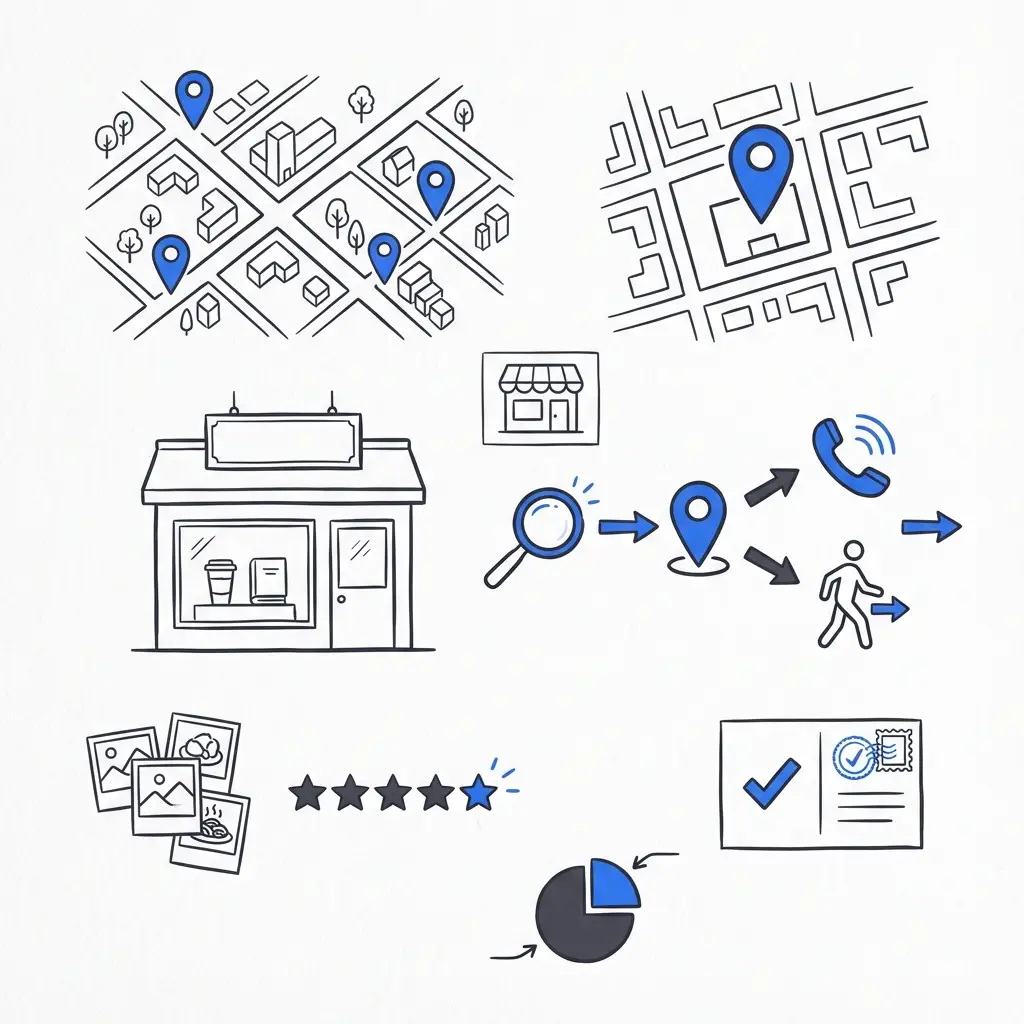
Before you spend on ads, update the place customers search first. Make sure your name, address and phone number are consistent everywhere. Use simple language to list services and add real photos of your work. Post short updates weekly – think a quick job photo, a seasonal service reminder, or an availability note. These posts don’t need to be polished. They need to be authentic.
Why this matters: your Google Business Profile is a living listing that drives calls, direction requests, and clicks. The profile’s insights panel tells you which photos, posts, and services are getting attention – use that data to adapt what you show.
Contact Agency VISIBLE if you want a quick audit and a checklist to improve your profile without wasting time; they focus on practical steps that lead to real calls and booked jobs.
Local-first guides can help you prioritize the right GBP fixes – for a concise list of best practices see Local Falcon’s local SEO best practices.

Reviews: how to collect them and why they matter
Almost everyone checks reviews when hiring a local service. A steady stream of honest reviews does three things: it builds trust, lifts local search visibility, and creates proof of how you work. Make review collection routine and respectful. Ask right after a job, send a short text with a direct link, or include the link on invoices and booking confirmations. Don’t buy or fake reviews – they backfire.
Short scripts to ask for a review (use the one that fits your voice):
1) “Thanks for the job today — if you’re happy with the work, a short review helps my small business a lot. Here’s the link: [short link].”
2) “Did everything go well? A quick review would mean the world — it helps neighbors find good help. Link: [short link].”
Handle negative reviews with calm. A quick, empathetic reply that acknowledges the issue and offers a fix is often more convincing than a five-star rating. Future customers read responses as proof you care.
For a deeper look at review impact and local tactics, this guide offers extra context: Top 7 Local SEO Tips for Handyman Businesses.
Make citations consistent
Citations are listings of your name, address, and phone across the web. They help search engines confirm your business is real. Keep them exact. Check Google, Yelp, HomeAdvisor/Angi, Thumbtack, local chambers, and neighborhood sites. Small mismatches can drop local visibility. This is low-glamour but high-value upkeep.
Content that actually helps — and converts

Before-and-after photos with short captions that explain what you fixed and how. Example caption: “Patched rotted door jamb with treated pine, sealed and primed – no more draft.” A clear logo helps people recognize your brand when photos are shared.
Short videos (15-60 seconds) made for Reels or TikTok: show the problem, one step of the work, then the reveal. Keep lighting natural, camera steady, and the voiceover or caption direct.
Mini FAQ landing pages for common searches like “handyman near me for deck repair” or “local handyman for drywall patching.” These pages should be short, local, and have one clear call to action: call, book, or send a photo.
Run tiny, measured paid tests
Think experiments, not huge bets. Try two ad tests side-by-side for a week or two: a Meta lead ad (Facebook/Instagram) and a Nextdoor hyperlocal ad. Point both to a single focused landing page and use a dedicated phone number to track calls. After the test, compare calls, form submissions, and actual booked jobs. Focus on cost-per-booked-job, not cost-per-lead.
Marketplaces like HomeAdvisor or Thumbtack can scale leads fast but track conversion rates closely. Know the percentage of marketplace leads that become booked jobs and the average job value. If you don’t know conversion, you’re guessing the value of those leads. For a practical industry take on handyman SEO, see ServiceTitan’s handbook on handyman SEO.
Small offline tactics that still work
Vehicle wraps, postcards, door-hanger flyers, and referral rewards help you stay visible in the neighborhoods where you want work. They’re less measurable, so use a tracking method: unique phone numbers, dedicated booking URLs, or coupon codes. That way you can tell which offline campaigns actually produce jobs.
Get a no-fluff visibility audit and a simple plan to book more jobs
Want help setting up a simple landing page and tracking system? Check Agency VISIBLE’s homepage for resources and to book a short audit: Agency VISIBLE.
Measurement-first approach: keep it simple
Build one focused landing page for one service in one neighborhood. Pair it with a strong Google Business Profile and a review workflow. Run two short ad experiments. Track calls, leads, booked jobs, conversion rates and cost per job. A simple spreadsheet that pulls in GBP insights and counts leads is enough to start.
The practical checklist to promote yourself this month
Use this 10-step checklist in the next 30 days to start seeing traction:
1) Update Google Business Profile: correct NAP, list services plainly, add 5 real photos, post once a week.
2) Ask 3 recent customers for reviews using a short text or invoice link.
3) Create one landing page for a single service in one neighborhood (call, book, or send photo as CTA).
4) Shoot 3 before-and-after photos and 2 short videos — post them to GBP and social.
5) Run a Facebook lead ad targeted to nearby zip codes for one week.
6) Run a Nextdoor ad limited to two neighborhoods for the same period.
7) Use dedicated phone numbers for ads and the landing page so you can track calls.
8) Log leads and outcomes in a simple spreadsheet; update it daily.
9) Respond to all leads within a set window (ideally an hour during business hours).
10) Reassess after two weeks – double down on what brings booked jobs.
Update one photo and one short post on your Google Business Profile and ask a recent happy customer for a review — that simple burst of activity often increases clicks and shows fresh activity to neighbors searching for help.
The easiest, fastest move is to update one photo and one short post on your Google Business Profile and ask a recent happy customer for a review. That short burst of activity often increases clicks and shows fresh activity to neighbors searching for help.
Detailed tactics and scripts you can use now
Landing page blueprint that converts
Your landing page only needs three things: clarity, local focus, and a single next-step. Use short headlines and bold the phone number. Example layout:
Headline: Door & Trim Repair in [Neighborhood Name]
One-sentence value: Fast, reliable repairs – same-week visits in [Town A], [Town B], and [Town C].
Photos: 4 before-and-after photos with short captions.
Social proof: two recent 4-5 star reviews pulled from GBP.
Call to action: Phone number (click-to-call), booking link, or a short form that asks for phone, address, and a photo.
Keep the page focused on one service and one area. That focus helps your ads and organic search results send clearer traffic that converts.
Sample short form fields
1) Name
2) Phone
3) Address
4) Quick description of the problem
5) Attach a photo (optional)
Ask for just what you need to estimate. Too many required fields kill conversion.
Scripts to reply fast and professionally
Phone callback script (30 seconds): “Hi, this is [Name] from [Business]. Thanks for reaching out – I’m available to take a look on [date/time]. Can I confirm the address and a quick detail about the issue?”
Text reply template: “Thanks for the message – I can be there [date/time]. Please send a photo if possible and I’ll confirm the price range before the visit.”
Review request templates
After-job card text: “If you’re happy with the work, a quick review helps my small business a lot. Scan this link or go here: [short link].”
Text follow-up (24-48 hours after job): “Hi [Name], thanks again for the job on [date]. If you have a minute, a short review helps others find reliable help: [link].”
Example ad experiment plan
Goal: 8 booked jobs in 30 days from two suburbs.
Budget: $300 total ($150 Meta lead ads, $150 Nextdoor hyperlocal test).
Landing page: single page for door & trim repair in two suburbs.
Tracking: dedicated numbers – one on landing page, one on GBP.
Measurement: track lead count, phone calls, booked jobs, and cost per booked job.
Decision rule after 2 weeks: if channel A’s cost-per-booked-job is under target, shift 60% of remaining budget to it.
Content templates that are low-cost and high-impact
Photo caption templates
1) “Before: rotten threshold. After: replaced with treated pine, sealed and painted – done.”
2) “Shelf installed using hidden brackets for a neat finish – good for heavy plants and tidy lines.”
Short video shot list (30-45 seconds)
1) Opening shot: show the problem (5 seconds)
2) One key step (10-15 seconds)
3) Reveal and short caption about the fix (10-15 seconds)
Keep voiceovers direct and avoid long explanations – show the problem and solution visually.
Monday: one before-and-after photo to GBP.

Wednesday: 20-30 second clip for Instagram reels or TikTok.
Friday: short text post about weekend availability or a seasonal tip.
Tracking, simple dashboards and what to measure
You do not need a fancy tool. A basic spreadsheet with the following columns will tell you what you need:
Date | Source (GBP, Facebook, Nextdoor, Flyer) | Lead Type (call, form, message) | Contact | Job Date | Booked? (Y/N) | Job Value | Notes
Track conversion rate and cost-per-booked-job for each channel. If a small repair becomes a larger project later, log that lifetime value – it changes how you value leads.
How to handle call tracking simply
Use two phone numbers: one on your GBP and one on the landing page. Forward both to your main line and note the source when a call arrives. If you use more campaigns, add a dedicated number per campaign and rotate them into the tracking sheet.
Pricing, offers and packaging that convert
Many customers choose based on trust and clarity, not always price. Offer simple, predictable options: a small repair price range, a same-day visit fee, or a free photo-estimate. Examples:
“Small repairs starting at $75 – same-day assessments available.”
“Free photo estimate – send a quick picture and get a price range by text.”
Make offers time-limited if you want faster responses: “Book this week for a discounted service call.”
Offline tactics that are trackable
Assign a coupon code or a unique URL to each offline campaign. If you drop postcards in a neighborhood, ask customers to mention the postcard for a small discount – that mention becomes your tracking metric. Use a different phone number or a short URL per campaign to measure response.
Common mistakes and how to avoid them
1) Trying to be everywhere at once – focus on one service and one neighborhood first.
2) Chasing vanity metrics like impressions – measure booked jobs and cost per job.
3) Slow responses – set a standard and stick to it; speed lifts conversion.
4) Inconsistent NAP – keep listings exact across the web.
Examples of small weekly workflows
Each week, spend 30-60 minutes on these items:
Monday: update one GBP post and review the previous week’s insights.
Wednesday: shoot or edit one short video/photo.
Friday: ask one or two recent customers for reviews; check your tracking sheet.
How to scale when you have steady demand
Once your tests show a clear winner, scale slowly. Increase ad spend on the best channel, expand landing pages to other neighborhoods, and hire a part-time assistant or scheduler if calls exceed what you can handle. Keep the measurement system – scale is only useful if you maintain conversion rates.
Technology to watch and how to use it
Local Services Ads can work well in some markets but are pay-for-lead and vary in cost. Test them and compare cost-per-booked-job to organic plus ad experiments. Conversational AI widgets can capture leads outside business hours – set them up to collect a photo, a short description, and contact info, then route high-intent leads to your inbox for a quick follow-up.
Final checklist before you stop reading
1) Update GBP and add a recent job photo.
2) Publish one focused landing page for a single service in a single neighborhood.
3) Ask three customers for reviews and send them a direct link.
4) Run two ad experiments for one week and use dedicated tracking numbers.
5) Log leads into a simple spreadsheet and review after two weeks.
What to expect in the first 90 days
In the first month you’ll see more clicks and a few extra calls. By 60-90 days, with consistent posts, reviews and a couple of tests, you’ll learn which channels bring booked jobs and can double down. Be patient: local marketing compounds slowly but predictably when you measure it.
Don’t go it alone — get practical help when needed
Small agencies and freelancers can assemble a measurement-first system quickly. If you work with an agency, ask for clear KPIs and raw data. When comparing agencies, choose one that prioritizes revenue and measurable outcomes. Agency VISIBLE follows a clear playbook – conversion page, strong GBP, review workflow, two ad tests and a simple dashboard – built to deliver calls and booked jobs for local businesses. See some of their projects for examples.
Quick reminder
How do I promote myself as a handyman? By doing a few simple things well – optimize your local profile, collect real reviews, show your work, test small ad experiments, and measure booked jobs. The rest is steady attention and responsiveness.
Expect initial movement in the first 2–4 weeks: more clicks, a few extra calls and fresh reviews. Measurable booked-job results usually appear within 6–12 weeks once you run ad tests and keep a steady review workflow. The exact timing depends on your local market and how quickly you act on leads.
Low-cost, high-impact moves include updating your Google Business Profile with fresh photos and a post, asking three recent customers for reviews, and creating one focused landing page for a single service in a nearby neighborhood. Pair that with a $50–$150 local ad test (Meta or Nextdoor) and track leads. These steps tend to bring early traction without a big budget.
Both have a place. Marketplaces (HomeAdvisor, Thumbtack) scale lead volume quickly but can be costly unless you know lead-to-booked-job conversion. Start with a small marketplace test while you build GBP and organic content. If you work with an agency, choose one that emphasizes measurement-first results like Agency VISIBLE — they prioritize cost-per-booked-job over vanity metrics.