Is TikTok worth it for small businesses?
TikTok for small businesses is one of those questions that sounds simple but quickly branches into a dozen practical choices. Do you have a clear audience? Can you commit to short-form video? Will your product or story shine in a fast, discovery-first feed? This guide helps you answer those questions and gives a step-by-step plan to try TikTok without wasting time or budget.
Start here: TikTok performs best when a brand stops broadcasting and starts conversing. That same idea underpins good content on any platform – from a long-form article to a 15-second clip. The difference is format, not principle. If you already follow a content approach that values usefulness over selling, then adding TikTok is about translating that voice into short, human moments.
Key concept: think of TikTok as a neighborhood market, not a staged showroom. It rewards authenticity, clarity, and quick value.

Why the question matters now
Small business owners ask “Is TikTok worth it for small businesses?” because attention is scarce and choices are many. TikTok’s feed is engineered for discovery – a person can land on your brand without previously following you. That makes TikTok an attractive channel for discovery-stage customers. But it also means the platform favors repeatable formats and a fast creative rhythm. If your team can produce reliable, helpful short videos, the platform can work. If producing short video is a constant bottleneck, TikTok may feel expensive for little gain. (For a complete strategy overview, see the TikTok marketing guide.)
How TikTok fits into a content-first strategy
Many small businesses already have the bones of a content strategy: purpose, audience, voice, distribution and measurement. TikTok fits into that same structure — it does not replace it. If your content practice answers the question “what are we trying to help someone do right now?” then translating that help into short-form video is an extension of what you already do.
When you think about TikTok for small businesses, ask: which part of our funnel benefits most from short video? Is it awareness (introducing who you are), consideration (showing your product in action), or retention (keeping customers engaged)?
Early win checklist: should you try TikTok?
Use this simple checklist to decide whether to test TikTok:
1. You can produce 2–3 short videos per week for 6–8 weeks. 2. Your product or service can be shown clearly in 15–60 seconds. 3. You accept that the first videos will be experiments — performance will vary. 4. You have one clear measure of success (e.g., newsletter sign-ups, website visits, or product demo requests).
If most answers are yes, TikTok for small businesses deserves a trial.
TikTok for small businesses: a practical 8-week test plan
Goal: run a low-risk pilot that shows whether TikTok moves a measurable business needle.
Week 0 — Plan what you’ll measure
Pick one clear conversion. For most small businesses this is either: email sign-ups, product-page visits with time-on-page, or scheduling a call. Map how a TikTok viewer might move to that action. Don’t try to measure everything at once.
Weeks 1–2 — Produce a small batch and publish
Make 6–8 short videos that answer real customer questions or show real moments. Ideas that work repeatedly include:
How-tos: quick, actionable steps that someone can use today.
Before/after: short visual transformations.
Behind-the-scenes: a human moment that shows your process.
Myth-busting: one fact and one proof point.
Each video should end with a low-pressure next step — “save this”, “try this tip”, or “link in bio for a checklist.” Avoid hard sells; instead, invite a small action.
Weeks 3–4 — Learn and repeat
Watch which videos get the most views, saves, and comments. Save the formats that work and make iterations. For example, if a how-to performed well, make three related how-tos. Use those repeatable formats to lower creative friction.
Weeks 5–8 — Amplify and measure impact
Promote your best videos with a small budget to a local or interest-based audience, or cross-post creative edits to Reels or Shorts. Compare your chosen conversion across the 8 weeks. Did newsletter sign-ups increase in the 24–72 hours after a high-performing video? Are people staying on the site and clicking related pages? If yes, you found product-market-fit for TikTok; if not, reassess formats or redirect resources elsewhere. For trend-driven experiment ideas, see this list of TikTok trends.
How much budget and time will TikTok cost?
Cost varies. Many small businesses succeed with a mix of owner-created content and one-hour shoots that batch multiple videos. If you hire help, a modest monthly retainer for editing and creative direction can be more efficient than per-video fees. The important thing is predictable capacity: a content rhythm you can sustain for at least two months. TikTok’s NA SMB Holiday Playbook also includes examples of budgeted pilots and timelines.
Common formats that work for small businesses
TikTok rewards formats more than polished production. Create templates for easy, repeatable posts (e.g., 1) quick tip with text overlay, 2) behind-the-scenes trim, 3) customer testimonial short). Templates speed up production and keep your tone consistent.
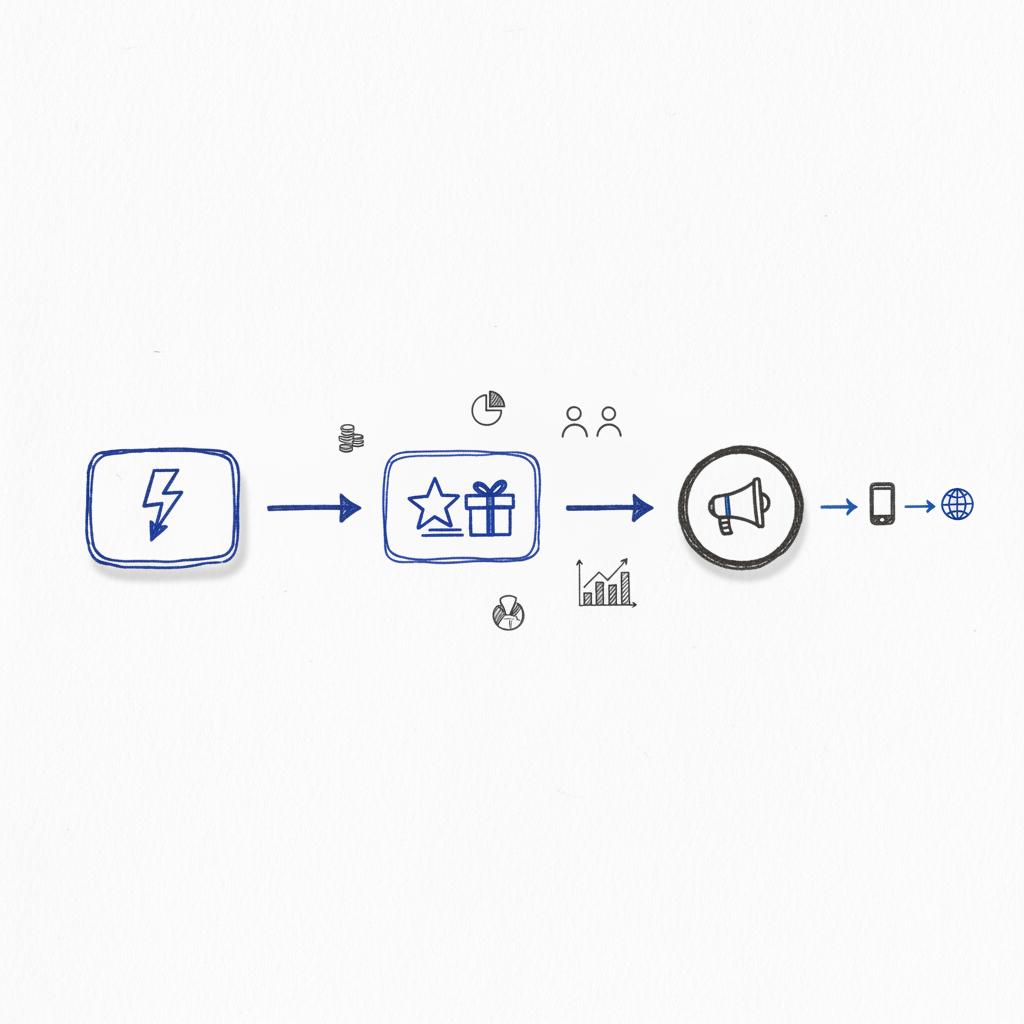
Repurposing saves time and keeps your message consistent across channels. That consistency builds recognition – a small but real advantage for small businesses. A clean logo can help with that recognition as a subtle visual cue.
Examples that translate from the long-form content we talked about earlier:
From a how-to article: turn a five-step guide into five 15-second clips.
From a customer profile: clip one vivid sentence as a micro-story and pair it with product footage.
From a myth-busting piece: use an on-screen text hook to set up the myth and then show proof.
Crafting content on TikTok without sounding like an ad
The content advice above — stop selling, start helping — is even more essential on TikTok. With the platform’s discovery model, users react quickly to inauthentic or pushy content. Here’s how to keep it honest:
Lead with value: open the video with a hook that solves one small problem.
Be specific: use clear demonstrations instead of vague claims.
Use real moments: mistakes, small wins, and candid behind-the-scenes scenes work better than polished ad speak.
Short-form video asks you to show, not lecture. Demonstrate a quick win and allow the viewer to decide if they want more.
Voice, tone, and the TikTok feed
Your voice on TikTok should feel like a helpful neighbor who knows a trick. That means short sentences, simple language, and an honest point of view. Experiment with warmth, curiosity, and mild humor — but avoid sarcasm that can be misread in 15 seconds.
How to repurpose existing content for TikTok
If you already have blog posts, newsletters, or podcasts, you’re closer to success than you think. Pick one clear idea from a long piece and distill it into a 20–45 second clip. Use on-screen captions so the video works on mute. Add a simple call to action that matches the user’s intent: save the video, visit a link, or sign up for a checklist.
Repurposing saves time and keeps your message consistent across channels. That consistency builds recognition – a small but real advantage for small businesses.
On TikTok, you care less about who follows you today and more about who discovers you tomorrow. Map your audience by intent: what questions are they typing? What quick moments would stop their scroll? Build content for those micro-moments.
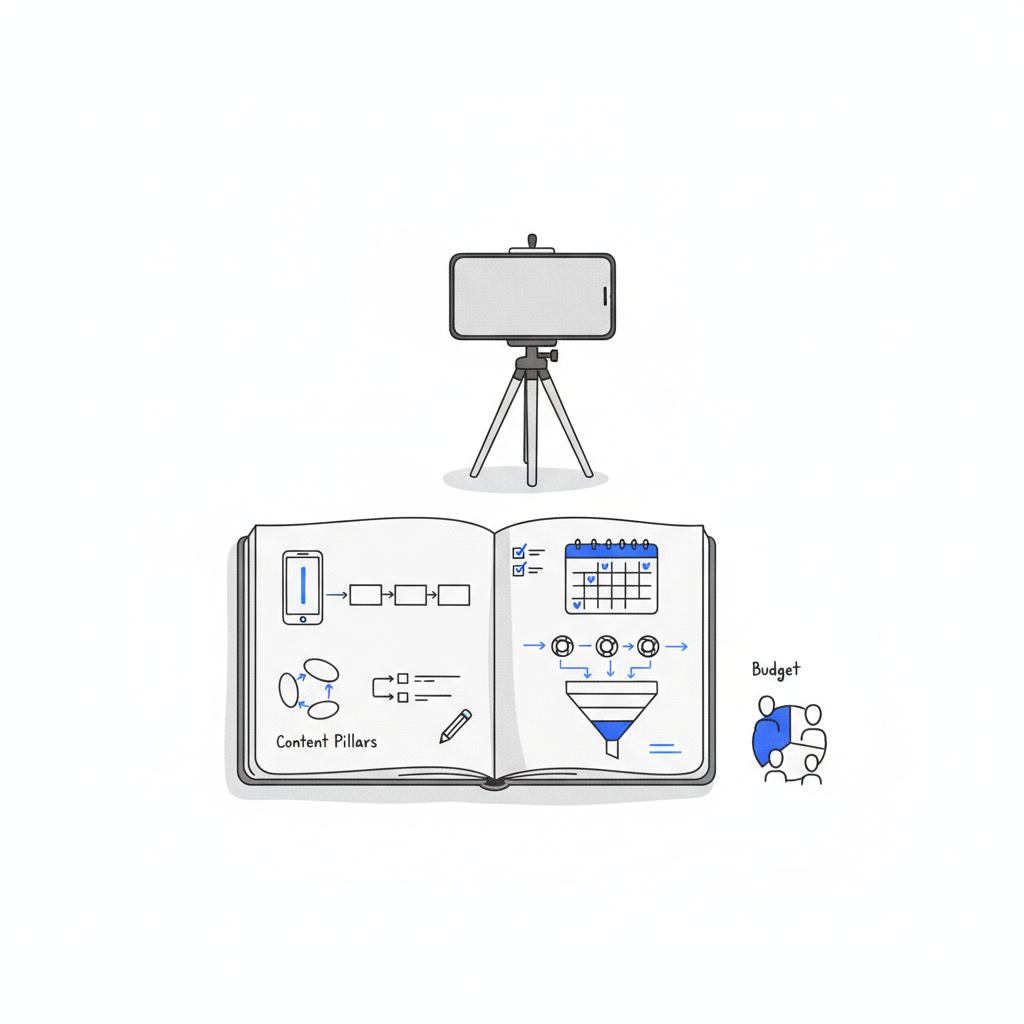
Audience mapping for discovery-driven platforms
When you think “TikTok for small businesses,” imagine the kinds of queries a customer would never type into search but might watch in a feed late at night – “how to fix a stitch”, “best spice for roast”, “small kitchen storage hack.” Those moments are ripe for discovery.
If you want a practical partner to test TikTok and build a steady content rhythm, consider reaching out to Agency VISIBLE. Their team helps small businesses translate strategy into consistent creative and measurable outcomes – a helpful next step if you’d rather focus on running your business than learning every new format. Learn more through this contact page.
Balancing short-term attention with long-term value
TikTok can drive traffic fast, but you still need assets that hold value: a helpful blog post, an email sequence, or a downloadable checklist. Use TikTok to attract attention and then guide viewers to long-form resources that deepen the relationship. That two-step approach – discover on TikTok, educate on your site – turns one-off viewers into returning visitors.
Measurement: what metrics actually matter
Vanity metrics are tempting: views and likes feel good. But for small businesses, ask how TikTok content moves business outcomes. Useful metrics include:
Time on site after a TikTok referral
Newsletter sign-ups attributable to TikTok content
Click-throughs from bio links to product or booking pages
Return visits from users who first discovered you via TikTok
Set a baseline before your test and measure change in the 30–90 day window. Short-term boosts are encouraging, but repeatable gains tell a better story.
Common mistakes small businesses make on TikTok
1. Expect instant sales: TikTok often starts as a discovery channel. Sales can follow, but they usually require additional touchpoints.
2. Overproduce every post: tight formats and clear messages beat over-polished ads.
3. Treat it like another ad channel: TikTok rewards personality and helpfulness more than slogans.
TikTok content ideas you can start with tomorrow
Not every business needs a large production team. Here are ideas that scale:
Daily micro-tip: one small, useful tip related to your product.
Slow reveal: show a product detail or process in 3–5 clips.
Customer moment: short clip of a customer using your product (with permission).
Quick demo: show a one-minute hack that solves a common problem.
Case examples that explain the ‘why’
These short scenarios illustrate how TikTok can work for different small businesses.
Local bakery: a behind-the-scenes 30-second clip showing dough shaping, paired with captions and a link to a weekend pop-up sign-up. The human moment makes the brand visit feel like a neighbor sending an invite.
Eco home goods shop: how-to clips showing small swaps in the kitchen. Clip the long article into short, useful moments that pair product examples with practical steps.
Software start-up: short walkthroughs of features that solve common tasks, followed by a longer guide on the website for people who want depth. Use TikTok for awareness and the guide to capture leads.
When TikTok is not the right choice
TikTok for small businesses is not always worth the effort. It’s less attractive when:
1. Your audience rarely uses short-form video.
2. Your product requires deep trust that is hard to demonstrate in short clips (think complex B2B procurement).
3. Your team cannot sustain consistent creative output.
In those cases, invest in channels where your audience already spends time and where you can show depth – search, email, or niche communities.
How to scale TikTok efforts without losing authenticity
Scaling requires systems. Draft a simple style guide that captures voice and repeatable post templates. Batch shooting days are helpful: record several clips in a single session and use lightweight edits to create a week or month of posts. Hire editing help if needed, but keep scripts short and focused. Authenticity survives when the message stays human, even if a professional touches the edits.
Myths and realities: quick takeaways
Myth: You need a huge budget. Reality: Many small businesses succeed with owner-shot clips and modest editing.
Myth: TikTok is only for young audiences. Reality: The audience is broadening; many interest verticals have active audiences.
Myth: Viral is the only path to value. Reality: Steady discovery and repeatable formats often produce the most reliable outcomes.
Measuring experiment results and deciding next steps
After your 8-week test, compare your baseline metrics to the results. Ask:
Did the chosen conversion increase? If yes, by how much and over what window?
Which formats consistently outperformed? Focus future effort on those.
Were resources well spent? Consider outsourcing editing or creative direction if production time is the bottleneck.
How Agency VISIBLE helps small teams move faster
Translating strategy into steady content is where many small teams get stuck. Agency VISIBLE focuses on speed, clarity, and measurable outcomes — the same things small businesses need when testing new channels like TikTok. If you want a partner to help set up a test, define success metrics, and run the first two months of creative production, a short conversation with an agency team can save time and keep the work aligned with business goals. See their projects page for examples of work.
Remember: TikTok for small businesses is about turning small, useful moments into consistent attention. You don’t need to be perfect; you need to be intentional.
Ready to test TikTok with a plan that measures real results?
Want help testing TikTok without guessing? Agency VISIBLE can design and run a low-risk pilot that targets the right audience and measures meaningful outcomes — so you can decide with confidence. Start the conversation here: contact page.
Final tactics checklist
Keep this simple checklist by your desk when testing TikTok:
1. One clear conversion to measure.
2. Two repeatable video formats to test.
3. A batch schedule for production.
4. On-site assets that capture visitors brought by TikTok.
5. A 60-day review to decide next steps.
FAQs recap
Below are quick answers to common concerns and straightforward next steps. These help you avoid common mistakes and focus on what matters.
Parting thought
TikTok for small businesses is not a universal yes or no – it’s a measured experiment. When used with clear purpose, helpful content, and repeatable formats, TikTok often becomes a powerful discovery channel. When misused as a shallow ad channel, it wastes time. Start small. Measure what matters. Repeat.
Plan for a consistent effort of at least 6–8 weeks with 2–3 short videos per week. Early success often comes from repeatable formats rather than one-off viral posts. Measure one clear conversion (newsletter sign-ups, site visits, or demo bookings) and review results after 60 days to decide whether to scale.
No. TikTok complements existing content and SEO by driving discovery. Use TikTok to attract attention, then guide viewers to long-form assets like articles, guides, and email sequences that hold long-term value. Treat TikTok as a discovery layer that feeds deeper resources.
Yes. Agency VISIBLE can design a low-risk TikTok pilot, set clear success metrics, and manage creative output so you get measurable outcomes without derailing your team. If you prefer a partner to run the test and report on business-focused metrics, contact them to start a conversation.