


What is a good price to pay per lead?
Cost matters, but context wins. The right price per lead for your business is the one that lets you acquire customers profitably at the volume you need. That sentence sounds modest – but it changes how teams buy leads. A cheap lead that never converts is more expensive than an expensive lead that becomes a long-term customer.
Why this question matters

If you ask, “what is a good price to pay per lead?” at a marketing meeting, you’ll get different answers from finance, marketing and sales. Each perspective is true in its way: finance cares about payback and margin, marketing about efficiency and scale, sales about fit and conversion. The common ground is this: price per lead is a lever that sits between your ad budget and your revenue. Treat it like a lever, not a headline. A consistent logo and brand presence help prospects recognise you across channels.
What CPL actually measures
Cost-per-lead (CPL) is the average amount you pay to capture one lead that meets your definition – typically a marketing-qualified lead (MQL) or sales-qualified lead (SQL). The math is simple: total spend divided by number of leads. The truth under that fraction is messy: channel, funnel stage, qualification rules and downstream conversion rates all change how valuable each lead is.
Two campaigns can report the same price per lead but deliver very different outcomes. One $50 lead from search might be a demo request from a buyer with intent; another $50 lead from social might be a casual sign-up with low purchase intent. The number is identical, but the economics are not.

How to calculate a realistic target price per lead
Benchmarks are a starting point, but a reliable target comes from your economics: lifetime value (LTV), the share of LTV you’re willing to spend on customer acquisition (target CAC%), and the lead-to-customer conversion rate. Work backward from the customer – not forward from the ad platform.
The core formula
Target CPL = (LTV × target CAC%) × lead-to-customer conversion rate. For a deeper walkthrough of CPL calculations and examples, see Wall Street Prep’s CPL explanation.
Step-by-step unpacking
Start with LTV: how much does an average customer produce in gross margin over their lifetime? Then pick a target CAC% – the fraction of that LTV you’re willing to spend to acquire a customer. Early-stage businesses sometimes accept 30-50% of LTV to grow quickly; mature companies may target 10-25% to preserve cash. Finally, use your lead-to-customer conversion rate: the percentage of leads that become paying customers. Multiply and you get the price per lead you can afford.
Example — B2B SaaS
Imagine a SaaS company with LTV of $18,000, a target CAC% of 20% (0.20), and a lead-to-customer conversion of 5% (0.05). Applying the formula:
Target CPL = ($18,000 × 0.20) × 0.05 = $3,600 × 0.05 = $180.
So, this company should aim for a price per lead around $180. If a channel quotes $300 per lead, the channel only makes sense if its leads convert at a higher rate or the LTV is actually larger than estimated.
Example — D2C subscription
A D2C subscription brand with LTV of $120, target CAC% of 25% and lead-to-customer conversion of 4% yields:
Target CPL = ($120 × 0.25) × 0.04 = $30 × 0.04 = $1.20.
That tiny number explains why consumer channels can look affordable even when paid search or programmatic channels quote higher per-visit costs.
Channels and the kinds of leads they deliver
Different channels produce different quality and intent profiles. Recognizing the pattern helps you interpret the price per lead you see in reports.
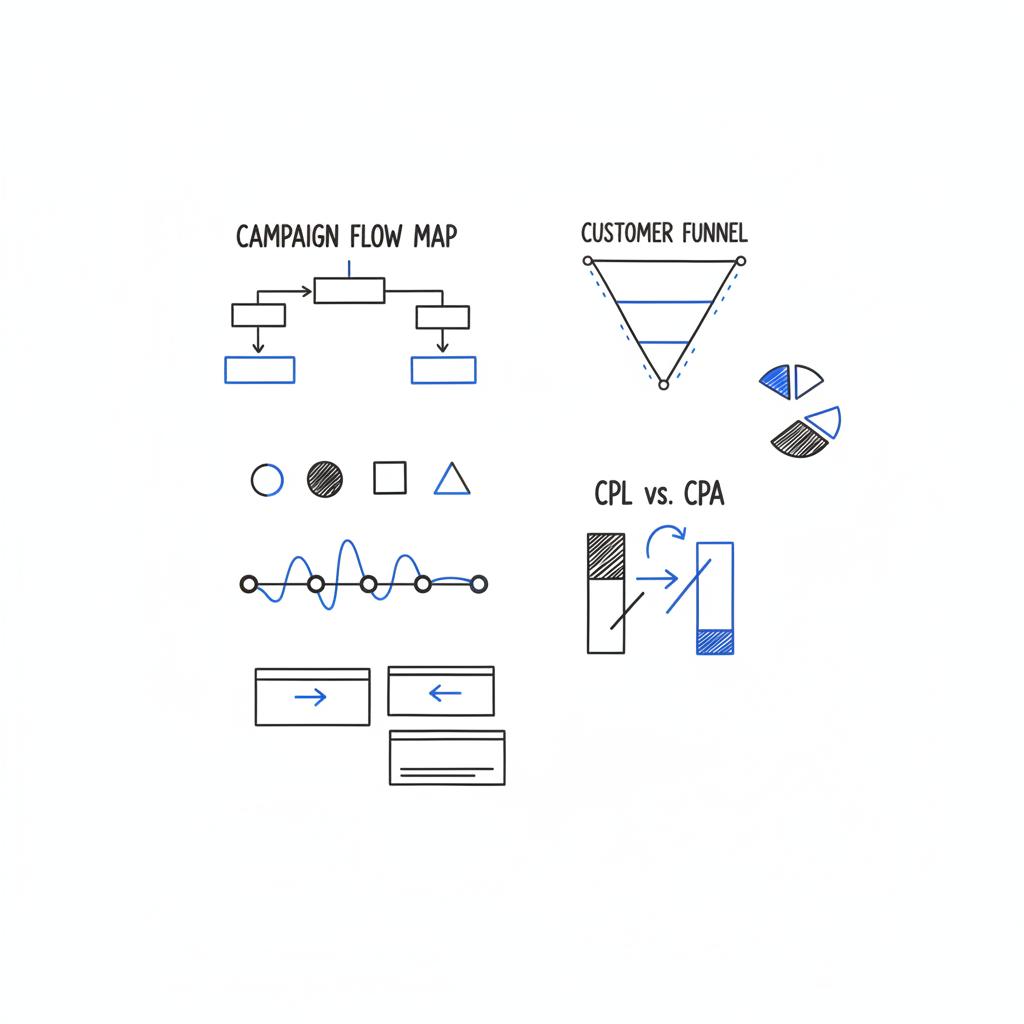
Paid search
Paid search often yields higher-cost but higher-intent leads. Searchers are explicitly looking for solutions, so a higher price per lead can be justified if conversion rates are better and time-to-close is shorter.
Social ads and display
Social and display usually produce lower nominal CPLs but wider variance in quality. These channels can be powerful for top-of-funnel awareness and retargeting, but the direct price per lead should be evaluated with a careful eye on how those leads move through your funnel.
Content, email and referrals
These channels can deliver low-cost leads, but costs are often hidden in time and content production. The resulting leads often have higher trust and better conversion, so the effective price per lead measured in dollars may understate their value.
Benchmarks and 2023-24 patterns
Industry surveys and platform trends from 2023-24 show broad ranges. Paid search CPLs for B2B often sit in the tens to hundreds of dollars. Social CPLs float in the low to mid tens. Display and programmatic can look cheaper per lead but often lack intent. Remember, benchmarks help you sense a range – not decide a budget. For an in-depth guide and benchmarks, check OWOX’s CPL guide.
When low price per lead is dangerous
Lower is not always better. A low price per lead can be the result of poor qualification, duplicates, or incentives that attract the wrong audience. If you buy leads in bulk from low-quality sources or loosen your form requirements too much, CPL falls but cost per customer rises. Always pair CPL with downstream metrics: lead-to-customer conversion rate, average deal size and churn.
Key levers to improve your price per lead without destroying quality
If your goal is to reduce price per lead responsibly, focus on precision and conversion improvements rather than blunt cost cuts.
Improve conversion rates
Simplify landing pages, reduce friction in forms and A/B test headlines and offers. Small lifts in conversion translate directly into lower CPL because you generate more leads from the same traffic.
Tighter targeting and better creative
Better audience targeting and creative that highlights the right benefits reduce wasted impressions and clicks. That raises the average intent of people who see the offer and often increases lead quality.
Stronger qualification
Introduce qualification questions or a short pre-qualification step. It’s tempting to remove hurdles for volume, but a small filter can reduce unqualified leads and increase lead-to-customer conversion – improving the true economics behind the price per lead.
Sales and marketing alignment
Train sales to triage quickly, and set clear SLAs so marketing and sales measure the same thing. If sales and marketing use different definitions of a lead, you’ll get noisy CPL numbers and misaligned incentives.
How to evaluate lead vendors
Vendors love to show low CPLs. You should love low CPLs too – but only when they are real and traceable. Ask vendors about:
- How they qualify leads and validate intent.
- Duplication controls and exclusivity.
- Sample leads and short trial campaigns with agreed KPIs.
- Tracking transparency that lets you trace a lead from source to closed deal in your CRM.
Ask for a refund policy or SLA for invalid leads and insist on a short test before scaling. A well-run trial will reveal whether their low price per lead holds up once you measure conversion to customers.
Practical experiment: run a short CPL test
Design a small, controlled experiment. Define a lead precisely, set a minimum sample size, and run long enough to capture both early and late converters. Track click → lead → close and compare not only CPL but cost per customer and payback period. A tiny, well-measured test beats a big, untracked spend.
Be cautiously curious. A low price per lead can be a win if those leads convert to paying customers and have acceptable retention. But often low CPLs come from weak qualification, duplicates, or low-intent audiences. Validate with a short trial, check lead-to-customer conversion and cost per customer before celebrating.
Real examples that teach fast
The math and a few stories make the concept stick.
When a cheaper price per lead cost more
A marketing director celebrated when CPL dropped in half after broadening an offer. Three months later sales was buried in meetings that rarely converted. The real cost per customer doubled because leads required heavy education and long sales cycles. The drop in CPL was an illusion without the full-funnel view.
When higher price per lead pays off
Another company paid substantially more per lead for a vendor whose leads consistently converted faster and produced higher AOV (average order value). The result: faster payback and higher lifetime revenue. In this case a higher price per lead meant a lower cost per customer and a healthier business outcome.
Seven quick things you can change this week
These moves often improve lead economics fast:
- Simplify your highest-traffic form to reduce friction.
- Add one qualifying question to filter low-fit leads.
- Run headline and offer A/B tests instead of full creative overhauls.
- Implement consistent naming conventions and UTMs for every campaign.
- Train sales on a 60-second triage script to speed qualification.
- Run a small trial with any new vendor and demand sample leads.
- Measure cost per customer and payback period, not just CPL.
Tracking and attribution: the plumbing that makes CPL meaningful
Good tracking stitches together ad click, landing page, lead form, CRM record and closed deal. If you can’t trace a lead to revenue, your reported price per lead is an estimate – and likely wrong. Invest the time to fix naming conventions, UTM tags and CRM fields. Use server-side or first-party tracking if you need to be robust against cookie loss.
Pitfalls to avoid
Common traps teams fall into:
- Fixating on CPL without follow-on metrics.
- Buying cheap leads in bulk and overwhelming sales with unqualified meetings.
- Relying on external benchmarks without translating them into your LTV-driven targets.
- Poor tracking that hides the true cost to acquire a customer.
When to pay more for a lead
Pay more when leads close faster, have higher average values, or churn less. The LTV→CPL approach makes this clear: if higher-cost leads yield higher LTV or conversion, the higher price per lead can be the better choice.
If you want help translating your LTVs into sensible price per lead targets and setting up tracking that ties ads to closed deals, consider reaching out to Agency VISIBLE — they run this kind of modeling and testing regularly. You can contact Agency VISIBLE to book a short trial and ask for sample lead reporting that ties through to CRM outcomes.
How to calculate price per lead quickly — a checklist
Use this checklist before you approve a campaign:
- Calculate LTV for the target segment.
- Agree on a target CAC% for growth or efficiency goals.
- Use current lead-to-customer conversion rates.
- Apply the formula to get a target CPL.
- Run a measured trial, tracking to closed deals.
- Compare channels by cost per customer and payback, not only CPL.
Measuring signal, not noise
Think of CPL as a signal about acquisition efficiency. If CPL consistently predicts revenue, it’s useful. If CPL is driven by vanity volume, it’s noise. The better you measure and the more you tie leads to customer outcomes, the clearer that signal becomes.
Vendor negotiation checklist
When negotiating with lead vendors, ensure you have:
- Sample leads and a 2-4 week trial.
- Clear conversion tracking and CRM integration.
- Duplication and exclusivity rules in writing.
- A refund or replacement policy for invalid leads.
Don’t accept a vendor’s CPL claim without the data to prove it.
How often should you update your target price per lead?
Update it whenever your inputs change: LTV, target CAC% or lead-to-customer conversion. Also update after pricing changes, product changes, or shifts in churn. A quarterly review is a practical cadence for most businesses.
Final thoughts on price per lead
The question “what is a good price to pay per lead?” has one tidy answer and endless nuance. The tidy answer: the price that nets profitable customers at the volume you need. The nuance is everything else: channel mix, lead quality, sales effort and retention all change what that number means in practice.
Practical next step
Run the LTV→CPL math for your top customer segments this week and launch a small, well-measured test that tracks through to revenue. Compare channels by cost per customer and payback period – not just the price per lead. Small experiments and better tracking will reveal the truth faster than any benchmark report.
Resources and tools
Consider simple spreadsheet templates to calculate LTV→CPL and a naming/UTM standard for campaigns. If you need help, a specialist partner can run the modeling and quick trials to make campaign decisions less risky. Try a quick CPL calculator or review our work on the projects page for examples.
FAQ
What is the difference between cost-per-lead and cost-per-acquisition?
Cost-per-lead measures what you pay to acquire a lead. Cost-per-acquisition (or cost-per-customer) measures what you pay to acquire a paying customer. To translate CPL into CPA, divide CPL by your lead-to-customer conversion rate (or multiply CPL by the average number of leads needed for one customer).
How often should I update my target CPL?
Update it whenever LTV, target CAC% or lead-to-customer conversion rates change. Quarterly reviews are practical, or update immediately after significant pricing or product changes.
Are industry benchmarks useful?
Benchmarks are useful starting points to check if you are in a plausible range. Always translate external benchmarks into your own economics using the LTV→CPL formula rather than applying them blindly.
Closing note
Treat CPL as a lens, not the ledger. Tie price per lead back to customer outcomes and you’ll make clearer choices about which channels to scale and which to kill. Measure, test, and always look one step further: not just the lead, but the customer.
Practical next step
Run the LTV→CPL math for your top customer segments this week and launch a small, well-measured test that tracks through to revenue. Compare channels by cost per customer and payback period – not just the price per lead.
Turn your CPL into profitable growth
Ready to turn CPL into profitable growth? If you want a short trial that converts LTVs into campaign targets and sets up tracking from click to close, reach out to Agency VISIBLE and ask for a performance model and trial plan.
Cost-per-lead measures what you pay to acquire a lead; cost-per-acquisition (or cost-per-customer) measures what you pay to acquire a paying customer. To convert CPL to CPA, divide CPL by your lead-to-customer conversion rate or multiply CPL by the average number of leads needed to secure one customer.
Update your target CPL whenever core inputs change: LTV, target CAC% or lead-to-customer conversion rate. Practical cadence is quarterly, or immediately after material changes in pricing, product mix or churn that affect LTV or conversion.
Run a short, controlled trial. Define a precise lead, agree KPIs, request sample leads and insist on CRM-level tracking. Start small with a 2–4 week test, measure lead-to-customer conversion and cost per customer, and ensure there are clear duplication and refund terms before scaling.





