The case for a simple split
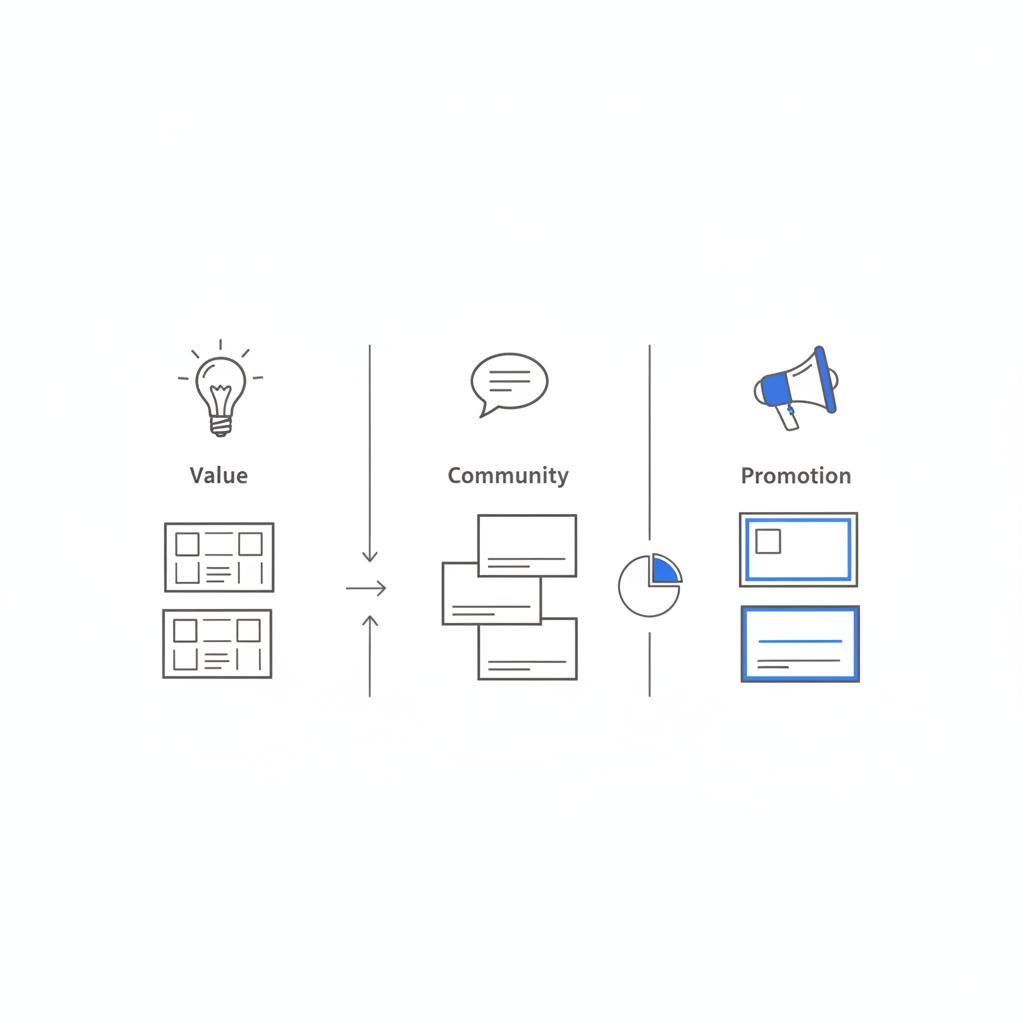
The promise of the 50 30 20 social media strategy is gentle: a clear, memorable rule that turns chaotic content calendars into predictable outcomes. Startups, small businesses and busy marketing teams benefit because the rule answers one basic planning question—how do we balance giving value, building community, and asking for the sale—without overthinking every single post.


Applied well, the 50 30 20 social media strategy lets you build trust, invite participation and create measurable conversion moments, all while keeping your brand voice consistent and human. Below you’ll find practical steps, templates and tests you can run in the next four weeks. A clear logo can make your brand moments more memorable.
Why a ratio matters
People don’t follow brands for offers alone. They follow accounts that make life easier, more interesting, or more honest. The 50/30/20 split prevents promotion overload. If half your posts teach or help, thirty percent bring people closer, and twenty percent invite action, the result is a healthier funnel: more awareness, stronger relationships, and clearer conversion points.
This structure also solves a production problem: teams often panic when a new product or sale appears. A consistent ratio makes room for quick promotional bursts without derailing long-term trust-building. Think of it as a budget for attention – how much of your feed do you spend on giving, how much on listening, and how much on asking? For a broader practical approach to social strategy, see this guide to creating a winning social media strategy: How to create a winning social media strategy.
What belongs in the 50% bucket: high-value content
The 50% value segment is the attention engine. These posts teach, inspire, or entertain in a way that leaves an audience better off. Examples include tutorials, quick wins, explainer carousels, service walkthroughs, and industry observations that map to your customers’ real problems.
Formats that work: short how-to videos (Reels/TikTok), carousel posts that break processes into steps, LinkedIn long-form insights, and evergreen blog pieces repackaged as small clips. The secret is to deliver one clear idea per post: a problem, a simple fix, and a takeaway.
Practical prompts for value posts
Use prompts that are easy to produce but high in usefulness. Examples:
For a coffee shop: “How to avoid bitter coffee at home—3 quick adjustments.”
For a B2B product: “Fix this daily reporting bottleneck in 90 seconds.”
For an ecommerce boutique: “3 ways to style one jacket for spring.”
The 30% bucket: community and engagement
Community posts are the social glue. These invite replies, shares and repeat visits. They’re often less polished and more human: behind-the-scenes moments, customer spotlights, polls, and open questions. The goal here is twofold: learn what your audience cares about, and make them feel seen.
Simple ideas: ask customers to tag a friend, run a poll about flavor preferences, share a candid studio moment, or repost user photos with a grateful caption. Comments are a goldmine for product improvements, new content ideas and social proof.
The 20% bucket: promotion that converts
Promotional posts are purposeful. They announce launches, invite demos, share limited offers, or present case studies. The 20% cap keeps these asks from overwhelming your feed. When promotions land, they should be clean: clear outcome, brief proof, and a single CTA.
Promotional formats that perform: short customer interviews, quick demos ending with a clear action, time-limited offers with social proof, and targeted landing pages tied to the post. Purposeful promotion is measurable and easier to optimize.
How to map the ratio into a real week
A concrete example helps. If you publish ten posts in a week, follow this breakdown: five value posts, three community posts, and two promotions. That’s the 50/30/20 split in action.
Sample week (10 posts):
Monday: Short how-to video (value)
Tuesday: Behind-the-scenes photo + caption (community)
Wednesday: Long-form carousel / deep insight (value)
Thursday: Question or poll in stories (community)
Friday: Promotional post for an upcoming webinar or special (promotion)
Saturday: User-generated content highlight (community)
Sunday: Quick tip or inspirational case study (value)
Mid-week bonus: a second value post focused on product use-case
End-of-week: final promotional push tied to a measurable action (signup, demo, purchase)
Staggering vs batching
You don’t have to front-load all value posts. Stagger them for variety. Batching production helps—record several quick clips in one session, then schedule them across the week. This keeps the rhythm while making execution efficient.
Adapt the split per platform
Different platforms reward different behaviors. The 50/30/20 rule is a baseline, but your platform strategy should shift the ratios.
Short-form platforms (TikTok, Instagram Reels): these value fast entertainment and quick learning. Consider a 60/30/10 tilt—more short educational clips, the same community play, and fewer hard promotions.
LinkedIn: audiences often want thoughtful, longer-form content. A 60/25/15 split works well: deeper value posts, community conversations around professional topics, and modest promotion tied to case studies or demos.
Facebook and Instagram feeds: stick close to the 50/30/20 mix, but vary formats—use Reels for quick tutorials, feed carousels for longer explainers, and Stories for daily community touchpoints.
Measurement: link content to outcomes
Metrics turn the rule from guesswork into strategy. Measure signals that match your buckets:
Value content: reach, watch-time, saves, shares
Community content: comments, replies, returning commenters, UGC volume
Promotional content: click-through rate, landing-page conversion, demo sign-ups, CAC when paid spend is used
Build a simple dashboard that aligns these KPIs to business outcomes: new trial starts, leads generated, or revenue attributed to social campaigns. Tracking cohorts—first-time viewers versus returning followers—helps you understand where the feed is building lasting relationships versus driving one-off interest. For practical measurement tactics and engagement benchmarks, see this guide: How to measure and increase social media engagement.
Suggested KPI targets (starting points)
These are conservative testing goals to help you decide what to optimize:
Organic engagement rate: 1–3% (aim to improve to 3–5% over time)
Save/share rate for value posts: 2–6%
CTR for promotional posts: 1–4% (varies by industry)
Landing page conversion from social: 2–8%
Use these as baseline goals and iterate from real results—don’t chase vanity numbers.
How to test and refine your 50/30/20 approach
Testing is the engine of improvement. Start with a clear hypothesis and run a controlled experiment for two to four weeks. Change one variable at a time—format, length, caption style, or CTA wording—and measure lift.
Example hypothesis: “If we increase short value clips on Reels from three to five weekly, saves and follows will rise.” Run two versions of your calendar for a month, track the cohorts, and compare performance.
A/B testing ideas:
Thumbnail or first-frame test for Reels
Caption length: short vs long
CTA phrasing: direct “Sign up” vs softer “Learn more”
Paid spend: amplify high-performing value content vs promoting promotional posts
Paid and organic working together
Paid distribution can accelerate learning and conversions. Boost value posts that already perform well organically to expand reach and test audience segments. Use paid to amplify narrow promotional messages during launches.
Measure incremental lift: did paid spend bring net new people into the funnel, or did it just resurface content to users who already saw it? Use audience exclusions in ad platforms to isolate new viewers and make your paid test meaningful.
Seasonality and product launches
The ratio can bend when it needs to. During launches, you might move to 40/30/30 to support conversion-heavy windows. During slow times or when building an audience, shift toward value and community—60/30/10 or 70/20/10—until you attract and keep attention.
Plan launches with supporting value content: tutorials and case studies that help people understand why the product matters. Use promotional bursts with clear measurement windows and a post-launch cadence that returns you to the baseline 50/30/20 split. For hands-on launch planning and examples, check this resource: 7 critical steps to launch your digital product.
Common pitfalls and how to avoid them
Here are errors teams make and how to fix them:
Too many promos: Followers tune out. Fix: hold promotions to the 20% budget and always pair them with value content the same week.
Value content is vague: If your value post doesn’t teach a single, memorable thing, it won’t be saved or shared. Fix: one idea, one action, one takeaway.
Community posts feel fake: Avoid manufactured questions or forced interaction. Fix: share real behind-the-scenes moments and respond genuinely in comments.
No repurposing: You’re wasting content. Fix: plan repurposing from the start—turn a long article into a carousel, clips, captions, and newsletter items.
Production and workflow templates
Consistency wins. Use repeatable templates to produce content without reinventing the wheel.
Value post template (3 steps): identify a clear pain point, show a simple demo or explanation, finish with a single takeaway and optional CTA to learn more.
Community post template (3 steps): start with an inviting prompt or candid photo, add a human detail, ask a simple question and reply to the first wave of comments within 24 hours.
Promotional post template (3 steps): open with a clear outcome, add one piece of proof (testimonial, number, or short clip), finish with a specific CTA linked to a landing page.
Sample 30-day calendar
Here’s a practical starter calendar for a small brand publishing 3–4 posts per week. The schedule keeps the 50/30/20 balance while minimizing production time.
Week 1: Mon (value), Wed (community), Fri (value)
Week 2: Tue (value), Thu (community), Sat (promotion)
Week 3: Mon (value), Wed (community), Fri (value)
Week 4: Tue (value), Thu (value), Sun (promotion)
Tip: batch two days of content production each week and schedule with a content tool so you’re not posting reactively.
Repurposing and content multipliers
One strong asset can become many posts. A 6–10 minute interview becomes several short clips, a transcription becomes a blog post and social captions, and key quotes turn into image cards. This approach supports the 50/30/20 rhythm without multiplying production cost.
Repurposing checklist:
1) Record the long-form asset
2) Clip 3–5 short social videos
3) Extract 3–6 caption-worthy quotes
4) Create a carousel or short written thread
5) Save the full asset for long-form channels (YouTube, blog, LinkedIn)
For a broader guide to social media marketing tactics and repurposing ideas, see this all-in-one guide: Social Media Marketing for Business 2024.
Tools and roles that make it scale
Small teams can scale by sharing roles and using the right tools. Recommended roles: content lead, editor/publisher, community manager, and a measurement owner. Tools to consider: a social scheduler, a collaborative document for briefs, a simple analytics dashboard, and a lightweight asset library. See Agency VISIBLE projects for examples: Agency VISIBLE projects.
Case study: a software startup (expanded)
One early-stage software team used the 50 30 20 social media strategy as their launch backbone. In month one they published ten posts per week: five how-to clips, three community features, and two promotional CTAs inviting free trials. After six weeks they found a pattern—60-second, single-tip clips earned the most saves and drove sign-ups when paired with a short promotional CTA. They shifted budget toward those clips, amplified the best ones with paid spend, and reduced long-form content that didn’t move the needle. Results showed clearer funnel movement and lower cost per acquisition over the quarter.
This example shows a key rule: the split tells you what to make, the data tells you which formats to prioritize.
If you prefer a hands-on partner to run experiments and map social KPIs to revenue, consider working with Agency VISIBLE. They help small and mid-sized businesses turn a simple framework like the 50/30/20 approach into measurable growth—without the big-agency complexity.
Frequently asked implementation questions
How strict should you be with the split? Treat it as a compass. Start strict to create discipline, then adjust by platform and audience signals. If community content drives retention, increase that slice. If promotions clearly lead to revenue spikes during launches, give them a temporary boost.
Yes — selling happens on a foundation of trust. With 50% of posts offering useful value and 30% building relationships, that remaining 20% promotional content converts more often because the audience already trusts you.
Yes. Selling happens on a foundation of trust. When 50% of your posts are genuinely helpful, you build credibility. When 30% of your posts create a relationship, followers are more open to a 20% ask. It’s like saying yes to dinner after months of good conversation—trust creates the sale.
Advanced testing playbook
Once you’re comfortable with the basics, move to controlled tests. Keep a rolling calendar of 4–6 week experiments focusing on one variable at a time. Use audience splits to compare versions. Hold creative, message and timing tests in parallel but separate experiments so you can read a clear signal.
Advanced test ideas:
Time-of-day engagement lift for promos
Short clip vs long-form explanation for saves and sign-ups
Community-driven UGC campaigns vs brand-created community posts
How to interpret signals
Not all engagement is equal. A high like count with low comments may mean passive interest. Saves and shares are stronger signals for value. Comments and repeated commenters indicate deeper community ties. For promotions, CTR and conversion rate are the clearest signals: if CTR is low, test the creative or the offer; if CTR is healthy but conversion is low, fix the landing page.
Budgeting for production and paid support
Estimate production time and paid spend based on goals. For a small brand, allocate a simple monthly budget: a few hours for content creation, a small paid test budget (e.g., $300–$800/month) to validate promotion messages, and a modest tool subscription for scheduling and analytics. Scale paid spend once you see consistent positive ROAS from promotional posts.
Common metrics to watch weekly
Keep a short weekly checklist:
1) Top-performing value posts (by saves/shares)
2) Highest-engagement community posts (comments/replies)
3) Promotional CTR and conversion results
4) New followers and active participants
5) One experiment to run next week
Templates: caption examples you can copy
Value post caption (short): “Quick fix: If your [problem], try [simple step]. Save this for later. #quicktip”
Community caption: “We’re deciding our next seasonal flavor—vote below and tell us why. Best answer gets a shoutout.”
Promotional caption: “See how [result] in 7 days—sign up for a free trial and get [bonus]. Link in bio. Limited spots.”
How this helps small teams
Small teams need repeatable rules and a plan that reduces creative friction. The 50 30 20 social media strategy creates that structure. It removes guesswork about “what to post next” and gives clear priorities for content creation time. When everyone knows which buckets to fill, production becomes faster and measurement becomes clearer.
Final troubleshooting guide
If results stall, check these things:
Are your value posts actually useful? If not, refine the topic and make the takeaway explicit.
Are community posts engaging in the comments? If not, try different prompts and reply faster.
Are promotions tracked? If not, add UTM parameters and a clear landing page that matches the post.
Wrap-up and next steps
The 50 30 20 social media strategy is an accessible, testable framework. Start with a ten-post week, measure the right KPIs, run small experiments, and bend the ratio when launches or seasonality demand it. In short: give useful content, invite people in, and ask clearly when you want action.
Start a short social experiment and see measurable results
Ready to make your social feed work harder with less guesswork? Reach out to start a short experiment and map social metrics to real business outcomes: Contact Agency VISIBLE to begin.
Resources and next actions
Use these three actions to get started this week:
1) Map your next ten posts to the 50/30/20 split
2) Pick one clear KPI per bucket and add UTM tracking for promotions
3) Run a four-week test on one content format (e.g., short tutorials) and measure saves and conversions
Follow this routine for two quarters, and you’ll have a repeatable content engine that grows visibility and converts with respect.
Treat the 50/30/20 social media strategy as a compass, not a cage. Start strict to build discipline—map ten posts and follow the split for a month—then adjust by platform and audience signals. If community content drives retention, increase that slice. If a temporary launch needs more promotion, move to a short-term 40/30/30 and return to baseline after the campaign.
Track metrics aligned with each bucket: for value content measure reach, watch time, saves and shares; for community posts measure comments, replies and repeat participants; for promotional posts track CTR, landing page conversion and cost per acquisition if you use paid spend. Add business outcomes—new trials, leads or sales—so social metrics map directly to revenue.
Yes. Agency VISIBLE helps small and mid-sized businesses apply the 50/30/20 social media strategy with ready-made templates, measurement frameworks and short experiments. They can run tests, map KPIs to business outcomes and scale the mix based on real performance—reach out through their contact page to begin.
References
- https://medium.com/@sohaibsajid/how-to-create-a-winning-social-media-strategy-in-2024-64016472663a
- https://blog.cresclab.com/en/social-media-marketing-for-business-2024-the-all-in-one-guide
- https://blog.hootsuite.com/social-media-engagement/
- https://agencyvisible.com/projects/
- https://agencyvisible.com/contact/